


.webp)


In the high-speed operational environment of data centers, performance, scalability, and cost-effectiveness are non-negotiable core requirements. Yet, cabling choices are often overshadowed by more eye-catching technologies like servers and storage systems. However, the decision between fiber patch cables and copper Ethernet cables directly determines a data center’s ability to handle bandwidth growth, support emerging technologies such as artificial intelligence (AI), and maintain stable operations. This guide cuts through jargon to help data center managers, IT teams, and decision-makers make the right choice based on their specific needs—no technical background required.
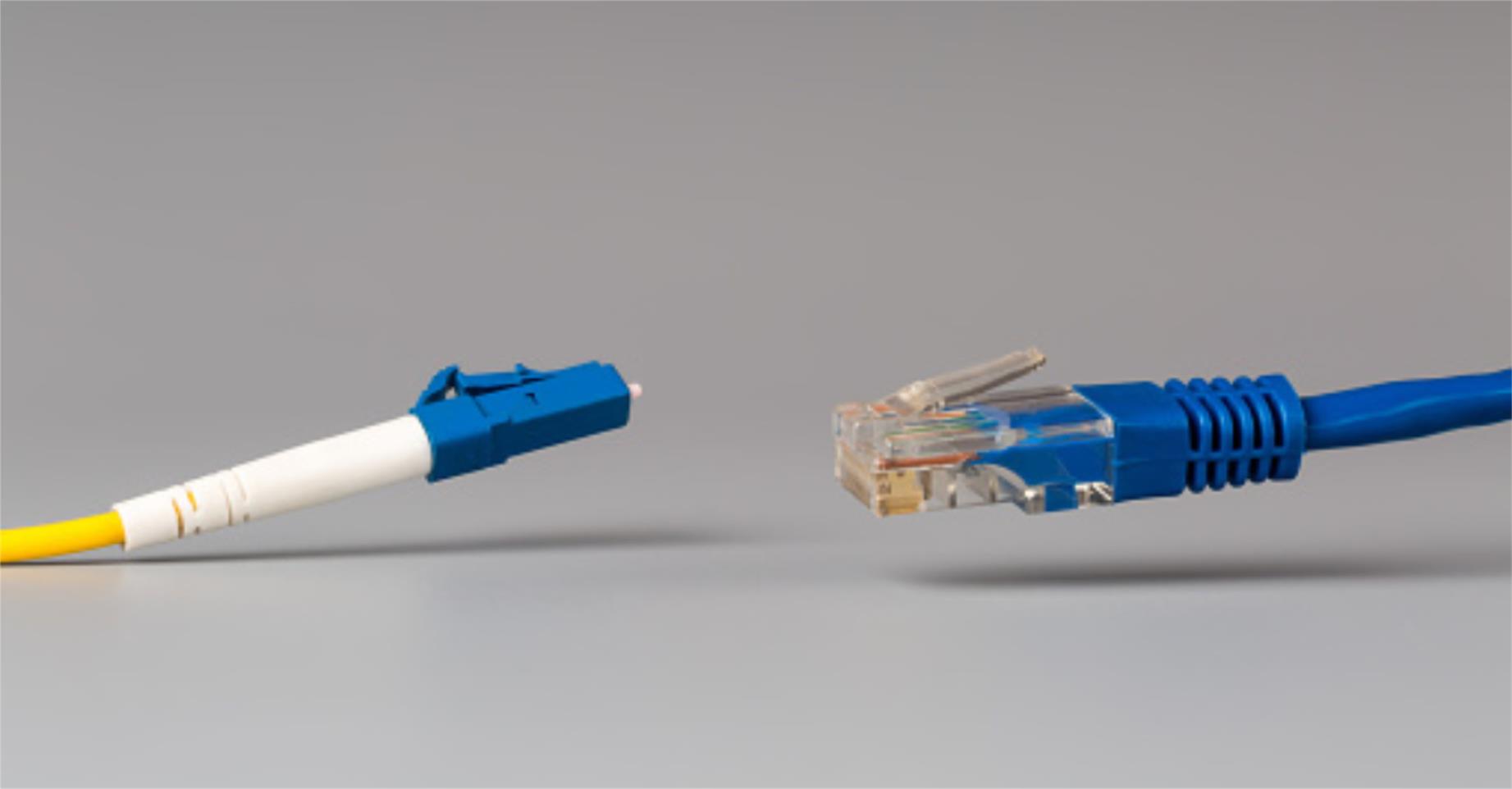
First and foremost, clarify the core premise: both fiber patch cables and copper Ethernet cables serve as the "nervous system" of data centers, connecting servers, switches, routers, and storage devices. Yet, their underlying technologies, performance, and applicable scenarios differ significantly. To make an informed decision, we will break down the key definitions, compare critical performance metrics, outline practical application scenarios, and clarify common misconceptions—all backed by real-world deployment experience.
What is Fiber Patch Cable and Copper Ethernet Cable? How Do They Work
Before diving into comparisons, understanding the basic concepts and working principles of these two cable types is crucial—it eliminates confusion, ensures the right evaluation direction, and lays the groundwork for data center cabling decisions.
Fiber Patch Cables
A fiber patch cable (also known as a fiber jumper) is a short-length fiber optic cable with pre-installed connectors such as SC, LC, FC, or MPO at both ends. It transmits light pulse signals through an ultra-pure glass or plastic core, surrounded by cladding and a protective layer, enabling low-loss, high-speed data transmission. In data centers, fiber patch cables are primarily used to connect active equipment (such as switches and optical transceivers) to fiber backbone lines, serving as key components for high-speed, long-distance transmission.
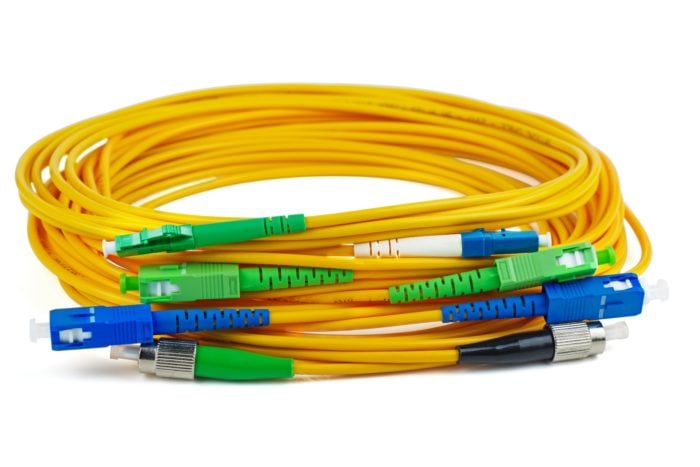
Fiber patch cables are mainly divided into two types: single-mode fiber (OS2) and multi-mode fiber (OM1, OM2, OM3, OM4, OM5). Single-mode fiber has a core diameter of only 9 microns, allowing light signals to travel along a single path, making it suitable for long-distance connections. Multi-mode fiber has a 50-micron core and can transmit multiple light signals simultaneously, making it more suitable for medium-to-short-distance transmission within data centers. With technological upgrades, optimized bend-resistant designs and low-loss characteristics have made fiber patch cables more adaptable and durable in the compact environment of data centers.
Copper Ethernet Cables
A copper Ethernet cable is a twisted-pair cable that transmits data via electrical signals. It consists of four pairs of insulated copper conductors (usually 22-24 AWG) twisted together to reduce electromagnetic interference (EMI), with an outer protective jacket. In data centers, the most commonly used categories are Cat6A, Cat7, and Cat8—the higher the category, the better the bandwidth and performance.

Copper Ethernet cables are further divided into unshielded (UTP) and shielded (STP) types. STP cables add an extra shielding layer to minimize electromagnetic interference, making them suitable for high-noise environments in data centers. Their core advantage is support for Power over Ethernet (PoE), which can deliver up to 90 watts of power to devices such as security cameras, wireless access points, and low-power servers—eliminating the need for additional power lines and greatly simplifying the deployment process.
Fiber Cable vs. Copper Cable in Data Centers
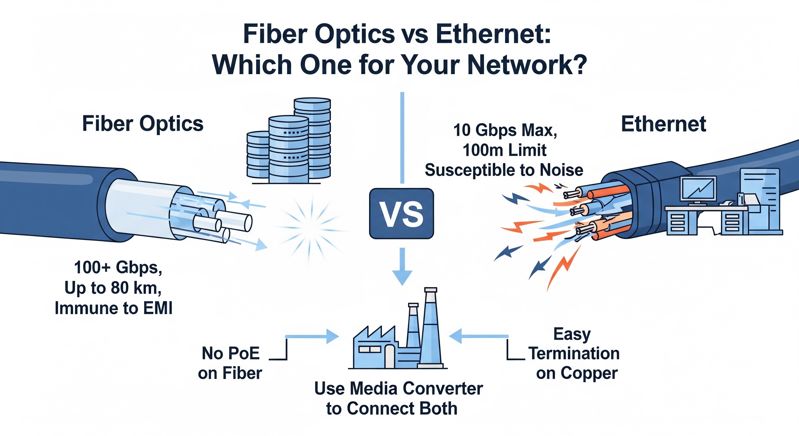
When evaluating fiber patch cables and Copper Ethernet Cables, data center teams should focus on core metrics that impact operations: bandwidth, transmission distance, EMI resistance, cost, installation and maintenance, and sustainability. The table below summarizes their key differences to streamline the decision-making process.
| Key Metrics | Bandwidth & Speed | Transmission Distance | EMI Resistance | PoE Support | Cost | Installation & Maintenance | Sustainability |
|---|---|---|---|---|---|---|---|
| Fiber Patch Cable | Currently up to 800 Gbps, with future projections exceeding 1.6 Tbps—meeting the ultra-high bandwidth needs of AI and data-intensive workloads. | Single-mode fiber: Up to 40 kilometers without signal regeneration; Multi-mode fiber (OM4): Up to 550 meters for high-speed applications. | Fully immune to electromagnetic interference (EMI) and electrostatic discharge (ESD), suitable for areas near high-frequency noise devices such as power distribution units (PDUs) and generators. | Does not support PoE; cannot transmit power, so connected devices require separate power supplies. | Higher initial cost (cables, connectors, and optical transceivers), but longer service life and strong scalability result in lower total cost of ownership (TCO) over time. | Requires professional skills, tools, and careful handling (fragile if not properly protected); termination and splicing processes are more complex. | More sustainable: Made of silica (one of the most abundant substances on Earth), with low power consumption and minimal environmental impact. |
| Copper Ethernet Cable | Cat6A/Cat7 supports up to 10 Gbps; Cat8 reaches 40 Gbps over short distances—sufficient for low-to-medium bandwidth requirements. | Limited to 100 meters for high-speed (10 Gbps+) applications. Signal attenuation occurs beyond this range, requiring repeaters. | Susceptible to EMI, which may cause signal distortion and data loss; STP types offer improved protection but are not fully immune. | Supports PoE (up to 90W), eliminating the need for separate power lines for low-power devices and simplifying infrastructure deployment. | Lower initial cost, but higher long-term costs for large-scale deployments or bandwidth upgrades. | Easy to install and terminate with standard tools; the familiar RJ45 interface ensures backward compatibility with legacy equipment, resulting in low maintenance costs. | Less sustainable: Copper is a limited resource; its mining is energy-intensive and produces harmful byproducts, and copper switches consume more power per port. |
When to Choose Fiber Patch Cable or Ethernet Copper Cable
There is no one-size-fits-all solution—choosing the right cable depends on a data center’s specific needs, including transmission distance, bandwidth requirements, budget, and future growth plans. Below are the advantageous application scenarios for each cable, based on real-world data center deployment experience.

Choose Fiber Patch Cables If:
● Long-distance connections are needed: Use single-mode fiber for backbone links between buildings, and multi-mode fiber for connections over 100 meters within a facility—critical for large-scale data centers or campus-style deployments.
● High bandwidth is non-negotiable: If your data center supports AI/machine learning training (requiring 400-800 Gbps bandwidth), cloud computing, or large-scale data transmission, fiber patch cables are the only viable option.
● EMI risks exist: Fiber’s immunity to EMI makes it ideal for deployment near high-frequency noise devices such as PDUs and generators.
● Room for infrastructure upgrades is needed: Fiber’s scalability (up to 1.6 Tbps) ensures the cabling system keeps pace with technological advancements, reducing the cost and hassle of future upgrades.
Choose Copper Ethernet Cables If:
● Connections are short (under 100 meters): Copper excels in single-cabinet connections, such as switch-to-server links and KVM (Keyboard-Video-Mouse) management connections.
● PoE power is required: For devices like security cameras, wireless access points, and low-power servers, copper Ethernet cables eliminate the need for separate power infrastructure, reducing deployment costs.
● Budget is a top priority: Copper has lower initial costs, making it suitable for small data centers, legacy system upgrades, or short-term projects with limited bandwidth needs.
● Legacy device compatibility is required: If your data center uses older equipment with RJ45 ports, copper Ethernet cables enable seamless integration without additional adapters.

Tip: Many modern data centers adopt a hybrid architecture, using copper Ethernet cables for short-distance, PoE-enabled connections and fiber patch cables for backbone links, long-distance, and high-bandwidth connections. This approach balances cost, performance, and flexibility.
Common Misconceptions
Misinformation can lead to wrong data center cabling decisions and subsequent high costs. Below are the most common misconceptions about fiber patch cables and copper Ethernet cables, along with the facts:
Myth 1: Fiber patch cables can completely replace copper Ethernet cables
False. Fiber patch cables require specialized optical transceivers (e.g., SFP modules) to connect to network devices, which adds extra cost. Additionally, fiber does not support PoE, making it unable to meet the needs of devices relying on network power. Copper remains indispensable for short-distance, PoE-enabled scenarios.

Myth 2: Copper Ethernet cables are obsolete
False. While fiber is growing in popularity, copper Ethernet cables (especially Cat6A and Cat8) still play a critical role in data centers. For short-distance scenarios (under 100 meters), copper is cost-effective, easy to maintain, and can easily support 10 Gbps speeds—more than enough for most switch-to-server connections.
Myth 3: Fiber patch cables are too fragile for data center environments
False. Modern fiber patch cables feature robust jackets and bend-resistant designs, making them durable enough for data center deployments. With proper handling (avoiding excessive bending and pulling), fiber patch cables can last over 25 years—far longer than copper cables.
The Direction of Data Center Cabling
As data centers evolve to support AI, edge computing, and 5G technologies, cabling technologies are continuously upgrading to meet new demands. The following trends are worth watching in the coming years:
● Fiber technology innovation: Technologies such as Co-Packaged Optics (CPO) integrate fiber optics with semiconductor chips, reducing power consumption by up to 84% and enabling terabit-level transmission speeds—making fiber more cost-effective in high-density data centers. Additionally, upgrades in Wavelength Division Multiplexing (WDM) technology will further increase the data transmission capacity of existing fiber.

● Copper technology upgrades: Higher-category copper cables beyond Cat8 and optimized signal processing will expand copper’s performance boundaries, but its core limitation—short transmission distance—will remain.
● Popularization of hybrid architectures: The hybrid architecture of "copper for short distances, fiber for long distances" will become mainstream. Media converters and advanced network equipment will further bridge the gap between the two technologies, enabling seamless connectivity.
● Focus on sustainability: Data centers will increasingly prioritize fiber’s low-power advantages and copper’s recyclability to meet corporate sustainability goals and regulatory requirements.
FiberMart Cabling Solutions
For different application scenarios and project requirements, Fiber-Mart offer cost-effective and high-quality cable products, fully covering multiple categories of Fiber Patch Cables, Copper Ethernet Cables and Direct Attach Cables (DAC), which can accurately adapt to various selection needs.Fiber-Mart cables are manufactured with rigorous testing and quality control to ensure stable performance and durability, providing reliable connectivity solutions for data centers, enterprise networks, and telecommunications. With a wide selection of lengths, connectors, and cable types, Fiber-Mart can meet your specific cabling requirements and help you optimize your network infrastructure.
How to Make the Right Choice
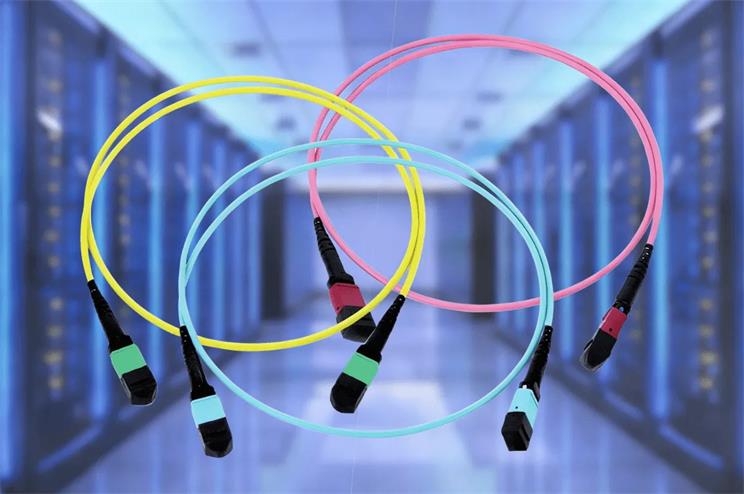
In summary, the choice between fiber patch cables and copper Ethernet cables boils down to three core questions:
● What is the transmission distance? Under 100 meters: Choose copper; Over 100 meters: Choose fiber.
● What is your bandwidth requirement? 10 Gbps or less: Choose copper; 40 Gbps or more: Choose fiber.
● Is PoE power needed? Yes: Choose copper; No: Choose fiber (or copper, if distance and bandwidth allow).

For most data centers, a hybrid architecture is the optimal solution: use copper Ethernet cables for short-distance, PoE-enabled connections, and fiber patch cables for backbone links, long-distance, and high-bandwidth connections. This combination balances cost and performance while ensuring scalability, allowing the data center to adapt to future technological developments.
Remember: Cabling is a long-term investment. Making the right choice today will save you time, cost, and unnecessary trouble in the future. If you still have doubts, consult a FiberMart expert to get personalized advice based on your data center’s specific infrastructure needs.
FAQs
Q: What are the differences between fiber patch cables and copper Ethernet cables?
Fiber transmits light signals (low-loss, high-speed) via glass/plastic cores, while copper transmits electrical signals via twisted pairs. They differ in bandwidth, distance, EMI resistance, and PoE support.
Q: What are the bandwidth and speed for fiber patch cable and copper cable?
Fiber reaches up to 800 Gbps (future up to 1.6 Tbps); copper (Cat6A/Cat7: 10 Gbps, Cat8: 40 Gbps over short distances).
Q: What are the maximum transmission distance of the fiber patchcord and copper ethernet cables?
Fiber: Single-mode (up to 40km), multi-mode OM4 (up to 550m for high-speed); copper: max 100m for 10 Gbps+ speeds.
Q: Do the two cables support PoE power supply?
Copper supports PoE (up to 90W) for low-power devices; fiber does not, requiring separate power supplies.
Q: From the perspective of purchase cost and long-term use cost, which is more cost-effective, fiber or copper cable?
Copper has lower initial costs; fiber has higher upfront costs but lower long-term TCO due to longer service life and scalability.
Q: What is the optimal cable solution for most data centers?
A hybrid architecture: copper for short-distance (under 100m) and PoE-enabled connections; fiber for backbone, long-distance, and high-bandwidth needs.
Posted on 21 April, 2026, by Francisco, Fibermart, All Copy Right Reserved.





No comments have been posted yet.