


.webp)


Explore the pros and cons of singlemode vs. multimode fiber optics and discover if it's time to reconsider your network's infrastructure.
Singlemode Fiber vs. Multimode Fiber for Your Network–Is it Time to Reconsider?

In the world of networking, the choice between single-mode and multimode fiber optics has been a long-standing debate. Both options offer unique advantages and disadvantages, making it crucial for network administrators and businesses to carefully consider their requirements before making a decision.
In recent years, technological advancements have blurred the lines between these two fiber types, prompting many to reconsider their choices.
In this blog, we will delve into the pros and cons of singlemode and multimode fiber optics and explore whether it's time to reconsider your network's fiber infrastructure.
Singlemode Fiber: The Workhorse of Long-Distance Communication
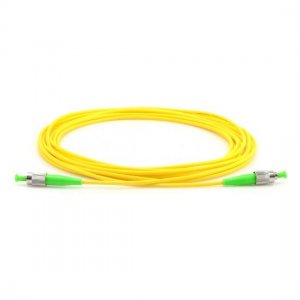
Singlemode fiber (SMF) is the preferred choice for long-distance communication due to its exceptional bandwidth and low signal loss over extended distances. Here are some of the key advantages of using single-mode fiber in your network:
1. High Bandwidth: Singlemode fiber offers significantly higher bandwidth compared to multimode fiber. This means it can handle a greater volume of data, making it ideal for high-demand applications such as data centers and long-haul telecommunications.
2. Longer Distances: SMF can transmit signals over much longer distances without significant signal degradation. This makes it the go-to choice for intercontinental communication and other scenarios where long distances are involved.
3. Future-Proofing: Investing in single-mode fiber infrastructure can future-proof your network to some extent. As technology evolves, SMF is more likely to support the higher bandwidth requirements of future applications.
4. Lower Dispersion: SMF has lower modal dispersion, which means that light signals travel more directly through the core of the fiber, reducing signal distortion and allowing for higher data rates.
However, single-mode fiber also has its drawbacks, including:
1. Cost: SMF is generally more expensive to install and maintain than multimode fiber. The cost of the fiber itself, along with the precision equipment required for installation, can be a significant investment.
2. Light Source Compatibility: SMF requires the use of narrow-linewidth light sources such as laser diodes, which can also add to the cost. This can be a limiting factor for some organizations.
3. Connectivity: Singlemode fiber connectors are more sensitive to alignment, making them trickier to install and maintain. This can result in higher installation and maintenance costs.
Multimode Fiber: The Go-To Choice for Short Distances
Multimode fiber (MMF) is favored for shorter-distance network applications, including most enterprise and campus environments. Here are some of the advantages of using multimode fiber:
1. Cost-Effective: MMF is more budget-friendly compared to single-mode fiber. The fiber itself is less expensive, and the optical transmitters used with it are typically more affordable.
2. Ease of Installation: Multimode fiber is less sensitive to alignment during installation, making it easier and quicker to deploy. This can save both time and money.
3. Short-Distance Efficiency: For distances within a few kilometers, multimode fiber performs admirably and can meet the needs of many businesses without the added expense of singlemode fiber.

However, MMF also comes with its limitations:
1. Limited Bandwidth: Multimode fiber has a lower bandwidth capacity than single-mode fiber. This can be a constraint as network demands increase, potentially requiring costly upgrades in the future.
2. Distance Limitations: MMF's performance degrades over longer distances due to modal dispersion. This limits its use in applications requiring high-speed data transmission over extended links.
3. Future Compatibility: With the ever-growing demand for higher data rates and bandwidth, MMF may not be the best choice for future-proofing your network.
The Technological Advancements that Blur the Lines
In recent years, technological advancements in multimode fiber have led to the development of OM3 and OM4 fiber, which offer higher bandwidth and longer reach than traditional multimode fiber.
These fibers, often referred to as "high-bandwidth multimode fiber," have pushed the boundaries of what MMF can achieve. OM3 and OM4 fibers are now capable of supporting 10 Gbps and 40 Gbps data rates over longer distances, making them suitable for some data center and enterprise applications.
Furthermore, parallel optics technology has emerged, allowing multiple lanes of data transmission over multimode fiber using MTP/MPO connectors. This innovation has significantly increased the bandwidth and data capacity of multimode fiber systems, making them more competitive with single-mode fiber in certain scenarios.
Is it Time to Reconsider?
The decision between single and multimode fiber for your network ultimately depends on your specific requirements and budget constraints. Here are some factors to consider:
1. Distance: If your network spans long distances or you plan to expand in that direction, single-mode fiber may be the better choice to avoid signal degradation over extended links.
2. Bandwidth Requirements: Evaluate your current and future bandwidth needs. If your network requires extremely high data rates, single-mode fiber is likely the more future-proof option.
3. Budget: Consider your budget limitations. Multimode fiber can be a cost-effective choice for shorter distances, but remember to account for potential future upgrades.
4. Technology Trends: Keep an eye on technological advancements. High-bandwidth multimode fiber and parallel optics can provide viable alternatives for certain applications.
5. Consult Experts: It's always a good idea to consult with experts or network consultants who can assess your specific needs and recommend the most suitable fiber type for your network.

If you’re confused about whether to use single-mode or multimode fiber optics cables, Fibermart can help you make an informed decision. With operations based in Hong Kong & USA, we are a globally recognized manufacturer of fiber optic network solutions.
Our wide range of products includes optical amplifiers, optical isolators, optical switches, and a lot more. Get in touch with us today, and let us help you make the best choice.


 OM4 UnibootFiber Cable.jpg "LC Uniboot vs LC Standard Fiber Cables: What Are the Differences")





No comments have been posted yet.