


.webp)


The accelerated growth of cloud computing, artificial intelligence, and big data has tested network infrastructures. In the efforts to keep pace with rising bandwidth demands, data centers are shifting towards sophisticated cabling systems that are scalable, dependable, and efficient. Facilitating the revolution is the MPO 24 fiber cable, an ultra-high-density connection system that brings astronomical advantages over traditional cabling systems. With the MPO cable and MPO splitter, this technology is changing the way networks are built and managed in the contemporary world.
Why MPO 24 Fiber Cable Is Revolutionary
Compared to conventional cabling that is multi-fiber per port, MPO 24 fiber cable has 24 fibers packed into one small interface. The port-efficient architecture is most tightly packed for maximum rack space and is ideal for use in data center applications where density matters most. Twice the bandwidth of more conventional 12-fiber architectures, the MPO 24 fiber cable supports more bandwidth with fewer connections and less total cost of infrastructure.
MPO 24 fiber cables are gaining wider usage in applications of 100G, 200G, and even 400G Ethernet. They enable designers to design future-proof infrastructure that can be increased seamlessly without the need for regular overhauls.
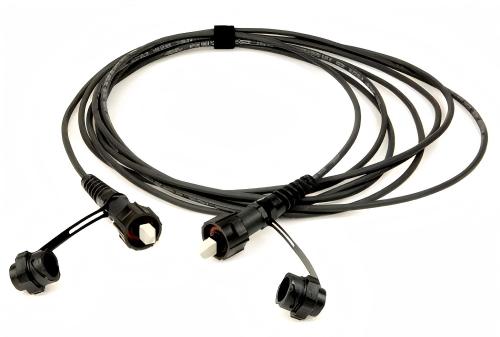
MPO connector: Key part of MPO 24 fiber optic cable
One of the most critical parts of the MPO 24 fiber cable system is the MPO connector. Produced with accuracy and for performance, the MPO connector can have a number of fibers in a solitary ferrule. The push-on feature of the cable is easy to install, but secure and low-loss in nature.
For density networks, the MPO connector avoids the hassle of handling dozens of discrete fiber connections. Rather, it processes all of them through a single easy-to-maintain interface. Not only is installation time reduced, but human installation and maintenance error is also reduced to a minimum.

Flexibility with MPO Splitter Cable
While the MPO 24 fiber cable provides backbone density, the MPO splitter cable provides the flexibility necessary for device-level connections. Often used to make the transition from high-fiber-count backbones to equipment interfaces, an MPO splitter cable can split out a 24-fiber MPO into multiple duplex connectors, such as LC or SC.
This breakout capability is particularly useful in connecting high-density backbones to servers, switches, or storage equipment. MPO splitter cable enables data centers to achieve parity between efficiency at the backbone level and flexibility at the device level—a requirement in dynamic information technology environments.

Benefits of MPO 24 Fiber Cable in Data Centers
There are some major advantages of MPO 24 fiber cable solutions:
Higher Density
Provides 24 fibers in one connector for optimal panel and rack density.
Scalability
Provides an easy migration path from 40G and 100G to 400G and higher with fewer upgrades.
Faster Deployment
Pre-terminated MPO connector assemblies cut down installation time.
Cost Efficiency
Fewer connectors and cables mean lower hardware and maintenance costs.
Future-Proofing
It is future-proofed for next-generation high-speed Ethernet and optical interconnect standards.
Overall, these advantages position the MPO 24 fiber cable as one of the optimal cabling solutions for future-proof data centers.
MPO 24 fiber cable Real-World Applications
MPO 24 fiber cable systems are universally used in industries:
- Cloud Data Centers: Used in spine-leaf architecture that requires fast interconnections.
- Telecommunications: Used in backbone networks requiring extreme ultra-high density and high reliability.
- Enterprise IT: Facilitates easy upgradation from 10G to 100G or 400G without rewiring.
- AI and HPC Clusters: Utilize the ginormous bandwidth requirements of parallel computing setups.
In all of these applications, the MPO connector provides performance reliability, and the MPO splitter cable provides endpoint flexibility.
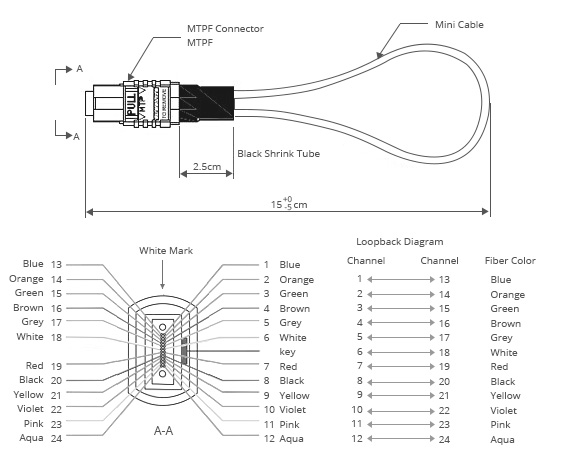
Conclusion: The Future of High-Density Cabling
With digital ecosystems evolving, the MPO 24 fiber cable will be at the forefront of network innovation. Its capabilities in delivering high bandwidth, saving space, and being scalable make it essential for organizations preparing for the next digital changeover. With the MPO connector and MPO splitter cable, it is an entire ecosystem that meets the current and future connectivity needs.
For both businesses and service providers, embracing MPO-based infrastructure today is not just a matter of keeping up with technology—it is an issue of setting the stage for long-term competitiveness in the digital age.





No comments have been posted yet.