


.webp)


Although ethernet cables are a common network transmission medium in our daily lives, many people are still confused about their transmission frequency. What is ethernet cable transmission frequency? What is its relationship to other factors? Is a higher ethernet cable transmission frequency always better? Does a higher ethernet cable frequency mean higher bandwidth? This article will answer these questions one by one.
What is Ethernet Cable Frequency?
The transmission frequency of a ethernet cable, measured in megahertz (MHz), determines the speed at which the cable transmits signals and represents the maximum rate the cable can support. For example, a cable with a transmission frequency of 100 MHz can support frequencies between 1 MHz and 100 MHz. In other words, the transmission frequency of a ethernet cable can be likened to the diameter of a water pipe: the larger the diameter, the more water it can flow.
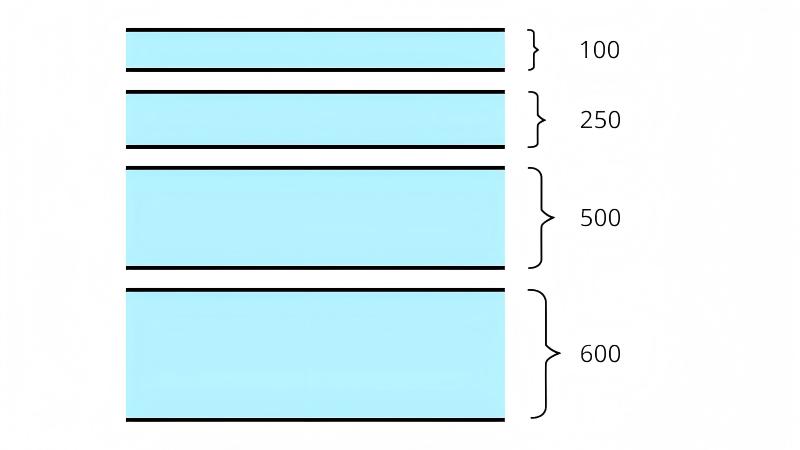
Figure 1: Cat5/Cat5e/Cat6/Cat6a/Cat7 ethernet cable transmission frequencies
What Does Ethernet Cable Frequency Related to?
Transmission Speed
The transmission frequency of a ethernet cable has the most direct impact on its maximum supported transmission speed. The higher the frequency, the higher the maximum transmission rate. For example, CAT6 cables support up to 250MHz, more than double the 100MHz of CAT5 cables. Cat6 cables support speeds up to 10GBASE-T, while Cat5 cables support speeds up to 1000BASE-T.
Transmission Distance
The transmission distance of a ethernet cable is also affected by its transmission frequency. Generally, other things being equal, the higher the frequency, the greater the transmission distance, and vice versa. For example, if a network transmission requirement is 10Gbps over a distance of 80m, it would be wise to choose a CAT6a (500 MHz) cable rather than a Category 6 (250 MHz) cable. This is because Category 6a can reach a transmission distance of up to 100m while maintaining a transmission rate of 10Gbps, while Category 6 only has a maximum transmission distance of 55m at a transmission rate of 10Gbps.
Summary of Ethernet Cable Frequencies
The transmission frequency of a ethernet cable represents the basic bandwidth of information transmission. To ensure that the network operates at the ideal bandwidth, it is necessary to ensure that the cable complies with the specifications. Different types of ethernet cables have different standard frequencies and speeds according to the specifications. The following table summarizes the frequency and speed standards of Cat5/Cat5e/Cat6/Cat6a/Cat7/Cat8 ethernet cables.
|
ethernet cable category
|
Applicable Network
|
Transmission frequency
|
Maximum transmission rate
|
Transmission distance
|
|
Cat5
|
100Base-T & 10Base-T
|
1~100MHz
|
100Mbps
|
100 meters
|
|
Cat5e
|
1000Bsae-T
|
1~100MHz
|
1000Mbps
|
100 meters
|
|
Cat6
|
1000Bsae-T
|
1~250MHz
|
1000Mbps/10Gbps
|
100m/37~55m
|
|
Cat6a
|
10GBase-T
|
1~500MHz
|
10Gbps
|
100 meters
|
|
Cat7
|
10GBase-T
|
1~600MHz
|
10Gbps
|
100 meters
|
|
Cat8
|
25/40GBase-T
|
1~2000MHz
|
25Gbps or 40Gbps
|
2000MHz 30m
|
Frequently Asked Questions about Ethernet Cable Frequency
Is the Higher the ethernet cable Frequency, the better?
The necessary prerequisite for selecting high-frequency ethernet cables is that all devices in the network deployment support high-bandwidth transmission. Under this condition, a ethernet cable transmission frequency that meets standard specifications can ensure that the ethernet cable can achieve a certain rate within a certain transmission distance.
What Is the Difference Between MHz and Mbps?
MHz is a unit of frequency of one million Hertz, which represents the frequency of electrical signal fluctuations;
Mbps stands for "megabits per second" and is a unit of transmission rate used to express network transmission speed.
Should I Choose a High-Frequency Cable Type?
Whether to choose a high-frequency ethernet cable depends on your actual application needs. If your network provider only offers a 1Gbps network speed, you should prioritize a CAT5e (100 MHz) cable. In this case, even if you choose a higher-quality 10G Category 6 (250 MHz) cable, your maximum transmission speed will only reach 1Gbps. If you still have questions about ethernet cable selection, you can read "What are the differences between Cat5e, Cat6, Cat6a, and Cat7 cables? Which is better?" for further information.
Does the Frequency of a Ethernet Cable have Anything to do With the Thickness of the Cable?
The transmission frequency of a ethernet cable has nothing to do with its thickness. It's a misconception that thicker cables have higher frequencies. The transmission frequency of a ethernet cable mainly depends on the type of cable.





No comments have been posted yet.