


.webp)


The choice of data center transmission media is always a controversial topic, especially in dedicated facilities like data centers, where both technical and business considerations must be considered. Some argue for fiber optic cables, while others favor copper cables. These questions often garner differing opinions. So, what are the differences between copper and fiber optic cables? Which is better? To clarify the choice between copper and fiber optic cables, this article will provide detailed answers from multiple perspectives.
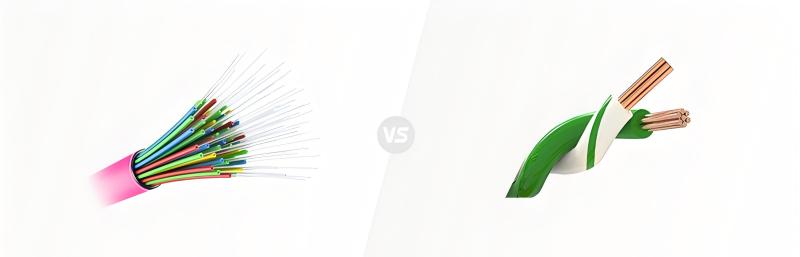
What is the difference between fiber optic cable and copper ethernet cable?
Fiber optics and copper ethernet cables are two common data center transmission media. Both offer excellent interference resistance and confidentiality. So what are the differences between fiber optics and copper ethernet cable? The differences between the two are mainly reflected in the following four aspects:
Material
Optical fiber, as a light transmission tool, is usually made of glass or plastic, while copper wire is made of a copper core (such as oxygen-free copper, pure copper, mixed copper, bronze, etc.).
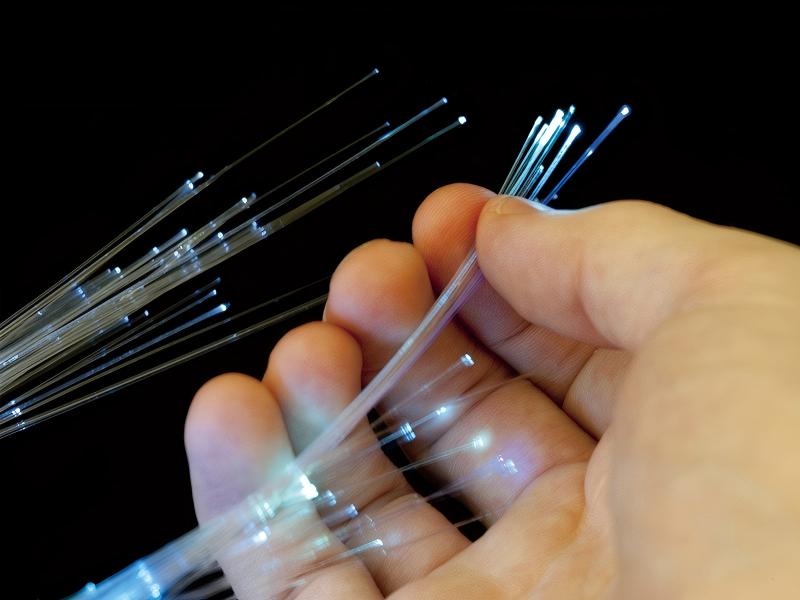
Transmitting signals
Optical fiber uses photoelectric conversion technology to transmit optical signals, which has the advantage of being unaffected by electromagnetic interference. Traditional copper ethernet cable transmit electrical signals, but when used for long-distance transmission, the signal attenuates quickly and is easily interfered with.
Transmission distance
As can be seen above, copper wire transmission distances are limited, generally not exceeding 100 meters. For example, Category 8 ethernet cables have a maximum transmission distance of only 30 meters, making them suitable for indoor applications (such as offices and data centers). Fiber optic cables have a maximum transmission distance of up to 100 kilometers. For example, single-mode fiber optic cables typically have a transmission distance of 10 to 20 kilometers, far exceeding the transmission distance of copper ethernet cable and making them ideal for long-distance transmission applications.
Transmission speed
Theoretically, optical fiber propagation speed is slower than copper wire. The propagation speed of optical fiber is approximately 2 x 10(8) m/s, while the propagation speed of copper wire is approximately 2.3 x 10(8) m/s. So why is optical fiber propagation slower than copper wire? This is because when optical fiber transmits signals, due to the principle of total internal reflection, the actual transmission distance of the fiber is much greater than its length.
Transfer rate
When transmission distances are the same, optical fiber has low attenuation and loss, allowing for a maximum transmission rate of up to 100Gbps (e.g., OM4 fiber optic patch cables ). Copper wire, on the other hand, is susceptible to external interference, exhibits high attenuation and loss, and has a maximum transmission rate of only 40Gbps (e.g., Category 8 Ethernet cables and DAC passive copper cables ). Overall, optical fiber's transmission rate far exceeds that of copper wire.
Maintenance Management
The production of copper wire crystal heads and the port connection of equipment are very simple, while the cutting, splicing and equipment connection of optical fibers have higher requirements and are more complicated.
Cost
Fiber optics, due to its relatively complex manufacturing process, are more expensive than copper wire. However, with the continuous improvement and innovation of fiber optic technology, the price has decreased. Compared to copper wire, fiber optics offers superior durability and an extremely long lifespan. It is less susceptible to damage after installation, making its subsequent maintenance costs much lower than copper wire. Fiber optics also saves wiring space, while copper wire requires more space for network cabling, which incurs additional costs. Overall, the total cost of fiber optics is actually much lower than that of copper wire.
How to choose between optical fiber and copper cables?
Fiber optic cables and copper cables differ in transmission speed, distance, maintenance, and cost. So, which is better for practical applications? The following article analyzes the cable characteristics and technical aspects to help you choose.
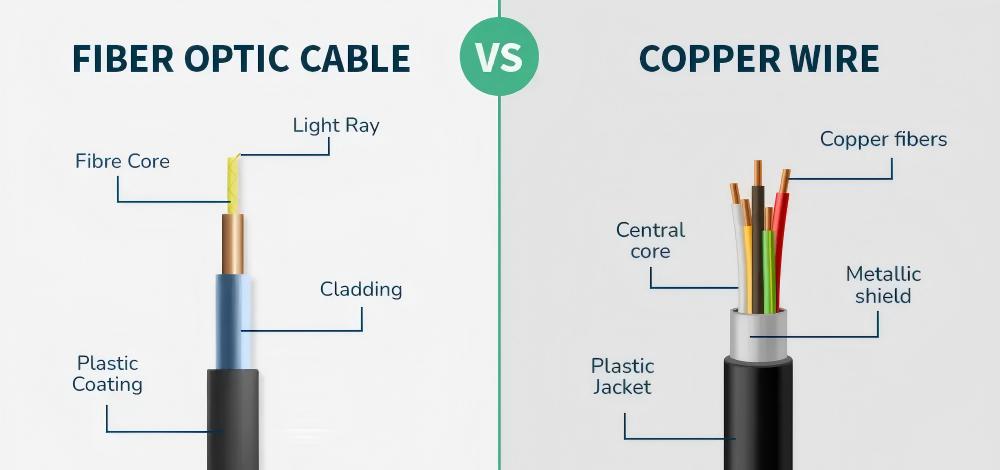
Fiber characteristics
As can be seen above, in addition to its advantages of high bandwidth and long transmission distance, optical fiber also features low attenuation, strong durability, and high reliability. Furthermore, because optical fiber is an insulator, it is not susceptible to electromagnetic interference and crosstalk during use, allowing it to be installed near industrial equipment. Copper wire, in addition to its excellent anti-interference performance, confidentiality, and ease of installation, maintenance, and management, also offers excellent flexibility and emergency power supply capabilities, allowing it to continue powering equipment even if the power supply is exhausted.
Technology
From a technical perspective, the appropriate data center transmission media type can be selected based on the following three aspects:
1. The ability of the medium to transmit signals
If the wiring environment is harsh or the anti-interference capability is required to be high, choose optical fiber, which is immune to the influence of other signals and has stronger anti-interference performance than copper wire.
2. Is power supply required via cable?
From the above, we can see that copper wire can supply power. If power supply needs to be provided through cables, copper wire should be selected.
3. Issues such as portability or mobility
If the fiber needs to be frequently replaced or moved, select a bend-sensitive fiber.
Simply put, fiber optics is generally more suitable for applications requiring ultra-high bandwidth and long-distance transmission (such as industrial Ethernet cabling). For shorter distances and lower transmission rates (such as within buildings or corporate offices), copper wire is more suitable due to cost considerations. This choice, of course, assumes your devices support the transmission medium. If you have any questions about the use of either medium, seek professional assistance.
Conclusion
After comparing fiber optic cables and copper cables from multiple perspectives, are you now clear about the differences between the two and how to choose the right cable for your application? If you are still unsure about the choice, please click the online consultation button on this website or send an email to [email protected]. Fibermart customer service will provide you with free, professional answers.





No comments have been posted yet.