


.webp)


Fiber amplifiers are the cornerstone enabling technology of modern high-speed, long-distance optical communication systems, fundamentally addressing the challenge of signal attenuation. This article writen by Patrick from Fibermart, provides an in-depth analysis of how fiber amplifiers work—particularly the revolutionary erbium-doped fiber amplifier (EDFA)—and explains their core value: directly amplifying optical signals via all-optical signal regeneration, thereby avoiding the bottlenecks associated with electro-optical conversion.Understanding the principles, types, operational wavelength bands, and advantages/disadvantages of fiber amplifiers is critical for designing and deploying high-performance, ultra-long-haul, high-capacity optical networks (such as backbone networks and submarine cables). These amplifiers underpin the operation of the global information society and drive the advancement of future communication technologies.
The Challenge of Signal Attenuation in Optical Communication Systems
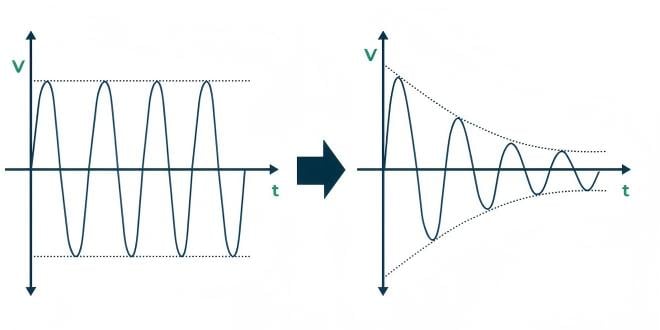
One of the core challenges in long-distance optical communication systems is signal attenuation. Fiber optic amplifiers are the key enabling technology that overcomes this challenge, making modern high-speed, long-distance optical communication possible. Signal attenuation is the phenomenon where the power of an optical signal gradually decreases during transmission through fiber, primarily caused by absorption, scattering, and bending, measured in dB/km. It is one of the primary factors limiting the transmission distance in optical communications. Understanding the sources, magnitude, and impact of attenuation is crucial for designing, deploying, and maintaining high-performance, highly reliable optical communication networks. Engineers overcome the challenges posed by attenuation through techniques such as selecting low-loss wavelengths, using high-quality fiber, optimizing cabling layouts, and deploying optical amplifiers.
The Critical Role of Fiber Amplifiers in Long-Distance Transmission
Fiber amplifiers play an indispensable and central role in long-distance fiber optic communication systems. They fundamentally overcome the primary obstacle in fiber transmission—signal attenuation—enabling ultra-long-distance transmission such as transoceanic communication and national backbone networks. Fiber amplifiers, especially Erbium-Doped Fiber Amplifiers (EDFAs) and Raman amplifiers, are the lifeline of long-haul fiber optic communication systems. By directly compensating for signal attenuation in the optical domain, they enable all-optical signal regeneration (repeaterless amplification). This supports the widespread application of Wavelength Division Multiplexing (WDM) technology. By improving the Optical Signal-to-Noise Ratio (OSNR) and suppressing nonlinear effects, they continuously push the limits of unrepeatered optical signal transmission distances. Without fiber amplifiers, modern high-speed, high-capacity global optical communication networks—including internet backbones and submarine cables—would not exist. They are essential key enabling technologies for the high-speed information age.
Core Functions of Fiber Amplifiers
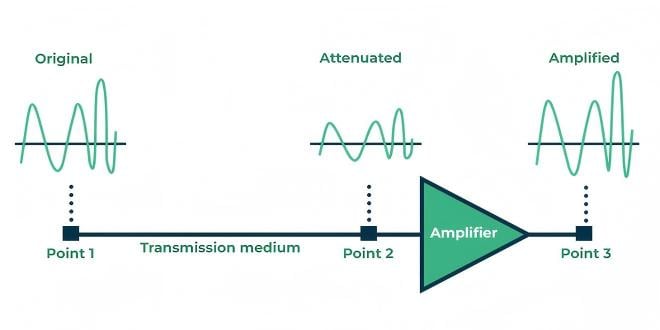
The core function of a fiber amplifier is to directly amplify optical signals without converting them into electrical signals. This makes them critical components in modern fiber optic communication systems and optical networks. Their core functions are specifically manifested in:
-
Overcoming Fiber Transmission Loss and Extending Transmission Distance: By placing fiber amplifiers at key points in the optical network (such as line amplifiers, power amplifiers, and pre-amplifiers), loss can be flexibly compensated, signal power boosted, and signal-to-noise ratio optimized.
-
Enabling All-Optical Networks: In all-optical networks, signals remain in optical form throughout transmission and switching processes, avoiding frequent optical-electrical-optical (OEO) conversions. This provides higher bandwidth, lower latency, reduced complexity, and lower power consumption. Fiber amplifiers are the necessary means for achieving long-distance transmission and power management of signals entirely within the optical domain.
Main Types of Fiber Amplifiers
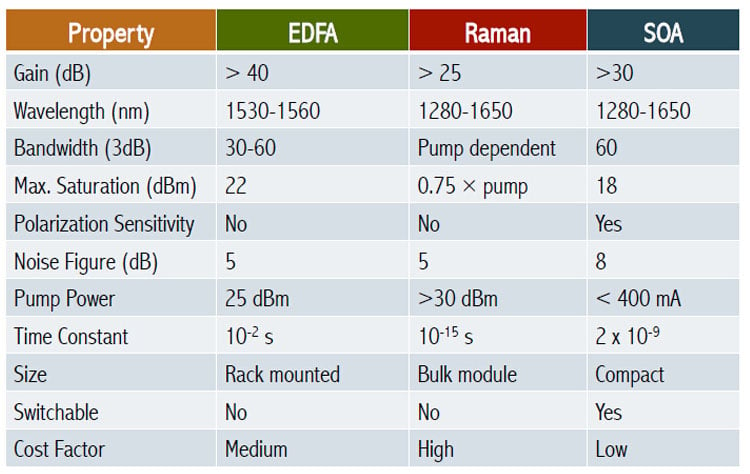
Fiber amplifiers are core devices in optical communication systems, primarily used to compensate for losses in fiber transmission, extending transmission distance or boosting signal power. The main types can be classified into the following categories:
1. Rare-Earth-Doped Fiber Amplifiers
-
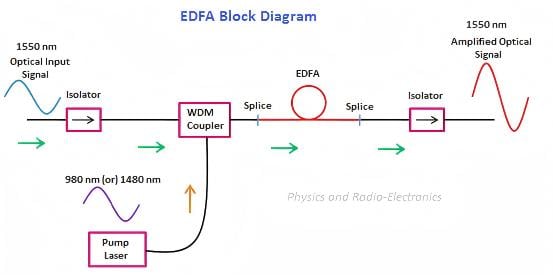
Principle: Specific rare-earth element ions (e.g., Erbium (Er), Ytterbium (Yb), Praseodymium (Pr), Thulium (Tm)) are doped into the fiber core. A pump laser source excites these ions to a higher energy level. When the signal light passes through, stimulated emission causes the excited ions to drop back to a lower energy level, amplifying the signal light.
-
Main Types:
-
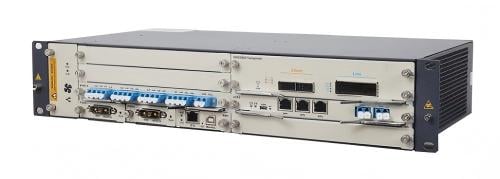
Erbium-Doped Fiber Amplifier (EDFA): The most widely used and mature fiber amplifier
-
-
-
-
Operating Bands: C-band (1525-1565 nm) and L-band (1565-1625 nm).
-
Characteristics: High gain, high output power, relatively low noise figure, mature technology, high reliability. It is the absolute mainstay of long-haul trunk networks, metropolitan area networks (MANs), and submarine cable systems.
-
-
-
-
Ytterbium-Doped Fiber Amplifier (YDFA):
-
Operating Band: Primarily in the 1μm band (approx. 1030-1180 nm).
-
Characteristics: Highly suitable for amplifying the seed sources of high-power fiber lasers and amplifiers. Extremely high output power (up to kilowatt level). Widely used in industrial processing (cutting, welding, marking), scientific research, medical fields, etc.
-
-
Thulium-Doped Fiber Amplifier (TDFA):
-
Operating Bands: S-band (1460-1530 nm) and 2μm band (approx. 1800-2100 nm).
-
Characteristics: S-band TDFAs can extend the usable bandwidth of C-band EDFAs. 2μm band TDFAs have important applications in biomedicine (e.g., surgery), LiDAR, mid-infrared light source generation, special material processing, and infrared countermeasures.
-
-
Praseodymium-Doped Fiber Amplifier (PDFA):
-
Operating Band: O-band (1310 nm window).
-
Characteristics: Primarily developed to address the amplification need at the zero-dispersion wavelength (1310 nm) of early deployed G.652 standard fiber. However, due to relatively low efficiency (requiring high-power pumping) and a higher noise figure, its application is less widespread than EDFA. With the shift of communication towards C/L bands and the development of Raman amplifiers, PDFA application scenarios have relatively decreased.
-
-
2. Raman Fiber Amplifier (RFA)
-
Principle: Based on the nonlinear effect of Stimulated Raman Scattering (SRS) in optical fiber. When intense pump light propagates through the fiber, its energy is transferred via optical phonons (lattice vibrations) to signal light at a longer wavelength than the pump light, thereby amplifying the signal.
-
Operating Band: The gain band is determined by the pump wavelength. Theoretically, amplification can be achieved across the entire low-loss window of the fiber (1270-1670 nm) with appropriate pump wavelengths. Commonly used in C-band and L-band as a supplement or alternative to EDFA.
-
Characteristics:
-
Distributed Amplification: Utilizes the transmission fiber itself as the gain medium. The signal is amplified as it propagates, reducing the impact of nonlinear effects and improving OSNR. This is its most significant advantage.
-
Flexible and Wide Gain Bandwidth: By using multiple pump sources at different wavelengths, a very flat and wide gain spectrum (exceeding 100 nm) can be synthesized.
-
Low Noise: The theoretical noise limit is lower than that of EDFA.
-
-
Disadvantages: Requires very high pump power (1-2 orders of magnitude higher than EDFA), relatively low pump efficiency, and a relatively complex system (requiring multiple pump lasers, pump combiners, etc.).
-
Applications: Primarily used in systems requiring ultra-long distance, ultra-high capacity transmission (e.g., submarine cables, ultra-long span terrestrial trunks). Often used in combination with EDFA (Hybrid EDFA/Raman) or to extend the amplification bandwidth.
3. Brillouin Fiber Amplifier (BFA)
-
Principle: Based on the nonlinear effect of Stimulated Brillouin Scattering (SBS) in optical fiber. Intense pump light generates an acoustic wave field (acoustic phonons) in the fiber. Signal light passing through this acoustic field is diffracted (similar to Bragg diffraction), generating Stokes light propagating in the opposite direction to the pump (the signal light is amplified).
-
Operating Band: Extremely narrow gain bandwidth (~10-100 MHz range), with the gain peak occurring at a wavelength approximately 0.08 nm (11 GHz) lower than the pump wavelength.
-
Characteristics:
-
Very High Gain: Gain is extremely large near the resonance point.
-
Extremely Narrow Bandwidth: This makes it unsuitable as a conventional power amplifier or line amplifier in optical communication systems.
-
-
Applications: Primarily used for narrowband optical filtering, optical sensing (distributed Brillouin sensing), microwave photonics, generating slow light effects, and certain specialized signal processing applications.
4. Semiconductor Optical Amplifier (SOA)
-
Principle: Essentially a semiconductor laser diode without an optical cavity or with suppressed end-facet reflectivity. Current injection creates population inversion in the semiconductor material (typically InGaAsP). The signal light is amplified as it passes through the active region.
-
Operating Band: Depends on the bandgap of the semiconductor material; can cover a range from around 800 nm to over 1600 nm.
-
Characteristics:
-
Small Size, Easy Integration: Compact structure, easily integrated with other photonic integrated circuits (PICs) or electronic devices.
-
Relatively Wide Gain Bandwidth: Can reach several tens of nanometers.
-
Electrically Pumped: Relatively simple driving mechanism.
-
-
Disadvantages: Higher noise figure, gain sensitive to polarization (requires polarization-independent design), significant nonlinear crosstalk, output power typically lower than doped fiber amplifiers.
-
Applications: Primarily used at optical signal processing nodes for functions like optical switching, wavelength conversion, signal regeneration, and optical computing. Also used as pre-amplifiers or power amplifiers in access networks, metropolitan area networks, and other cost- and size-sensitive applications where extreme performance demands are not critical. Plays an important role in integrated photonics.
Fiber Optic Amplifier FAQS
Q: What is a fiber optic amplifier?
A: A fiber optic amplifier is an active optical device that amplifies optical signals transmitted through a fiber optic cable, without the need for electrical-to-optical conversion.
Q: What are the main types of fiber optic amplifiers?
A: The two most common types of fiber optic amplifiers are the Erbium-Doped Fiber Amplifier (EDFA) and the Raman Fiber Amplifier (RFA).
Q: What are the key differences between EDFA and Raman fiber amplifiers?
A: EDFAs rely on doped fibers and discrete pump lasers, while Raman amplifiers use the inherent properties of the fiber itself and distribute the pump power along the fiber length.
Q: What are the typical operating wavelengths and gain characteristics of fiber optic amplifiers?
A: EDFAs typically operate in the 1550nm wavelength region, while Raman amplifiers can operate across a wider range of wavelengths. The gain provided by these amplifiers can range from tens of decibels to over 40dB.
Q: How do fiber optic amplifiers improve the performance of fiber optic communication systems?
A: Fiber optic amplifiers enable longer transmission distances, higher data rates, and improved signal-to-noise ratios by compensating for the signal attenuation in optical fibers.
Conclusion
In summary, fiber optic amplifiers, particularly the Erbium-Doped Fiber Amplifier (EDFA), with their revolutionary capability for all-optical signal regeneration, have completely overcome the rate and distance limitations inherent in traditional optical-electrical conversion. As the undisputed cornerstone of modern optical communication networks, by amplifying signals directly within the optical domain, they ensure the high-speed, high-capacity, ultra-long-distance, low-loss transmission of information across vast fiber optic networks. It is their stable and efficient performance that underpins the backbone of today's global information society and continues to provide the crucial foundational support for the evolution of next-generation communication technologies. Fiber-Mart's Fiber amplifiers are not only the pillar of optical communications but also the core driving force behind its continuous advancement. Their foundational status is set to remain unshaken in the future.






No comments have been posted yet.