


.webp)


How Fiber Optic Links Are Reshaping the Future of FPV Drones
Amidst the smoke of the Russia-Ukraine battlefield, a fiber optic cable thinner than a human hair has quietly changed the rules of warfare. It enables drones to fly stably under intense electromagnetic interference (EMI) and transmit high-definition video back to the ground station in real-time.
In 2024, Russian forces deployed fiber optic FPV drones on the front lines for the first time, successfully carrying out precision strikes against Ukrainian armored targets. These drones transmit data through an ultra-thin optical cable, achieving "absolute immunity" to traditional electromagnetic jamming.

It's not just the military domain; fiber optic drones are also rapidly developing in civilian applications. A single optical fiber with a diameter of 0.5 mm and a length of 5 kilometers may weigh only about 60 grams, yet it can transmit data streams far exceeding the bandwidth of radio frequencies.
What is Fiber Optic UAV Drone?
A fiber optic drone is an Unmanned Aerial Vehicle (UAV) system that utilizes a fiber optic cable for control and data transmission. It establishes a physical, wired connection channel between the drone and the ground station, replacing traditional wireless radio frequency (RF) communication.
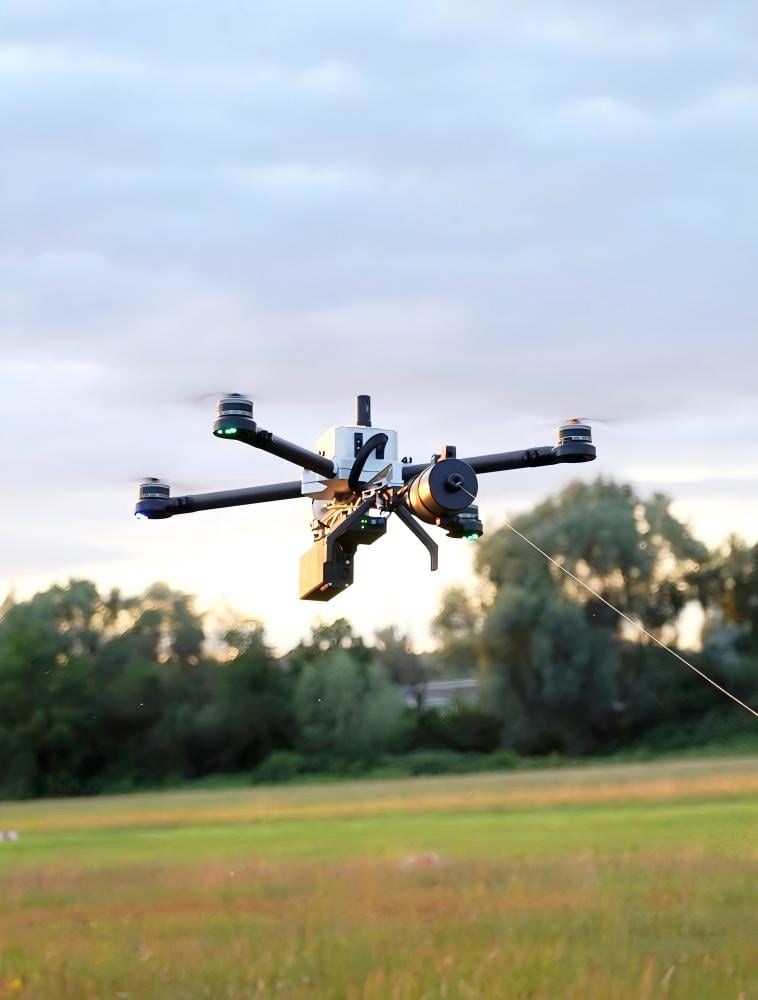
This technology fundamentally reconstructs the drone's communication link by leveraging the high bandwidth and interference-resistant properties of optical signals. Although limited by the physical tether, fiber optic drones demonstrate irreplaceable advantages in specific scenarios such as high-EMI environments and covert operations.
In practical applications, fiber optic drones can address specific challenges by combining with traditional radio systems. For example, radio can be used to provide flexible connectivity for end devices, while the fiber optic cable serves as the backbone for transmitting high-capacity data.
Why Choose Fiber Optics? The Unique Advantages of Optical Communication in UAV FPV Drone
Compared to traditional radio-controlled drones, fiber optic drones hold significant advantages in the communications realm. The very nature of data transmission via light signals in fiber optics means it fundamentally avoids electromagnetic interference issues. The light signals travel within the enclosed channel of the fiber, unaffected by external electromagnetic waves.
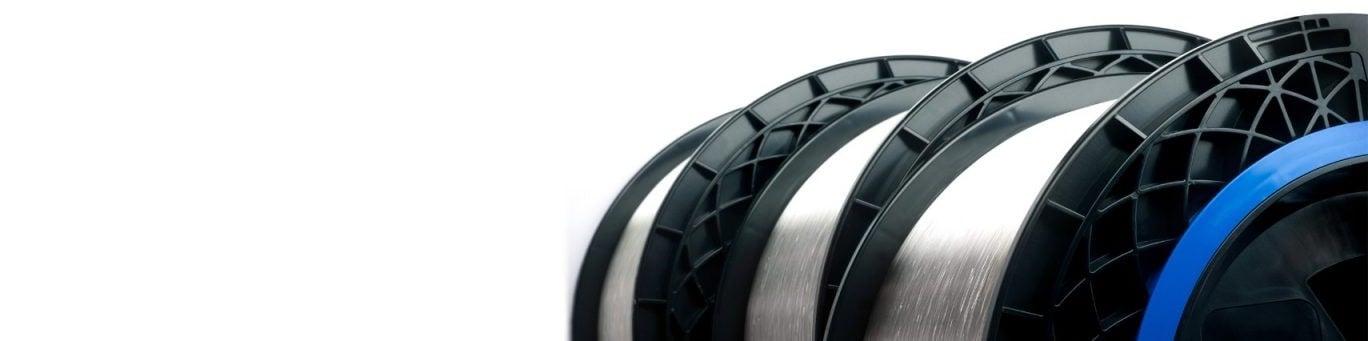
This allows fiber optic drones to maintain reliable communication in areas with strong EMI, such as battlefields, high-voltage power towers, and radar stations. In actual tests, fiber optic drones have survived for nearly 12 hours in intense EMI environments, far outperforming conventional drones.
Comparison: Fiber Optic Drones vs. Traditional Radio Drones:
| Comparison Dimension | Fiber Optic Drone | Traditional Radio Drone |
|---|---|---|
| Anti-Jamming | Completely immune to EMI | Susceptible to EMI |
| Data Bandwidth | Up to 10 Gbps, supports real-time HD video | Limited by frequency band & modulation, typically lower |
| Stealth | Signal contained, extremely difficult to detect | RF signals easily detected and located |
| Latency | Extremely low and stable, typically <1 ms | Affected by environment & distance, variable |
| Range | Limited by fiber length, typically 5-40 km | Affected by power & environment, can reach tens of km |
Another core advantage of fiber optic communication is its extremely high bandwidth and data transmission stability. Fiber can transmit multiple data streams simultaneously, providing clear, smooth video feeds, allowing operators to discern target details clearly.
Fiber optics ensure precise control with low data latency, which is crucial for FPV flying and precision strikes requiring real-time response.
System Components and Working Principle of Fiber Optic Drones
A fiber optic drone system consists of three main parts: the airborne unit, the ground control unit, and the fiber optic link.
The airborne unit includes the onboard computer system and the airborne (sky-side) photoelectric conversion module. The computer system aggregates drone status and sensor data and processes it in real-time via intelligent algorithms. The photoelectric conversion module performs the critical task of converting electrical signals to optical signals (E/O) and vice versa (O/E).
The ground control unit includes the ground-side photoelectric conversion module and the ground station. The ground-side module corresponds to the airborne module, handling bidirectional signal conversion. The ground station displays data transmitted from the drone and sends control commands.
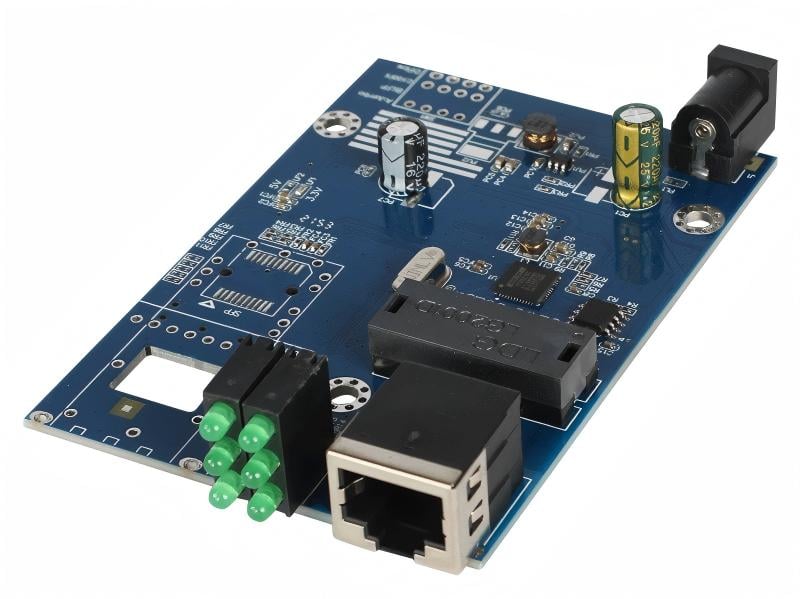
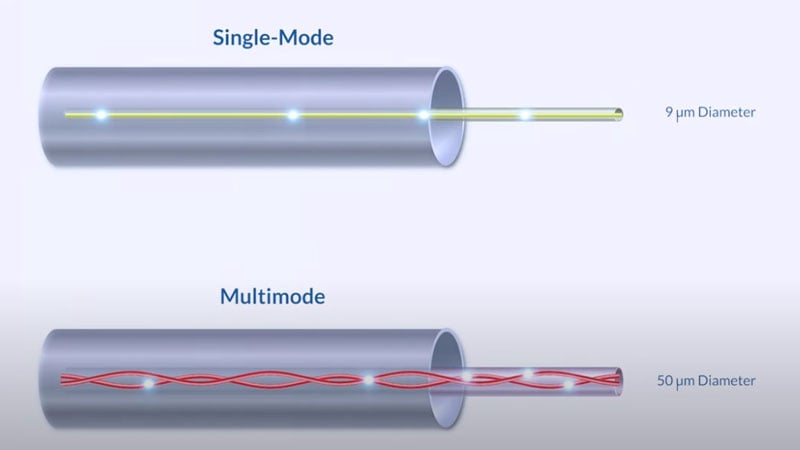
The fiber optic link typically uses single-mode fiber (long-distance) or multi-mode fiber (short-distance), employing Wavelength-Division Multiplexing (WDM) or Time-Division Multiplexing (TDM) for bidirectional communication.
The system's working principle forms a complete, real-time bidirectional loop: Downlink control signals from the ground station are converted and transmitted via fiber to the drone. The uplink data channel transmits the drone's multi-dimensional status data in reverse. This all-fiber architecture effectively avoids the vulnerability of wireless signals to interference.
Fiber UAV Drone Hardware Deployment: From Module Selection to System Connection
The first step in deploying a fiber optic drone system is selecting the appropriate hardware components. The photoelectric conversion modules are the system's "translators." The ground-side module converts the Remote Controller's (RC) electrical signals to optical, and the airborne module performs the reverse process. When selecting modules, ensure their interface voltage levels are compatible with the flight controller's (FC) serial port.
Fiber optic cable selection depends on distance: Single-mode fiber has a thin core and very long transmission range (10 km+). Multi-mode fiber is lower cost but typically limited to a few kilometers.
The actual hardware connection follows a specific sequence:
Remote Controller → Ground-side Photoelectric Module → Fiber Optic Cable → Airborne Photoelectric Module → Flight Controller.
A critical step is ensuring that any wireless video/telemetry modules on the drone are disabled to prevent conflict between wireless and fiber optic signals. For factory-paired systems, access the device configuration interface, delete the ESSID parameter, save, and reboot the device.
Fiber Optic UAV Drone Software Configuration and Flight Control
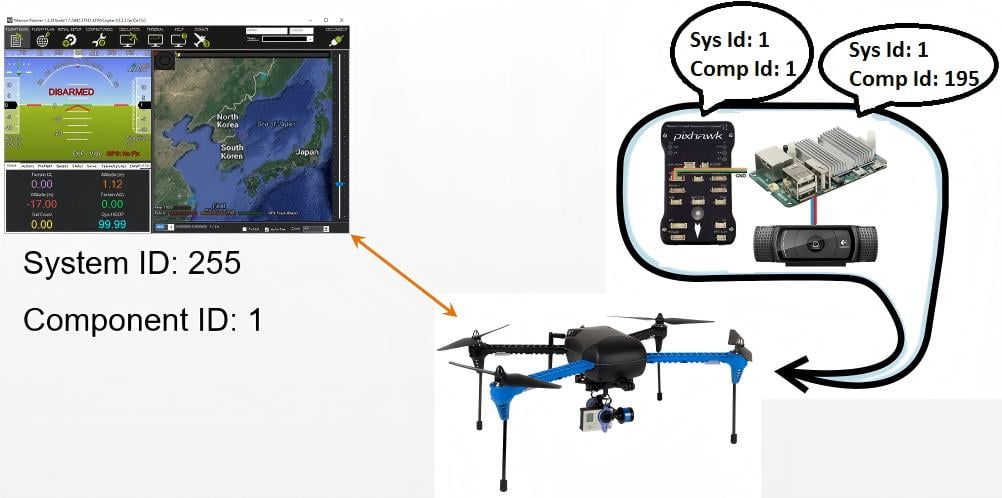
After hardware connection, detailed software configuration is required. First, in the flight controller parameters, locate the serial port connected to the fiber optic module and set its protocol to the required data protocol, such as MAVLink. MAVLink is the mainstream drone communication protocol for communicating with the ground station, transmitting flight status, commands, and telemetry data.
Simultaneously, set the baud rate to match the fiber optic module. For MAVLink, 115200 or higher (e.g., 921600) is typically used. Fiber modules themselves often support very high baud rates, with potential bottlenecks lying in the flight controller's data processing capability.
Fiber management and payout are the biggest challenges in flight operations. The drone must carry a fiber spooling mechanism (winch) that synchronously releases the fiber during flight.
This mechanism must payout smoothly and incorporate tension control to prevent the fiber from breaking due to pulling or tangling due to slack.
In practice, for absolute safety, high-end or military systems employ a redundant dual-link design (fiber + radio). The fiber link serves as the primary connection. If the fiber breaks, the system immediately and automatically switches to the wireless backup link, ensuring the drone remains controllable.
UAV Drone Technical Challenges and Development Trends
Despite their significant advantages, fiber optic drones face several technical challenges. The most prominent is limited mobility—the drone's movement is strictly confined to the length of the fiber tether.
Fiber weight is also a constraint: Taking a 0.5 mm diameter fiber as an example, 5 km of fiber plus its protective sheath can weigh up to 2.5 kg, directly impacting the drone's payload capacity.
In complex environments like jungles or between urban buildings, the fiber is highly susceptible to snagging and breaking, imposing stringent requirements on flight path planning. Experimental data indicates that when a fiber optic drone turns at an angle exceeding 120 degrees, the fiber is extremely prone to breaking, increasing the risk of loss of control.
Future development of fiber optic drones will focus on intelligence, lightweighting, and multi-functionality. AI will optimize flight control and mission management, using deep learning algorithms to predict wind speed changes and adjust hovering parameters.
New materials like carbon nanotube composites could reduce the weight of fiber per 100 meters to 0.1 kg. 6G networks are expected to increase data rates to 100 Gbps and reduce latency to 0.5 ms, supporting ultra-high-definition video transmission.
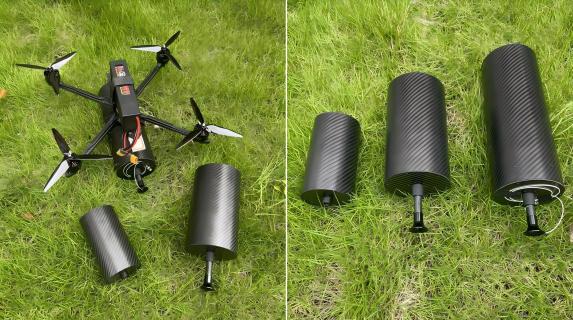
A Ukrainian manufacturer has tested a fiber-optic FPV drone capable of flying a 20-kilometer route and simulating approaching a target, while earlier models could only fly 5 to 10 kilometers. On the battlefield, fiber-optic drones can launch covert attacks from low-altitude, tricky angles such as building windows and armored vehicle ventilation openings, carrying out "window-breaking" and "hole-drilling" strikes.
The fiber trailing behind these drones typically has a diameter smaller than 0.5 mm, making it extremely difficult to spot in the air. When the operator cuts that hair-thin connection, the drone plummets to the ground like a kite with its string severed. This slender optical cable is both its lifeline and its single point of failure.





No comments have been posted yet.