


.webp)


In the realm of optical connectivity, fiber jumper cables and fiber patch cables are two indispensable components that play pivotal roles in ensuring seamless data transmission across various network environments. While these terms are often used interchangeably in casual conversations, they possess distinct characteristics, design nuances, and application scopes that set them apart.
Core Definitions: Clarifying the Fundamentals
What is a Fiber Jumper Cable?
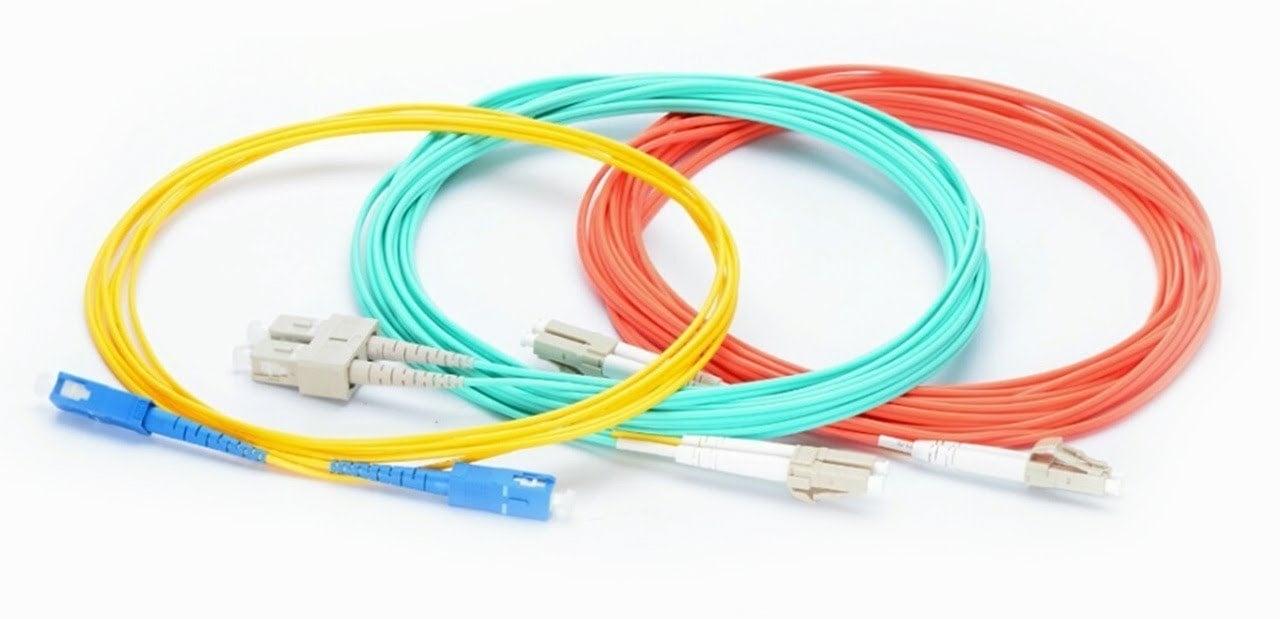
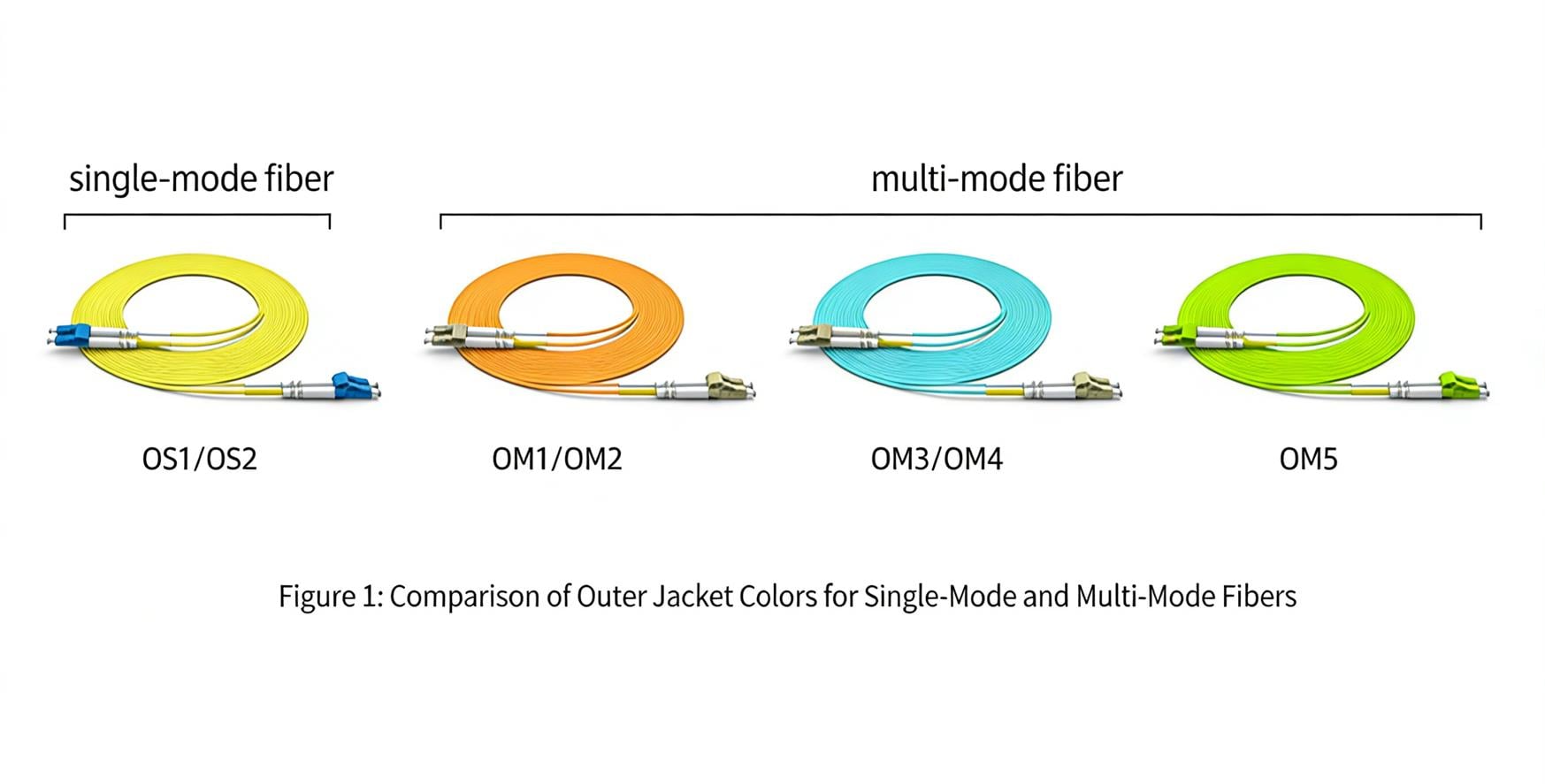
A fiber jumper cable, also known as a fiber jumper assembly, is a precision-engineered passive optical component designed to establish reliable connections between critical network endpoints. It typically features factory-terminated, industry-standard connectors (such as LC, SC, FC, and E2000) on both ends, ensuring consistent performance and compatibility with a wide range of networking equipment. Fiber jumpers are optimized for minimal signal loss and maximum signal integrity, making them ideal for high-speed, demanding applications where transmission quality is non-negotiable. They are available in both single-mode (9/125μm) and multimode (OM1/OM2/OM3/OM4/OM5) configurations, as well as simplex (for unidirectional communication) and duplex (for bidirectional communication) setups to accommodate diverse network requirements.
What is a Fiber Patch Cable?
A fiber patch cable, often referred to as a fiber patchcord, is a versatile optical connectivity solution designed for linking network equipment within localized environments. Similar to fiber jumpers, it comes with terminated connectors on both ends, but offers a broader range of connector options, including LC, SC, ST, FC, MTRJ, MU, SMA, and E2000, with UPC or APC polishing for enhanced performance. Fiber patch cables are available in PVC (Polyvinyl Chloride) or LSZH (Low Smoke Zero Halogen) jacketing, with plenum-rated (OFNP) options for safe installations in air-handling spaces. They support both single-mode (long-distance transmission) and multimode (short-distance transmission) operations, with multimode variants including standard (OM1/OM2) and laser-optimized (OM3/OM4/OM5) grades capable of handling bandwidths up to 100 Gbps and beyond. A key distinguishing feature of fiber patch cables is their customizable length, allowing them to be tailored to specific installation needs, and each unit undergoes 100% optical testing to ensure optimal performance before deployment.
Key Differences: A Detailed Comparison
Connector Options and Compatibility
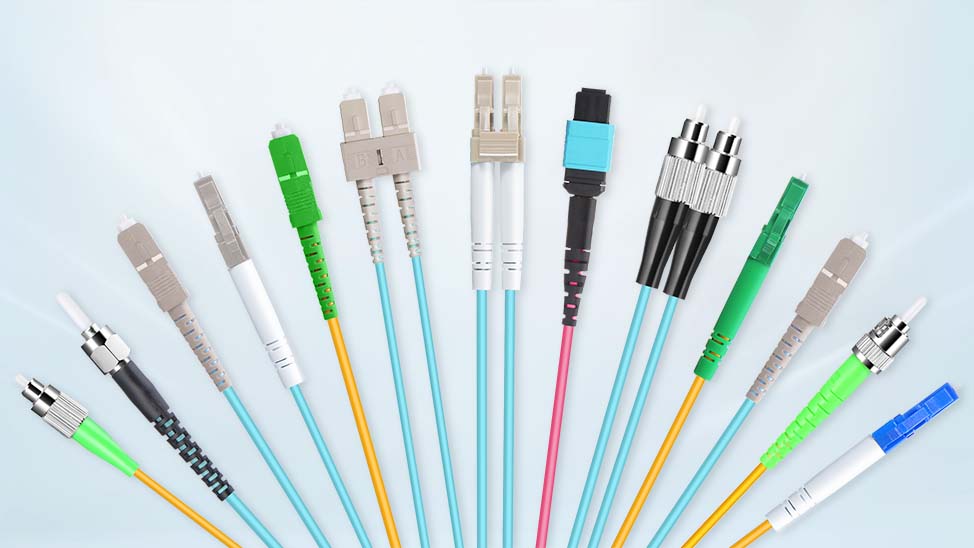
While both fiber jumpers and patch cables support industry-standard connectors, fiber patch cables offer a more extensive selection. Fiber jumpers are primarily equipped with LC, SC, FC, and E2000 connectors, focusing on universal compatibility with core networking equipment in data centers and telecommunication systems. In contrast, fiber patch cables expand the connector range to include MTRJ, MU, and SMA, making them suitable for specialized applications such as CATV systems, test and measurement setups, and legacy equipment integration. Additionally, fiber patch cables offer UPC or APC polishing options, where APC (Angled Physical Contact) connectors reduce back reflection, making them ideal for high-frequency applications like CATV and video transmission. This broader connector versatility gives fiber patch cables an edge in environments requiring connections to diverse or specialized equipment.
Design and Construction
Fiber jumpers are engineered with a focus on precision and robustness for critical connections. They feature tight-buffered cable construction with a consistent outer diameter (typically 2.0mm) and robust jacketing options, including standard, armored, and bend-insensitive designs, to withstand harsh operating conditions. The ferrules in fiber jumpers are precision-manufactured to ensure exact core alignment, minimizing insertion loss (≤0.25dB) and maximizing return loss (≥50dB). Fiber patch cables, on the other hand, offer more flexibility in cable design, with varying outer diameters (0.9/1.6/2.0/3.0/3.6mm) to suit different installation spaces. Their jacketing options (PVC/LSZH/OFNP) prioritize safety and environmental adaptability, with LSZH jacketing minimizing toxic smoke and corrosive gas emission in case of fire— a crucial feature for indoor installations like office buildings and data centers.
Transmission Capabilities and Distance
The transmission capabilities of fiber jumpers and patch cables are closely tied to their fiber mode configurations, but their optimized use cases differ. Single-mode fiber jumpers are designed for long-haul transmission, leveraging a narrow core (9μm) to reduce modal dispersion, enabling signals to travel tens of kilometers with low attenuation (0.4dB/km at 1310nm and 0.3dB/km at 1550nm). Multimode fiber jumpers, while supporting high bandwidth, are typically used for shorter distances in data center environments. Fiber patch cables, on the other hand, are versatile in both short and long-distance applications but are most commonly deployed for short-range connections. Single-mode patch cables are used in telecommunications backbones and FTTx deployments, while multimode patch cables (especially OM3/OM4/OM5 grades) excel in data centers and LAN backbones, supporting high data rates over distances up to 550m (for 10G over OM4). The key difference lies in optimization: fiber jumpers are fine-tuned for critical long-haul or high-speed links, while patch cables are designed for flexible, localized connectivity.
Customization and Application Flexibility
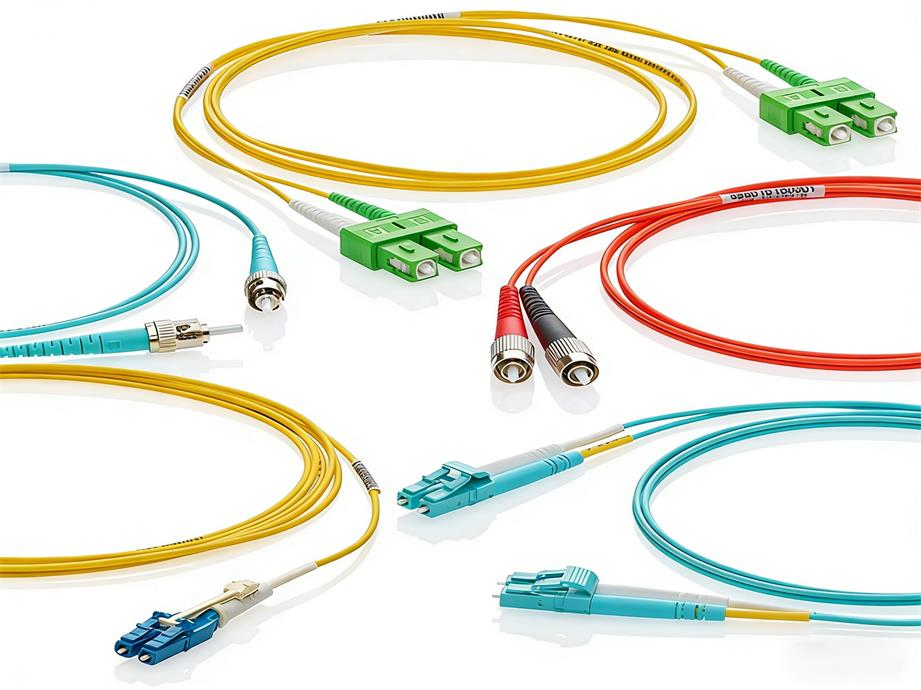
Fiber patch cables offer a significant advantage in customization, with the ability to be tailored to any length, making them ideal for installations where precise cable lengths are required to minimize excess cabling and improve airflow in data centers or office spaces. Each fiber patch cable comes with a 100% individual testing report, ensuring zero failure and consistent performance. Fiber jumpers, while available in standard lengths, are less commonly customized, as they are designed for standardized connections between network components. In terms of application flexibility, fiber patch cables are more adaptable to diverse environments, including data centers, LANs, CATV systems, and test setups. Fiber jumpers, however, are specialized for critical applications such as data center server-to-switch connections, telecommunication central office cross-connections, and enterprise network backbones, where reliability and signal integrity are paramount.
Practical Applications: Choosing the Right Cable for Your Needs
Ideal Scenarios for Fiber Jumper Cables
Fiber jumper cables are the preferred choice for mission-critical applications that demand uncompromised signal integrity and reliability. Key use cases include:
● Data center interconnections: Linking servers, switches, and storage area networks (SAN) in high-speed data center environments, where minimal signal loss is essential for supporting large data transfers.
● Telecommunication systems: Establishing cross-connections in central offices and equipment rooms, enabling long-haul transmission between network hubs.
● Enterprise network backbones: Supporting horizontal cabling in large office buildings or campus networks, ensuring consistent performance across extended distances.
● Fiber to the Home (FTTH) installations: Terminating distribution points in residential or commercial areas, delivering high-speed internet and multimedia services.
● Test and measurement setups: Serving as reference cables in laboratory environments, ensuring accurate testing of optical equipment and components.
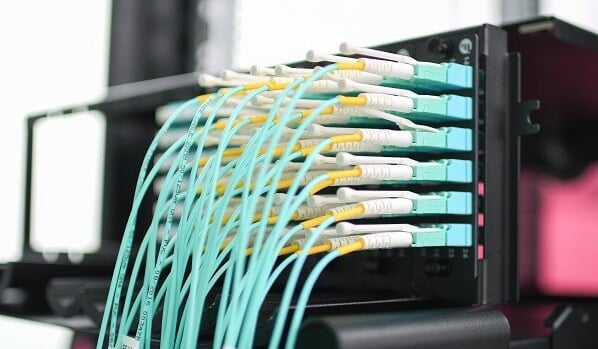
Ideal Scenarios for Fiber Patch Cables
Fiber patch cables are versatile and well-suited for localized, flexible connectivity needs. Common applications include:
● Data center rack-to-rack connections: Patching equipment within racks or across rows, where customizable lengths help optimize cable management.
● Local Area Network (LAN) backbones: Connecting telecommunications closets and distribution points in small to medium-sized office buildings.
● CATV and video transmission: Delivering broadcast signals in headend facilities and distribution networks, often using single-mode patch cables with APC connectors to reduce signal interference.
● Office and enterprise connectivity: Linking desktop computers, routers, and switches in office environments, where safety (LSZH jacketing) and flexibility are key considerations.
● Test and measurement: Acting as reliable cables for on-site maintenance and field testing of optical networks, thanks to their robust construction and consistent performance.
Summary
While fiber jumper cables and fiber patch cables share similarities in basic structure (terminated connectors, single-mode/multimode options), their differences in design, connector options, transmission optimization, and customization make them suited for distinct applications. Fiber jumper cables are the go-to choice for critical, high-speed, or long-haul connections where signal integrity and reliability are non-negotiable. Fiber patch cables, with their extensive connector options, customization flexibility, and safety features, are ideal for localized, adaptable connectivity in diverse environments.When selecting between the two, it is essential to consider your specific requirements: distance of transmission, network speed, equipment compatibility, installation environment, and customization needs.





No comments have been posted yet.