


.webp)


In today's interconnected world, UTP cables have become an indispensable part of our daily lives. Whether for office network connections, home internet access, or telephone system wiring, these cables silently transmit our data.
But have you ever wondered how these seemingly ordinary cables work, and why they are so widely used around the globe?
What is a UTP Cable?
Unshielded Twisted Pair (UTP) is a type of data transmission cable consisting of four pairs of differently colored wires twisted together. Each pair of same-colored wires carries electrical pulses in both directions.
This design utilizes the principle of electromagnetic cancellation to shield against electromagnetic interference. UTP is widely used in Ethernet (LAN) and telephone lines.
The concept of twisted pairs is not new. In fact, unshielded twisted pair cables were first used in 1881 in Bell's telephone system.
By 1900, the U.S. telephone line network was also primarily composed of UTP, owned by telephone companies. Since then, UTP technology has continuously evolved, becoming the preferred choice for network cabling.
How Does UTP Cable Work?
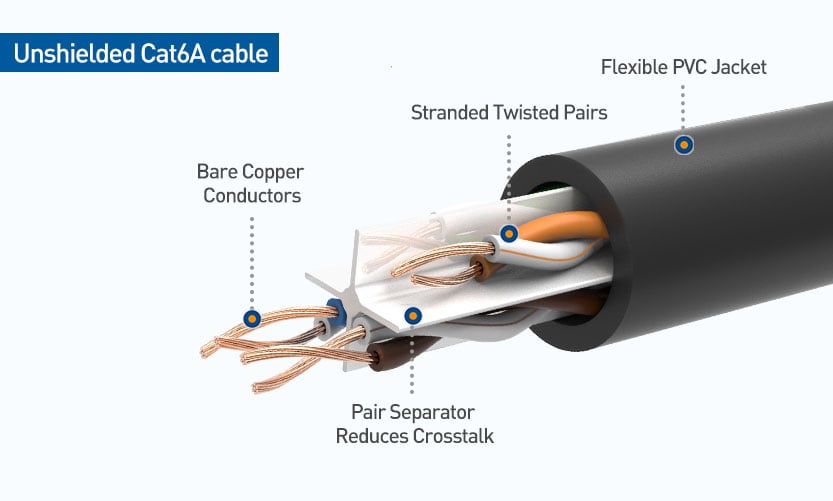
The working principle of UTP cables is based on a simple concept: twisting. Each pair of wires is twisted together. This twisted-pair design causes the electromagnetic fields generated by the electrical pulses during transmission to cancel each other out, thereby minimizing electromagnetic radiation and the effects of external electromagnetic interference.
When an electrical signal passes through a pair of wires, it creates an electromagnetic field. Without twisting, this field could interfere with signals in adjacent wires (a phenomenon called "crosstalk") or be susceptible to external electromagnetic fields.
By twisting the two wires together, the amount of interference each wire experiences is roughly equal, thus canceling each other out.
The noise cancellation capability of twisted pairs is directly dependent on the number of twists per unit length. Generally, a tighter twist (more twists per meter) provides better performance, which is why higher-performance cable categories (like Cat6 vs. Cat5e) typically have tighter twists.
UTP Cable Structure and Composition
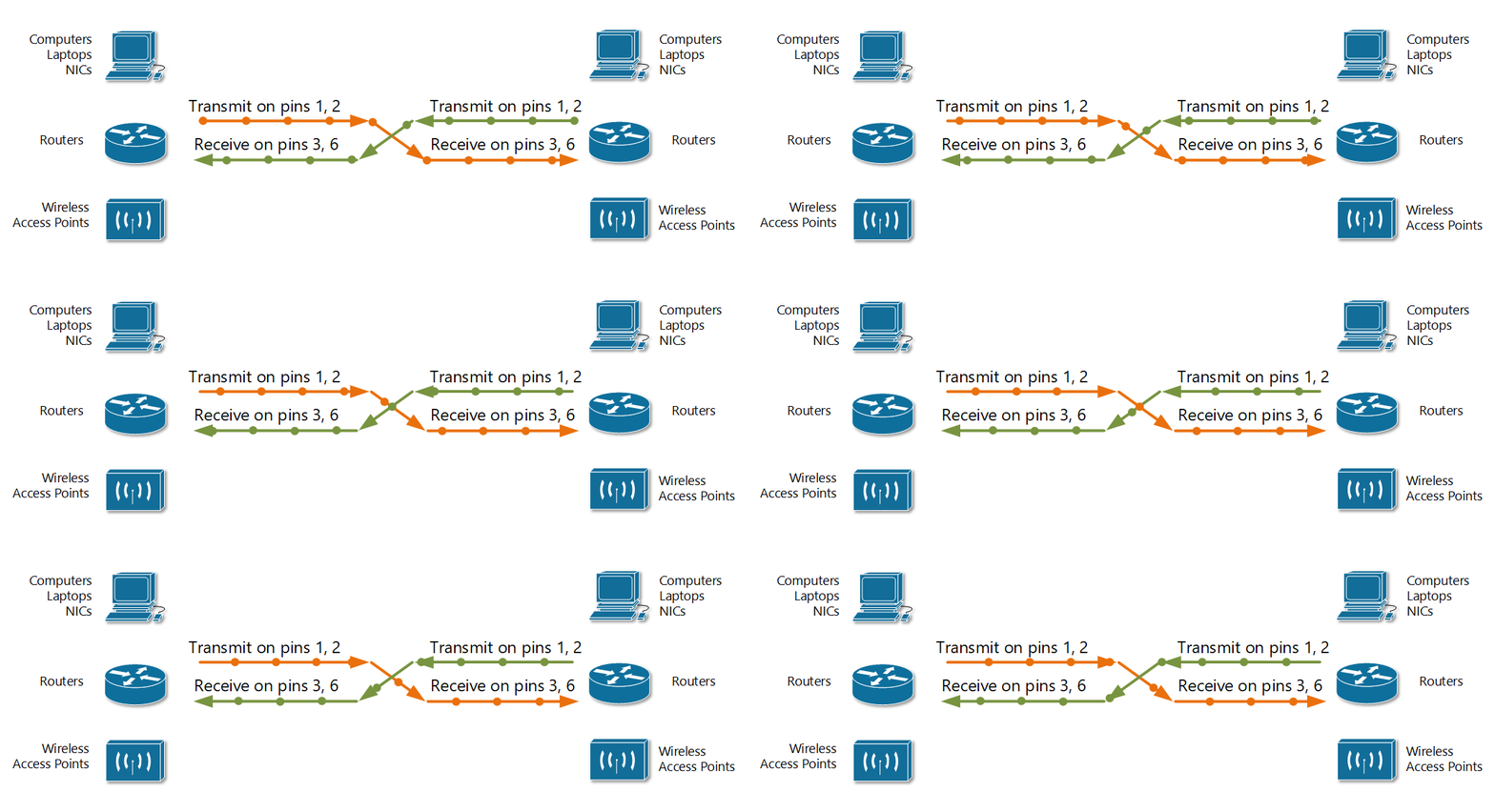
UTP cables consist of the following basic components:
-
Conductor: Typically uses bare copper solid or stranded conductors, usually 24 AWG (diameter approx. 0.51mm)
-
Insulation: Each copper wire is coated with an insulating material like High-Density Polyethylene (HDPE), providing color coding for identification.
-
Twisted Pairs: The 8 insulated wires are divided into 4 pairs, each twisted together with a different twist rate (lay length).
-
Jacket: The outermost layer is a sheath made of materials like PVC or LSZH (Low Smoke Zero Halogen), providing protection and durability.
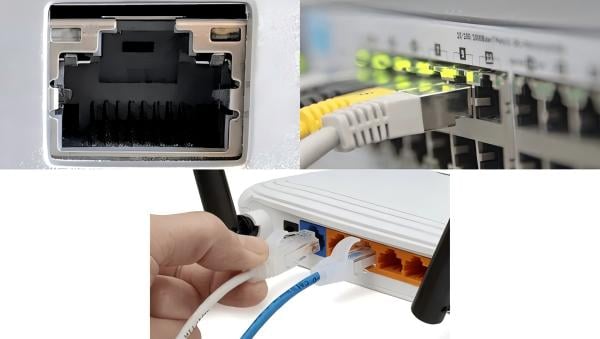
A standard UTP cable contains 4 twisted pairs (8 wires total), but sometimes only 2 pairs are used for telephone systems. The cable ends are typically terminated with RJ-45 connectors for plugging into compatible communication ports.
UTP Cable Categories and Standards
Based on performance specifications, UTP cables are divided into different categories, each supporting different frequencies and data rates:
| Category | Transmission Frequency | Typical Application | Notes |
|---|---|---|---|
| Cat3 | 16 MHz | 10BASE-T Ethernet | Less common now |
| Cat5 | 100 MHz | 100BASE-TX Ethernet | Gradually replaced by Cat5e |
| Cat5e | 100 MHz | 1000BASE-T Gigabit Ethernet | Most common office network cable |
| Cat6 | 250 MHz | 1000BASE-T, 10GBASE-T | Higher performance applications |
| Cat6A | 500 MHz | 10GBASE-T | 10G Ethernet over longer distances |
| Cat7 | 600 MHz | 10GBASE-T | Uses shielded structure |
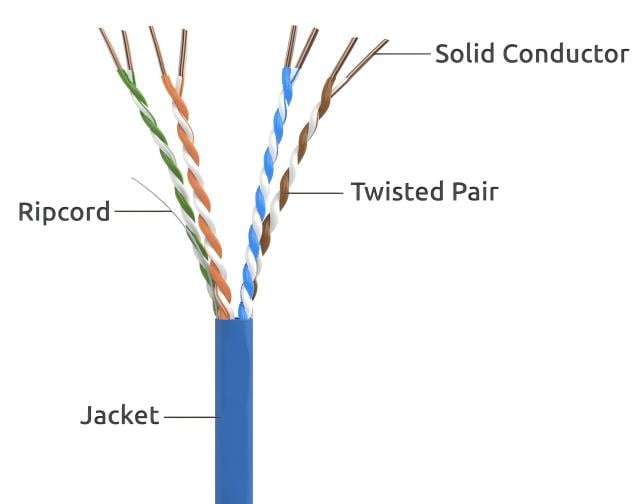
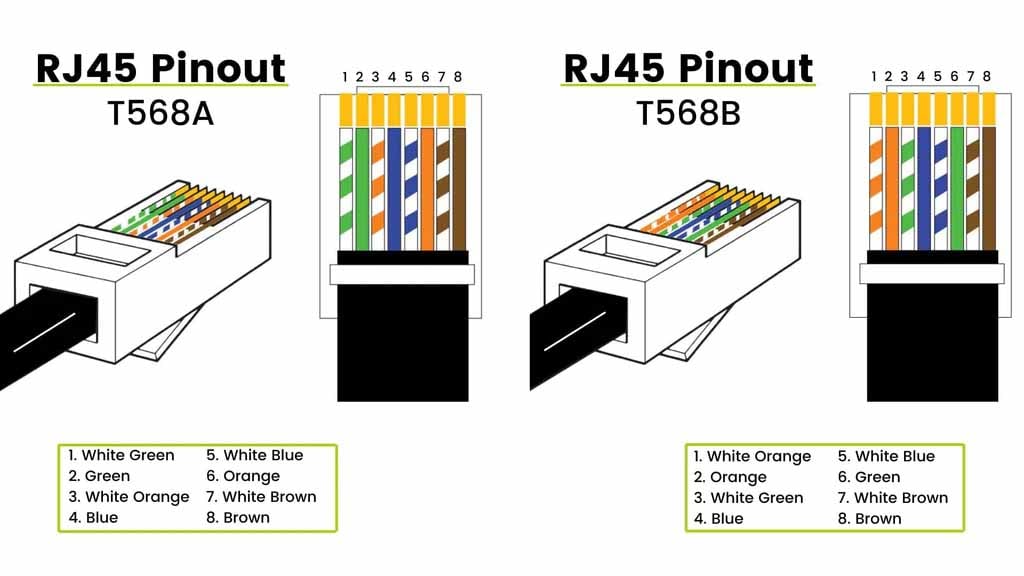
The TIA/EIA wiring standards define two pin/pair assignments for twisted-pair cables: T568A and T568B:
-
T568A: Green/White--1, Green--2, Orange/White--3, Blue--4, Blue/White--5, Orange--6, Brown/White--7, Brown--8
-
T568B: Orange/White--1, Orange--2, Green/White--3, Blue--4, Blue/White--5, Green--6, Brown/White--7, Brown--8
In practice, T568B is more common, but either will work correctly as long as the same standard is used on both ends.
UTP Cable Advantages and Limitations
Advantages
UTP cables are so popular primarily due to their numerous advantages:
-
No shielding sheath, smaller diameter, saves space
-
Lightweight, flexible, easy to install
-
Minimizes or eliminates crosstalk through twisted-pair design
-
Flame retardant, compliant with safety standards
-
Independent and flexible, suitable for structured cabling systems
-
Relatively inexpensive, cost-effective
Limitations
Of course, UTP cables also have their limitations:
-
Poor resistance to external electromagnetic interference, may be affected in high-interference environments
-
Tends to radiate signals, lower security, not suitable for highly secure applications
-
Limited transmission distance, maximum segment length is 100 meters, requires repeaters beyond this distance
-
Bandwidth limitations, supports lower bandwidth compared to fiber optics
UTP Cable Applications
UTP cables are widely used in various environments:
-
Ethernet Networks: From legacy 10Mbps networks to high-speed 10Gbps networks
-
Telephone Systems: Connecting telephone equipment and lines
-
Video Transmission: Supports certain types of video signal transmission
-
Building Automation Systems: Used for control systems and device connections
How to Choose High-Quality UTP Cable?
When selecting UTP cable, consider the following factors:
-
Category Requirements: Choose the appropriate category based on network speed requirements (Cat5e and Cat6 are the most common choices currently).
-
Conductor Material: Bare copper conductors offer the best performance.
-
Compliance with Standards: Ensure the cable complies with TIA/EIA or ISO/IEC standards.
-
Jacket Type: Choose PVC (general purpose) or LSZH (Low Smoke Zero Halogen, for areas with poor ventilation) based on the installation environment.
-
Brand Reputation: Choose a reputable manufacturer.
At Fiber-mart.com, we offer a variety of high-quality UTP cables, from Cat5e to Cat6A, to meet the needs of different application scenarios. Our cables fully comply with TIA/EIA and ISO/IEC standards, ensuring optimal performance and reliability.
UTP Cable Installation Key Points
Correct installation is crucial for UTP cable performance:
-
Adhere to Maximum Length Limit: The maximum transmission distance for a twisted-pair segment is 100 meters. For longer distances, repeaters can be installed between segments; up to 4 repeaters can connect 5 segments, allowing a maximum transmission distance of 500 meters.
-
Avoid Excessive Bending: While UTP cable is flexible, excessive bending can damage the internal conductors.
-
Keep Away from Interference Sources: Try to avoid running parallel to power lines. If unavoidable, maintain a distance of at least 30 cm (approx. 12 inches).
-
Termination Quality: Ensure RJ-45 connectors are terminated correctly. When tested with a cable tester, all indicator lights should sequence green.
Conclusion
From its first use in 1881 to the present day, UTP cable has come a long way. Its simplicity, reliability, and cost-effectiveness make it the go-to choice for network cabling. Understanding how UTP cables work, their types, and applications will help you choose the right cable for your specific needs and ensure optimal network performance.
Whether you are deploying a home network, office wiring, or a data center, UTP cable will likely continue to play a key role in connecting our digital world.
If you need help selecting the right UTP cable for your project, visit Fiber-mart.com. Our expert team is ready to assist you. We offer a wide range of high-quality UTP cables, connectors, and accessories to meet all your networking needs.
Answers to Your UTP Cable FAQs
What Is UTP, and How Does It Work?
UTP stands for Unshielded Twisted Pair, a type of cable that consists of pairs of insulated copper wires twisted together. The twisting of the pairs helps to reduce electromagnetic interference (EMI) and crosstalk, ensuring more reliable data transmission. UTP cables are the go-to choice for networking due to their cost-effectiveness, flexibility, and ease of installation. Learn more: What Is UTP? UTP Cable Introduction
What Is the Maximum Distance UTP Cables Can Cover?
The maximum distance UTP cables can cover depends on the category of the cable and the data rate. Generally, for Ethernet applications, Cat5e and Cat6 can reach up to 328 feet or 100 meters. Cat6a and Cat7 can also cover 328 feet or 100 meters but at higher data rates, making them suitable for demanding applications.
What Connector Is Used for Twisted Pair Cable?
The most common connector used for twisted pair cables, including UTP cables, is the RJ45 (Registered Jack 45) connector. The RJ45 connector has become the standard for Ethernet networking and is widely used for terminating UTP cables. It is an eight-pin connector that is modular and easy to use, featuring gold-plated pins for reliable electrical contact.
Different Categories of UTP Cables, How to Classify?
UTP cables come in various categories, each designed to support different data rates and applications. The most common categories are Cat5e, Cat6, Cat6a, and Cat7. Cat5e supports speeds up to 1Gbps and is suitable for basic Ethernet applications. Cat6 can handle 1Gbps up to 100 meters and 10 Gbps up to 55 meters. Cat6a supports 10Gbps up to 100 meters, and Cat7 takes it a step further with 10Gbps up to 100 meters and 40Gbps up to 50 meters.
Stranded vs Solid UTP Cables, Which to Buy?
Stranded and solid UTP cables serve different purposes, and the choice between them depends on the specific requirements of your networking environment.
- Choose Stranded UTP Cables If: You need flexibility, frequent movement, and ease of termination. Stranded cables are suitable for patch cords and situations where the cable needs to bend or flex regularly.
- Choose Solid UTP Cables If: You prioritize performance in permanent installations where the cable is not frequently moved. Solid cables are cost-effective and offer reliable electrical performance for structured cabling systems and in-wall wiring.
How to Terminate UTP Cables?
Terminating UTP cables involves attaching connectors to the ends of the cables to connect them to networking devices. Common methods include using RJ45 connectors for Ethernet connections. Termination can be done using punch-down blocks or modular connectors, depending on the installation requirements. Proper termination is crucial for maintaining signal integrity and ensuring a reliable connection.
Can UTP Cables be Used for PoE?
Yes, UTP cables can support Power over Ethernet (PoE) to transmit both data and electrical power over the same cable, which allows for the centralized powering of devices such as IP cameras, VoIP phones, wireless access points, and other networked devices via Ethernet cables. However, it's essential to consider the power requirements and the cable's capacity when deploying PoE.
Can I Use UTP Cables Outdoors?
UTP cables are not ideal for outdoor use without proper protection. They are sensitive to environmental factors such as moisture and temperature. If outdoor installation is necessary, it's recommended to use outdoor-rated UTP cables or consider alternatives like fiber optic cables designed for outdoor use.





No comments have been posted yet.