


.webp)


Fiber-optic data transmission offers many benefits over satellite networks or their copper counterparts. Learn how fiber optics work before ordering fiber optic tools for sale.
How Do Fiber-Optic Cables Transmit Data?
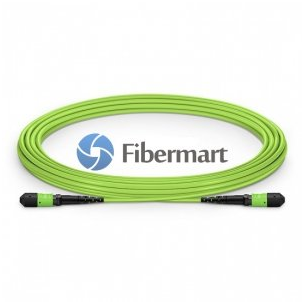
Modes that enable safe and efficient data transmission are becoming more important as the world grows more connected and the consumption of data expands exponentially. Fiber optic cables have served as a key enabler for technological trends, setting new standards for data transmission distances, bandwidths, and speeds.
Since different types of fiber optics can be used in different cases, there’s no one right way of designing the network. To enhance efficiency, you need the expertise of companies like Fibermart that offer all kinds of fiber optic tools for sale to keep pace with the mushrooming data transmission needs.
What is Fiber Optics?
The technology known as fiber optics helps transmit data traffic as light pulses over small optical fibers that are about the same diameter as a human hair strand. When the light beams travel down the fiber’s core, it’s prevented from escaping through the cladding that insulates the fiber-optic cables from inclement weather or other harsh conditions that can result in damage.
Optical fiber transceivers help transport the data traffic in the fiber optics networks by transforming data into light. The wavelength-specific laser then converts electric data signals into optical ones to transmit them over fiber optic cables.
Since fiber optic data transmission is faster and easier over long distances compared to other technologies, they’ve become the foundation of all data transmission projects for telecom, enterprise data network centers, and internet service providers.
Fiber Optics Data Transmission Process
Each optical fiber has two parts: the core and the cladding. The former is where the light travels. The glass cover has a low disturbance index, which enhances the total internal reaction. Meanwhile, the cladding is an additional layer that’s made of glass or plastic to create the total internal bend when wrapped around the core.
Both parts work in conjunction to generate the total internal reflection, which refers to how the light beams escape without the fibers moving down. That’s when the light hits at a very low angle to reflect it as though it’s reflecting against the mirror.
Here, the cladding works to keep the light in the core as the glass it’s made of can have a lower refractive index or different optical densities. These conditions indicate how the glass or plastic bends and slows down the beams.
The light’s transmitted under laser pulses or LED that travel incredibly swiftly. They contain binary data that’s made of bits to create everything found on the internet. The bits drive information in patterns known commonly as bytes.
The binary bits are relatively easier to translate into pulses of light, which can then travel up to 65 miles before potential degradation. The pulses pass through amplifiers that visually amplify the signal to minimize data loss when broadcasting data thousands of miles.
Once the pulses reach the destination, the ONT (Optical Network Terminal) converts the light pulses into the Ethernet. The transformation takes place in the last part of the mile in the fiber that connects the user to the Internet. Most of the Internet’s backbone comprises fiber optic cables to make it possible for people all over the globe to connect through the web.

How Do Fiber Optic Cables Enable Faster Data Transmission with Higher Security and Greater Bandwidth?
In the past, copper wires were commonplace to transmit data as electric signals. Fiber optics have uncovered substantial improvements in terms of efficiency and safety by transmitting data as light.
While copper wires are cheaper, fiber optic cables offer lower signal attenuation and higher bandwidth. They also don’t need frequent maintenance or replacement as long as they’re properly taken care of.
Unlike their copper counterparts, fiber optics are insensitive to electromagnetic interference and work perfectly fine even in harsh environments such as underwater. The fiber optic cables boast a broad range of frequencies that travel without impacting the data quality, allowing significantly higher bandwidth capabilities.
These cables consume less power, are relatively lightweight, and are harder to tap, making them a much more secure and reliable option in the long run.
Technologies for Improving Your Fiber Optic Network’s Performance
Fibermart offers a range of high-tech solutions to help extend the reach, secure, simplify, optimize, and improve your fiber optic network’s performance.
You can buy fiber patch cables, optical amplifiers, fiber trunk and breakout cables, MTP cables, MPO cables, LC and SC cables, fiber optic adaptors, fiber couplers, PLC splitters, quick connectors, DWDM modules and many other connectivity solutions.
Reach out to discover our product range or learn what makes us the leading online supplier of top-notch fiber optic tools for sale.





No comments have been posted yet.