


.webp)


Follow this fiber-optic cable installation guide to ensure maximum productivity, speed, efficiency, and longevity of your optical fiber cables.
Top Five Basic Tips For Fiber Optic Cable Installation
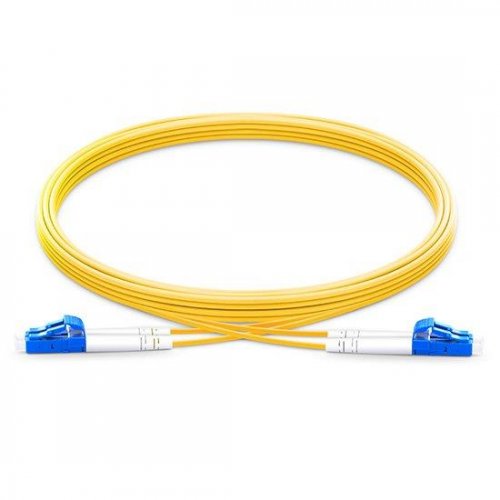
Fiber optic cable installation-based internet is the future of broadband. The adaptable and dependable fiber technology provides the currently highest accessible speeds. Used across multiple industries for diverse applications, optical fiber cabling uses light pulses to transmit data through one or more glass or plastic pipes.
Each of the pipes is around the size of human hair and is surrounded by a cladding second layer made of the same glass or plastic but built at a different density. The cladded fibers are then wrapped in a sheath made of multiple insulated casing layers. A sleeve is also frequently added as a protective wrapping.
Besides giving faster bandwidth and speeds than Ethernet or copper-based Wi-Fi signals, fiber optics help transfer extremely heavy data quickly and safely. They’re also suitable for high-voltage spaces and those prone to electromagnetic interference, chemicals, combustibles, or clement weather.
While the benefits of fiber-optic cable installation outweigh the higher up-front investment, follow these tips by fiber-mart experts to spare yourself a lot of frustration and costs associated with future repairs and maintenance.
Tip #1- Avoid Mistakes by Planning Properly
Creating a good plan before laying the fiber optic cables helps prevent costly mistakes. Fiber-optic cable installation for homes and offices both require a blueprint for the place with a detailed plan for setting up the cables.
Thoroughly assess the route to ensure the cables are free from potential hazards, develop a port map to avoid guesswork, and get guidance regarding where to connect and lay each cable.
The port map will feature information about each patch panel, port, network cabinet location, and additional hardware. The port map can also be used as a reference guide in case network issues arise. It can quickly identify the nodes that need to be connected.
Tip #2- Test Quality and Functionality Before and After Fiber Optic Cable Installation
Prevent disputes or quality problems due to cable damage by testing the cable before and after installation. Pre-installation tests aren’t extensively time-consuming or complicated, but they can help determine the effectiveness of the cables.
A continuity tracer can help ensure no substandard or faulty cables sabotage the project. A cable is likely to be sound if all the optics transmit light. A visual fault locator can also help identify breaks in the fiber optic cable.
Follow up with a post-installation test to ensure any excessive pulling or other factors didn’t cause an issue during installation. Detecting the abnormality sooner can help remedy the problem by replacing or repairing the damaged fiber optics.
Tip #3- Avoid Exceed Pulling, Bending, or Twisting to Reduce Waste
Controlling pulling or bending and precise cable measurement are two important aspects to monitor during fiber-optic cable installation to prevent unnecessary disasters. Measure the required length accurately before using the optic cable to reduce wastage or exceed budgets.
Also, consider the pull tensile or load and bending radius before installing the optic cable. The glass fiber in the cable is fragile, so excessive tension can result in increased broken fibers and attenuation. However, with high-quality fiber optic cables, the attenuation returns to normal if the cable’s elements aren’t damaged when the bend is relaxed.

Tip #4- Don’t Exceed the Maximum Vertical Rise
Some fiber optic cables aren’t suitable for any vertical applications. Every vertical optical fiber cable comes with a maximum vertical rise representing the optimum vertical distance the cable could be installed without the intermediate support points.
It refers to the function of the cable’s tensile strength and weight. Avoid exceeding the perpendicular distance if you’re using them vertically. Use support if you think it’s exceeding the steep rise to avoid optical cable damage.
Tip #5- Avoid Mixing Fiber Optics
Multimode and single-mode are two of the primary types of fiber optics. Both are incompatible, so make sure you don’t mix the fiber optic cables or other components. It will reduce their effectiveness or cause costly failures.
A good practice is to bind all the same fiber optics with cable ties for convenient identification. You can also use labels to avoid confusion by marking different costs. If you’re looking for fiber optics tools for sale, Fibermart is the one-stop solution to all your problems.
We’re a top-rated online seller of all things related to the fiber optics field. Whether you want to buy fiber patch cables, optical amplifiers, fiber trunk and breakout cables, MTP cables, MPO cables, LC and SC cables, DWDM modules, fiber optic adapters, fiber couplers, fiber quick connections, PLC splitters, quick connectors, we’ve got it all.
Reach out to our 24/7 customer service representatives to learn more or place an order directly.





No comments have been posted yet.