


.webp)


The Protective Role of Fiber Optic Cable Jackets
Fiber optic cables represent remarkable feats of engineering where precision glass fibers transmit data at lightning speeds through pulses of light. While the optical core performs the actual transmission, the protective jacket materials surrounding this core play equally critical roles in determining the cable's safety, durability, and appropriate application environment. These jackets serve as the first line of defense for the delicate glass fibers inside, protecting them from mechanical damage, environmental hazards, and catastrophic fire conditions.

This comprehensive guide examines four common fiber optic jacket materials—OFNP, LSZH, OFNR, and PVC—exploring their distinct properties, appropriate applications, and how they protect the valuable core components of fiber optic cables. Understanding these differences is essential for network designers, installers, and facility managers who must balance performance requirements, safety considerations, and regulatory compliance in their communications infrastructure.
Fiber Optic Cable Composition: What Jackets Protect
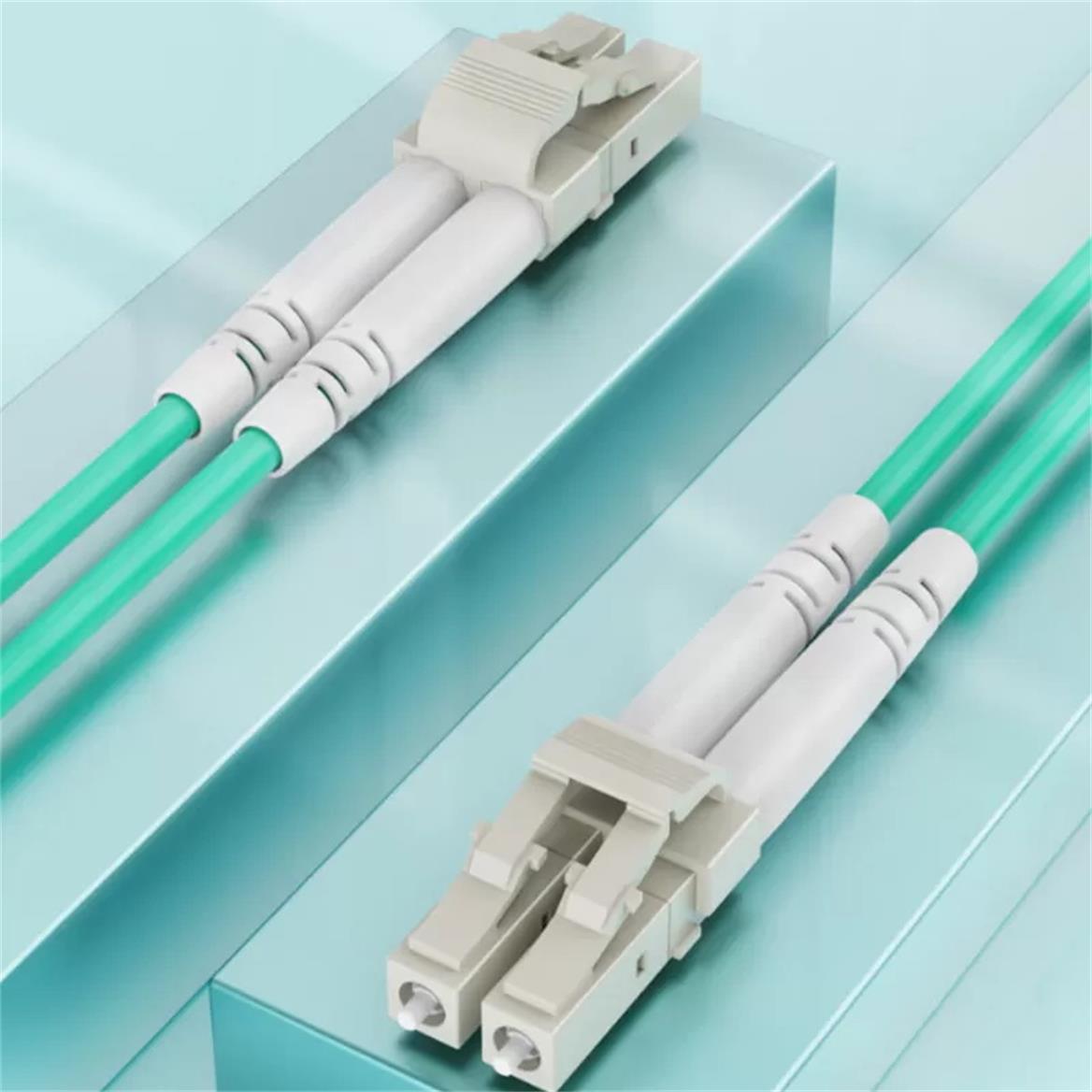
To fully appreciate jacket selection, one must first understand what these jackets protect. Fiber optic cables consist of four essential layers, each serving a specific protective function. The fiber core serves as the light transmission medium typically made from high-purity silica glass capable of transmitting data at speeds exceeding 100Gbps with minimal signal loss. A coating layer made of protective material such as acrylate resin or silicone rubber protects the fragile glass fiber from microbending losses and mechanical stress that could lead to signal degradation or fiber breakage.
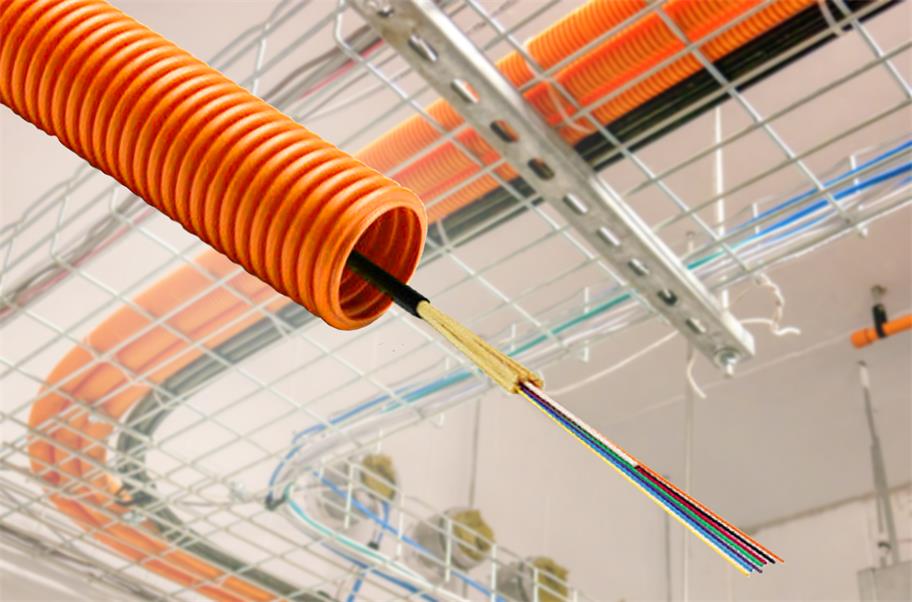
Strength members including structural components typically made from aramid yarn, fiberglass rod, or steel reinforcements provide tensile strength and protect the fibers during installation and under mechanical stress. The jacket itself forms the outer layer that provides environmental protection, chemical resistance, and fire safety properties while containing all other components. The jacket material must therefore protect these internal components from threats including moisture, chemicals, physical abrasion, and fire exposure while meeting specific safety standards for the installation environment. Basically, the most usual fiber cable jackets are: LSZH, OFNP, PVC, OFNR.
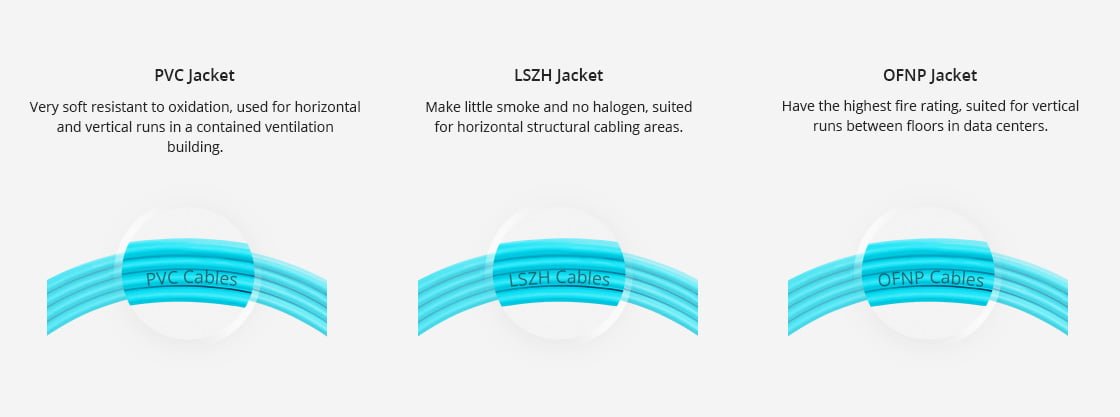
Understanding Cable Jacket Types: OFNP, LSZH, OFNR, and PVC
Understanding OFNP (Optical Fiber Nonconductive Plenum)
Defining OFNP Standards and Certifications
OFNP represents the highest fire safety rating available for fiber optic cables as established by the National Fire Protection Association and Underwriters Laboratories standards. OFNP-rated cables are designed to prevent fire propagation and maintain functionality even in extreme fire conditions. These cables demonstrate exceptional self-extinguishing properties—when subjected to a flame test with forced air circulation, OFNP cables must extinguish themselves before flames propagate beyond established safety limits.
Material Composition and Safety Characteristics
Unlike lower-grade materials, OFNP jackets emit zero toxic halogens or corrosive gases when exposed to fire, and produce minimal smoke, making them essential for environments where human safety and equipment protection are paramount. The composition of OFNP jackets typically includes fluoropolymers or other advanced materials that provide these fire-resistant properties while maintaining flexibility and durability.
Application Environments and Advantages
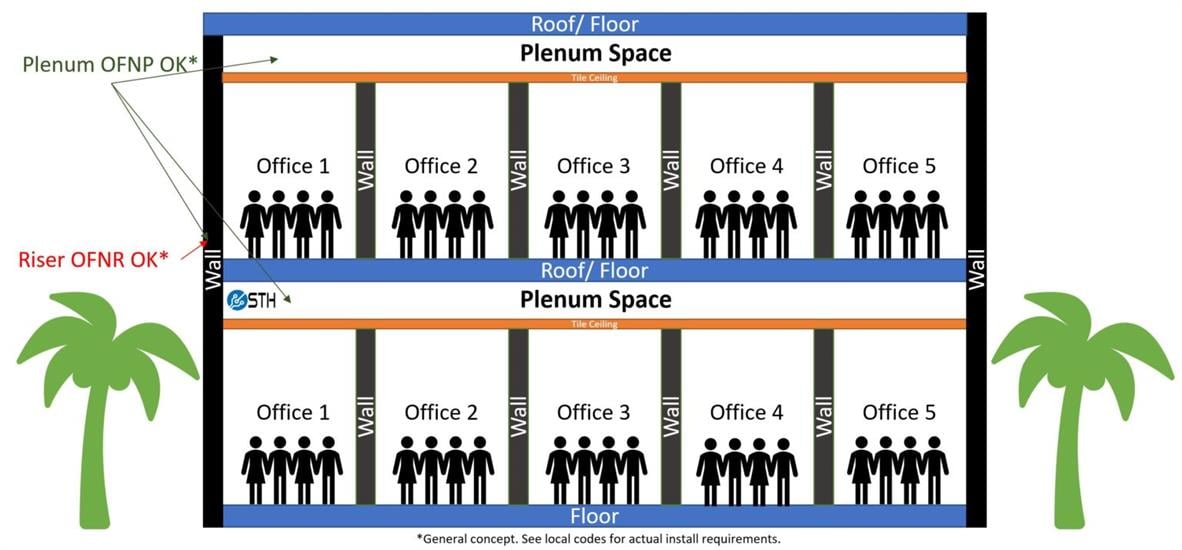
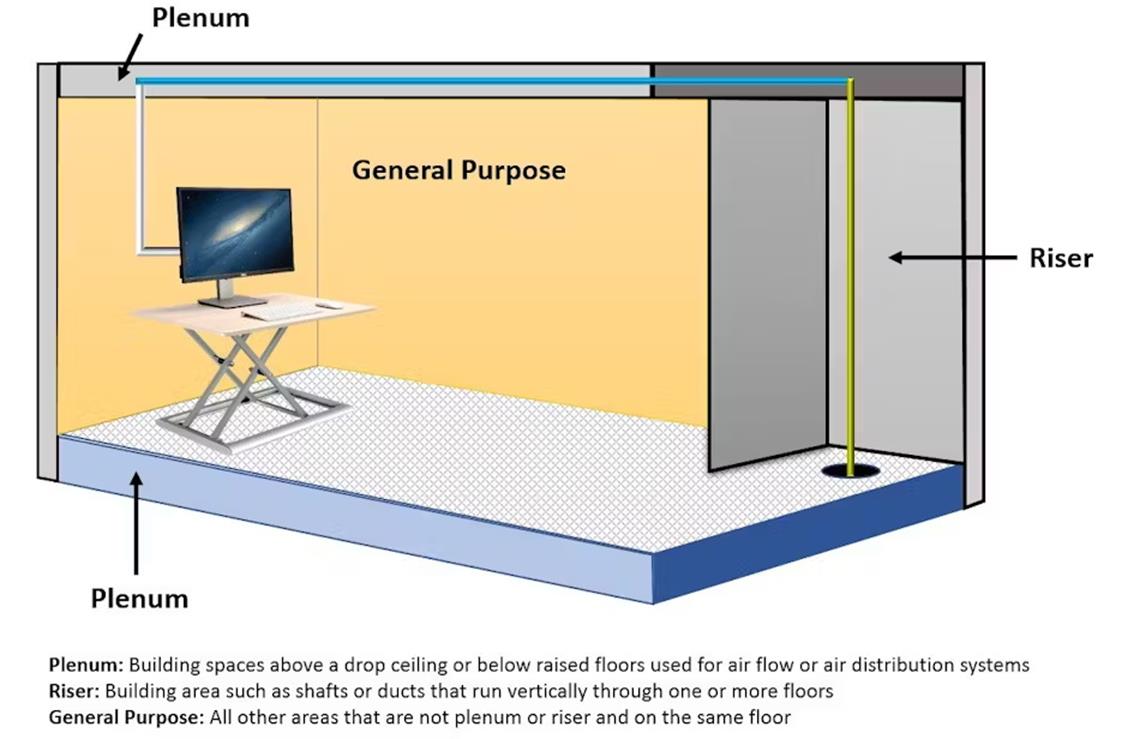
OFNP-rated cables are specifically mandated for use in plenum spaces—the air handling compartments in buildings used for return air circulation, air conditioning, and ventilation systems. These include spaces above suspended ceilings or below raised floors used for environmental air circulation, air return ducts and air handling systems, and building areas with centralized ventilation systems. The primary advantage of OFNP cables lies in their superior fire performance, which prevents them from serving as a fuel source or emitting dangerous substances into air circulation systems during fires. This protection extends to the valuable fiber core within, maintaining signal integrity even under extreme conditions.
Understanding LSZH (Low Smoke Zero Halogen)
Development and Material Innovation
LSZH jacket materials were developed in response to the recognized dangers posed by traditional halogenated materials like PVC when burned. LSZH compounds are specifically engineered to produce minimal smoke and zero halogenated gases when exposed to fire. Traditional PVC cables release hydrogen chloride gas when burned—a toxic, corrosive substance that damages electronic equipment and poses serious health risks to humans.
Chemical Composition and Fire Performance
The formulation of LSZH materials typically involves polyethylene or ethylene vinyl acetate base resins combined with metal hydroxides that act as flame retardants. When exposed to heat, these compounds release water vapor instead of toxic gases, simultaneously diluting combustible gases and suppressing smoke production.
Optimal Application Scenarios
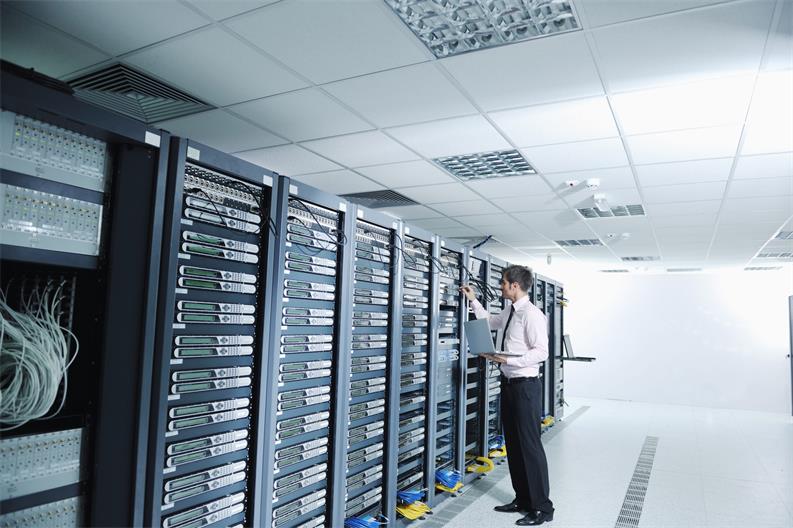
LSZH cables are particularly valuable in confined spaces with limited ventilation where human safety and equipment protection are concerns, including mass transit systems, telecommunications closets and data centers, hospitals and healthcare facilities, and public buildings and high-occupancy structures. The advantages of LSZH jackets include their enhanced safety profile during fires, specifically their reduced smoke production and elimination of corrosive acid gases that can damage sensitive electronic equipment.
Understanding OFNR (Optical Fiber Nonconductive Riser)
Performance Standards and Testing Requirements
OFNR represents the second tier in fiber optic cable fire ratings. While still offering good flame resistance, OFNR standards are less stringent than OFNP requirements. OFNR cables are designed to prevent vertical fire propagation between floors in building riser applications. When tested with a fan-induced flame, OFNR cables must self-extinguish before flames propagate beyond established safety limits for vertical applications.
Material Composition and Safety Features
OFNR jackets typically consist of modified polyolefins or other flame-retardant compounds that provide adequate fire resistance for vertical installations without the premium cost of plenum-rated materials. While OFNR cables may produce some smoke when burned, they are designed to limit flame spread along the cable length, particularly in vertical shaft installations.
Installation Applications and Cost Benefits
OFNR-rated cables are primarily designed for use in vertical riser applications that run between floors in buildings, including electrical closets and vertical shafts, backbone cabling between floors, and areas not used for environmental air handling. The primary advantage of OFNR cables is their balance of cost and performance, providing adequate fire safety for many building applications without the premium expense of OFNP-rated cables.
Understanding PVC (Polyvinyl Chloride)
Historical Usage and Material Properties
PVC has been one of the most widely used cable jacket materials since the 1980s, primarily due to its low cost, durability, and ease of processing. Standard PVC formulations include chlorine compounds and plasticizers that provide flexibility but produce significant smoke and toxic gases when burned.
Safety Considerations and Limitations
When exposed to fire, PVC jackets release hydrogen chloride gas—a corrosive, toxic substance that forms hydrochloric acid when combined with moisture. Additionally, PVC cables produce dense black smoke that reduces visibility during firefighting and evacuation efforts. These characteristics have led to declining use of PVC jackets in applications where human safety or equipment protection are priorities.
Appropriate Applications and Economic Advantages
Despite their safety limitations, PVC-jacketed cables still have appropriate applications, including outdoor installations with adequate ventilation, point-to-point connections in well-ventilated areas, temporary installations or cost-sensitive projects, and applications where fire safety is addressed through other means. The advantages of PVC jackets include their proven durability, excellent moisture resistance, flexibility, and low cost.
Comparative Analysis: Application and Performance Parameters
The selection of cable jackets represents a complex interplay between safety requirements, environmental conditions, and practical considerations. Each jacket type brings distinct properties that make it suitable for specific applications while presenting limitations in others.
OFNP, LSZH, OFNR, PVC Comprehensive Comparison
The following table provides a holistic overview of how these four jacket types compare across key decision-making criteria, illustrating the spectrum of protection available for fiber optic installations.
Table 1: Comprehensive Four-Way Jacket Comparison
| Criterion | OFNP (Plenum) | LSZH (Low Smoke Zero Halogen) | OFNR (Riser) | PVC (Polyvinyl Chloride) |
|---|---|---|---|---|
| Primary Standard | UL 910 (NFPA 262) | IEC 60754-2, EN 50399 | UL 1666 | UL 1685 (General Purpose) |
| Fire Rating | Highest. For use in air-handling plenums. | Material Property. Can be made to various ratings (e.g., LSZH-Riser). | Moderate. For vertical riser shafts between floors. | Basic. For general purpose, non-plenum/riser use. |
| Key Application | Spaces for environmental air (ceiling plenums, raised floors). | Confined public spaces (subways, data centers, hospitals). | Vertical runs in dedicated riser shafts or closets. | Outdoor, conduit, or well-ventilated industrial areas. |
| Smoke Production | Very Low | Extremely Low | Moderate | Very High |
| Toxic/Halogenated Gas Emission | None | None | Low | Very High (HCl gas) |
| Material Basis | Fluoropolymers (e.g., FEP) | Halogen-Free Polyolefins with Metal Hydroxides | Flame-Retardant Polyolefins | PVC with Plasticizers |
| Cost Factor | Premium | Moderate to High | Moderate | Low Cost |
This comprehensive comparison reveals the fundamental trade-offs between safety, performance, and cost. OFNP stands as the premium solution where safety is non-negotiable, while LSZH offers specialized protection against smoke and toxicity. OFNR provides balanced performance for vertical applications, and PVC remains the economical choice where fire risk is minimal.
OFNP vs. LSZH Comparison:
The relationship between OFNP and LSZH represents one of the most nuanced distinctions in cable jacket selection, often misunderstood even by experienced professionals.
Table 2: OFNP vs. LSZH - High-Performance Nuances
| Parameter | OFNP | LSZH | Key Takeaway |
|---|---|---|---|
| Governing Criteria | Must pass UL 910 (NFPA 262) plume test for flame spread & smoke density. | Must pass IEC 60754-2 for acidity (pH & conductivity) and smoke density tests. | OFNP is a certification; LSZH is a material recipe. An LSZH cable can be OFNP-rated if it passes the stringent plenum test. |
| Primary Application Driver | Building Code Mandate. Required by law in plenum spaces in North America. | Risk Mitigation. Chosen to protect human life and sensitive equipment from smoke/corrosion. | OFNP is about fire propagation prevention; LSZH is about toxicity reduction. |
| Performance Focus | Prevents flame spread in air circulation spaces, with low smoke as a secondary benefit. | Minimizes smoke obscuration and eliminates corrosive acid gases, with flame retardancy as a feature. | LSZH excels in smoke density reduction, often outperforming OFNP in this specific metric. |
This comparison reveals that OFNP and LSZH address different aspects of fire safety. OFNP is fundamentally concerned with preventing fire spread through air handling systems, while LSZH focuses on preserving life and equipment by minimizing smoke and toxic emissions. The ideal scenario often involves LSZH materials that meet OFNP standards, providing comprehensive protection against both fire spread and its dangerous secondary effects.
OFNR vs. PVC Comparison:
The choice between OFNR and PVC represents perhaps the most common cost-to-safety decision point in cable specification, particularly in applications where plenum rating is not required.
Table 3: OFNR vs. PVC - Safety vs. Economy
| Parameter | OFNR | PVC | Key Takeaway |
|---|---|---|---|
| Governing Criteria | Must pass UL 1666 riser test, limiting flame propagation height in a vertical shaft simulation. | Must pass UL 1581 VW-1 (vertical wire) flame test, a basic general-purpose standard. | OFNR is designed to stop vertical fire spread between floors; PVC is only designed to resist igniting easily. |
| Primary Application Driver | Building Code Mandate. Required for vertical cable runs in riser shafts between floors. | Cost-Sensitive Projects. Used where codes allow and ventilation is sufficient to disperse smoke/gases. | PVC is suitable only where its significant smoke and toxic fume production is not a life safety issue. |
| Toxicity & Corrosion | Produces low levels of smoke and toxic gases. | Produces dense, obstructive smoke and highly corrosive Hydrogen Chloride (HCl) gas. | OFNR protects both people and the sensitive electronic equipment in wiring closets from corrosive damage. |
This comparison highlights the significant safety advantages of OFNR over PVC, particularly in vertical installations where fire could spread rapidly between floors. While PVC may be acceptable for some outdoor or industrial applications, its combustion characteristics make it problematic for any occupied space. The hydrogen chloride gas emitted when PVC burns forms hydrochloric acid when combined with moisture—posing serious risks to both human respiratory systems and electronic equipment.
Selection Criteria: Choosing the Right Jacket Material
Environmental Application Considerations
Selecting the appropriate jacket material requires careful consideration of multiple factors beginning with application environment. Plenum spaces require OFNP-rated cables while riser applications require at least OFNR-rated cables. Outdoor installations may use PVC but should consider LSZH for environmental resistance, and confined spaces should use LSZH to minimize smoke and toxic emissions.
Regulatory Compliance Requirements
Safety regulations and standards must guide selection decisions, including compliance with local building codes and insurance requirements, meeting NFPA standards, adherence to UL ratings specific to application needs, and conformance to international standards for global projects.
Economic Analysis and Value Assessment
Total cost of ownership analysis should consider initial material costs with PVC being cheapest followed by OFNR and OFNP being most expensive, installation costs as premium cables may require special handling techniques, potential liability costs as inferior jacket materials may create greater liability in fire events, and equipment protection value provided by LSZH and OFNP materials.
Performance Specification Evaluation
Performance requirements must also be evaluated including flexibility needs as some materials offer greater flexibility for tight spaces, durability requirements for outdoor applications that may require special UV-resistant compounds, temperature tolerance considerations, and chemical resistance needs for industrial environments.
Implications for the Fiber Optics Industry
Regulatory Evolution and Standards Development
The evolution of jacket materials reflects the fiber optics industry's growing emphasis on safety, reliability, and environmental responsibility. Several trends are shaping jacket material development and selection including increasing regulation through stricter building codes and safety standards that are driving adoption of higher-rated cables.
Technological Innovation and Material Advances
Material innovation continues to advance with new compounds like TPU-based materials offering enhanced protection with improved environmental profiles. Growing awareness among educated consumers and installers is creating demand for safer cable options that protect both people and equipment.
Sustainability Integration and Environmental Considerations
Environmental considerations are becoming increasingly important with LSZH and other halogen-free materials supporting sustainability initiatives throughout the product lifecycle. Performance integration represents another significant trend as jackets are increasingly designed to protect both against fire hazards and mechanical damage to the fragile fiber core.
Future Trends and Market Direction
These trends suggest continued movement away from PVC in indoor applications and toward specialized materials like LSZH and OFNP that provide both fire safety and superior protection for the valuable glass fibers within.
Conclusion: Protecting Your Network Core with the Right Cable Jacket
The selection of fiber optic cable jacket materials represents a critical decision point in network design that balances performance requirements, safety considerations, and economic factors. While the exquisite glass fibers at the core of these cables perform the actual data transmission, it is the often-overlooked jacket that determines whether these fibers will survive various environmental challenges and protect both people and equipment during catastrophic events.
OFNP cables provide the highest level of fire protection for plenum spaces, while LSZH materials offer enhanced safety through reduced smoke and toxic emissions. OFNR cables deliver a balanced solution for vertical applications, and PVC remains a cost-effective option for appropriate environments. Each material serves specific purposes in protecting the valuable core components—the glass fibers, coatings, and strength members—that make fiber optic communication possible.
As network technologies continue to evolve and data becomes increasingly critical to operations, the protective role of cable jackets will only grow in importance. By understanding these material differences and making informed selection decisions, network designers and installers can ensure both optimal performance and appropriate safety levels for their fiber optic installations.
FAQs
Can a cable be both LSZH and OFNP/OFNR?
Yes, absolutely. In fact, this is common. LSZH refers to the material's composition, while OFNP/OFNR are performance ratings that a finished cable achieves through safety testing. A cable with an LSZH jacket can be tested and certified as OFNP or OFNR. You will often see products described as "Dual Rated (OFNR/LSZH)".
How do I choose the right fiber cable Jacket?
The choice depends heavily on the installation environment and local fire codes.
OFNP (Plenum) Cable: Required for spaces used for environmental air (air handling/plenum spaces), such as the space above a dropped ceiling or below a raised floor that serves as an air return. This is the strictest rating.
OFNR (Riser) Cable: Used for running cables vertically in a shaft or floor-to-floor riser. Its key function is to prevent fire from spreading between floors. It cannot be used in plenum spaces without special conduit.
LSZH Cable: Often chosen for safety-critical areas like data centers, hospitals, public transportation systems, and confined spaces where human evacuation can be challenging. Its main benefit is reducing smoke inhalation and protecting sensitive equipment from corrosive gases.
PVC Cable: Typically used in general-purpose applications where fire safety codes are less stringent, or where cost is a primary concern.
Is a cable labeled "LSZH" always safe?
Not necessarily. The term "LSZH" can sometimes be used as a marketing claim without independent verification. For critical applications, it is important to look for cables that are independently tested and certified to meet international safety standards such as IEC 61034 (for smoke density) and IEC 60754 (for halogen content). Reputable manufacturers provide test documentation.
Why is OFNP cable more expensive than OFNR?
OFNP cables must meet the most demanding flame-resistance and low-smoke generation standards because they are designed for air circulation spaces where fire can spread extremely quickly. The materials and construction required to achieve this highest rating result in a higher cost.





No comments have been posted yet.