


.webp)


In optical communication networks, optical cable splitters and Wavelength Division Multiplexing (WDM) modules are two foundational passive optical components that support signal distribution and capacity expansion respectively. Though both manage optical signals in fiber links, they differ sharply in working principles, functional objectives, performance features, and deployment scenarios. Misselection between them often leads to inefficient resource usage, higher costs, or unstable network performance. This article systematically compares optical cable splitters and WDM technology, clarifies their core differences, and provides clear guidance on proper application to help engineers and planners make optimal device choices for FTTH, enterprise networks, data centers, and backbone transmission systems.
Overview of Optical Cable Splitters
Definition and Working Principle
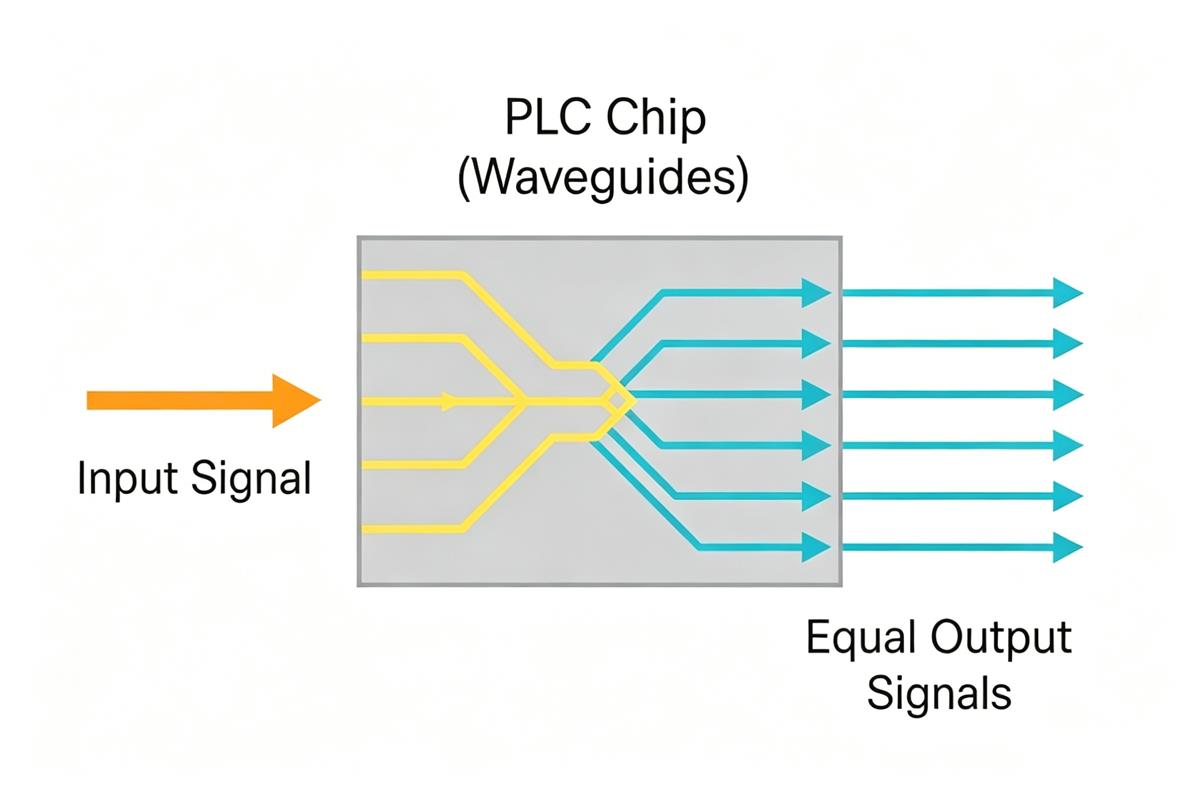
An optical cable splitter is a purely passive device that distributes input optical power into multiple output paths at a fixed ratio, without altering signal wavelength or data content. Most modern deployments use Planar Lightwave Circuit (PLC) splitters, which integrate waveguide structures on a silica chip via semiconductor manufacturing processes. When an optical signal enters the input port, the waveguide network splits optical power evenly or proportionally across output ports, supporting configurations such as 1×2, 1×4, 1×8, 1×16, 1×32, and 1×64. This power-splitting mechanism is wavelength-insensitive across 1260–1650 nm, making it compatible with EPON, GPON, and other broadband access systems.
Key Performance Characteristics
● Passive and maintenance-free: No power supply or electronic control, ensuring high reliability and long service life in outdoor or integrated cabinets.
● Broad wavelength compatibility: Works steadily across 1260–1650 nm to support mixed transmission of voice, data, and video services.
● Uniform power distribution: Delivers consistent optical power to each output, critical for balanced user-side reception in PON networks.
● Compact structure: Small form factor enables easy integration into optical distribution frames, cross-connect cabinets, and wall-mounted boxes.
● Low polarization-dependent loss (PDL): Stable performance under varying polarization states, reducing signal fluctuation.
Typical Application Scenarios
Optical cable splitters excel in one-to-many power distribution, especially in passive optical networks:
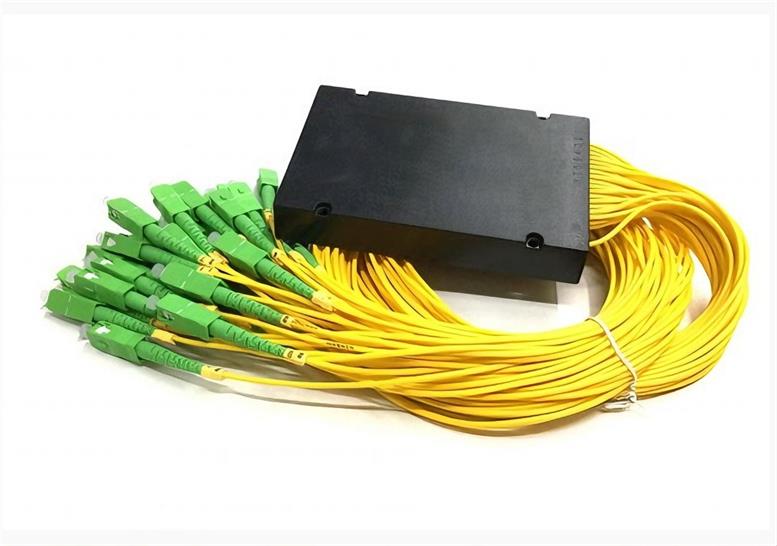
● FTTH/FTTB access networks: The core component of ODN linking OLT and multiple ONUs, enabling shared fiber infrastructure for residential and commercial users.
● CATV distribution: Transmits analog and digital TV signals to multiple nodes while maintaining signal quality.
● Fiber sensing systems: Distributes light sources to parallel sensor branches for structural health monitoring and industrial sensing.
● Local convergence points: Provides flexible optical splitting in campus, residential, and industrial parks to simplify cabling and lower deployment costs.
Overview of WDM Technology
Definition and Working Principle
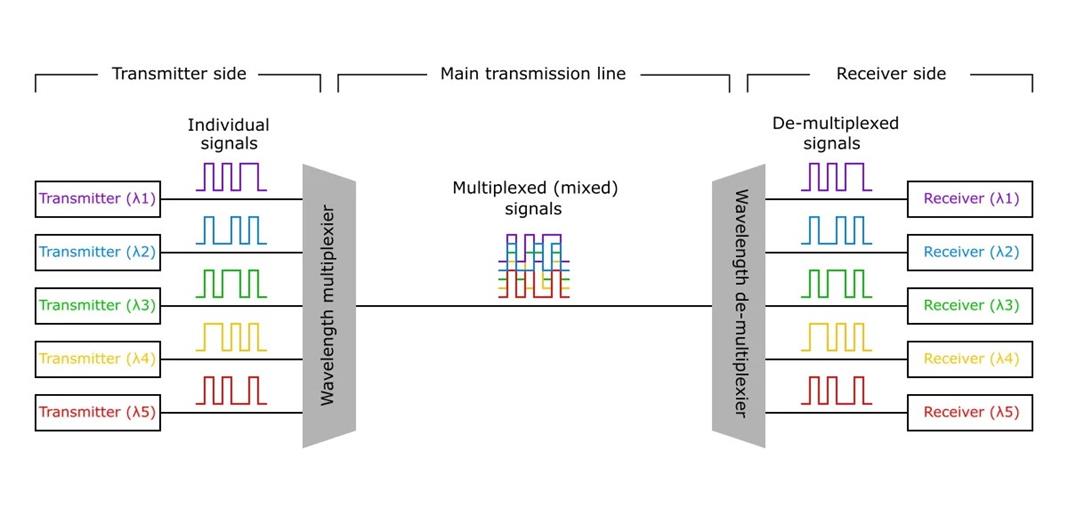
WDM is a capacity-enhancement technology that combines and separates optical signals of distinct wavelengths over a single fiber. At the transmit side, a multiplexer (MUX) merges multiple wavelength channels; at the receive end, a demultiplexer (DEMUX) filters and separates them by wavelength. Each wavelength acts as an independent data channel, allowing simultaneous transmission of diverse services without interference. WDM is categorized into Coarse WDM (CWDM) with wide channel spacing (~20 nm) and Dense WDM (DWDM) with narrow spacing (≤1.6 nm), supporting 4–16 and 80+ channels respectively.
Key Performance Characteristics
● Ultra-high bandwidth utilization: Multiplies fiber capacity without laying new cables, ideal for backbone and data-center interconnection (DCI).
● Wavelength-selective routing: Processes signals by wavelength, supporting independent service scheduling and management.
● Transparent service transmission: Carries Ethernet, SAN, OTN, and video signals at various rates with protocol independence.
● Long-haul capability: When paired with optical amplifiers, DWDM supports thousands of kilometers for national and international backbones.
● Flexible upgrade: Increases capacity by adding wavelengths, protecting early investment and lowering long-term costs.
Typical Application Scenarios
WDM dominates high-capacity, long-distance, and multi-service convergence:

● Metro and backbone networks: Carries large-scale voice, data, and mobile backhaul to meet core traffic growth.
● Data center interconnection (DCI): Provides high-bandwidth, low-latency links between geographically dispersed data centers for cloud and storage services.
● 5G fronthaul/backhaul: Supports multi-wavelength transmission of CPRI/eCPRI signals to simplify base station cabling.
● Enterprise private lines: Delivers dedicated, secure channels for banks, government, and large enterprises with high reliability demands.
Core Differences Between Optical Cable Splitters and WDM
Functional Difference
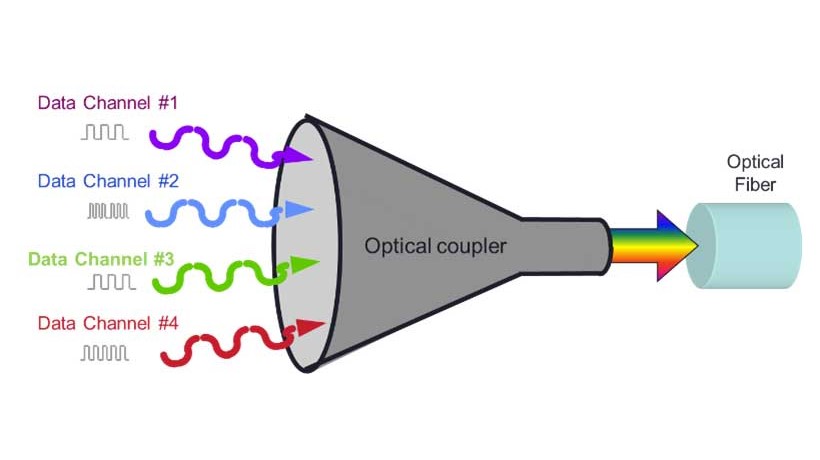
Optical cable splitters perform power splitting: they divide a single input’s optical power across outputs, with all ports carrying identical signals at reduced power. WDM performs wavelength multiplexing/demultiplexing: it combines or separates distinct wavelength channels, each carrying independent data streams. Splitters share power; WDM shares fiber spectrum.
Signal Processing Mechanism
Splitters use fixed-ratio power distribution and treat all wavelengths uniformly, with no wavelength selectivity. WDM relies on wavelength-selective filtering (thin-film filters, arrayed waveguide gratings) to distinguish and route channels precisely. Splitters are “power distributors”; WDM are “spectrum managers.”
Wavelength Dependence
PLC splitters show consistent performance across 1260–1650 nm, with loss independent of wavelength. WDM performance is tightly wavelength-dependent; each channel operates at a defined wavelength, and spacing directly affects capacity and cost.
Network Architecture Orientation
Splitters are optimized for point-to-multipoint (P2MP) access in PON, where one OLT serves many users. WDM is optimized for point-to-point (P2P) high-capacity links in backbones, DCI, and private lines, maximizing fiber utilization.
Cost and Complexity
Splitters are low-cost, compact, passive, and easy to install with no commissioning overhead. WDM systems require precise wavelength devices, often with active controls, increasing complexity and cost; they suit high-value capacity expansion rather than mass access.
Selection Guidelines: When to Use Splitters or WDM
Choose Optical Cable Splitters When
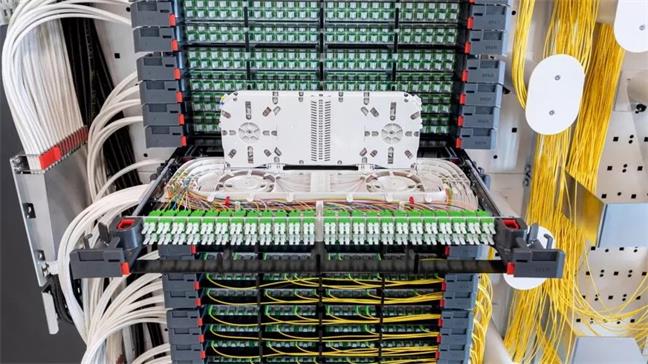
● Deploying FTTH/FTTB/GPON/EPON networks requiring one-to-many power distribution.
● Seeking low-cost, passive, maintenance-free user-side optical distribution.
● Needing uniform power splitting for multi-user broadband or CATV.
● Working in space-constrained cabinets with compact integration needs.
● Building simple monitoring or sensing networks with parallel signal branches.
Choose WDM Technology When
● Expanding backbone/metro capacity without additional fiber deployment.
● Building high-bandwidth DCI or 5G fronthaul/backhaul networks.
● Transmitting multiple independent services over one fiber for service isolation.
● Needing long-haul, high-capacity transmission for national/international backbones.
● Upgrading capacity incrementally by adding wavelengths to protect investment.
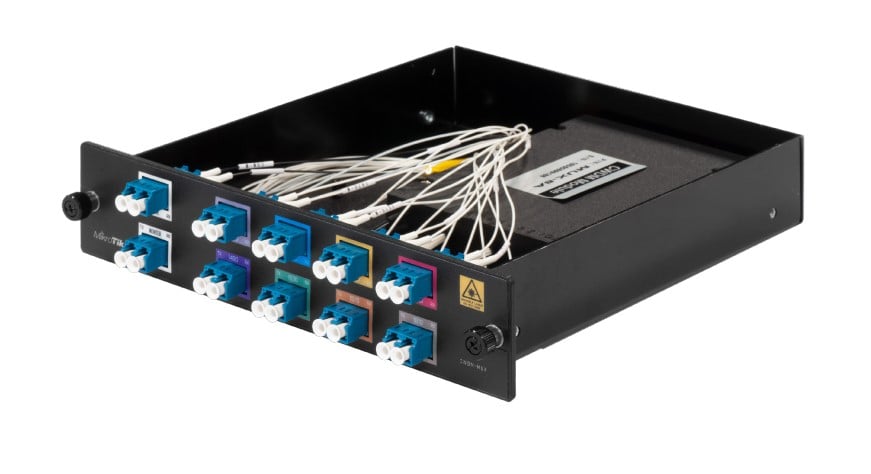
Optical cable splitters and WDM serve distinct roles in optical networks: splitters enable cost-effective P2MP power distribution for access networks, while WDM unlocks fiber spectrum for high-capacity P2P transmission. Splitters are the cornerstone of FTTH and passive access; WDM is the engine of backbone and DCI capacity growth. Correct selection aligns with network architecture, service type, capacity demand, and budget. In integrated networks, they often complement each other—splitters for user-side distribution, WDM for trunk capacity—to build efficient, scalable, and future-ready optical communication systems.





No comments have been posted yet.