


.webp)


In this era of big data, the demand for more stable and quicker communications networks grows by the day. Whether it is long-haul transmission networks or access and metropolitan area networks, maintaining signal integrity over extremely long distances is a problem now. That is where an optical amplifier enters as a primary facilitator of modern optical communication. Amplifying light signals directly—that is, without first converting them into an electrical form—optical amplifiers have revolutionized the transmission of data on fiber-optic networks.
What is an Optical Amplifier
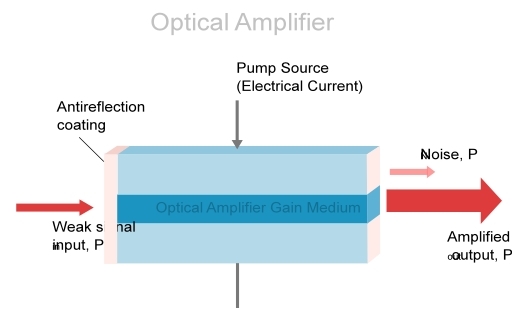
An optical amplifier is equipment that amplifies the power of an optical signal without ever converting it to an electrical signal. This technique minimizes signal loss and simplifies networking. Conventional electronic repeaters entail converting the optical signal into an electrical signal and then back into an optical signal, leading to delay and increasing the problem of expense. However, optical amplifiers amplify the light signal directly and facilitate transmission to occur faster and with greater efficiency.
Types of Optical Signal Amplifiers
Optical signal amplifying technologies are available in various forms, which are appropriate for specific applications:
Semiconductor Optical Amplifiers (SOAs): These are very compact and economical and are well-suited to short lengths as well as photonic integrated circuits.
Raman Amplifiers: They boost the signal intensity by distributed amplification using the transmission fiber itself.
EDFA Optical Amplifiers: Almost universal choice for dense wavelength-division multiplexing (DWDM) and long-distance networks.
Among them, the EDFA optical amplifier (Erbium-Doped Fiber Amplifier) is the most sophisticated used today for next-generation optical networks with its high gain, low noise, and wide wavelength compatibility.
How An EDFA Optical Amplifier Works
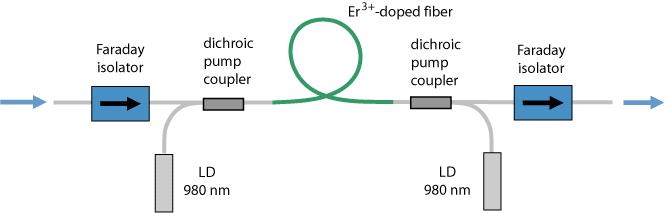
EDFA is an erbium-ion-doped fiber-optic amplifier. With laser pumping at specific wavelengths (usually 980 nm or 1480 nm), the erbium ions get excited to a higher energy level. In the transmission of the input optical signal through the doped fiber, the excited ions transfer their energy to the signal photons and hence directly amplify the optical signal.
This process produces:
High Gain: EDFAs offer amplification of 20–40 dB, making them suitable for long-distance transmission.
Low Noise Figure: Minimum level of signal-to-noise ratio loss yields improved data.
Wavelength Flexibility: The EDFAs are most efficient in the C-band (1530–1565 nm) and L-band (1565–1625 nm) wavelengths and are capable of supporting multiple channels in DWDM systems.
Advantages of Optical Amplifiers in Modern Networks
Optical amplifier technology has revolutionized network planning and operation. Some major benefits include:
Wider Coverage: Long-distance networks are able to transmit data tens of thousands of kilometers in a single stream without incessant regeneration of the signal.
Multi-Path Capability: Optical signal amplifiers can amplify different wavelengths at once, which is crucial in high-bandwidth networks.
Cost-Efficiency: Electrical-to-optical conversion is avoided, reducing hardware complexity and operating cost.
Future-Proofing: With growing requirements for data, EDFA optical amplifiers can be easily integrated into future network design.
Applications of EDFA Optical Amplifiers
EDFA technology is ubiquitous in numerous industries today:
Telecommunications: For transcontinental and intercity backbone networks.
Data Centers: To enable high-bandwidth interconnects between sites.
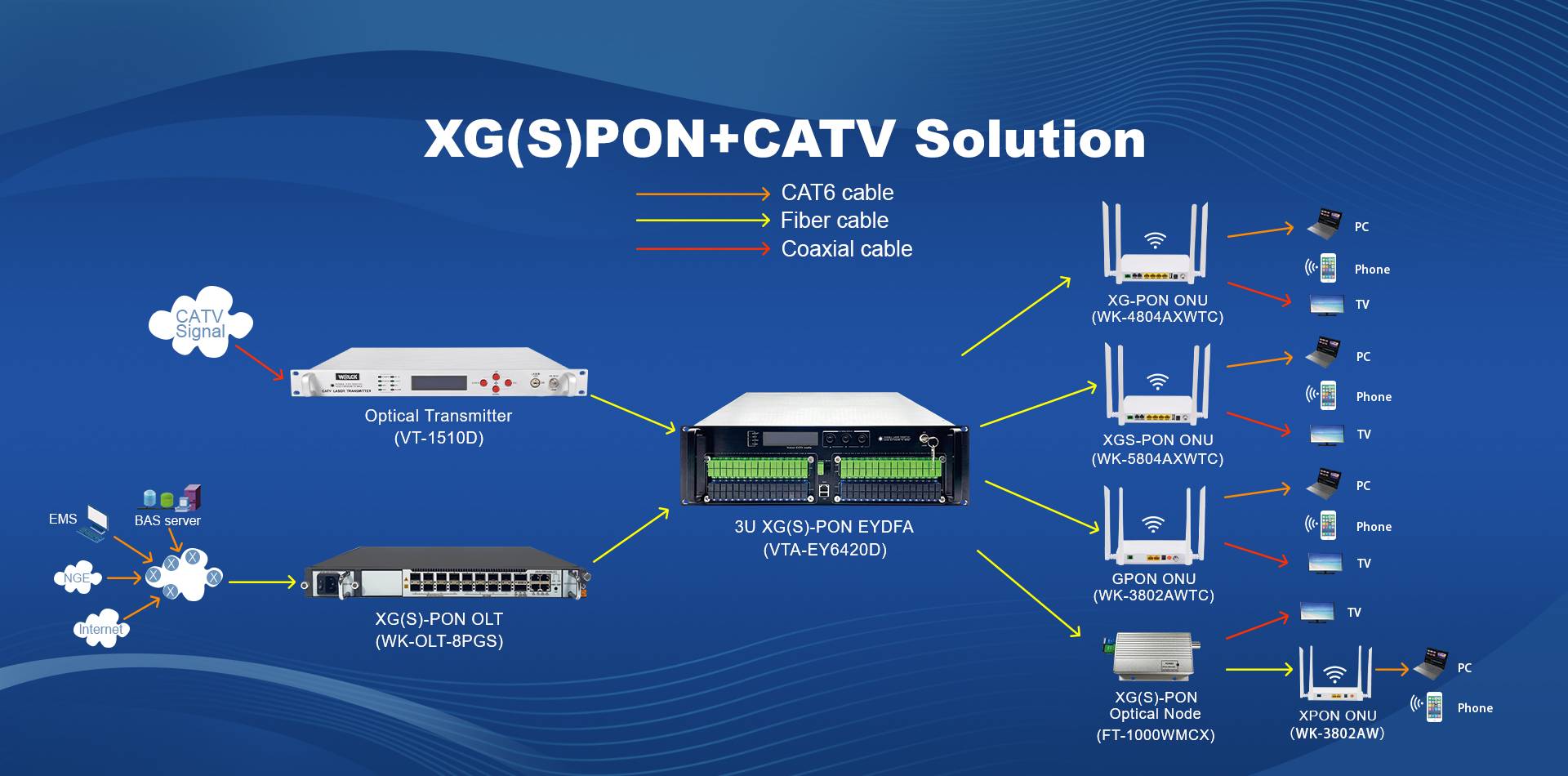
Cable TV Systems: For distribution to large numbers of subscribers over long distances.
Research and Defense: For high-bandwidth specialized optical systems.
Conclusion
With the expansion of 5G networks and burgeoning data traffic fueled by cloud computing and AI use cases, the importance of optical amplifiers will keep increasing. Technologies such as hybrid amplifiers that combine EDFA optical amplifiers with Raman technology are waves of change in furthering transmission reach and performance.





No comments have been posted yet.