


.webp)


In the deployment and maintenance of modern fiber optic networks, identifying fiber optic link faults has become critically important. The Visual Fault Locator (VFL), with its simple and efficient features, is an essential tool for every fiber technician. By injecting visible laser light into the fiber, it quickly identifies breaks, bends, or connector faults in the fiber, making it ideal for troubleshooting fiber optic links. In this article, we will delve into the principles of VFL, its various types, selection parameters, and usage guidelines, providing a comprehensive reference guide for purchasing and using a VFL.
What is a Visual Fault Locator?
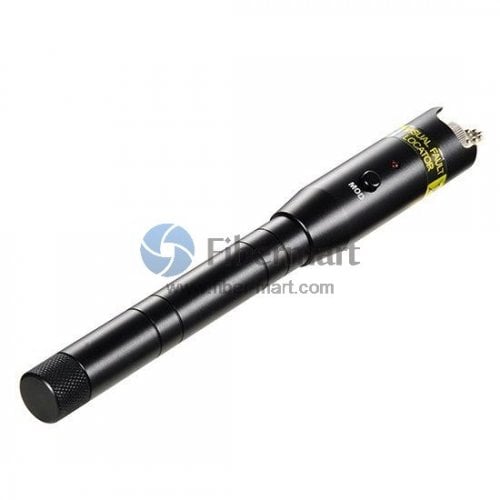
A Visual Fault Locator (VFL) is a basic tool used to troubleshoot fiber optic link faults. It injects a red laser beam into the fiber to detect defects in the core, such as sharp bends, breaks, and connector faults. These defects usually leak red or green light outside the fiber, making them easy to detect. VFLs can also help locate OTDR blind spot faults and accurately identify problems from one end of the fiber to the other. Whether in the process of installing new fiber or troubleshooting existing networks, the VFL is a must-have tool in a fiber technician’s toolbox.
Applications of Visual Fault Locators
- Fiber Fault Troubleshooting: The VFL's red laser beam can quickly identify sharp bends, breaks, and connector faults in fiber optic cables.
- OTDR Blind Spot Detection: VFLs can supplement OTDR equipment by effectively detecting OTDR blind spot faults.
- Fiber Identification: When it's necessary to identify a fiber from one end to the other, the VFL can provide effective guidance through its red laser.
Types of Visual Fault Locators
Visual Fault Locators come in various shapes and sizes. The main types include:
Pen-Type VFL
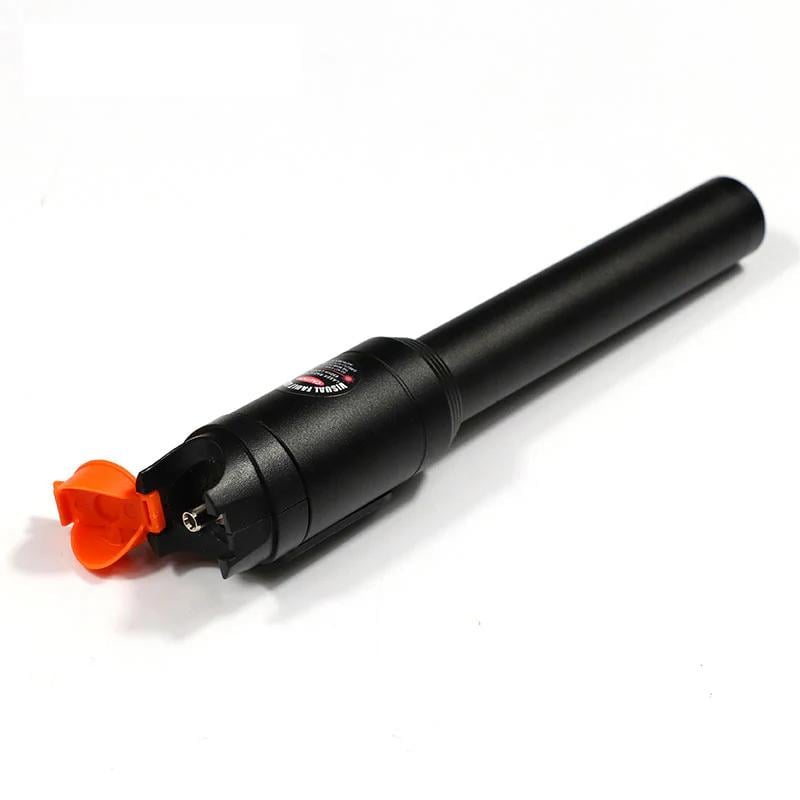
This type of VFL is usually compact, resembling a pen, and easy to carry. Its simple design and ease of operation make it an ideal tool for fiber technicians to carry with them. Pen-type VFLs are typically suitable for troubleshooting shorter fiber optic links.
Handheld VFL
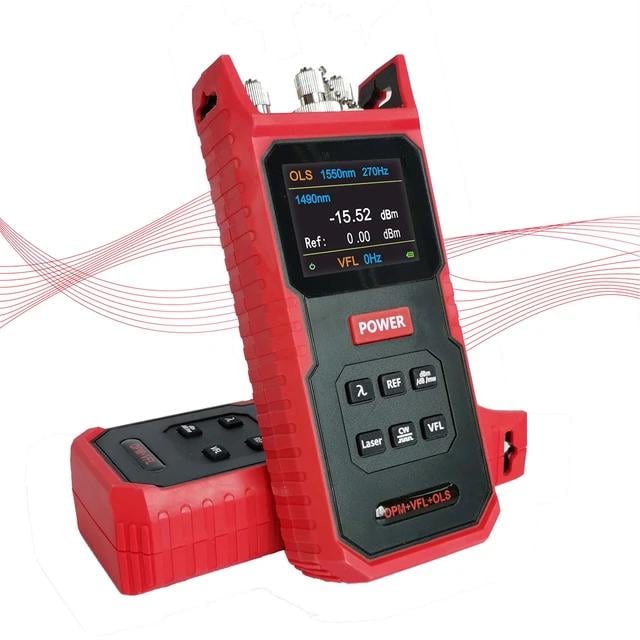
Handheld VFLs are larger than pen-type VFLs and have higher output power, generally used for detecting longer fiber optic links. They resemble a small test equipment box and usually have more control functions to handle complex testing needs.
How Visual Fault Locators Work
VFLs work by injecting laser light into the fiber core. Light from the laser leaks from the fiber at breaks or macro bends and usually illuminates the buffer around the fiber. The laser can penetrate the fiber's outer sheath, showing light leaks in the core. Therefore, without connecting external equipment, it can quickly and accurately determine the location of faults in the fiber.
Main Applications
- Detecting Fiber Breaks: The laser beam can penetrate the fiber sheath and produce noticeable light leakage at break points.
- Detecting Fiber Bends: When the fiber has a sharp bend, the laser beam will leak at the bend, indicating the bend position.
- Detecting Connector Faults: At connector faults, the laser beam will also leak, making it easy to locate the fault position.
Important Parameters for Selecting a VFL
Fiber Distance
Fiber distance indicates the maximum length of fiber that a VFL can detect. This parameter is primarily determined by laser power. Generally, VFLs can detect links up to 10 kilometers in multimode fibers and up to 5 kilometers in single-mode fibers. High-power VFLs can achieve longer detection distances; for example, a 30mW VFL can detect fiber links up to 15 kilometers.
Output Power
Output power is one of the key specifications of a VFL. The higher the output power, the further the VFL can detect. Typically, the output power of a VFL ranges from 0.5mW (single-mode fiber) to 2mW (free space).
Fiber Mode
All VFLs are compatible with both single-mode and multimode fibers. Multimode fiber has a larger core diameter, usually 50µm or 62.5µm, while single-mode fiber typically has a core diameter of 9µm. Therefore, multimode fibers can transmit more laser power and have a longer detection range than single-mode fibers.
Modulation Frequency
VFLs usually provide two operating modes: Continuous Wave (CW) and Pulsed Light (2Hz or 1Hz). Since human eyes are more sensitive to flickering light than steady light, fiber technicians typically prefer using the pulsed light mode for more noticeable detection.
Battery
VFLs typically use two AAA or two AA batteries as a power source.
Wavelength
The working wavelength of VFLs usually ranges from 635nm to 670nm. The wavelength of such laser beams belongs to the visible light range, making it easy for the human eye to recognize. VFLs with wavelengths of 635nm, 650nm, and 670nm all work well, and there is generally no need to overemphasize wavelength when choosing.
How to Use a Visual Fault Locator
To use a Visual Fault Locator correctly, follow these steps:
Step 1: Clean the Fiber Connector
First, use a microscope to inspect the end face of the fiber connector. If the end face is clean, you can connect the VFL to the fiber connector. Before connecting, ensure the fiber end face is free from any contamination or damage.
Step 2: Connect and Turn on the VFL
Connect the VFL to the fiber connector and then turn on the VFL. Observe whether there is red light at the other end of the fiber. If the fiber has no faults, the red light will pass directly through. If the fiber is broken or bent, the red light will leak from somewhere in the middle, indicating a fault in that position.
Step 3: Inspect the Fiber
After finding the fiber fault, you can further pinpoint its exact location. If red light leaks from a part of the fiber, then the fault is nearby. In this way, you can quickly identify the fault in the fiber.
Precautions for Using a VFL
- Avoid Direct Eye Contact with the Laser Beam: The laser beam may harm the eyes, so avoid direct exposure to the laser beam during operation.
- Stay Away from Harsh Environments: Using a VFL in damp, dusty, or extreme temperature environments will affect its performance. Try to avoid using it in these environments.
- Remove the Battery for Storage: When storing the VFL for an extended period, remove the battery to prevent leakage from damaging the equipment.
- Avoid Pointing at Active Devices: Do not point the VFL's laser beam directly into any active devices or microscopes to avoid damage.
- Ensure No Electronic Devices Are Connected: Ensure that the fiber under inspection is not connected to any electronic devices to prevent damage.
VFL Maintenance Tips
- Regular Cleaning: Clean the VFL end face after 50 uses, or sooner if performance decreases.
- Clean Fiber Connectors: Use a lint-free cloth and alcohol to clean the end face of the fiber connector to ensure it is clean and dust-free.
- Maintain Ferrules: Check the condition of the ferrules and ensure they are firmly fixed in the housing to ensure proper VFL operation.
Conclusion

As an essential tool for fiber technicians, Visual Fault Locators play a crucial role in fiber optic link installation and maintenance. Whether troubleshooting sharp bends, breaks, or connector faults in fibers or locating OTDR blind spot faults, VFLs can quickly and accurately help technicians pinpoint fault locations. Choosing the right VFL requires considering factors like fiber distance, output power, and fiber mode, as well as mastering the proper usage methods and maintenance techniques.
For those looking to purchase, Fiber-Mart offers a wide range of options, from pen-style and handheld to portable visual fiber fault locators. Our newest product, the Optical Laser Tester/Fiber Pen/Fiber Laser Pen, stands out with its capability to detect fiber cable faults up to 30 kilometers. No matter your needs, Fiber-Mart has a product that fits. We hope this article provides comprehensive guidance for purchasing and using a VFL, offering reliable support for your fiber network.





No comments have been posted yet.