


.webp)


The explosive growth of generative AI, cloud computing, and high-density compute clusters is completely reshaping the traffic landscape of modern data centers. According to the latest IDC reports, global data center traffic is growing at over 30% annually, with east-west server-to-server traffic from AI training clusters surging at more than 100% year over year. Bandwidth bottlenecks have become the core constraint limiting compute performance and business innovation.
Today, every IDC operator, enterprise IT leader, and compute infrastructure professional faces a critical decision when upgrading their data center network: which should you choose between the two dominant bandwidth architectures, 100G and 400G?
Should you stick with the mature, cost-optimized 100G network, or make the jump to 400G to embrace the future of the compute era? There is no one-size-fits-all answer, only the optimal solution tailored to your specific use case. This article provides an in-depth breakdown of the fundamental differences between 100G and 400G networks across five core dimensions: underlying technology, performance, cost model, deployment scenarios, and evolution path. We’ll deliver a actionable decision-making framework, along with end-to-end optical communication solutions optimized for both architectures.
Deep Technical Breakdown: Underlying Architecture and Differences Between 100G and 400G Networks
To make an informed choice, you first need to understand the technical fundamentals of each technology, and avoid being misled by marketing-focused specifications.
100G Ethernet: The Mature Industry Baseline Bandwidth
100G Ethernet was standardized in 2010 under the IEEE 802.3ba protocol. After 16 years of commercial iteration, it has become the baseline bandwidth standard for data centers worldwide. The entire supply chain—from chips, optical transceivers, and switches, to cabling and test equipment—has reached unmatched maturity and cost optimization.
Technical Implementation
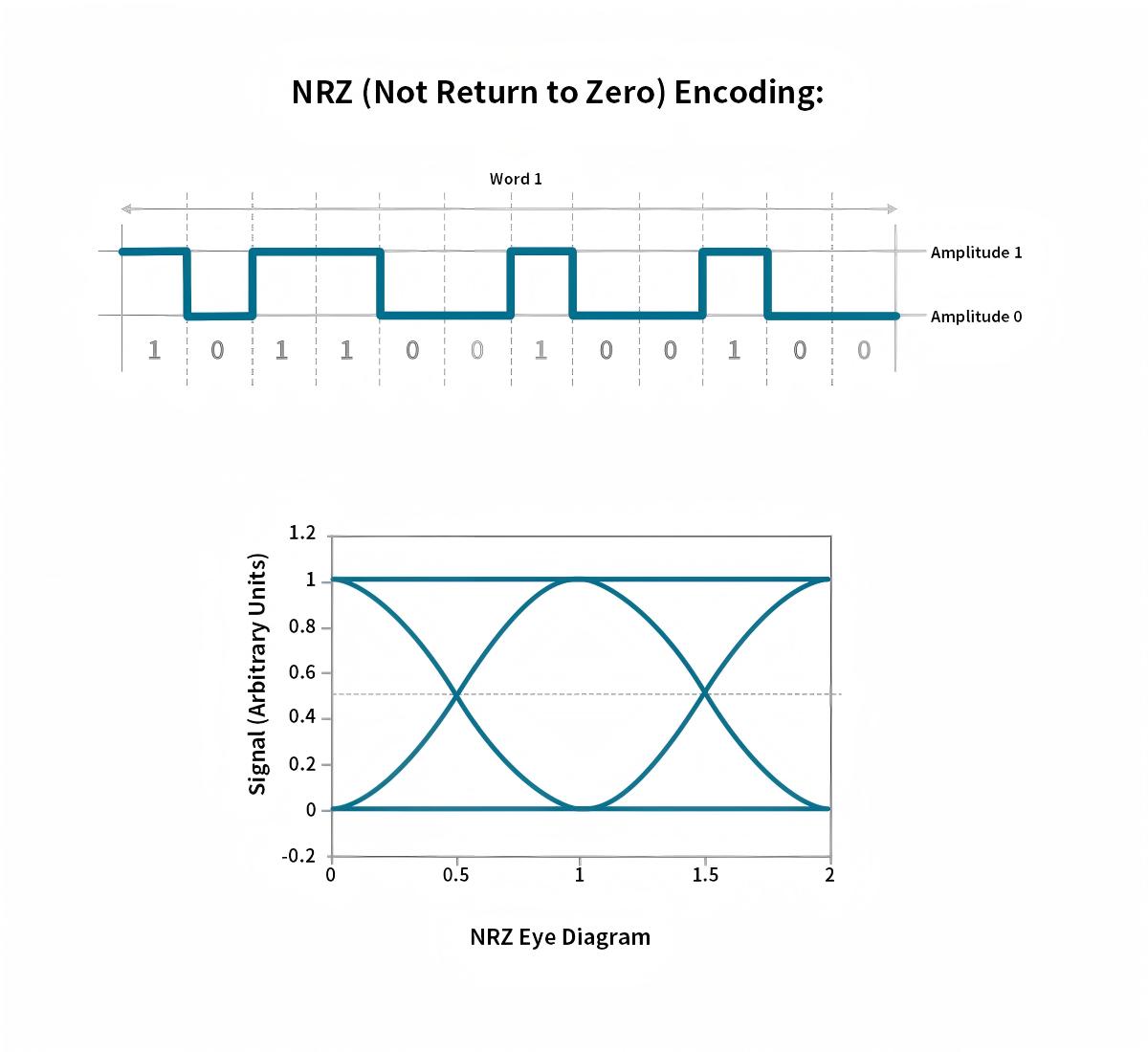
The mainstream 100G solution uses 4×25G NRZ (Non-Return-to-Zero) modulation, a binary signaling scheme that transmits 1 bit per symbol period. Four parallel 25G lanes combine to deliver a total 100G bandwidth. This architecture features low technical barriers, excellent power efficiency, and strong interference immunity, with an extremely low failure rate validated by more than a decade of global commercial deployment. For advanced use cases, single-wavelength 100G PAM4 solutions are also available, enabling 100G transmission over a single lane to simplify cabling for high-density deployments.
Leading Commercial Solutions
● 100GBASE-SR4: Multimode short-reach solution with an MPO-12 interface, supporting 100m over OM3 fiber and 150m over OM4 fiber. It is the dominant solution for ToR switch uplinks and short-reach server interconnects within data centers.
● 100GBASE-LR4: Single-mode long-reach solution with CWDM wavelength division multiplexing and an LC duplex interface, supporting 10km transmission over single-mode fiber. It is optimized for cross-facility and metro data center interconnects.
● 100GBASE-DR1: Single-wavelength 100G single-mode solution with an LC simplex interface, supporting 500m transmission. It cuts cabling costs in half and is ideal for long-term, high-density 100G deployments.
Advantages: Fully mature global supply chain, stable inventory, extremely low deployment and maintenance barriers, predictable end-to-end costs, and broad compatibility, making it the optimal baseline choice for the vast majority of non-hyperscale data centers.
400G Ethernet: The Core Bandwidth Foundation for the Compute Era
400G Ethernet was standardized in 2017 under the IEEE 802.3bs protocol. After nearly 9 years of technical iteration, it has entered the mass commercial deployment phase, and is the mainstream upgrade path for global hyperscale cloud providers and AI compute facilities. It also serves as the foundational evolution path for future 800G/1.6T high-speed networks.
Technical Breakthrough
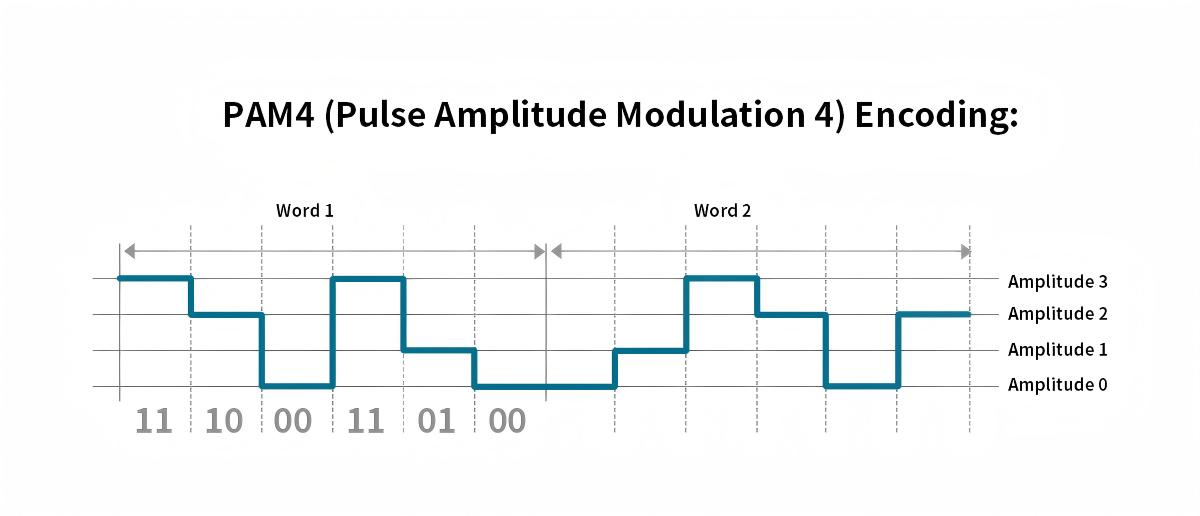
The revolutionary technology behind 400G is PAM4 (4-level Pulse Amplitude Modulation), which replaces traditional NRZ signaling. PAM4 uses 4 signal levels to transmit 2 bits per symbol period, doubling transmission efficiency at the same baud rate. Leveraging PAM4, mainstream 400G solutions use either 8×50G PAM4 or 4×100G PAM4 architectures, delivering 4x the bandwidth of 100G without a significant increase in lane count.
Additionally, 400G optical transceivers universally integrate high-performance DSP chips to handle signal equalization, error correction, and compensation, addressing the lower signal-to-noise ratio and higher transmission loss inherent to PAM4 modulation, and ensuring stable long-haul, high-speed transmission.
Leading Commercial Solutions
● 400GBASE-SR8: Multimode short-reach solution with 8×50G PAM4 and an MPO-16 interface, supporting 100m over OM3, 150m over OM4, and 200m over OM5 fiber. It is the benchmark solution for high-density interconnects in AI training clusters and hyperscale data centers.
● 400GBASE-SR4.2: Multimode backward-compatible solution with 4 lanes of bidirectional 50G PAM4 and an MPO-12 interface, fully reusing existing 100G SR4 cabling infrastructure. It is the core solution for smooth migration from 100G to 400G.
● 400GBASE-DR4: Single-mode medium-reach solution with 4×100G PAM4 and an MPO-12 interface, supporting 500m over single-mode fiber. It is optimized for cross-facility interconnects in large data centers, with a seamless evolution path to 800G DR8.
● 400GBASE-FR4/LR4: Single-mode long-reach solution with CWDM wavelength division multiplexing and an LC duplex interface, supporting 2km (FR4) and 10km (LR4) transmission. It is ideal for metro data center interconnects and is fully compatible with existing single-mode cabling.
Advantages: 4x higher per-port bandwidth density, 75% fewer switch ports required for the same total bandwidth, significantly reduced over-subscription ratios in spine-leaf architectures, lower transmission latency and jitter, and native support for AI/RDMA lossless networks, making it the inevitable evolution path for data centers in the compute era.
100G vs 400G Specification Comparison Table
|
Comparison Item |
100G Ethernet |
400G Ethernet |
|---|---|---|
|
Standardization Maturity |
IEEE 802.3ba (2010), fully mature across the supply chain |
IEEE 802.3bs (2017), mass commercial deployment, rapid iteration |
|
Modulation Technology |
Mainstream 4×25G NRZ; advanced single-wavelength 100G PAM4 |
Mainstream 8×50G/4×100G PAM4, doubling transmission efficiency |
|
Per-Port Bandwidth Density |
100G baseline, limited maximum bandwidth per rack |
4x 100G, 4x higher bandwidth in the same rack space, 75% improved over-subscription ratio |
|
Typical Power Consumption |
≤3.5W per transceiver, extremely low absolute power |
10-15W per transceiver, superior power efficiency per Gbps vs 100G |
|
End-to-End Deployment Cost |
Low baseline cost, 30-50% of 400G for equivalent link scale |
Higher absolute per-port cost, superior long-term TCO at scale |
|
Maintenance & Compatibility |
Extremely low operational barrier, compatible with all major vendor equipment, excellent reusability |
Requires specialized operational expertise, with compatible solutions enabling smooth migration |
|
Lifespan & Evolution Path |
Current mainstream, will remain baseline bandwidth for 3-5 years |
Mainstream for the next 10 years, with seamless evolution to 800G/1.6T |
Practical Decision-Making Framework: When to Choose 100G vs. 400G
The core principle of network selection is always: business requirements first, cost predictability, and alignment with 3-5 year evolution plans—no blind pursuit of the latest technology, no unnecessary conservatism. Based on extensive real-world deployment cases, we’ve defined clear selection boundaries.
Scenarios Where 100G is the Preferred Choice: Cost-Effective, Low-Risk, Operationally Friendly
100G is the most cost-effective, lowest-risk choice if your use case matches the following characteristics:
-
Small-to-Medium Enterprise Data Centers, Regional IDCs, Edge Data Centers
Use Case Profile: Primarily north-south user traffic, low east-west server-to-server traffic, workloads including enterprise private cloud, virtualization, office systems, and storage backup. Low per-rack power density, server scale in the hundreds, no large-scale AI compute requirements.
Selection Rationale: 100G bandwidth fully covers peak business demands, with end-to-end deployment costs at just 30-50% of 400G. No additional technical training for operations teams is required, with a stable supply chain and abundant spare parts, delivering maximum return on investment.
-
Smooth Upgrade Scenarios for Existing 10G/25G Networks
Use Case Profile: Existing data center with 10G ToR switches and 25G server access, facing uplink bandwidth bottlenecks, requiring phased upgrades without a full rip-and-replace of the network architecture and cabling system.
Selection Rationale: 100G networks are fully backward compatible with existing 25G server access and MPO-12 cabling. In spine-leaf architectures, 100G uplink ports seamlessly interface with existing equipment, eliminating the need to replace all fiber and switches, minimizing upgrade costs and near-zero business disruption risk.
-
Cost-Sensitive Colocation Data Centers, Government/Industry Cloud Scenarios
Use Case Profile: Strict CAPEX and OPEX controls, predictable business growth, no explosive bandwidth demands, and extremely high requirements for network stability, compliance, and low failure rates.
Selection Rationale: 16 years of global commercial deployment has validated 100G’s ultra-low failure rate. End-to-end solutions meet global compliance standards with predictable operational costs, delivering the perfect balance of performance and cost.
Scenarios Where 400G is Preferred or Required: Bandwidth Density First, Future-Proofed for Compute
400G is the inevitable choice, and even a mandatory requirement, if your use case matches the following characteristics:
Hyperscale Cloud Data Centers, National Compute Hub Nodes
Use Case Profile: Hundreds of thousands to millions of servers, over 80% east-west traffic, workloads including public cloud, CDN, and large model inference. Require extremely low over-subscription ratios and ultra-high port density to reduce network tiers and transmission latency.
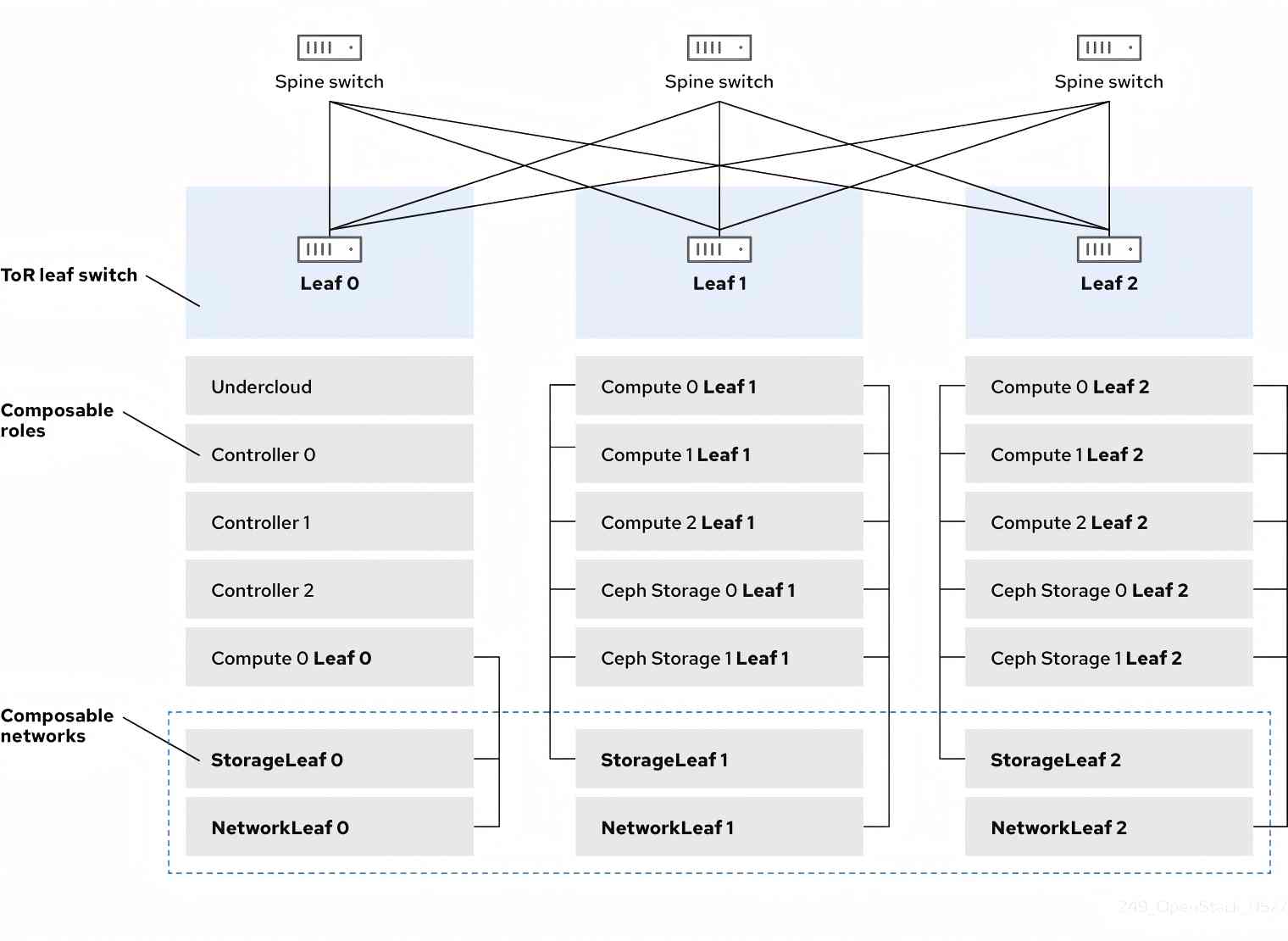
Selection Rationale: 400G delivers 4x the per-port bandwidth of 100G, reducing the number of switch ports required by 75% for the same switching capacity. This drastically cuts the number of devices, rack space, power consumption, and cabling complexity in spine-leaf architectures, delivering significantly better long-term TCO than 100G at scale.
AI Training/Inference Clusters, High-Performance Computing (HPC) Data Centers
Use Case Profile: Multi-GPU/AI chip clusters requiring real-time massive data exchange, strict requirements for RDMA/RoCE lossless networks, and extreme sensitivity to bandwidth, latency, and jitter. Single GPU cards already require over 200G of access bandwidth, with multi-card clusters needing terabit-scale interconnect bandwidth.
Selection Rationale: 400G is the standard baseline for current AI compute clusters. It drastically reduces over-subscription ratios in multi-GPU interconnects, eliminates data transmission bottlenecks, improves AI training efficiency, shortens large model training cycles, and serves as the core foundation for unlocking compute performance.

Greenfield Data Centers with a 3-5+ Year Planning Horizon
Use Case Profile: New data center build with a 5+ year full lifecycle plan, clear business growth and bandwidth upgrade roadmap (e.g., AI, cloud computing, edge-compute convergence), with no desire for another network rebuild in 2-3 years.
Selection Rationale: 400G networks have a longer service life, with a seamless evolution path to 800G/1.6T high-speed networks. Complementary single-mode/OM5 multimode cabling systems support future higher bandwidth solutions, enabling a one-time deployment with long-term evolution, avoiding redundant investment.
Breaking the Either/Or Myth: Smooth Migration Path from 100G to 400G
Many professionals fall into the misconception that choosing 100G locks you out of future 400G upgrades, or that 400G requires a full rip-and-replace of your existing infrastructure. In reality, mature modern solutions enable seamless, low-cost smooth migration from 100G to 400G, with two core focus areas:
Cabling System Reuse and Compatibility
The cabling system is the longest-lived infrastructure in a data center, accounting for over 60% of end-to-end deployment costs, and is the core pain point of upgrades.
● Existing MPO-12 OM3/OM4 multimode cabling used for 100G SR4 is directly compatible with the 400GBASE-SR4.2 solution, with no need for re-cabling. Simply replace the optical transceivers and switches at both ends to upgrade from 100G to 400G, cutting upgrade costs by over 60%.
● Existing LC duplex single-mode cabling used for 100G LR4 is fully compatible with the 400GBASE-FR4/LR4 solution. Future upgrades only require replacing transceivers and equipment, with no changes to the cabling system whatsoever.
Phased Network Architecture Evolution
There is no need for a full network upgrade in one go. A phased "spine-first, leaf incremental replacement" approach can be used:
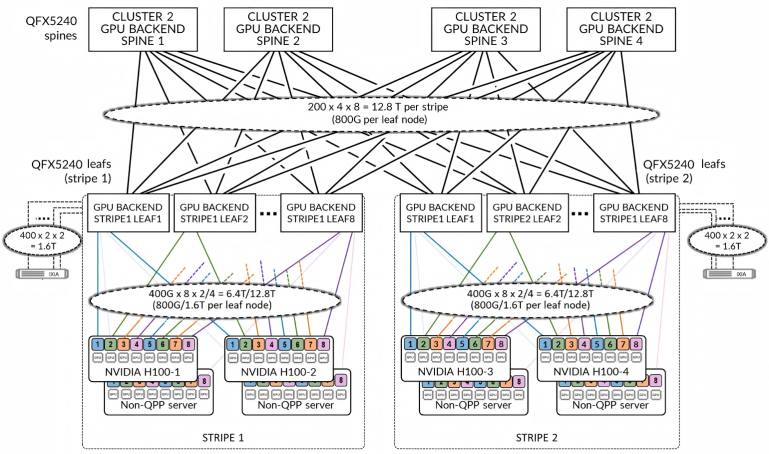
● Phase 1: First upgrade spine switches to 400G ports, while leaf switches retain 100G uplinks. Connect to existing leaf switches via 400G-to-4x100G breakout, increasing total spine switching capacity and resolving uplink bandwidth bottlenecks.
● Phase 2: Incrementally replace leaf switches and server network adapters based on business growth, achieving a full 400G network upgrade with no disruption to normal business operations and zero risk.
Fibermart End-to-End 100G/400G Solutions: Powering Your Data Center Upgrade
Whether you’re sticking with a cost-effective, reliable 100G deployment, or smoothly migrating to a 400G compute-era network, Fibermart—a leading global provider of optical communication solutions—offers a complete portfolio of IEEE-compliant 100G/400G optical transceivers, fiber cabling, and patch panel systems, delivering end-to-end, highly reliable, cost-effective solutions for data centers. Our entire product line is compatible with switches and servers from all major global vendors, including Nvidia, Cisco, Arista, Juniper, and Mellanox, with global fast delivery and 24/7 professional technical support.
Fibermart 100G Data Center End-to-End Solutions
For 100G deployment scenarios, we provide one-stop solutions from transceivers to cabling systems, perfectly optimized for small-to-medium data centers, smooth network upgrades, and cost-sensitive use cases.
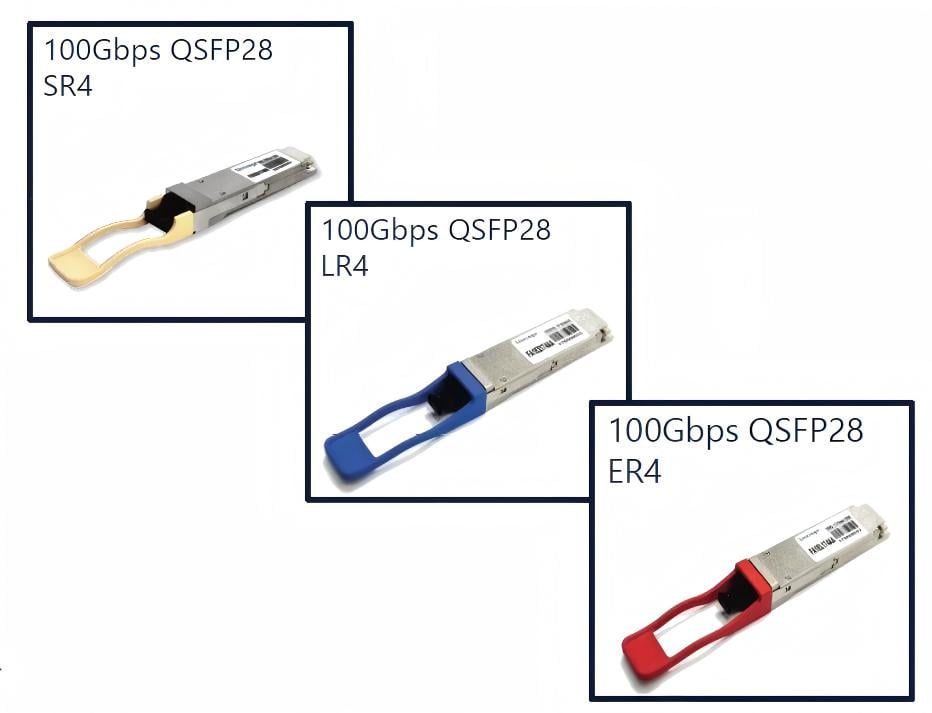
Fibermart 100G QSFP28 Transceiver Portfolio
-
100GBASE-SR4 QSFP28 Transceiver
Key Specifications: 4×25G NRZ modulation, MPO-12 interface, 100m reach over OM3 fiber, 150m over OM4, 0-70℃ operating temperature, typical power consumption of just 2.5W, fully compliant with IEEE 802.3ba.
Advantages: Industrial-grade chipset, ultra-low bit error rate, plug-and-play, 100% compatible with all major vendor equipment, highly competitive pricing for bulk deployment. It is the go-to solution for data center ToR uplinks and short-reach server interconnects.
Target Use Cases: 100G access for small-to-medium enterprise data centers, 10G/25G to 100G network upgrades, short-reach spine-leaf architecture interconnects.
-
100GBASE-LR4 QSFP28 Transceiver
Key Specifications: 4×25G NRZ modulation, CWDM wavelength division multiplexing, LC duplex interface, 10km reach over single-mode fiber, integrated CDR (Clock and Data Recovery) circuit, typical power consumption 3.5W, compliant with IEEE 802.3ba.
Advantages: Superior chromatic dispersion and interference immunity, stable, error-free long-reach transmission, wide temperature operation support, perfectly optimized for cross-facility and metro long-reach data center interconnects.
-
100GBASE-DR1 QSFP28 Transceiver
Key Specifications: Single-wavelength 100G PAM4 modulation, LC simplex single-mode interface, 500m reach, typical power consumption 3W, compliant with IEEE 802.3cu.
Advantages: Simplex bidirectional design cuts cabling costs in half, simplifies high-density cabling maintenance, backward compatible with 25G/50G solutions, making it a cost-effective advanced option for long-term 100G network deployments.
Fibermart 100G Data Center Cabling Solutions
Core products include OM3/OM4/OM5 multimode MPO fiber patch cords, single-mode LC fiber patch cords, high-density MPO patch panels, and pre-terminated trunk cable systems.
Advantages: Uses imported Corning high-purity fiber, with insertion loss ≤0.35dB and return loss ≥50dB, compliant with TIA/EIA international standards. 100% factory terminated and tested, plug-and-play, drastically reducing data center deployment timelines. It is not only fully optimized for 100G transmission, but also compatible with future 400G SR4.2 upgrades, reserving ample headroom for subsequent bandwidth evolution.
Fibermart 400G Data Center End-to-End Solutions
For 400G deployment scenarios, we offer a full product line from smooth migration solutions to AI cluster-optimized transceivers, delivering end-to-end high-performance solutions for hyperscale cloud data centers, AI compute facilities, and long-cycle greenfield data center builds.
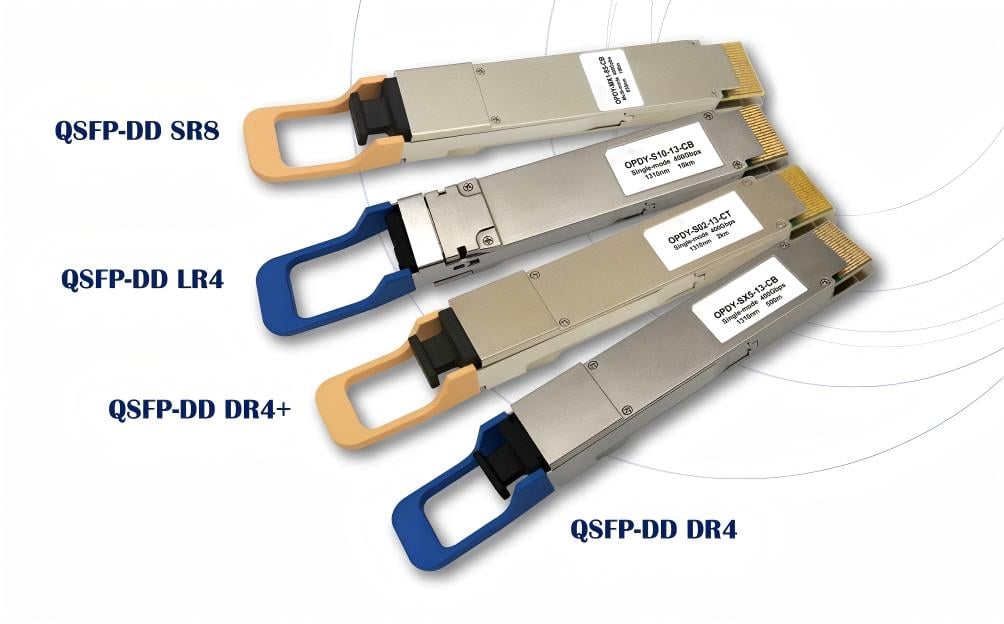
Fibermart 400G QSFP-DD Transceiver Portfolio
-
400GBASE-SR8 QSFP-DD Transceiver
Key Specifications: 8×50G PAM4 modulation, MPO-16 interface, 100m reach over OM3, 150m over OM4, 200m over OM5 fiber, integrated high-performance DSP chip, typical power consumption 12W, compliant with IEEE 802.3bs.
Advantages: Benchmark high-density 400G short-reach interconnect solution, superior signal processing capability, ultra-low bit error rate, perfectly optimized for AI training clusters and high-density spine-leaf interconnects in hyperscale data centers, delivering maximum bandwidth density and drastically reduced cabling complexity.
Target Use Cases: AI training/inference clusters, server access in hyperscale cloud data centers, short-reach high-density spine-leaf network interconnects.
-
400GBASE-SR4.2 QSFP-DD Transceiver
Key Specifications: 4 lanes of bidirectional 50G PAM4 modulation, MPO-12 interface, 70m reach over OM3, 100m over OM4 fiber, typical power consumption 10W, compliant with IEEE 802.3cm.
Advantages: The core solution for smooth migration from 100G to 400G, fully reusing existing 100G SR4 MPO-12 cabling infrastructure with no re-cabling required, cutting upgrade costs by over 60%. It eliminates the core cabling pain point of data center upgrades, making it the preferred solution for migrating existing 100G networks to 400G.
-
400GBASE-DR4 QSFP-DD Transceiver
Key Specifications: 4×100G PAM4 modulation, MPO-12 interface, 500m reach over single-mode fiber, integrated high-performance DSP and FEC (Forward Error Correction), typical power consumption 12W, compliant with IEEE 802.3bs.
Advantages: Highly reliable single-mode medium-reach transmission, optimized for cross-facility interconnects and long-reach spine-leaf links in large data centers, with a seamless evolution path to 800G DR8 and an extended service life, making it the core baseline solution for greenfield 400G data centers.
-
400GBASE-FR4/LR4 QSFP-DD Transceiver
Key Specifications: 4×100G PAM4 modulation, CWDM wavelength division multiplexing, LC duplex interface, 2km (FR4) and 10km (LR4) reach, integrated high-performance DSP and CDR circuit, typical power consumption 14W, compliant with IEEE 802.3bs.
Advantages: LC duplex interface fully compatible with existing 100G single-mode cabling systems, superior chromatic dispersion immunity, stable long-reach transmission, optimized for metro data center interconnects and cross-campus 400G long-reach transmission scenarios.
Fibermart 400G Data Center Cabling Solutions
Core products include OM5 wideband multimode MPO/MTP fiber patch cords, single-mode MPO fiber patch cords, high-density MPO/MTP patch panels, pre-terminated trunk cable systems, and intelligent cabling management systems.
Advantages: Uses Corning ultra-low-loss fiber, with insertion loss ≤0.3dB and return loss ≥55dB, supporting 400G/800G high-speed transmission. MPO/MTP connectors are compliant with IEC international standards, with 100% factory end-to-end testing to guarantee full link transmission performance. It is not only fully optimized for the entire 400G transceiver portfolio, but also compatible with future 800G/1.6T high-speed networks, reserving ample headroom for your data center’s bandwidth evolution over the next 10 years.
Final Summary and Selection Recommendations
100G and 400G networks are never mutually exclusive replacement options—they are complementary solutions tailored to different use cases and stages of business growth.
-
For small-to-medium data centers, cost-sensitive scenarios, and smooth upgrades of existing 10G/25G networks, 100G is the most cost-effective, lowest-risk, and most operationally friendly choice available today. Fibermart’s full 100G product portfolio delivers a stable, reliable, and cost-predictable end-to-end solution for your deployment.
-
For AI compute clusters, hyperscale cloud data centers, and greenfield data centers with a 3-5+ year planning horizon, 400G is the inevitable evolution path. It not only resolves your current bandwidth bottlenecks, but also provides a solid foundation for future compute upgrades. Fibermart’s full 400G product line—from backward-compatible smooth migration solutions to high-performance AI cluster-optimized transceivers—delivers a one-stop 400G deployment service for your facility.
Finally, a reminder for all data center professionals: whether you choose 100G or 400G, prioritize the forward compatibility of your cabling system. Select high-quality cabling products that support future bandwidth evolution to avoid redundant investment in subsequent upgrades.
If you’re planning a data center network upgrade, unsure whether 100G or 400G is the right fit for your business, or need a customized optical communication solution, visit the official Fibermart website today. Our expert technical team will provide one-on-one selection guidance, free link design, and test sample support, helping your data center achieve optimal bandwidth upgrades and unlock the full potential of your compute infrastructure.





No comments have been posted yet.