


.webp)


A silent transformation is unfolding among the racks of data centers worldwide—traditional copper cabling is gradually being replaced by the faint glow of fiber optics. Compared to copper, fiber optics enable higher data transfer speeds and greater bandwidth over long distances, with significantly less signal loss and complete immunity to electromagnetic interference.
Fiber Optic is evolving from a mere transmission medium into a core strategic asset for data centers to meet future challenges.
Why Fiber is the Critical Lifeline of the Modern Data Center
The pace of data center evolution exceeds anything seen before. New business models, the proliferation of cloud architectures, demands for low-latency edge computing, and the march towards 400G and higher bandwidths all impose stringent requirements on the underlying physical network.
Fiber optics have become an irreplaceable cornerstone due to their inherent physical advantages. In the space-constrained, stability-and-speed-critical environment of a data center, every characteristic of fiber is amplified into a key value proposition.
● High Bandwidth & Speed: Fiber transmits data via light pulses, offering virtually limitless potential bandwidth. This allows it to effortlessly support seamless evolution from 10G, 40G to 400G, 800G, and even 1.6T, paving the way for applications like AI training, big data analytics, and real-time video processing.
● Ultra-Low Latency & Long-Distance Transmission: Light travels extremely fast through fiber with minimal signal attenuation. This enables high-speed interconnects across floors, between buildings, and even across campuses within data center complexes, forming the foundation for distributed computing and storage architectures.
● Space & Power Efficiency: Fiber optic cables are thinner and lighter than equivalent-bandwidth copper cable bundles. This significantly saves valuable conduit and tray space, improves cabinet airflow, reduces cooling energy consumption, and is key to achieving high-density deployment.
● Absolute Reliability: Made of glass or plastic and non-conductive, fiber is completely immune to Electromagnetic Interference (EMI) and Radio-Frequency Interference (RFI). In power-dense data center environments, this ensures absolutely pure and stable data transmission.
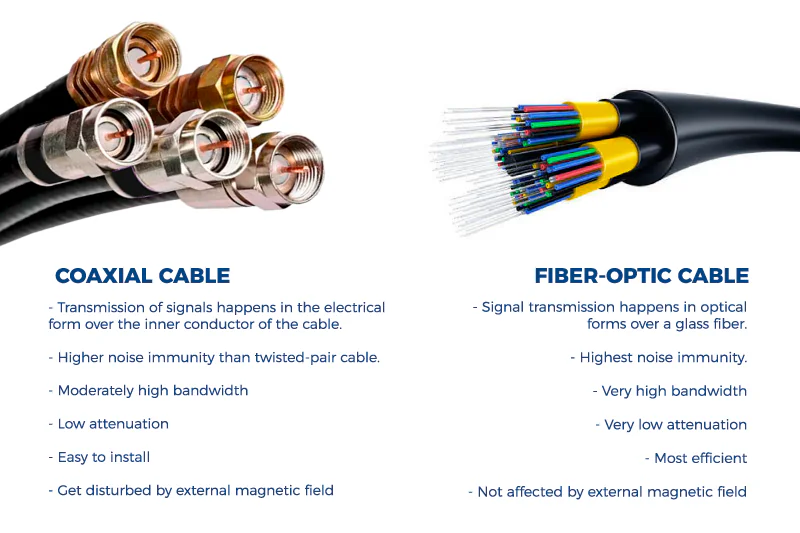
How to Choose the Right Fiber Type and Connectivity Technology?
Selecting the correct fiber type is the first step in building an efficient data center network. This depends primarily on transmission distance, bandwidth requirements, and overall budget.
The core distinction lies between Single-Mode Fiber vs. Multi-Mode Fiber. Single-Mode Fiber (SMF) has an extremely thin core, typically 8-10 microns, allowing only one mode of light to propagate. It exhibits low attenuation over long distances (up to tens of kilometers), making it the absolute mainstay for campus interconnects and metro networks.
Multi-Mode Fiber (MMF) has a thicker core (typically 50 or 62.5 microns), allowing multiple light modes to travel simultaneously. Its manufacturing cost and the cost of associated equipment (like optical transceivers) are relatively lower, making it ideally suited for short-distance, high-bandwidth interconnects within a data center, such as within a cabinet or between devices in the same room.
| Characteristic | Single-Mode Fiber (SMF) | Multi-Mode Fiber (OM3/OM4/OM5) | Applicable Scenario |
|---|---|---|---|
| Core Diameter | 8-10 microns | 50 microns | - |
| Transmission Distance | Long-haul (Up to 10km+) | Short-haul (OM4: 150m for 100G) | Campus Interconnect vs. Intra-room |
| Cost Consideration | Lower fiber cost, higher transceiver cost | Higher fiber cost, lower transceiver cost | Total cost trade-off based on distance |
| Evolution Path | Capacity increased via Wavelength Division Multiplexing (WDM) | Capacity increased via parallel fiber technology | Different technology upgrade paths |
| Key Advantage | Ultra-long range, ultra-large capacity | Cost-effective short-reach solution | Choose based on specific needs |
Comparison of Fiber Types and Application Scenarios
Multi-mode fiber itself has evolved. From OM3 and OM4 to the latest OM5 (Wideband Multimode Fiber), each generation has increased bandwidth and supported reach. OM5 fiber further supports Shortwave Wavelength Division Multiplexing (SWDM), enabling multiple wavelengths over a single fiber, making it a forward-looking choice for migrating to 400G/800G.
At the connector level, high-density MPO/MTP connectors have become mainstream. A single MPO connector can terminate 12, 24, or even more fibers, greatly increasing port density. MPO-based pre-terminated systems are key to enabling rapid deployment and plug-and-play architectures.
How Does Structured Cabling Support Data Center Reliability and Agility?
Disorganized point-to-point cabling is an operational nightmare for data centers. Modern data centers widely adopt structured cabling systems—a hierarchical, modularly designed physical network infrastructure.
It typically follows standards like TIA-942 or ISO/IEC 24764, dividing the cabling into areas such as the Main Distribution Area (MDA), Intermediate Distribution Area (IDA), Horizontal Distribution Area (HDA), and Equipment Distribution Area (EDA). This architecture not only provides clear management but also facilitates Moves, Adds, and Changes (MACs), enabling rapid response to business needs.
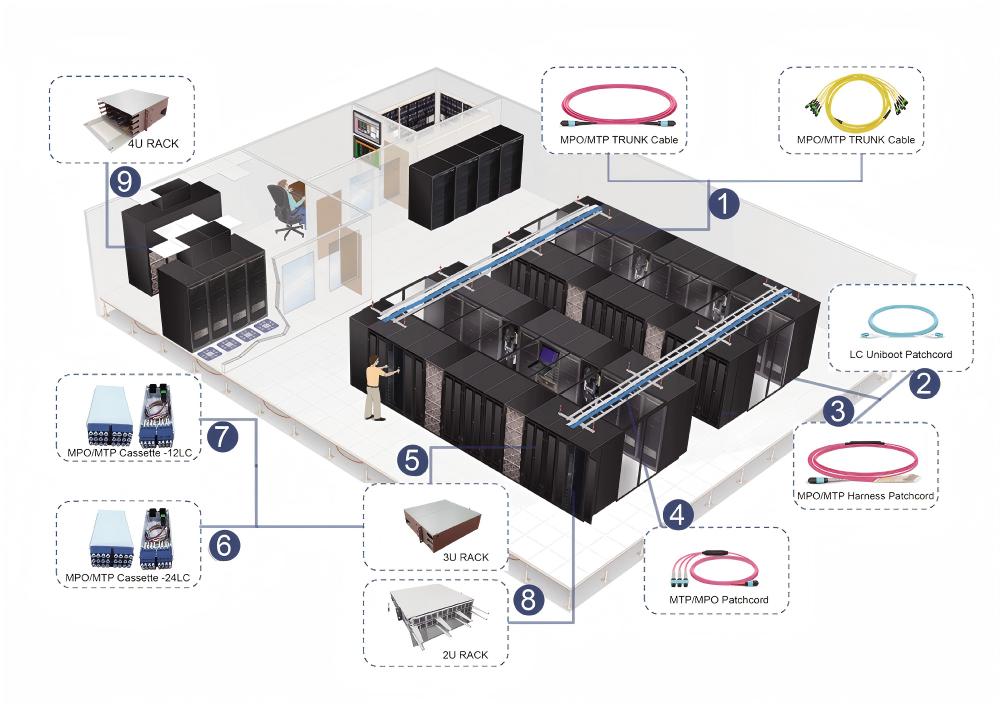
Cabling design must consider scalability. When the network evolves from 10G to 40G/100G and even 400G, the ability to upgrade by simply changing transceivers and patch cords at both ends, without replacing the backbone fiber, is central to investment protection. For example, a pre-deployed 12-fiber MPO trunk can be flexibly adapted to different speed device ports using various breakout cables and modules.
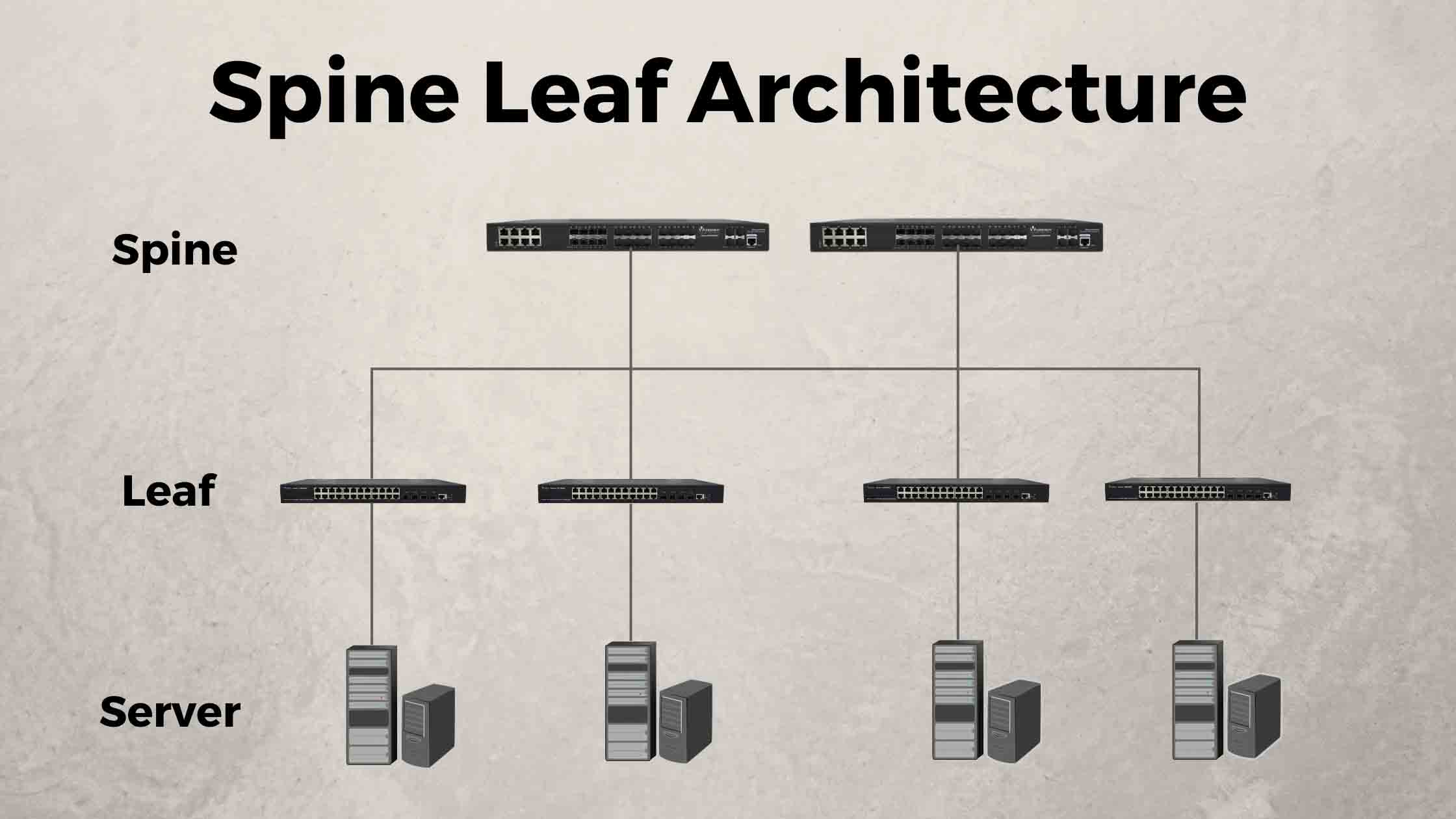
The popularity of the Spine-Leaf network architecture also influences cabling design. This full-mesh interconnect architecture requires each leaf switch to connect to all spine switches, leading to a surge in connection counts. High-density MPO pre-terminated systems, due to their deployment efficiency and manageability, have become the ideal choice to support Spine-Leaf architectures.
How Do Pre-termination and High-Density Technologies Solve Real-World Challenges?
Facing pressures of deployment speed, space utilization, and operational complexity, innovative fiber solutions continue to emerge.
Pre-terminated Fiber Optic Systems represent the current benchmark practice. Factories perform cable cutting, termination, and testing in a controlled environment, then ship complete modular components (like MPO trunk cables, patch panels) to the site.
This offers revolutionary advantages: Deployment speed increases by up to 80%, requiring only simple plug-and-play on-site; performance consistency is extremely high, avoiding uneven loss or contamination from field polishing; significantly reduces the requirement for advanced technician skills on-site.
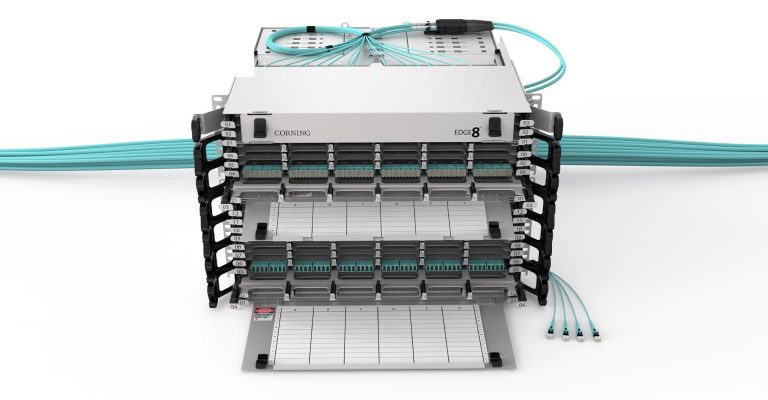
Corning's EDGE8® solution is a representative in this field. Based on an 8-fiber design, it claims to achieve 100% fiber utilization, eliminating the need for conversion modules, simplifying the upgrade path from 40G to 400G, and saving up to 25%-50% in installation time and cost.
High-Density Solutions are equally critical. Achieving port configurations of 96 fibers or higher density within a 1U-high patch panel maximizes rack space utilization. Combined with LC duplex or MPO high-density connectors, they meet explosively growing connection demands within limited space.
Advanced Cleaning & Monitoring Technologies ensure system reliability. For instance, connectors featuring factory pre-cleaning (like CleanAdvantage™ technology) ensure "ready-to-use" performance, avoiding faults introduced by improper field cleaning. Integrated optical power monitoring modules enable real-time performance monitoring of passive links, facilitating predictive maintenance.
How Will Co-Packaged Optics and Smarter Networks Evolve?
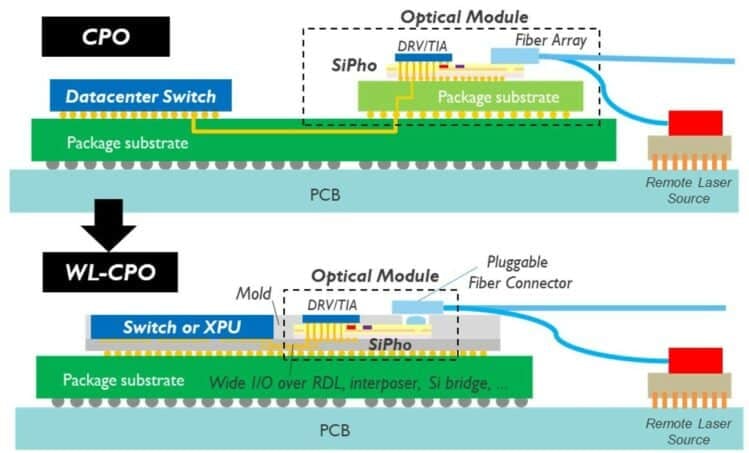
Technological evolution never stops. Co-Packaged Optics (CPO) is seen as the next breakthrough technology. CPO co-packages the optical engine and the switch chip on the same substrate, drastically shortening electrical signal paths. It can significantly reduce system power consumption and latency while increasing I/O density, born specifically to meet the extreme demands of AI/ML supercomputing clusters.
To meet ever-growing bandwidth demands, the industry is exploring higher-rate solutions based on 2-fiber or 8-fiber connectivity as the foundation for migration to 400G and beyond. Simultaneously, increases in per-lane data rates (from 25G to 50G, 100G) combined with more advanced multiplexing techniques (like denser WDM) will continue to unlock the potential of a single fiber.
Intelligent and Automated network management will also become a focus. Integrating digital labeling (e.g., RFID), Data Center Infrastructure Management (DCIM) software with physical layer devices enables precise visual management and asset tracking for every fiber and port, shifting operations from "fire-fighting" to "prevention."
How to Choose a Reliable Fiber Optic Partner for Your Data Center?
Designing and deploying a top-tier data center fiber network requires not only clear technical planning but also a foundation of high-quality, reliable products and components. Every element—from specification-compliant fiber cables and low-loss connectors to adaptable patch panels and modules—impacts the final network's performance and stability.
When selecting products and suppliers, beyond focusing on product performance specs, consider the completeness of the product ecosystem, the expertise of technical support, and supply chain stability.
For engineers and technical decision-makers planning or upgrading data centers, having a procurement platform that offers a wide selection, genuine product assurance, and professional support is crucial.
As a globally recognized online store for optical communication products, Fibermart, leveraging deep industry expertise (its partners have been focused on fiber optic communications since 2010), can provide data center projects with comprehensive one-stop product services. This includes Single-Mode/Multi-Mode fiber cables, MPO/MTP high-density pre-terminated solutions, various fiber optic patch cords, to testing and maintenance tools.
The platform's strength lies in integrating product lines from multiple quality manufacturers. Users can efficiently filter, compare, complete product selection, and streamline procurement based on clear technical specifications, ensuring supply chain support for smooth project execution.
For example:
MTP/MPO Fiber Trunk Cable
40G QSFP+ to LC Breakout Active Optical Cable
100G QSFP28 transceiver module
In a testing lab at Corning in the US, an engineer performs final verification on a 96-fiber cable bundle using an MPO polarity tester. The connection topology on the screen is clear and accurate, with indicator lights flashing a steady green.
These rigorously tested fiber bundles are about to be packaged and shipped to a newly constructed hyperscale data center. They will lie quietly within enclosed cable trays, silently moving massive amounts of data at the speed of light, becoming the invisible digital arteries of the intelligent era.





No comments have been posted yet.