


.webp)


In electronic communication systems and other fields, it is essential for everyone, from professionals to tech enthusiasts, to gradually understand data transfer rates. One common question is how to convert megabits per second (Mbps) to gigabits per second (Gbps). This article aims to clarify these terms and explain these values in a simpler way. We will explore what these data rate measurement units mean and explain why and when they are used to measure broadband internet and network speeds. By the end of this article, readers will not only know how to numerically convert Mbps to Gbps but, more importantly, will understand the practical significance of these speed ranges.

How Are Gigabits per Second (Gbps) and Megabits per Second (Mbps) Related?
Gigabits per second (Gbps) refers to a speed of approximately one billion bits of data transmitted per second, while megabits per second (Mbps) refers to one million bits of data transmitted per second. The conversion between the two is very simple: 1 Gbps equals 1000 Mbps. This conversion is crucial, as it helps us make accurate comparisons when measuring internet speeds and evaluating system and network performance. Understanding that "Gbps represents a much higher speed than Mbps" will help users more clearly assess the required bandwidth capacity and system data processing capabilities when choosing broadband plans or evaluating network performance.
Interpreting Gbps and Mbps: Definitions, Conversion, and Practical Applications
Gbps (gigabits per second) and Mbps (megabits per second) are units used to measure data transfer speeds, primarily for evaluating network performance. Gbps represents one billion bits of data transmitted per second, while Mbps represents one million bits of data transmitted per second. The core difference lies in the order of magnitude: 1 Gbps = 1000 Mbps. This conversion is essential when assessing network bandwidth requirements and application scenario suitability.
Comparison Between Gigabits per Second (Gbps) and Megabits per Second (Mbps)
A transmission speed of 1 Gbps is extremely fast, equivalent to transmitting 1000 megabits of data per second (Note: The original text mistakenly mentioned "800 Mbps," but it should be 1000 Mbps). This high-speed connectivity supports instantaneous transmission of large-capacity data, making it particularly suitable for high-bandwidth scenarios such as 4K ultra-high-definition video streaming, online gaming, and large file downloads. In comparison, internet speeds of 1-10 Mbps can only meet basic needs, such as web browsing, email, or low-resolution video playback. Understanding this difference helps users choose the appropriate network service based on their actual usage scenarios, such as multi-device home networks or enterprise-level applications.
Why Is It Important to Understand the Conversion Between Gbps and Mbps?
Mastering the conversion between Gbps and Mbps helps users more scientifically select internet service plans. Gigabit (Gbps) networks are suitable for high-load tasks, such as multi-device 4K simultaneous streaming, remote collaboration, and data center interactions, significantly reducing latency and improving efficiency. In contrast, megabit (Mbps) plans are prone to lag when multiple users or devices are used simultaneously, affecting the experience. By understanding the unit conversion, users can combine their needs (such as household size and work type) and budget to choose a plan that meets performance requirements without wasting resources, thereby optimizing their network experience.
How to Properly Use a Gbps to Mbps Converter?
Step-by-Step Guide to Conversion Calculator
- Clarify the units: Confirm the direction of conversion (Gbps to Mbps or vice versa), paying special attention to comparison scenarios, such as broadband plan speed labels.
- Apply the formula: Remember the core conversion formula: 1 Gbps = 1000 Mbps.
- Enter the value: Input the value to be converted in the converter field (e.g., enter "1.5" for 1.5 Gbps).
- Perform the calculation: Click the "Convert" button to generate the result.
- Verify the result: Check if the output value matches expectations (e.g., 1.5 Gbps should convert to 1500 Mbps).
- Practical application: Use the conversion result to evaluate network needs and select a suitable internet plan.
By following these steps, users can accurately perform unit conversions, providing reliable data for network performance evaluation.

Common Mistakes and How to Avoid Them
- Unit confusion: Avoid mixing up Gbps and Mbps. Always confirm the conversion direction (1 Gbps always equals 1000 Mbps).
- Input errors: Double-check numbers when entering values. Using copy-paste functions in calculators can reduce manual errors.
- Ignoring decimals: Pay attention to values with decimals (e.g., 0.5 Gbps = 500 Mbps). Missing a decimal point can cause a 1000-fold error.
- Disregarding real-world scenarios: Recognize that theoretical speeds are limited by network conditions (e.g., router performance, provider bandwidth). Actual speeds are often lower than theoretical values.
Avoiding these mistakes improves conversion accuracy and helps users make more informed decisions.
Real-World Data Transfer Rate References
Understanding practical application scenarios helps users intuitively grasp speed requirements:
- HD video streaming: 5 Mbps (720p)
- 4K ultra-high-definition streaming: 25 Mbps
- Large file downloads: 100 Mbps - 1 Gbps (depending on file size and network capacity)
- Online gaming: 3-6 Mbps (basic requirement; competitive gaming requires higher stability)
These examples help users determine the required bandwidth based on their activities (e.g., home entertainment, remote work), avoiding over- or under-selecting plans.
By mastering conversion methods, avoiding common mistakes, and considering real-world scenarios, users can more scientifically plan network resources and optimize their experience.
Why Do Providers Offer Gigabit Internet?
Advantages of Gigabit Broadband Plans
When exploring 1 gigabit per second (1 Gbps) internet plans, I found the following significant advantages:
- Extreme speeds: Extremely high download and upload speeds, nearly eliminating lag and buffering, enhancing experiences like streaming, gaming, and video calls.
- Multi-device support: Suitable for households or businesses with multiple devices connected simultaneously, supporting multiple high-bandwidth activities in parallel.
- Improved efficiency: Reduces waiting time for file transfers and cloud collaboration, significantly boosting productivity (as emphasized by many authoritative websites).
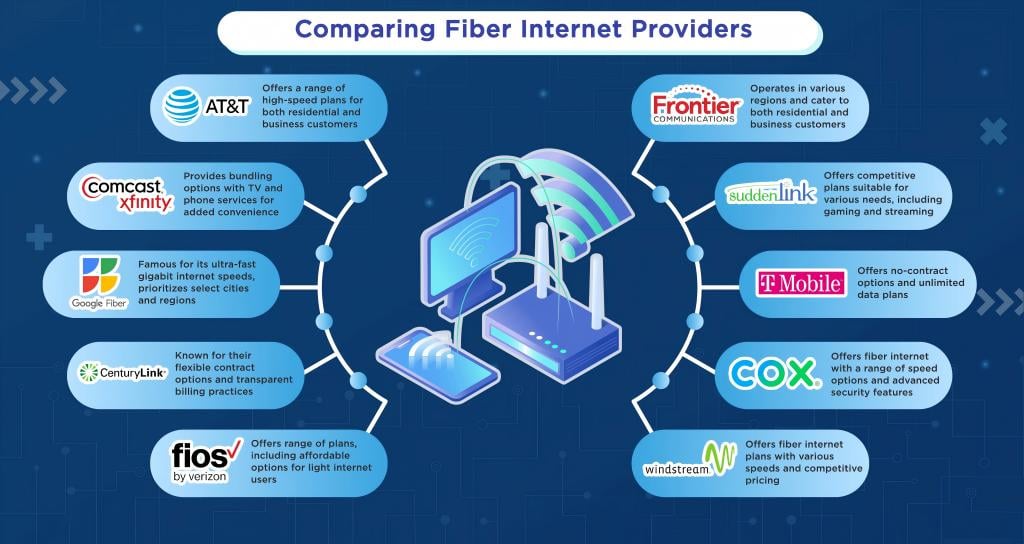
Who Needs Gigabit Speeds?
- Digital professionals: Those who regularly work in graphic design, video editing, or software development.
- Multi-device households: Families simultaneously engaged in streaming, online gaming, and remote work.
- Business users: Companies relying on cloud applications and data storage to maintain efficient operations.
Impact of Internet Speed on Daily Life
Today, internet speed is a necessity, directly affecting productivity and entertainment experiences:
- Entertainment scenarios: Gigabit connections support buffer-free 4K streaming and low-latency online gaming.
- Remote work: High-speed networks ensure smooth video conferences, fast file sharing, and efficient cloud services.
- Educational needs: Stable speeds guarantee uninterrupted online classes, enhancing virtual learning outcomes.
Choosing the right internet speed significantly optimizes the quality of network interactions, ensuring seamless online activities.
How Many Megabits per Second are in a Gigabit per Second?
Decimal Conversion Principle
1 Gbps = 1000 Mbps (based on the International System of Units: "giga" represents 10^9, "mega" represents 10^6). This conversion helps accurately understand modern data transfer rates.
Detailed Explanation of Converting 1 Gbps to Mbps
Conversion method: Multiply the Gbps value by 1000 (e.g., 1 Gbps = 1000 Mbps). This conversion is crucial for data management and bandwidth planning in the telecommunications field.

Why Use a Conversion Calculator?
- Avoid human error: Automated tools reduce mistakes in complex calculations.
- Efficient decision-making: Helps businesses and individuals allocate bandwidth reasonably, ensuring selected plans meet actual needs.
- Functional integration: Good calculators may also support other unit conversions (e.g., MB to KB).
How to Easily Convert Between Mbps and Gbps?
Steps to Use a Conversion Calculator:
- Enter the value (e.g., 100 Mbps).
- Select the conversion direction (Mbps to Gbps or vice versa).
- The tool automatically calculates (100 Mbps ÷ 1000 = 0.1 Gbps).
- Obtain the result and apply it to real-world scenarios.

Key Features of a Converter:
- Accuracy: Ensures precise results based on standard algorithms.
- User-friendly interface: Simple and easy-to-understand design.
- Efficient calculation: Fast response, suitable for office scenarios.
- Multi-platform compatibility: Supports online or software forms.
- Extended functionality: Some tools support other unit conversions (e.g., 4.5 Mbps to Gbps).
Practical Conversion Examples:
- 100 Mbps to Gbps: 100 ÷ 1000 = 0.1 Gbps.
- 1 Gbps to Mbps: 1 × 1000 = 1000 Mbps.
These basic conversions are core skills in network planning, telecommunications management, and data transmission fields, requiring a combination of accuracy and practicality.
By mastering the above content, users can scientifically evaluate their needs and optimize network resource allocation, avoiding overconsumption or insufficient performance.
Frequently Asked Questions (FAQs) on Mbps and Gbps
How many megabits are there in a gigabit?
A: A gigabit per second is one thousand megabits per second. To express it in the Gbps metric, the Gbps should be multiplied by 1000. For instance, 1 Gbps equals 1000 Mbps, 2 Gbps equals 2000 Mbps, and so forth.
How do megatons and gigatons fit into the overall scale of bytes?
A: Megabits (Mb) and gigabits (Gb) are more familiar units of data measurement, mainly concerned with conveying speed, whereas the latter is more common regarding data and its storage capacity, while 8 bits is a single byte. Thus, 1 MB = 8 Mb and 1 GB = 8 Gb also apply. The unit bits are used when measuring connection bandwidth, not the byte.
What is the difference between Mbps and MBps?
A: Mbps is short for megabits per second, whereas MBps is the short form for megabytes per second. The most important thing to note is that lower case ‘b’’ is used in Mbps, which is for bits, while upper case ‘B’’ is for MBps, which is for Bytes. Considering 1 byte = 8 bits, then 1 MBps will equal 8 MBps. For instance, a 100 Mbps wired connection is the default for a 12.5 MBps download.
How many megabits make up a single gigabit per second?
A: The measure of one Gigabit per second (Gbps) contains 1000 Mega-bit per second (Mbps). This conversion is important when variables such as internet speeds or transfers are varied. For now, if a provider offers a gigabit Internet connection, expect a speed of up to 1000 Mbps.
Why are Gigabit internet providers companies popular?
A: The service providers take advantage of the market to meet the needs of individual clients and also to target fast internet providers who are priorities. Individuals are now comfortable with faster connections due to the introduction of gigabit internet (1 Gbps/ 1000 Mbps). It facilitates fast downloads, unhindered streaming, speedy file transfer, and efficiently handling numerous connected devices. This is especially useful in homes with heavy internet users, gamers, or businesses with huge data transfer needs.
How do I convert gigabits in a second to megabits?
A: When converting Giga-bits per second (GB) to Mega-bits per second (MB), it is important to note that the formula is simple, where the Gbps value is multiplied by 1000.
For example:
– 1 Gbps = 1 x 1000 = 1000 Mbps
– 2.5 Gbps = 2.5 x 1000 = 2500 Mbps
– 10 Gbps = ten x1000 = 10000 mbps.
If necessary, an online calculator can be used to convert these units metrically.
What is the main difference between 100 Mbps and 1 Gbps in construction?
A: The most distinguishing difference between the two connections comes with the amount of data transferred in every other second in the gigabytes discussion. A connection of 1 Gbps is ten times better than a 100 Mbps connection. In practical terms, 100 Mbps would enable the download of a file of size 1 GB in roughly 1.5 minutes, whereas a 1 Gbps speed will download the same file size of 1GB in approximately 8 seconds. John says a gigabit connection does all of the above but does them in a better way- faster downloads, smooth 4K video streaming, faster file transfer, and better multi-device usage.





No comments have been posted yet.