


.webp)


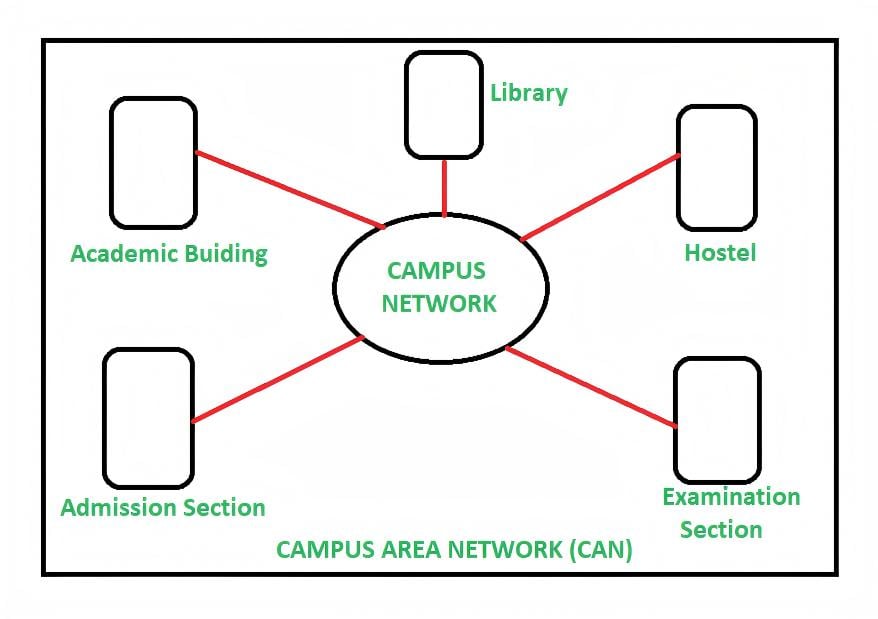
A modern university campus consists of various buildings such as libraries, classrooms, laboratories, and dormitories. These dispersed nodes require a unified network to connect them, forming the campus network.
The design goal of a campus network is to provide high-speed, reliable, and secure connectivity within a limited physical area.
Core Concepts of Campus Networks
A campus network, typically referred to as a Campus Area Network (CAN), serves a relatively concentrated geographical area, such as a university campus, corporate park, or hospital complex.
Unlike Wide Area Networks (WANs) that cover entire cities or countries, the defining characteristics of a campus network are its limited geographical scope and unified organizational management.
This means that all infrastructure within a campus network is usually owned and operated by a single organization (like a university or company), enabling centralized control, uniform security policies, and efficient resource management.
Technically, a campus network interconnects Local Area Networks (LANs) within multiple buildings via a high-speed backbone, creating a unified network environment. This allows users in different buildings to seamlessly access shared resources, applications, and services.
Campus networks need to provide stable connections for hundreds, thousands, or even tens of thousands of concurrent users, supporting diverse needs from basic web browsing to HD video streaming and virtual reality applications.
Significant Advantages of a Robust Campus Network
A well-designed and implemented campus network delivers significant benefits to an organization, with enhanced communication/collaboration efficiency and strengthened security management being two of the most prominent.
Efficient Communication and Collaboration is a primary value proposition of a modern campus network. It eliminates communication barriers between buildings and departments, providing seamless connectivity that enables real-time collaboration, file sharing, and application access across the entire campus infrastructure.
This enhanced connectivity provides robust support for video conferencing, unified communications, and cloud-based productivity tools.
Centralized Security and Policy Management is another key advantage. Through a campus network, an organization can implement and enforce consistent security policies across all buildings and network segments from a centralized management platform.
This unified approach simplifies compliance, reduces security vulnerabilities, and provides comprehensive visibility into network traffic.
Improved Performance and Reliability are also crucial values of a campus network. By optimizing traffic flow, implementing Quality of Service (QoS) policies, and providing redundant connection paths between critical systems, a campus network delivers superior performance compared to multiple independent networks.
This enhanced reliability is essential for supporting mission-critical applications and real-time processes.
Key Elements of Campus Fiber Optic Network Design
Fiber optic cable has become the preferred transmission medium for modern campus backbone networks, primarily due to its high bandwidth capacity and immunity to electromagnetic interference. In selecting fiber, network designers must decide between single-mode and multimode fiber based on transmission distance and bandwidth requirements.
Single-mode Fiber has a small core diameter (approx. 8-10 micrometers), uses a laser light source, and is suitable for long-distance transmission, often exceeding 40 kilometers.It offers higher bandwidth capacity, making it ideal for campus backbone infrastructure, especially for connecting buildings that are far apart.
Multimode Fiber has a larger core diameter (approx. 50-62.5 micrometers), uses an LED light source, and is best suited for short-distance applications, typically not exceeding 2 kilometers.Its bandwidth is sufficient for intra-building or campus network needs, and it is lower in cost and simpler to install.
The table below compares key differences between traditional campus networks and all-optical campus networks:
| Comparison Dimension | Traditional Campus Network | All-Optical Campus Network |
|---|---|---|
| Network Architecture | Three-tier (Core, Aggregation, Access) | Two-tier, flattened architecture |
| Transmission Medium | Primarily copper cable | All-fiber |
| Bandwidth Capacity | Typically Gigabit backbone, 100Mb to desktop | 10 Gigabit backbone, Gigabit/10Gb to desktop |
| Transmission Distance | Limited by 100-meter Ethernet cable constraint | Up to 40 kilometers |
| Operational Complexity | Multiple device layers, difficult fault isolation | Simplified devices, centralized management |
Determining the quantity of fiber strands is also necessary when designing a fiber network. This requires analyzing current and future bandwidth needs, network topology, and redundancy considerations.
Selecting fiber types and quantities requires detailed analysis, including assessing current application demands, forecasting future growth, and considering unique factors of the specific campus environment.
A campus fiber optic network typically includes several key components: a backbone network serving as the high-speed core connecting campus areas; distribution layer fiber connecting individual buildings to the backbone; and an access layer connecting end-user devices to the network.
Practical Considerations for Campus Fiber Networks
Topology is a core consideration in campus network design. The cabling topology for the campus should be determined before finalizing fiber types to design the cable infrastructure effectively.
Common campus network topologies include star, ring, and mesh structures, each with specific use cases and redundancy characteristics.
Determining Fiber Count is another critical decision point. Determining the number of fiber strands needed for the campus backbone requires detailed analysis, including assessing current and future bandwidth demands, application types, and network growth projections.
Designers must consider redundant paths, interconnection requirements between different buildings, and potential network segmentation strategies.
Modern campus networks face diverse requirements for service isolation. A campus network must not only meet the internet access needs of students and staff but also support various school information acquisition and transmission requirements.
Common service isolation technologies include:
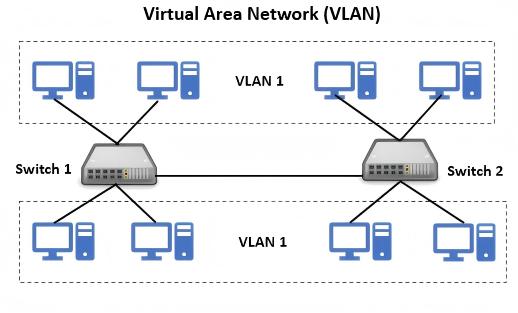
● VLAN Technology: Divides a physical LAN into multiple logical LANs, enhancing security and limiting broadcast domain scope.
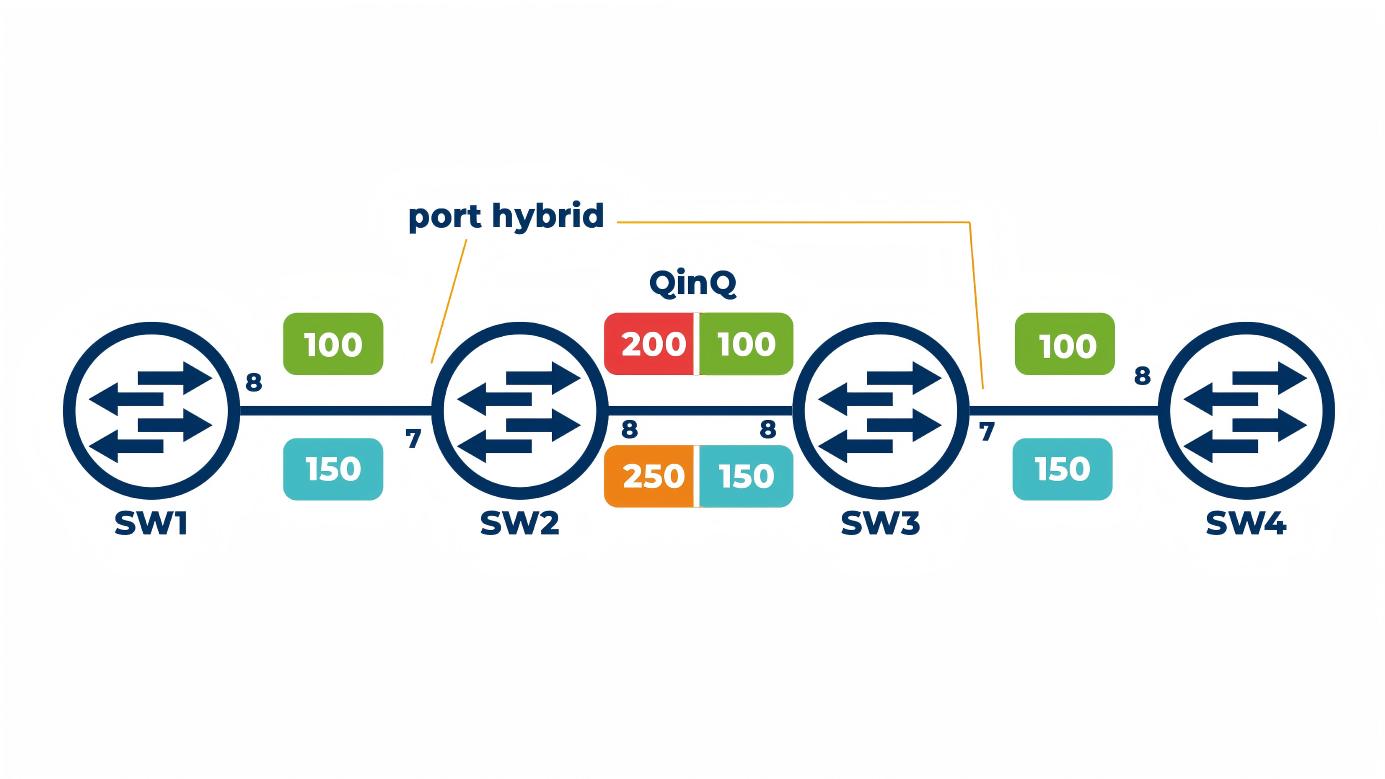
● QinQ Technology: Extends VLAN space by adding a second layer of VLAN tags, enabling fine-grained user management.
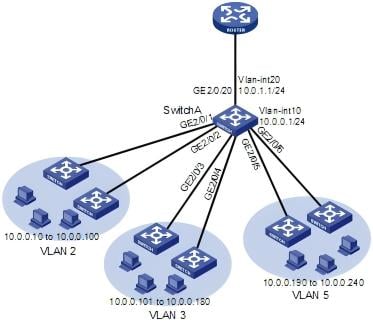
● SuperVLAN Technology: Aggregates multiple Sub-VLANs into one logical Super-VLAN, sharing the same IP subnet and default gateway, thus conserving IP address resources.
● VxLAN Technology: Uses MAC-in-UDP packet encapsulation to extend Layer 2 networks over a Layer 3 domain, overcoming VLAN ID limitations.
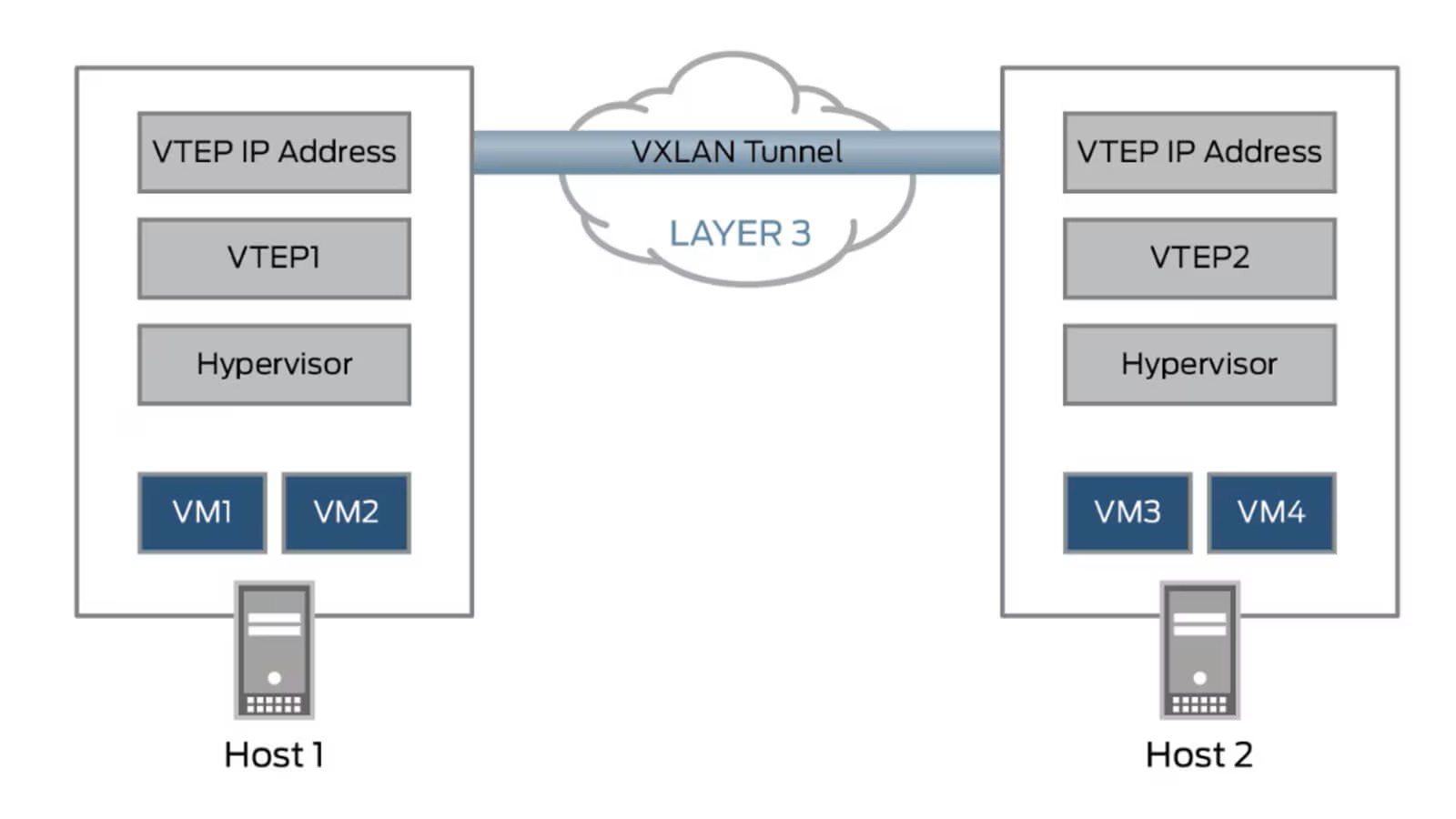
● Security Considerations are paramount in campus network design. Campus networks must implement network segmentation, access control policies, and monitoring systems to protect sensitive data across multiple buildings and network segments.
With the proliferation of IoT devices on campuses, network design must also address the additional security challenges these devices introduce.
Operations and Management (OAM) are key to ensuring the long-term reliable operation of a campus network. Modern campus networks typically employ centralized management tools that provide visibility, control, and automation capabilities for the entire network infrastructure.
These tools enable network administrators to monitor performance, configure devices, troubleshoot issues, and enforce security policies from a unified management console.
With the emergence of private 5G technology, campus networks are undergoing a paradigm shift. The high speed and low latency of 5G make it a promising solution for campus networks, enabling faster data transfer and better connectivity.
Fiber-Based Campus Network Design
University Campus Fiber Optic Network Example
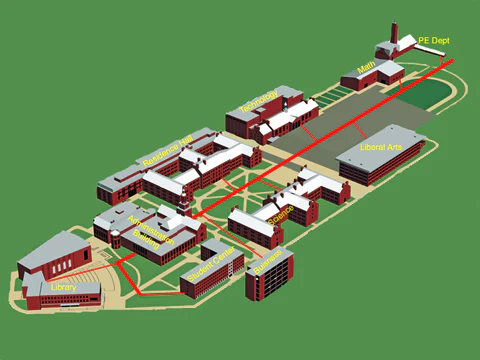
A fiber-based campus network design example typically employs a hierarchical, highly redundant topology. Key buildings like teaching blocks, libraries, and dormitory areas serve as nodes, interconnected via single-mode fiber forming a 10 Gigabit or higher-speed ring or star backbone network, ensuring high bandwidth and low latency for data transmission. Inside buildings, multimode fiber or high-quality Category 6 Ethernet cable connects to access switches on each floor, achieving Gigabit connectivity to desktops. High-performance core switches, redundant power supplies, and link aggregation technologies ensure core network stability. Combined with wireless controllers and Gigabit PoE switches, this enables seamless, secure wireless coverage and IoT device access across the entire campus. The result is a high-performance, manageable, scalable modern campus information infrastructure with excellent Quality of Service (QoS).
Why Use Fiber in Campus LAN Architecture
In traditional campus LANs, copper cables often struggle to handle the massive data loads of modern smart campuses due to limited bandwidth, short transmission distances, and susceptibility to interference. Fiber optic cable, with its ultra-high bandwidth, long transmission distances, and complete immunity to electromagnetic interference, has become the core backbone for building future-proof networks.
Therefore, deploying fiber in campus networks is not only a powerful solution for current needs like high-concurrency internet access, remote teaching, and research data transfer but also an investment in the future. It provides ample headroom for future technologies like VR/AR teaching, high-definition video analytics, and IoT expansion, ensuring the network core remains stable, high-speed, and reliable for decades without requiring cable replacement.
Overview of Fiber Optic-Based Universal Campus Network Design
A typical fiber optic-based universal campus network design employs a classic three-layer architecture (core layer, aggregation layer, and access layer). Single-mode fiber forms the campus backbone ring or star network connecting various buildings, providing extremely high bandwidth and transmission reliability. Aggregation layer devices are connected to the core via fiber optic cables and are responsible for traffic integration and policy management across different areas. Finally, they are connected to access switches within each building via fiber optic cables or high-quality copper cables, enabling flexible access for users and terminal devices. The overall design is based on the high bandwidth, low loss, and anti-interference characteristics of fiber optics, ensuring the network has high performance, high reliability, and good scalability for future technology upgrades.
Fiber Network Equipment Used in Campus LANs
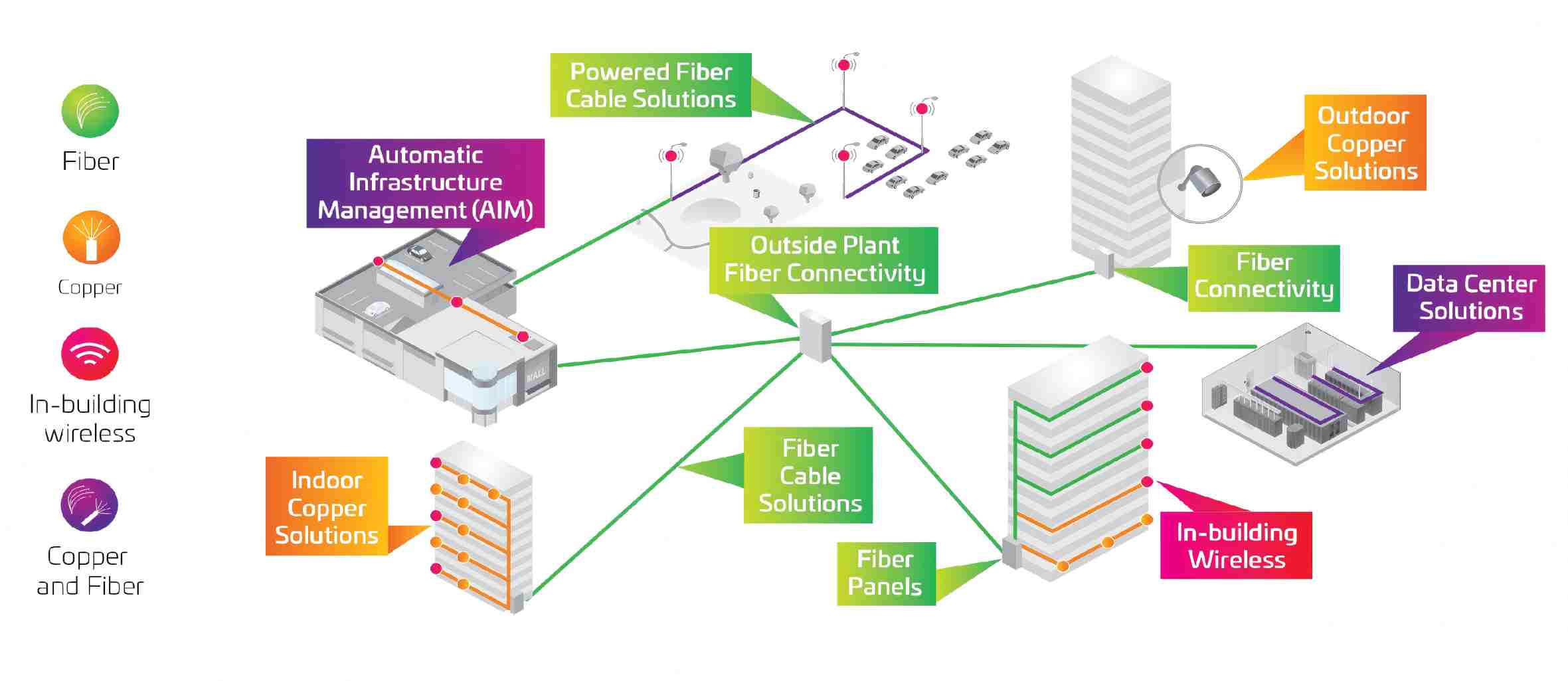
These campus networks must utilize high-quality components, be it fiber or Ethernet. Below are some of the devices we offer.
● Fiber Patch Cables: When building a high-performance campus fiber LAN, the critical interconnections between every core switch, optical module, and patch panel determine the network's ultimate performance. Fibermart's full range of high-quality fiber optic patch cables provides stable, efficient, and lossless end-to-end connectivity solutions for your campus network backbone.
● Network Switches: Fibermart offers various managed and unmanaged network switches with port counts ranging from 2 to 40 or more, in different configurations. Products include ruggedized industrial switches, Gigabit Ethernet switches, fiber optic switches, commercial-grade switches, and PoE switches. All switches are equipped with SFP+ and RJ45 interfaces. Our fiber network switches support VLANs (Virtual Local Area Networks) and can be configured for Layer 3 networking to designate LAN segments.
● Media Converters: Fibermart provides 10/100 and 10/100/1000 dual-function and triple-function media converters. Our specific models have been deployed in mission-critical applications in defense and other sensitive industries.
● PoE Switches: Fibermart offers Power over Ethernet switches and fiber media converters that can transmit both power and data over a single network cable. These devices are very useful in remote areas of the network.
Conclusion
The campus that once relied on aging copper wires for data transmission is now rewoven with a slender yet resilient fiber optic network.As more complex technologies like AI management tools and advanced cybersecurity solutions integrate into campus networks, future trends point towards more intelligent and automated network operations.
Technologies like private 5G deployments promise to further enhance the speed and efficiency of campus networks, making them even more suitable for environments requiring real-time data transfer—whether for testing autonomous vehicles on a university campus or for real-time monitoring of production parameters in an industrial complex.





No comments have been posted yet.