


.webp)


The PLC Splitter (Planar Lightwave Circuit Splitter) is a foundational passive optical component that distributes optical power across multiple output channels via integrated optical waveguide technology. It is widely deployed in FTTH, PON, CATV, and data center interconnection systems, serving as the critical node for signal branching and distribution. Unlike traditional fused biconical taper (FBT) splitters, the PLC Splitter delivers superior wavelength insensitivity, compact structure, and mass-production consistency, making it the preferred choice for large-scale optical access networks.
In practical deployment, the performance of a PLC Splitter directly determines transmission stability, signal quality, and network coverage. Even minor deviations in key parameters can lead to degraded end-user experience, increased bit error rates, or shortened transmission distances. Among all performance metrics, Insertion Loss and Uniformity stand out as the two most critical specifications for evaluating PLC Splitter quality. This article explains their definitions, measurement standards, influencing factors, and selection guidelines to help engineers and purchasers make informed decisions when sourcing a PLC Splitter.
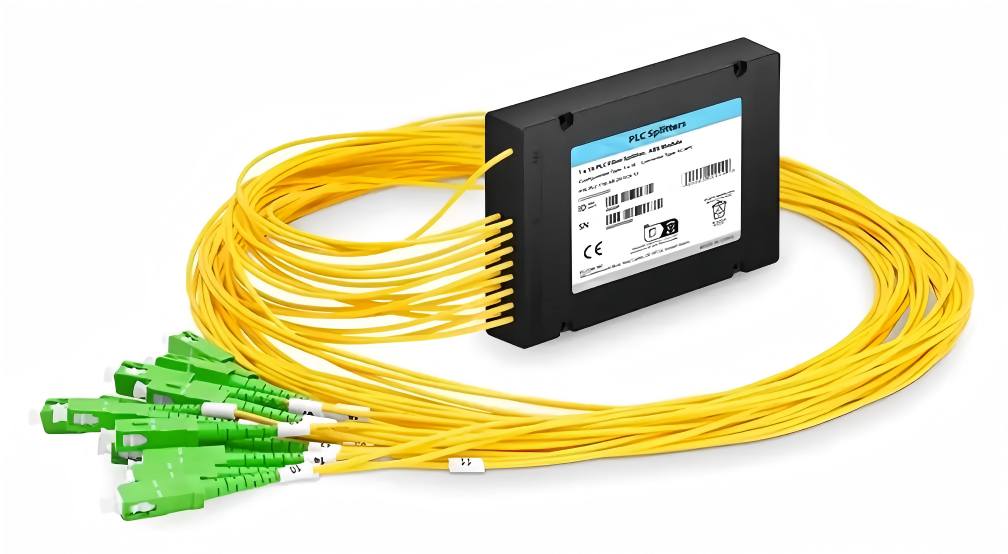
Insertion Loss: The Foundation of PLC Splitter Transmission Efficiency
1. Definition and Mathematical Expression of Insertion Loss
Insertion Loss (IL) refers to the optical power attenuation caused by inserting a PLC Splitter into a fiber link, expressed in decibels (dB). It quantifies how much optical power is lost as light travels from the input port to a single output port. The formula is: IL = -10log₁₀(Pout / Pin) Where Pin is the input optical power and Pout is the output optical power of a specific channel.
For a PLC Splitter, insertion loss includes inherent splitting loss, waveguide transmission loss, coupling loss, and packaging loss. Lower insertion loss means higher energy utilization and stronger residual optical power at the receiver, supporting longer transmission distances and more cascaded network levels.
2.Typical Insertion Loss Values for Common PLC Splitter Configurations
Insertion loss increases with the number of output ports, as power is divided among more channels. Industry-standard values for single-mode PLC Splitters operating at 1260–1650 nm are as follows:
● 1×2 PLC Splitter: typical ≤3.6 dB, maximum ≤4.1 dB
● 1×4 PLC Splitter: typical ≤6.8 dB, maximum ≤7.4 dB
● 1×8 PLC Splitter: typical ≤10.0 dB, maximum ≤10.5 dB
● 1×16 PLC Splitter: typical ≤13.0 dB, maximum ≤13.8 dB
● 1×32 PLC Splitter: typical ≤16.0 dB, maximum ≤17.1 dB
● 1×64 PLC Splitter: typical ≤19.5 dB, maximum ≤20.5 dB
These values are measured under standardized laboratory conditions without connectors. Connectors typically add ~0.3 dB per interface, so field deployments should account for connector losses in link budgets.
3.Key Factors Affecting Insertion Loss of a PLC Splitter
Wafer and Waveguide Quality: High-precision silica-on-silicon wafers with low scattering loss reduce transmission attenuation. Impurities or surface defects increase insertion loss.
Coupling Alignment Accuracy: Precise alignment between fiber arrays and waveguide chips minimizes coupling loss. Manual or low-precision assembly introduces significant extra loss.
Packaging and Protection: Hermetic packaging stabilizes performance; poor sealing causes moisture absorption and structural drift, raising insertion loss over time.
Operating Wavelength: The PLC Splitter supports 1260–1650 nm, but loss varies slightly across wavelengths. Premium devices maintain flat response across the entire band.
Environmental Durability: Wide temperature tolerance (−40°C to 85°C) prevents loss drift in harsh outdoor or cabinet environments.
4.Why Insertion Loss Is Non-Negotiable in PLC Splitter Selection
Insertion loss directly impacts the optical link budget. In FTTH networks, optical line terminals (OLTs) transmit signals to optical network units (ONUs) through splitters and distribution fibers. Excessive insertion loss reduces received power below the receiver sensitivity threshold, causing packet loss, service interruptions, or failed connections.
For high-split systems like 1×32 or 1×64 PLC Splitter modules, controlling insertion loss is critical. Even a 1 dB improvement can extend coverage by hundreds of meters or reduce the number of OLT ports, lowering capital expenditure. Purchasers must prioritize insertion loss compliance with Telcordia GR-1209 and GR-1221 standards to ensure long-term reliability.
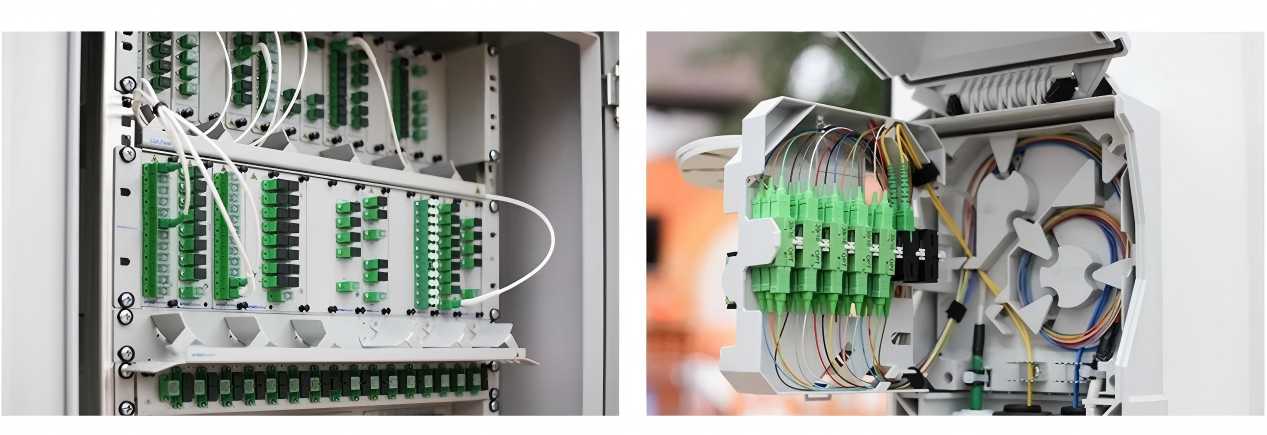
Uniformity: The Guarantee of Balanced Performance Across All Output Ports
1.Definition and Classification of Uniformity
Uniformity (also called loss uniformity) measures the consistency of insertion loss across all output ports of a PLC Splitter. It is defined as the difference between the maximum and minimum insertion loss values among all channels, expressed in dB.
Uniformity has two key dimensions:
Port-to-Port Uniformity: Loss variation across all output ports at a fixed wavelength.
Wavelength-Dependent Uniformity: Loss variation for a single port across the operating wavelength range (1260–1650 nm).
In most applications, port-to-port uniformity is the primary selection criterion, as it ensures equal signal strength to all end-users.
2.Standard Uniformity Specifications for PLC Splitter Products
Industry-standard uniformity values for 1×N PLC Splitters are:
● 1×2 / 1×4: ≤0.6 dB
● 1×8: ≤0.8 dB
● 1×16: ≤1.0 dB
● 1×32: ≤1.5 dB
● 1×64: ≤2.0 dB
High-grade PLC Splitters for enterprise or carrier-grade networks achieve uniformity ≤0.5 dB, ensuring stable service for all users regardless of port location.
3.Factors Determining the Uniformity Performance of a PLC Splitter
Waveguide Lithography Precision: Advanced photolithography ensures consistent waveguide dimensions across the chip, minimizing power imbalance.
● Splitting Circuit Design: Symmetric Y-branch or tree-topology designs improve power distribution uniformity.
● Chip Uniformity: Wafers with consistent refractive index and thickness prevent channel-to-channel deviation.
● Fiber Array Matching: Uniform core diameter and geometric consistency in fiber arrays preserve coupling balance.
● Packaging Stress: Uneven stress from packaging causes waveguide distortion, degrading uniformity.
4.The Critical Impact of Uniformity on Network Stability
Poor uniformity creates uneven power distribution. In a 1×16 PLC Splitter, some ports may operate at optimal power while others fall below sensitivity, causing unstable connections, slow speeds, or service outages for specific users.
For GPON and XGS-PON systems, uniformity directly affects upstream and downstream signal quality. Uneven power triggers frequent power adjustments, increasing latency and reducing network efficiency. In multi-service networks (voice, video, data), non-uniform splitters degrade QoS, leading to customer complaints. Uniformity ensures fair service delivery and simplifies network planning and maintenance.
Synergistic Effects of Insertion Loss and Uniformity on PLC Splitter Performance
Insertion loss and uniformity are interdependent. A PLC Splitter with low insertion loss but poor uniformity creates weak channels, while a device with good uniformity but high insertion loss limits transmission distance. Only when both parameters meet standards can the splitter deliver reliable performance.
In high-density, long-distance networks, both metrics are equally critical. For example, a 1×64 PLC Splitter used in a large residential area requires low insertion loss to maintain sufficient power and tight uniformity to ensure every ONU receives a stable signal.
Manufacturing quality determines the balance between these two parameters. Premium PLC Splitters use ultra-precise waveguides, automated alignment, and hermetic packaging to minimize both insertion loss and uniformity deviation. Inferior products may pass basic tests but degrade over time due to material or process flaws.
Practical Guidelines for Evaluating Insertion Loss and Uniformity When Purchasing a PLC Splitter
1. Verify Compliance with Industry Standards
Ensure the PLC Splitter meets Telcordia GR-1209, GR-1221, and ITU-T standards. Request certified test reports and check that insertion loss and uniformity values fall within standard ranges for the specified port count.
2.Test Under Real-World Conditions
Conduct on-site testing using an optical power meter and light source to measure insertion loss and uniformity across all ports and wavelengths. Test under extreme temperatures to validate long-term stability.
3.Match Specifications to Network Requirements
Short-distance, low-split networks (1×2, 1×4): Prioritize ultra-low insertion loss and uniformity ≤0.6 dB.
Large-scale FTTH/PON (1×16, 1×32, 1×64): Enforce strict compliance for both parameters to avoid coverage gaps.
Outdoor or cabinet deployments: Select devices with stable performance across −40°C to 85°C.
4.Assess Manufacturer Quality Control
Choose suppliers with mature wafer fabrication, automated assembly, and full-quantity testing. Avoid products with vague specifications or no quality certificates.
5.Consider Total Link Budget
Calculate insertion loss including splitters, fibers, connectors, and patches. Ensure sufficient margin for aging and environmental changes. Uniformity should leave no port below receiver sensitivity.
Insertion loss and uniformity are the most critical specifications for evaluating a PLC Splitter. Insertion loss determines transmission efficiency and link budget, while uniformity ensures balanced performance across all channels. Together, they define the reliability, stability, and service quality of optical access networks.
When purchasing a PLC Splitter, buyers must prioritize these two parameters, verify compliance with international standards, and test under realistic conditions. Selecting a high-performance PLC Splitter with low insertion loss and excellent uniformity improves network stability, reduces maintenance costs, and enhances user experience.
As optical networks evolve toward higher bandwidth and larger scale, the performance of PLC Splitters will become even more critical. By focusing on insertion loss and uniformity, network builders and operators can lay a solid foundation for reliable, high-quality optical communication systems.





No comments have been posted yet.