


.webp)


In the rapidly evolving landscape of high-density optical networks, MPO (Multi-fiber Push-On) and MTP cables have emerged as critical components, enabling efficient data transmission for modern data centers, AI compute clusters, and high-speed telecommunications. While these two cable types are often used interchangeably in industry conversations, they possess distinct characteristics, origins, and performance nuances that cater to specific network requirements.
Fundamental Definitions and Origins
What is an MPO Cable?
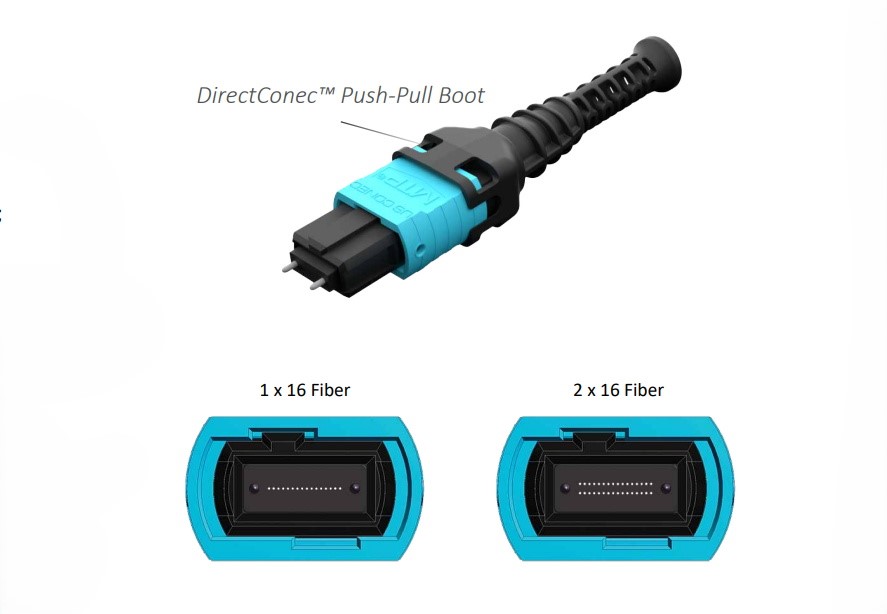
MPO, short for Multi-fiber Push-On, is a standardized multi-fiber connector and cable system designed for high-density optical connectivity. Developed to address the growing demand for compact, high-capacity cabling in data centers, MPO cables consolidate multiple optical fibers (typically 8, 12, 16, 24, or 32 strands) into a single connector ferrule. This design eliminates the need for numerous individual single-fiber patch cords, significantly reducing installation time, cable clutter, and rack space usage. MPO cables adhere to international standards, ensuring compatibility across different manufacturers and network equipment. They are widely recognized as the backbone of scalable optical networks, supporting data rates from 10G to 400G and beyond.
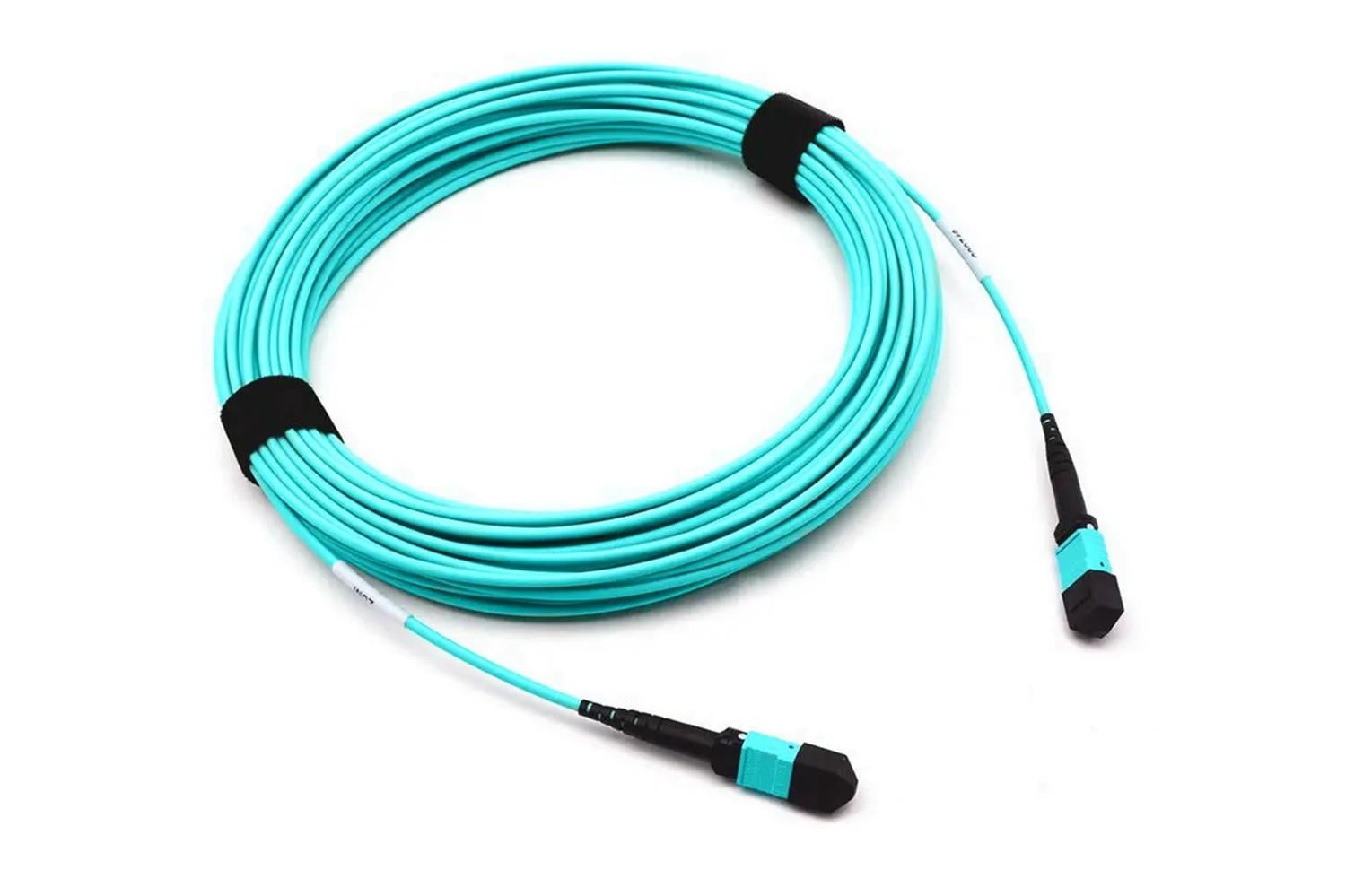
What is an MTP Cable?
MTP, which stands for Multi-fiber Termination Push-on, is a premium, enhanced version of the MPO cable. Developed by US Conec, a leading provider of optical connectivity solutions, MTP cables are built on the MPO standard but incorporate advanced design features to deliver superior performance and reliability. The "MTP" designation is a registered trademark of US Conec, indicating that these cables meet strict manufacturing and quality control criteria. MTP cables retain the high-density advantage of MPO cables but offer improved optical and mechanical properties, making them ideal for mission-critical applications where signal integrity and long-term stability are paramount.
Core Design and Performance Differences
Connector Technology
The most significant distinction between MPO and MTP cables lies in their connector design. MPO connectors are manufactured to meet basic industry standards, with fiber alignment achieved through a standard ferrule and pin configuration. While MPO connectors ensure reliable connectivity for general applications, they may have slight variations in fiber positioning and mechanical tolerance across different manufacturers.
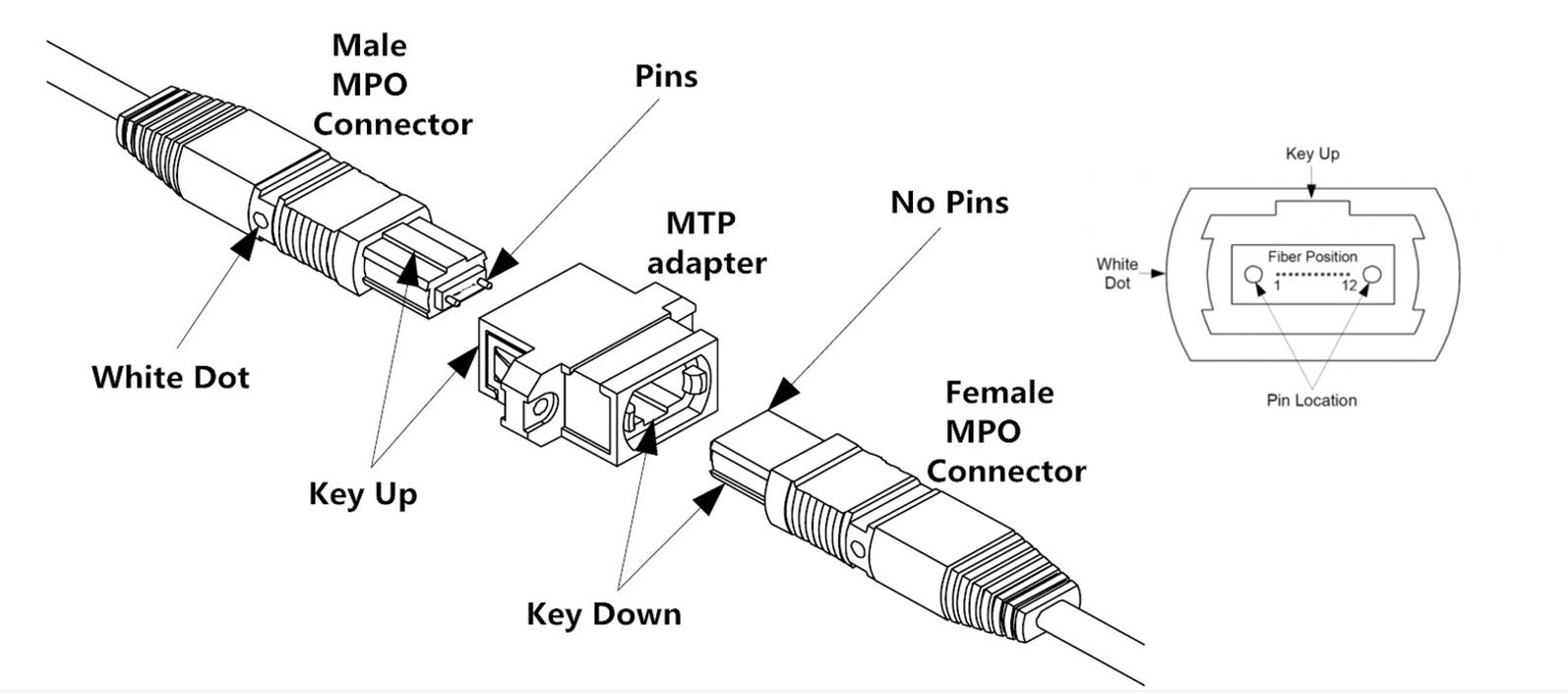
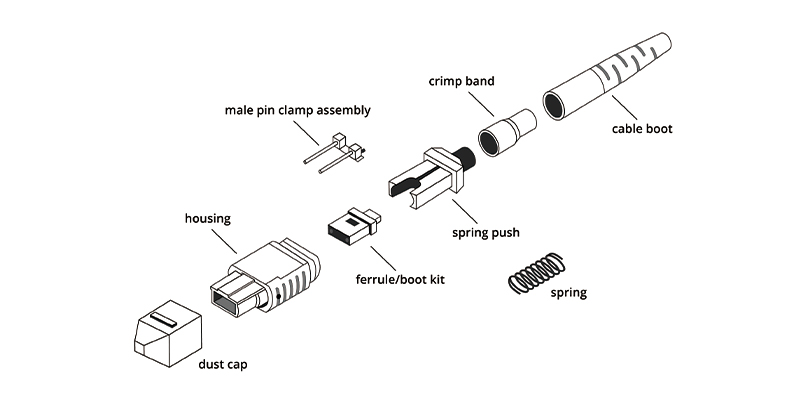
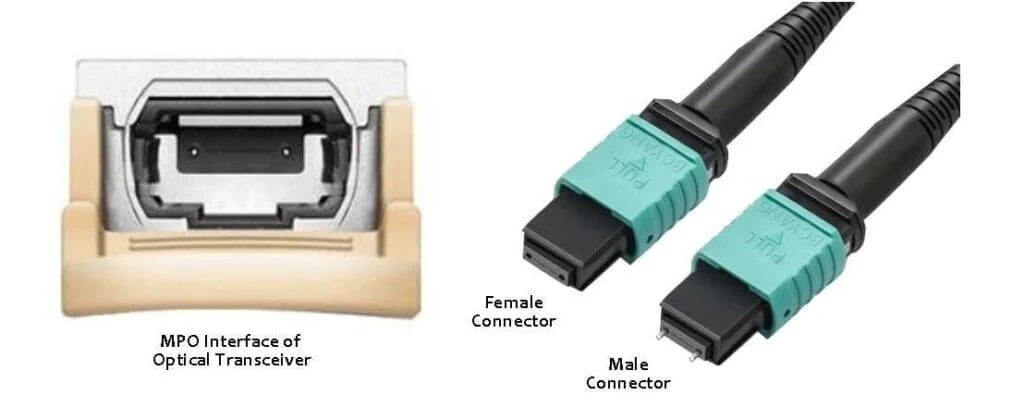
In contrast, MTP connectors feature precision-engineered components that enhance performance. US Conec’s MTP connectors incorporate a floating ferrule design, which compensates for mating misalignments and reduces insertion loss. Additionally, MTP connectors use high-precision pins and sleeves to ensure consistent fiber alignment, resulting in lower insertion loss and higher return loss compared to standard MPO connectors. The enhanced mechanical stability of MTP connectors also makes them more durable, withstanding repeated mating cycles without compromising performance.
Optical Performance Metrics
Optical performance is a critical factor in distinguishing MPO and MTP cables. MPO cables typically have a maximum insertion loss of 0.20 dB per mated pair, which is sufficient for most data center and enterprise network applications. The return loss of MPO cables is generally ≥20 dB, ensuring minimal signal reflection and maintaining signal quality.
MTP cables, however, offer superior optical performance. With a maximum insertion loss of 0.35 dB (and a typical insertion loss of 0.15 dB) per mated pair, MTP cables deliver more efficient signal transmission, making them ideal for high-speed networks operating at 40G, 100G, 400G, and beyond. The return loss of MTP cables is significantly higher, reaching ≥65 dB, which minimizes signal degradation and ensures reliable long-distance transmission. These enhanced optical properties make MTP cables the preferred choice for applications where signal integrity is critical, such as AI/ML compute clusters and high-performance computing (HPC) systems.
Mechanical Durability and Reliability
Mechanical durability is another key difference between MPO and MTP cables. MPO cables are designed to meet standard industry requirements for tensile strength and bend radius. With a minimum bend radius of 7.5mm, MPO cables offer flexibility for routing in tight spaces. However, the mechanical tolerance of MPO connectors may vary, and repeated mating can lead to gradual degradation in performance.
MTP cables are engineered for exceptional mechanical reliability. They feature a reinforced cable jacket and connector housing, providing increased tensile strength and resistance to physical damage. The minimum bend radius of MTP cables is 10mm, which, while slightly larger than that of MPO cables, is offset by their superior mechanical stability. MTP cables can withstand short-term tensile loads of 660N and long-term tensile loads of 200N, ensuring durability in harsh installation environments. Additionally, the precision manufacturing of MTP connectors ensures consistent performance over thousands of mating cycles, making them suitable for applications that require frequent reconfiguration or maintenance.
Application-Specific Use Cases
MPO Cable Applications
MPO cables are well-suited for a wide range of applications where high density and cost-effectiveness are prioritized. Some common use cases include:
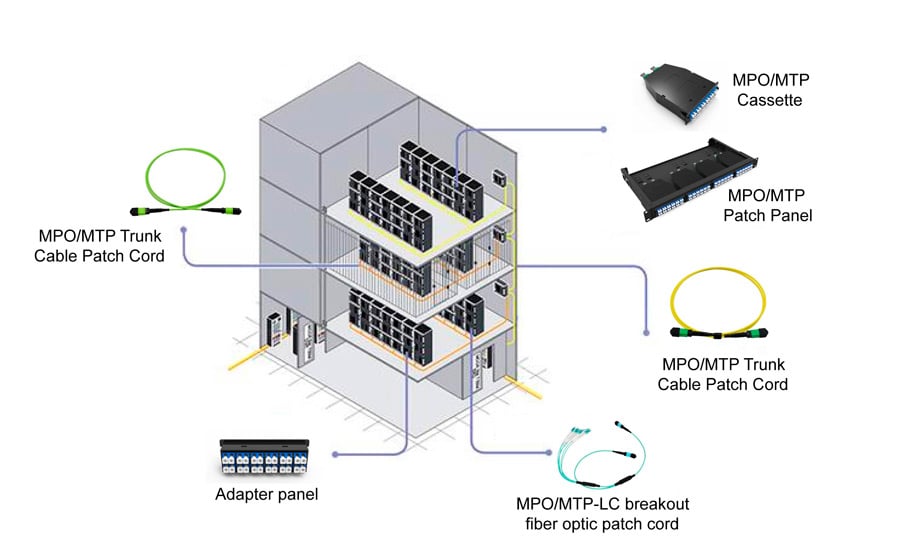
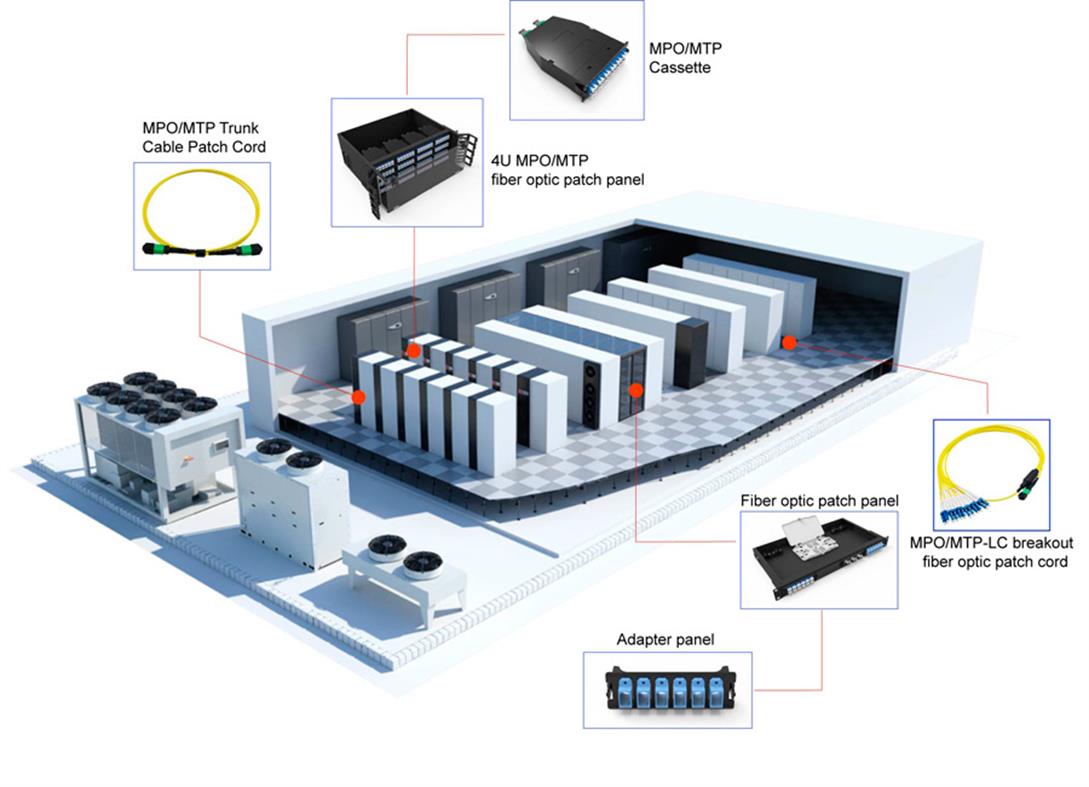
● Data Center Structured Cabling: MPO cables are widely used to connect main distribution area (MDA) switches to intermediate distribution area (IDA) or equipment distribution area (EDA) frames, providing a scalable backbone for data center networks.
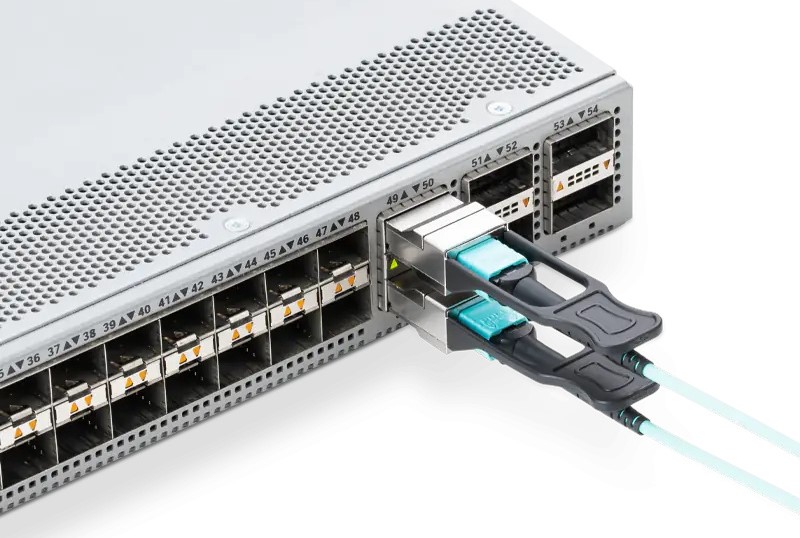
● High-Speed Network Interconnect: Supporting 40G/100G QSFP+ and QSFP28 transceivers, MPO cables form the physical layer infrastructure for evolving 400G and 800G networks.
● Fiber-to-the-Server Deployments: In top-of-rack (ToR) or end-of-row (EoR) designs, MPO cables connect servers and storage arrays to aggregation switches, reducing cable clutter and simplifying network management.
● Telecommunications Central Offices: MPO cables are used for efficient, high-capacity inter-rack and inter-bay connections in telecommunications central offices, where space optimization is critical.
MTP Cable Applications
MTP cables are designed for mission-critical applications that demand superior performance and reliability. Key use cases include:
● High-Performance Computing (HPC) and AI/ML Clusters: MTP cables provide ultra-high-density, low-latency interconnects required for linking servers and switches in HPC and AI/ML systems, where data processing speeds and signal integrity are essential.
● 400G/800G Network Deployments: With their enhanced optical performance, MTP cables are the preferred choice for high-speed networks operating at 400G and 800G, ensuring reliable data transmission over long distances.
● Data Center Upgrades and Migrations: MTP cables enable seamless upgrades from 10G to 40G/100G/400G infrastructure, leveraging existing cable pathways while delivering improved performance.
● Mission-Critical Telecommunications: In telecommunications central offices and main distribution areas (MDAs), MTP cables provide high-capacity, reliable interconnections for critical communication services.
Compatibility and Interoperability
Cross-Compatibility Between MPO and MTP
One of the key advantages of both MPO and MTP cables is their compatibility. MTP connectors are backward-compatible with MPO connectors, meaning that MTP cables can be used with MPO patch panels, modules, and equipment. This interoperability allows network operators to upgrade their networks incrementally, replacing MPO cables with MTP cables in critical areas while retaining existing MPO infrastructure. However, it is important to note that when MTP and MPO connectors are mated, the performance will be limited by the lower-performing component (i.e., the MPO connector). For optimal performance, it is recommended to use MTP connectors with other MTP connectors.
Standardization and Compliance
Both MPO and MTP cables comply with international standards, ensuring interoperability across different manufacturers. MPO cables adhere to standards such as IEC 61754-7 and TIA-604-5, which define the mechanical and optical requirements for multi-fiber connectors. MTP cables, in addition to meeting these standards, also comply with US Conec’s strict quality control criteria, ensuring consistent performance and reliability. All MPO and MTP cables from reputable manufacturers are certified to ISO9001, CE, RoHS, and FCC standards, guaranteeing environmental safety and reliability.
Cost Considerations
Cost is an important factor for network operators when choosing between MPO and MTP cables. MPO cables are generally more cost-effective than MTP cables, making them the preferred choice for large-scale deployments where budget constraints are a consideration. The lower cost of MPO cables is due to their standardized manufacturing process and broader market competition.
MTP cables, on the other hand, are premium products with a higher price point. The advanced design, precision manufacturing, and superior performance of MTP cables justify their higher cost for mission-critical applications. While MTP cables may require a larger initial investment, their enhanced reliability and performance can reduce long-term maintenance costs and minimize network downtime, making them a cost-effective choice for applications where performance and stability are critical.
Summary
In summary, MPO and MTP cables are both essential components of high-density optical networks, but they differ significantly in design, performance, and application suitability. MPO cables offer a cost-effective, standardized solution for general high-density connectivity needs, making them ideal for data centers, enterprise networks, and telecommunications applications where basic performance requirements are sufficient. MTP cables, on the other hand, provide superior optical and mechanical performance, making them the preferred choice for mission-critical applications such as HPC, AI/ML clusters, and high-speed 400G/800G networks.When selecting between MPO and MTP cables, network operators should consider their specific application requirements, performance needs, and budget constraints. For most general-purpose high-density connectivity, MPO cables offer an excellent balance of performance and cost. For applications where signal integrity, reliability, and long-term stability are paramount, MTP cables provide the enhanced performance and durability required to support the most demanding network environments.





No comments have been posted yet.