


.webp)


What Is MMC Connector
With the continuous expansion of data center scales and the in-depth popularization of Artificial Intelligence (AI), cloud computing, and High-Performance Computing (HPC), rack space utilization and fiber optic port density have become key constraints on the development of AI data centers. Currently, the scale of computing clusters in AI clusters and hyperscale cloud data centers is evolving from several hundred thousand cards to millions of cards, placing unprecedentedly high requirements on the spatial adaptability and connection efficiency of fiber optic connectors.
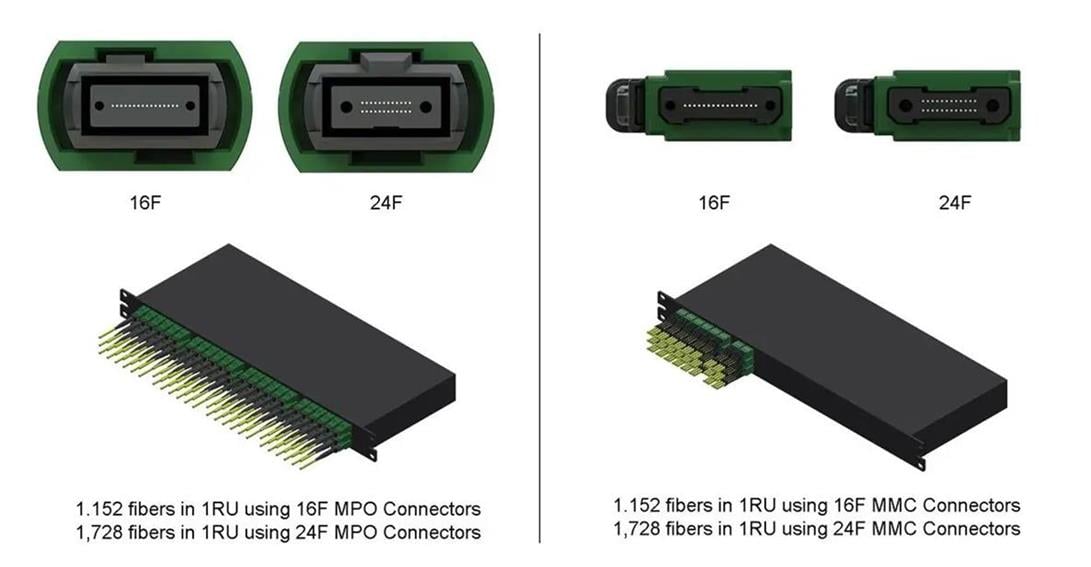
Traditional MPO and LC fiber optic connectors have gradually revealed obvious shortcomings in high-density scenarios: MPO connectors occupy a great deal of rack space, directly limiting the number of deployable fiber optic links; as single-fiber connectors, LC connectors have relatively low port density and cannot meet the explosive growth of high-density interconnection demands in AI scenarios. Against this backdrop, "denser, faster, and more energy-efficient" connection solutions have become an industry consensus. As a new generation of Very Small Form Factor (VSFF) multi-fiber connectors, MMC connectors have become the core choice to break through the physical and scalability limits of traditional fiber optic solutions, especially suitable for the next-generation AI infrastructure needs laid out by enterprises such as Corning. It is worth noting that the MMC connectors produced by Corning's Jiading factory have a density 36 times that of traditional LC connectors, further highlighting their spatial advantage.
The Rise of MMC Connectors
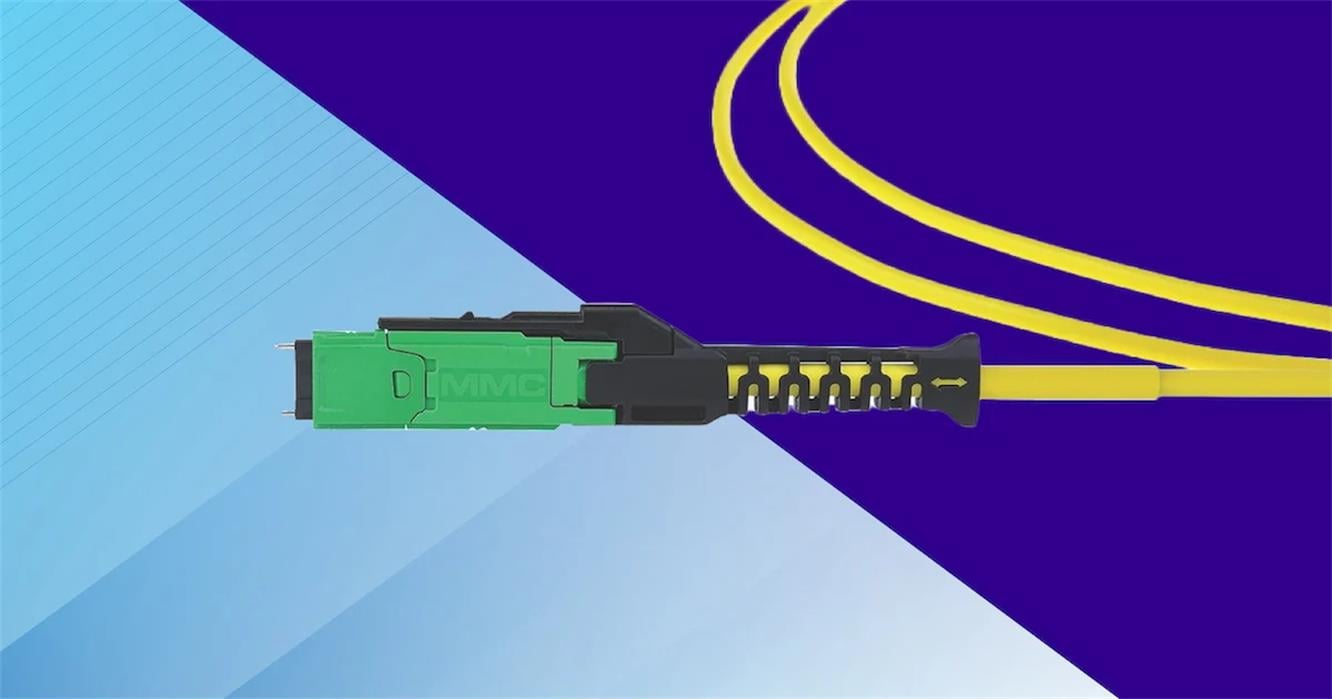
MMC (Miniature Multi-fiber Connector), developed by US Conec, is a VSFF multi-fiber connector specifically designed for single-mode and multi-mode fibers, supporting cables with a diameter of up to 2.5 millimeters. Different from traditional MPO and LC connectors, MMC connectors combine a new small MT-type ferrule (TMT) with an innovative VSFF connector. By simplifying the male-female end design and polarity management, they greatly reduce the complexity of MPO cabling facilities and are regarded by the industry as the next-generation development direction of MPO connectors.
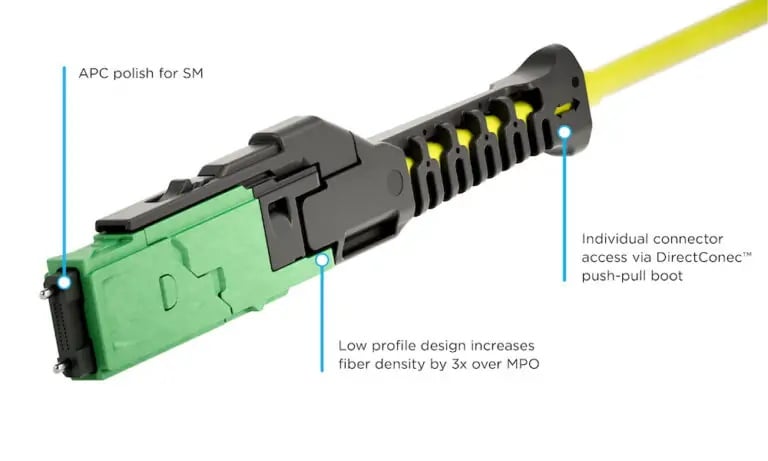
In the AI data center infrastructure ecosystem, MMC connectors are not only key components to solve the space constraints of high-density deployment but also set an industry benchmark in terms of operational convenience and optical stability. When used in conjunction with Corning® multi-fiber cables, the MMC platform solution can further expand its functions, supporting higher-density architectures in increasingly compact spaces, perfectly matching the development needs of the next-generation AI infrastructure. As an emerging high-density solution, MMC is accelerating iteration and large-scale application, becoming the core direction for AI data center cabling upgrades.
MMC Connector Technologies
TMT Ferrule Technology
The excellent performance of MMC connectors stems from the TMT ferrule technology they carry, which is also the key to achieving high-density and low-loss connections. Derived from the mature MT and MT-16 ferrules used in MTP® and MTP®-16 applications, TMT ferrules have achieved breakthrough improvements in size reduction, structural optimization, and fiber alignment accuracy, laying a solid foundation for the stable operation of MMC connectors.
Compared with traditional MT ferrules, TMT ferrules have four significant advantages: first, the size is greatly reduced, with a thickness reduction of about 30% and an overall size reduction of about 50%, making them very suitable for high-density cabling and on-board fiber management; second, the symmetrical design enhances mechanical stability, enabling repeatable mating cycles; third, the reduced epoxy resin usage minimizes the impact on the environment and product performance; fourth, it has high-precision alignment capability, maintaining low insertion loss and long-term optical stability even in uncontrolled environments. In addition, TMT ferrules are compatible with MT and MT-16 ferrule structures, supporting single-mode APC and multi-mode APC, and are suitable for on-board optical interconnection and rugged connector solutions.
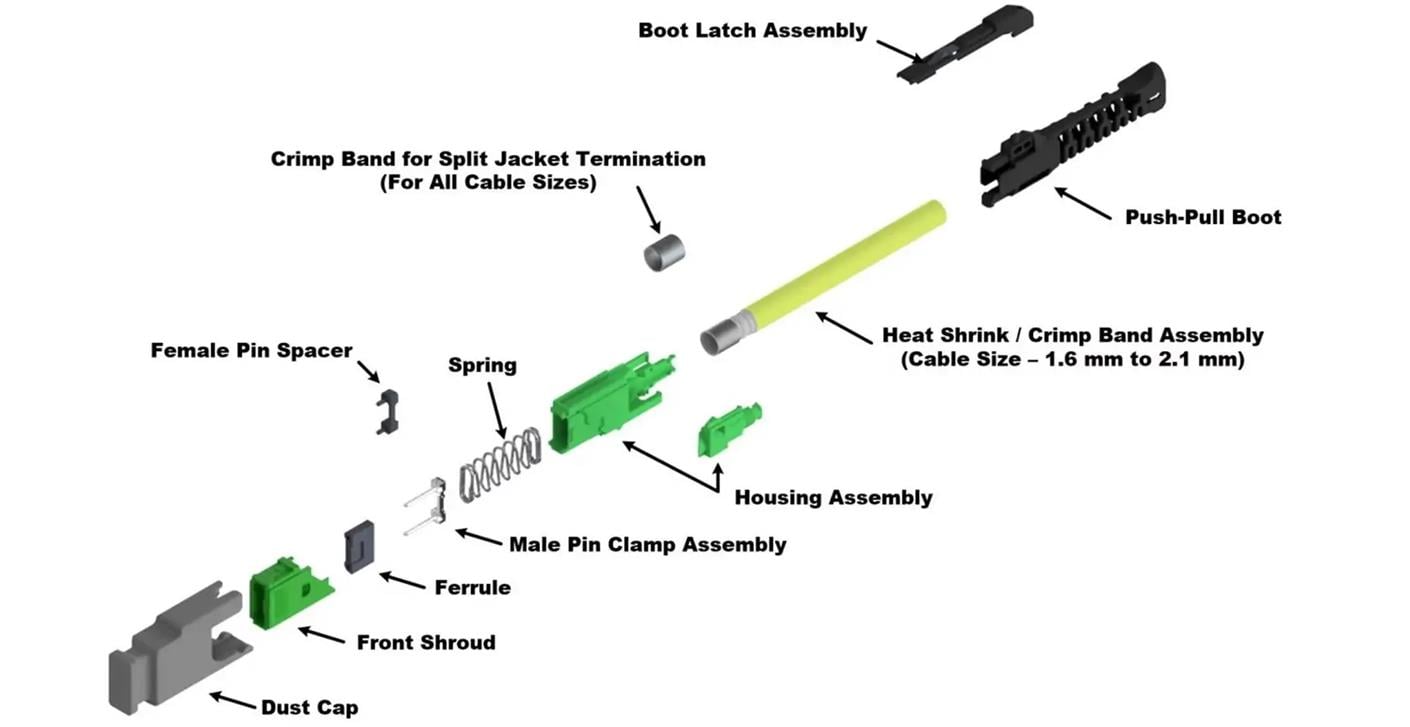
It is worth noting that MMC® connectors adopting TMT ferrules further expand the application boundary of the MMC platform. Their lens-based beam expansion interface can achieve passive alignment, debris resistance, scalable manufacturing, and blind mating connections, which can better adapt to the evolution trend of AI data center architectures such as Co-packaged Optics (CPO) and Near-packaged Optics (NPO). As a key technology for future AI data centers to reduce power consumption and latency, CPO is also a key layout direction for enterprises such as Corning.
Advantages of MMC Connectors
Compared with traditional MPO and LC connectors, MMC connectors have comprehensive advantages, which can perfectly match the core needs of AI data centers for high density, high reliability, and high flexibility. Their core advantages are mainly reflected in the following aspects:
High Port Density: In the same area, the density of MMC ports can reach three times that of traditional MPO ports, and even 36 times that of LC connectors. It can maximize the use of rack space. For AI data centers where rack space is extremely valuable, it can significantly increase the number of fiber optic ports per rack without expanding the physical space.
Easy Operation: Equipped with a DirectConec™ push-pull protective sleeve, it can be easily inserted and pulled out even in dense cabling environments, effectively solving the problem of difficult operation of traditional connectors in high-density scenarios, shortening installation time, and reducing the risk of operational errors.
Reliable Performance: Based on mature MT/MT-16 ferrule technology, MMC connectors have passed the strict testing of Telcordia GR-1435 standard, ensuring long-term optical and mechanical reliability, and can stably support the high-frequency data transmission needs of AI workloads.
Wide Compatibility: It supports fibers with a standard 250 µm and smaller pitch, and the maximum cable diameter can reach 2.5 millimeters, adapting to single-mode and multi-mode applications; at the same time, MMC ferrules are compatible with MT and MT-16 structures, and can be seamlessly integrated with the standard fiber optic cabling ecosystem, facilitating connection with existing cabling systems.
Low Insertion Loss: Adopting TMT Elite™ low-loss ferrules, the insertion loss is as low as 0.25–0.35 dB (≥97% in random interconnection scenarios), ensuring stable and efficient signal transmission, and meeting the high-bandwidth transmission needs of AI models and HPC tasks.
Flexible Configuration and Complete Ecosystem: It provides various formats such as 1×12, 1×16, and 2×12, and APC polishing can be selected on demand to meet the diverse needs of different AI data center scenarios; at the same time, it is compatible with standard cabling tools such as cleaners, polishers, and interferometers, forming a complete product ecosystem to support seamless deployment and later maintenance.
Comprehensive Comparison Between MMC and Traditional Connectors (MPO/LC)
To clearly present the application value of MMC connectors in AI data centers, this section clarifies their advantages, differences, and applicable scenarios compared with traditional MPO and LC connectors through multi-dimensional comparison, providing a reference for AI data center cabling selection:
|
Comparison Dimension |
MMC Connector |
MPO Connector |
LC Connector |
|---|---|---|---|
|
Connector Type |
Very Small Form Factor (VSFF) Multi-fiber |
Multi-fiber |
Single-fiber |
|
Port Density |
Very High (more than 3 times that of MPO, 36 times that of LC) |
High |
Relatively Low |
|
Typical Application Scenarios |
High-density racks, on-board cabling, AI clusters, CPO/NPO, data center interconnection |
Front panel interfaces, general high-density deployment |
Front panel interfaces, short-distance links |
|
System Design Focus |
Space efficiency, high density, adaptation to AI architecture evolution |
General deployment, scalability |
Flexibility, maintainability |
|
Technology Maturity |
Emerging high-density solution, accelerating iteration and large-scale application |
Mature, industry standard |
Highly mature, widely used |
It can be seen from the comparison that the MMC solution has outstanding advantages in high-density cabling, space-constrained environments, and on-board optical interconnection, which exactly addresses the core pain points of AI data centers; while MPO and LC connectors still have irreplaceable value in traditional panel applications and scenarios where deployment flexibility is the core demand. In the long run, MMC will coexist and complement MPO rather than completely replace it.
MMC Supporting System
The MMC solution is not limited to the connector itself, but provides a comprehensive portfolio of fiber optic jumper products to support high-density interconnection and seamless upgrades across different cabling architectures. With various configurations such as direct connection, hybrid connection, and branch connection, MMC jumpers can be compatible with existing cabling systems while maintaining port density, realizing flexible deployment, and meeting the diverse needs of AI data center construction and upgrades:
MMC Fiber Jumper: Mainly used for high-density interconnection within the MMC system, suitable for short-distance connections between intra-rack or adjacent devices. Common forms include MMC12, MMC16, and MMC24, which can be adapted to high-density distribution frames and on-board interconnection, simplifying the cabling process and reducing management complexity.
MMC to MPO Hybrid Fiber Jumper: Realize compatibility with existing MPO infrastructure, promoting the effective integration of the new MMC system with traditional cabling. Common forms are MMC16 ↔ MPO16 and MMC24 ↔ MPO24, supporting phased upgrades without large-scale replacement of existing equipment, and adapting to the phased deployment and hybrid cabling environments of AI data centers.
MMC Breakout/Harness Fiber Jumper: Split multi-fiber MMC interfaces into multiple device ports to improve system flexibility. Common forms are MMC16 → 8 × LC/DX and MMC24 → 12 × LC/DX, realizing a smooth transition from high-density backbone networks to device ports, while maintaining clear port management and maintainability.
Application of MMC Solution in AI Data Centers
Typical Application in AI Data Centers
With the continuous evolution of AI data center architectures, MMC connectors have been widely used in key links such as structured cabling, data center interconnection, and CPO/NPO, providing strong support for the efficient operation of AI workloads. Combined with the development characteristics of AI data centers, their typical application scenarios are as follows:
Indoor Structured Cabling
As the core infrastructure of AI data centers, indoor structured cabling has extremely high requirements on port density and space utilization. MMC connectors can replace traditional MPO/LC cabling, increasing the number of fiber optic ports per rack while saving valuable rack space, adapting to the explosive growth of fiber optic connection demands brought by the popularization of AI clusters and high-bandwidth applications. With the upgrade of optical module rates from 400G to 800G, 1.6T, and higher rates, MMC connectors can better match the demand for doubling the port density of single devices and adapt to the development trend of increasing the proportion of multi-mode fiber applications.
Data Center Interconnection and Space-Constrained Cabling
In large data center parks, a single high-density optical cable can accommodate up to 6,912 fibers. The compact design of MMC connectors supports factory pre-terminated components, which can be quickly deployed in space-constrained paths, shortening installation time and reducing downtime risks. It is crucial for the interconnection of large AI data center clusters, which can effectively improve the transmission efficiency between data centers and support the large-scale expansion of AI computing power.
Co-packaged Optics (CPO) and Near-packaged Optics (NPO)
The next-generation AI architecture is driving the development of in-box photonics, and CPO and NPO have become key technologies to solve energy consumption and transmission bottlenecks in high-computing-power scenarios. MMC connectors can meet the high-density connection requirements of CPO/NPO architectures, save cabling space from the optical engine to the card edge, and maintain sufficient heat dissipation and airflow conditions, adapting to the future trend of CPO evolution to 1.6T+ modules. In particular, MMC connectors equipped with PRIZM® TMT ferrules can achieve blind mating connections, which are more in line with the integration needs of CPO/NPO devices. As a key layout direction for enterprises such as Corning, CPO will further promote the large-scale application of MMC connectors.
MMC Technology Outlook
In the next five years, the global AI computing power scale will continue to grow at a rate of more than 50%, and the demand for high-density, high-bandwidth, and high-efficiency interconnection in AI data centers will continue to rise. As an emerging high-density solution, MMC connectors will usher in broader development space, and their technological iteration and industry development will present four trends:
Continuous Upgrade of Port Density and Performance
With the continuous progress of TMT ferrule technology and the improvement of upstream ferrule self-sufficiency rate and production capacity scale, MMC connectors will further increase the number of fibers per ferrule, evolving from the current 16/32 cores to higher core counts, and further reduce insertion loss to adapt to the transmission needs of future 3.2T and higher rate optical modules; the optimization of structural design will further improve their mechanical stability and operational convenience, promoting continuous breakthroughs in product performance.
In-depth Integration with AI Infrastructure Ecosystem
MMC connectors will be further deeply integrated with key technologies such as CPO/NPO, silicon photonics, and thin-film lithium niobate to form a more comprehensive high-density interconnection solution; with the development of optoelectronic hybrid networking and OIO (Optical In Optical Out) technology, MMC connectors will play a more core role in the high-speed interconnection of computing and storage in AI data centers, forming a synergistic effect with Corning and other enterprises' multi-fiber cable and CPO layouts.
Continuous Expansion of Market Scale
According to industry forecasts, the global MMC connector market will maintain a high-speed growth trend. Major enterprises will increase investment in MMC technology research and development, promote the maturity of the industrial chain, reduce product costs, and gradually popularize MMC connectors to small and medium-sized AI data centers, further expanding the scope of application.
Coexistence and Complementarity with Traditional Connectors
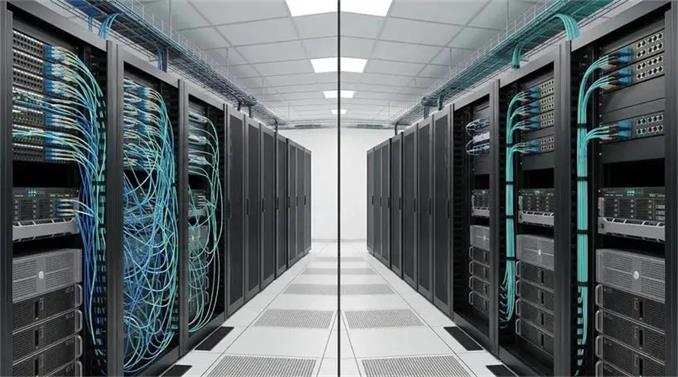
In the future, MMC connectors will not completely replace MPO and LC connectors, but form a pattern of "each performing its own duties and complementary coexistence" — MMC focuses on high-density, space-constrained scenarios such as AI clusters and CPO/NPO; MPO and LC will continue to be applied in traditional panel interfaces and scenarios where flexibility is the core demand, jointly supporting the stable operation of AI data centers.
MMC Solutions in AI Data Centers Consideration
For users planning to build next-generation AI data centers or upgrade network architectures, when evaluating MMC solutions, they need to focus on four core points to ensure the applicability and forward-looking of the solution:
First, judge the bottleneck scenario
Clarify whether port density or space utilization has become a bottleneck in the current development of the data center. If the existing rack space is tight and the demand for fiber optic ports is growing rapidly, the MMC solution should be a priority evaluation option, especially suitable for AI cluster scenarios with extremely high requirements for space efficiency.
Second, pay attention to compatibility connection
Focus on compatibility with existing infrastructure. Phased upgrades can be realized through MMC to MPO hybrid jumpers, avoiding large-scale replacement of existing equipment, reducing transformation costs, and achieving a smooth transition between old and new systems.
Third, match AI development plans
Combine with the development plan of your own AI workloads, select the appropriate MMC configuration (such as fiber core count, polishing method), and ensure that the solution has long-term scalability, which can adapt to the future upgrade of optical module rates and the expansion of computing power.
Fourth, pay attention to the maturity of the industrial chain:
Focus on the maturity of the MMC industrial chain and the support capacity of supporting tools to ensure that deployment, testing, maintenance and other links can be carried out smoothly, reducing later operation costs.
FiberMart and MMC Solutions
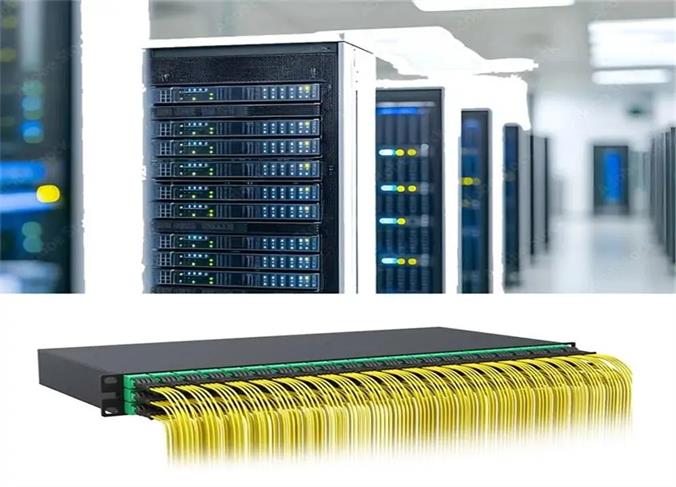
Focusing on the high-density interconnection needs of AI data centers and the development trend of MMC (Miniature Multi-fiber Connector) technology, FiberMart is committed to providing advanced MMC series products, including MMC jumper and MMC backbone branch optical cables, bringing extensive posibilities for variable needs.
FiberMart, as a world-leading provider who is responsible for delivering advanced fiber optics with recognized reliability and reputation, has been focusing on making the leading optical technologies available to those who are seeking high-standard and trustworthy fiber optics at a reasonable cost and with excellent service all the time.
Summary
In the AI era, the demand for high-density, high-bandwidth, and high-efficiency interconnection in data centers is becoming increasingly urgent. Traditional fiber optic connectors are gradually approaching the limit of physical performance and cannot meet the needs of large-scale expansion of AI computing power. As a new generation of VSFF multi-fiber connectors, MMC connectors, relying on TMT ferrule technology, ultra-compact design, and a complete product ecosystem, have broken through the space constraints of traditional connectors, and have shown irreplaceable advantages in core AI data center scenarios such as adapting to CPO/NPO and high-density racks. Their synergy with Corning and other enterprises' multi-fiber cables and CPO technologies will further promote the upgrade of AI infrastructure.
With the continuous iteration of technology and the continuous improvement of the industrial chain, MMC connectors will become a key force driving the interconnection upgrade of AI data centers, helping AI data centers optimize the balance between port density, space efficiency, and long-term scalability, and laying a solid foundation for the sustainable growth of AI computing power. For the builders and operators of AI data centers, accurately grasping the technical characteristics and application rules of MMC connectors will help gain an advantage in the fierce market competition and promote the high-quality development of AI infrastructure.
FAQs
How does the MMC connector compare to standard MPO connectors?
MMC connectors deliver up to 3× the port density of traditional MPO connectors, enabling more fiber connections within the same physical footprint.
How much fiber density can the MMC connector accommodate?
The MMC connector supports 16- to 32-fiber configurations. Support up to 576 fibers in MMC trunk cable.
Where are MMC connectors typically used today?
MMC connectors are designed for high‑density environments such as AI data centers, high‑performance computing, and advanced optical architectures where space efficiency and scalability are critical.
How does MMC support next‑generation optical architectures?
MMC connectors enable higher fiber counts in smaller footprints and support advanced connectivity models, making them well suited for next‑generation architectures like near‑packaged optics and co‑packaged optics.
How does multicore fiber enhance MMC connector solutions?
When combined with the FiberMart Multicore Fiber Solution, MMC connector solutions support even higher fiber density in compact spaces, helping data centers scale capacity without increasing physical infrastructure.





No comments have been posted yet.