


.webp)


In the field of network communications, SFP (Small Form-factor Pluggable) is the core foundational component for building modern, scalable optical networks. Most existing online resources about SFP transceivers focus heavily on product promotion rather than providing systematic, comprehensive explanations of their technical principles, category differences, and application logic. This article will professionally break down the core definition, technical characteristics, full category classification, working mechanism, selection criteria, and operation and maintenance specifications of SFPs, covering all the professional knowledge that network practitioners need.
What is SFP
SFP, short for Small Form-factor Pluggable, is a standardized, compact network transceiver device and the critical interface connecting network hardware and transmission media. Its core function is to realize bidirectional conversion between electrical and optical signals, enabling various network devices such as switches, routers, media converters, and PoE fiber switches to adapt to multiple transmission media including optical fibers and copper cables for long-distance, high-speed data transmission.
Compared with the fixed fiber ports that come with traditional devices, SFPs adopt a modular pluggable design with extreme flexibility and universality. Without replacing the core network hardware, you only need to replace the SFP module to adjust the transmission rate, distance, and media type of the network link, which greatly reduces the cost of network upgrade, operation and maintenance, and expansion. SFPs are widely used in enterprise campus networks, data centers, metropolitan area networks, and long-distance telecommunications infrastructure.
Working Principle of SFP Modules
The core working logic of SFP modules is bidirectional optical-electrical signal conversion, which realizes full-duplex data transmission relying on internal high-precision optical and circuit components, and is mainly divided into two units: transmitter and receiver.
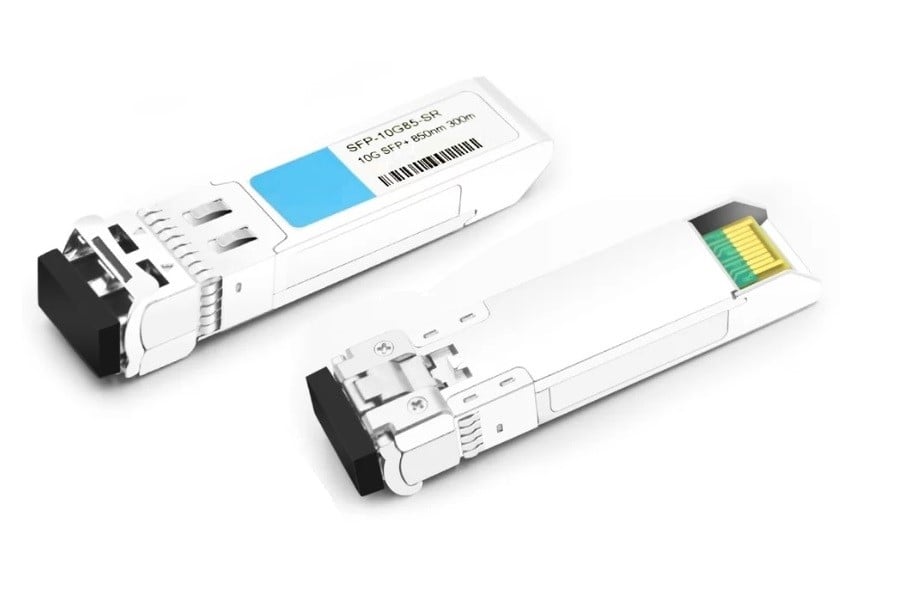
The transmitter unit (TX) modulates the electrical signal output by the network device into an optical signal of a specific wavelength through a laser diode/VCSEL and injects it into the optical fiber; the receiver unit (RX) restores the optical signal transmitted by the optical fiber to an electrical signal through a high-sensitivity photodiode and sends it back to the network device. Optical signals of different wavelengths adapt to different transmission scenarios: 850nm for short-distance multimode transmission, 1310nm for medium-distance single-mode transmission, and 1550nm for long-distance and ultra-long-distance single-mode transmission. By optimizing wavelength parameters, signal attenuation is minimized and transmission stability is improved.
At the same time, the module ensures that the link bit error rate (BER) ≤ 10⁻¹² through core parameters such as optical power budget, extinction ratio, and return loss, realizing high-speed and stable data transmission.
Technical Characteristics of SFP
The popularity of SFP modules benefits from their multiple standardized core technical characteristics, which are also the core advantages that distinguish them from traditional fixed ports. All mainstream SFP series products comply with the MSA (Multi-Source Agreement) standardized specifications to ensure cross-vendor compatibility.
Hot-Swappable Design
All SFP series modules support hot swapping, which means they can be inserted, removed, replaced, and upgraded while the network device is powered on and the business is running normally without interrupting network services. This feature completely avoids the downtime risk of traditional hardware upgrades, greatly shortens the operation time for fault maintenance and network expansion, and adapts to high-availability scenarios such as data centers and telecommunications core networks.
Standardized Compatible Architecture
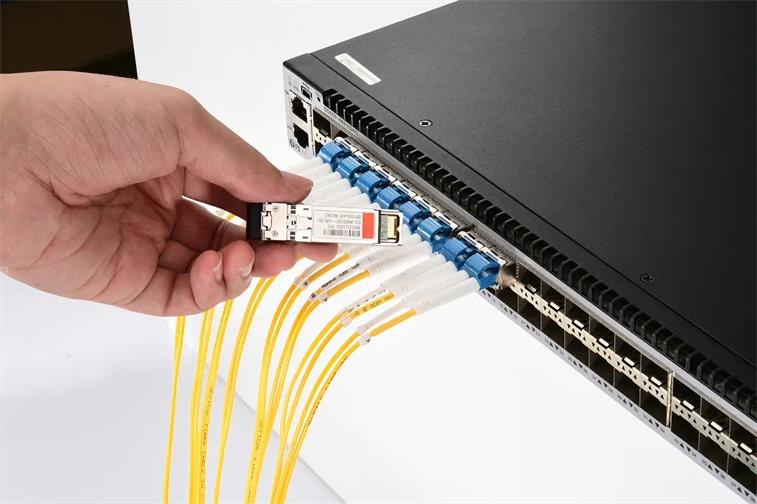
SFP modules strictly follow the MSA mechanical and electrical interface specifications. The unified form factor, electrical parameters, and optical standards can be compatible with most brands of network devices such as managed/unmanaged media converters, PoE switches, and industrial switches, effectively avoiding single-vendor hardware lock-in and improving the flexibility of equipment selection and supply chain.
Digital Optical Monitoring (DOM/DDM)
Modern SFP modules integrate Digital Optical Monitoring (DOM), also known as Digital Diagnostic Monitoring (DDM), which can collect and monitor core parameters such as transmit optical power, receive optical power, module operating temperature, supply voltage, and laser bias current in real time. It supports fault warning, link loss detection, and accurate fault location, realizing visualized operation and maintenance of network links and reducing the difficulty of fault troubleshooting.
Wide Temperature Adaptability
All optical transceivers including SFP, SFP+, and XFP are divided into two specifications according to operating temperature: commercial-grade modules adapt to the normal temperature environment of 0°C to +70°C and are suitable for conventional scenarios such as indoor computer rooms and enterprise offices; industrial-grade modules can work stably in the extreme high and low temperature environment of -40°C to +85°C and adapt to harsh scenarios such as outdoor base stations, industrial factories, and field communications.
Full Category Classification of SFP
SFP modules have a rich variety of categories, which can be accurately divided into six dimensions: transmission rate, transmission distance, fiber mode, wavelength division technology, management capability, and application scenario. The performance parameters and applicable scenarios of different categories vary significantly, which is the core basis for network selection.
Classification by Transmission Rate and Iteration Version
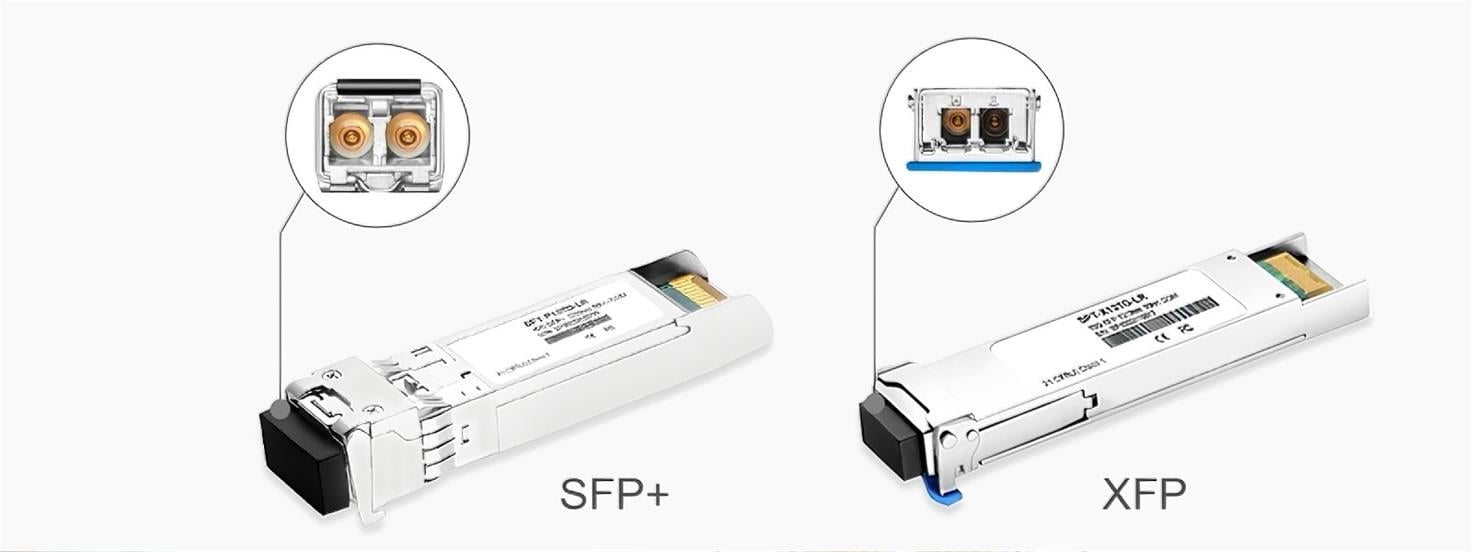
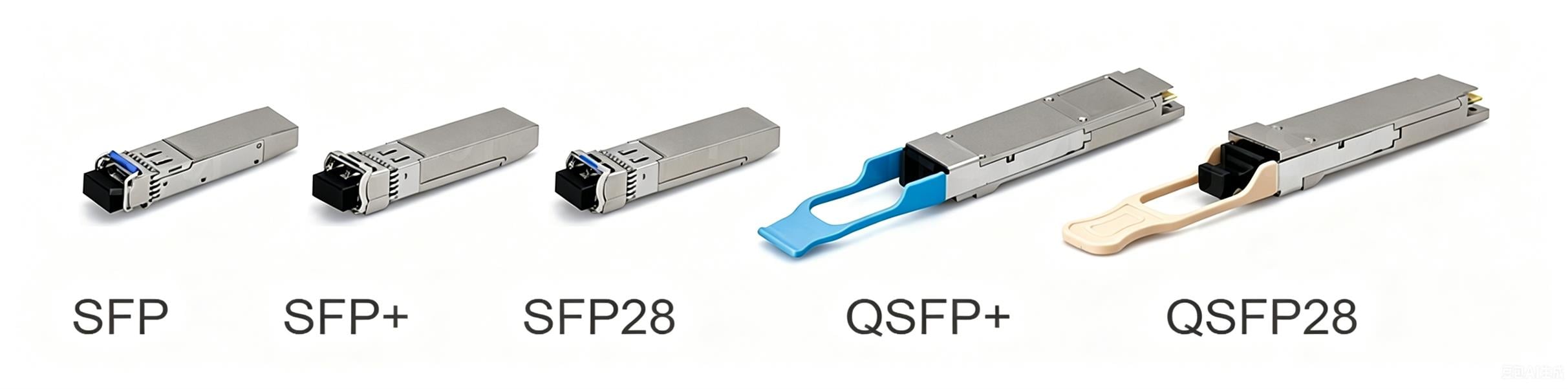
This classification is the most commonly used core classification, which directly determines the upper limit of network link bandwidth. The mainstream iterative products include four series: SFP, SFP+, SFP28, and XFP.
● 1G SFP: The basic version of small form-factor pluggable module with a maximum transmission rate of 1.25Gbps, supporting Gigabit Ethernet protocol. It has extremely strong compatibility and low cost. It is mainly used in scenarios with low bandwidth requirements such as enterprise network access layer, office local area network, and industrial monitoring, and is the mainstream access module for traditional networks.
● SFP+ (Enhanced SFP): The upgraded version of SFP with a maximum transmission rate of up to 10.3125Gbps, 10 times the bandwidth of 1G SFP. It has exactly the same form factor as SFP and is compatible with the original SFP port. It adapts to 10G Ethernet and 10G Fibre Channel protocols and is widely used in enterprise core backbone networks, small and medium-sized data center aggregation layers, and server uplinks.
● SFP28: The new generation of high-speed module with a maximum transmission rate of 25.78Gbps, 2.5 times the throughput of SFP+, with lower power consumption and higher port density. It is mainly used in high-performance data centers, 5G fronthaul/midhaul networks, AI computing clusters and other high-speed, low-latency scenarios, and is the mainstream benchmark for data center infrastructure upgrades in 2026.
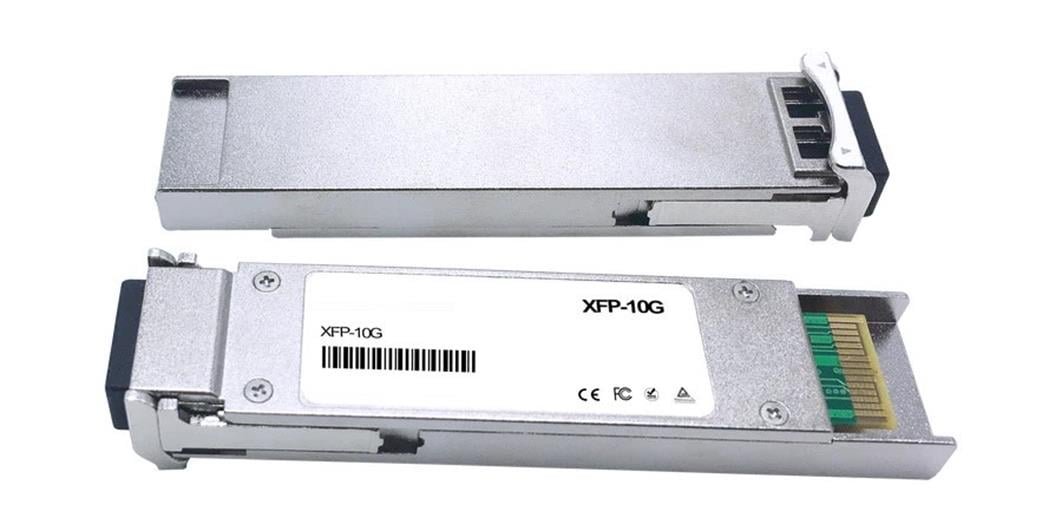
● XFP (10 Gigabit Small Form-factor Pluggable): The first-generation 10G high-speed optical module with an overall size larger than SFP/SFP+. It supports a transmission rate of 10Gbps and covers wavelengths of 850nm, 1310nm, and 1550nm. It is only compatible with managed media converters and is gradually being replaced by smaller, more cost-effective SFP+.
Classification by Transmission Distance and Fiber Mode
This category is divided according to the adapted fiber type and transmission distance, adapting to network deployments in different geographical ranges, and is mainly divided into four categories: short-distance, medium-distance, long-distance, and ultra-long-distance.
|
Optical Transceiver Module Technical Specifications
|
||||
|---|---|---|---|---|
|
Transceiver Type
|
Compatible Fiber Type
|
Operating Wavelength
|
Maximum Transmission Distance
|
Application Scenarios
|
|
SX Short-Reach Modules
|
OM2/OM3/OM4 multimode fibers (MMF)
|
850nm
|
550 meters
|
Short-distance high-density interconnections within racks and between rows in data centers
|
|
LX Medium-Reach Modules
|
OS2 single-mode fibers (SMF)
|
1310nm
|
10 kilometers
|
Campus backbone networks, inter-building interconnections, and metropolitan area access networks
|
|
EX/ZX Long-Reach Modules
|
Single-mode fibers
|
1310nm/1550nm
|
40-80 kilometers
|
Metropolitan area aggregation networks and telecommunications access backhaul links
|
|
EZX/ZR Ultra-Long-Reach Modules
|
Single-mode fibers |
1550nm
|
More than 160 kilometers
|
Core scenarios such as telecommunications backbone networks and long-distance operator interconnections
|
|
BiDi Bidirectional Modules
|
Single-mode fibers |
Dual-wavelength multiplexing
|
On-demand adaptation
|
FTTx access, industrial monitoring, and metropolitan area aggregation scenarios with scarce fiber resources, saving 50% of fiber wiring resources
|
Classification by Wavelength Division Multiplexing Technology
For large-scale fiber expansion scenarios, SFP modules support professional wavelength division technology, which can greatly increase the transmission capacity of a single optical fiber.
● CWDM Coarse Wavelength Division Multiplexing Modules: Have 8-18 wavelength channels with a channel spacing of 20nm and a maximum transmission distance of 80 kilometers. They are cost-effective and suitable for medium and short-distance fiber expansion in enterprise campuses and metropolitan area networks.
● DWDM Dense Wavelength Division Multiplexing Modules: Support more than 40-96 high-density wavelength channels with a channel spacing of only 50GHz/100GHz. With amplification equipment, they can achieve transmission of more than 1000 kilometers and are the core expansion solution for telecommunications backbone networks and cross-border long-distance communications.
Classification by Management Capability
● Ordinary SFP Modules: Have basic transceiver functions without independent configuration and management capabilities, adapt to unmanaged devices, and meet conventional data transmission needs.
● Managed SFP Modules: Can be remotely configured and managed via Ethernet, supporting SLA (Service Level Agreement) monitoring, SNMP fault alarms, and link isolation. They can empower unmanaged devices with management capabilities without independent border devices, effectively reducing capital expenditure (CAPEX) and operational expenditure (OPEX), and adapting to high-end enterprise and operator networks.
SFP Adapted Transmission Media and Port Specifications
SFP modules can adapt to two major types of transmission media: optical fibers and copper cables, and are matched with standardized ports and connectors to adapt to wiring requirements in different scenarios.
Types of Transmission Media
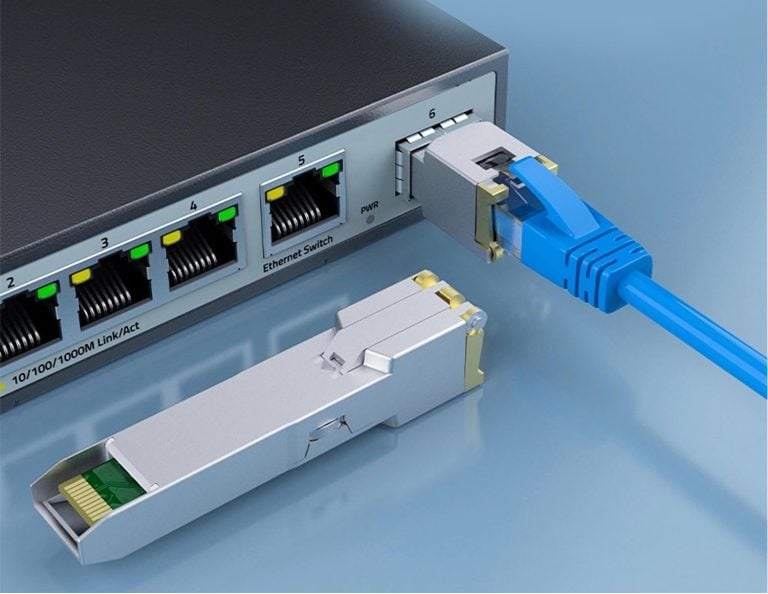
● Multimode Fiber (MMF): With a core diameter of 50μm, including mainstream standards OM3 and OM4. It uses LED light sources, has low cost and short transmission distance (maximum 550 meters), adapts to short-distance SFP modules with a wavelength of 850nm, and is mostly used for high-speed short-distance transmission inside data centers.
● Single-Mode Fiber (SMF): With a core diameter of 9μm, the mainstream standard is OS2. It uses laser light sources, has extremely low signal attenuation and long transmission distance (10-160 kilometers), adapts to medium and long-distance modules with wavelengths of 1310nm and 1550nm, and is the core medium for backbone networks and long-distance communications.
● UTP Copper Cable: Needs to meet CAT5e or higher standards, adapted through SFP RJ45 modules, with a maximum transmission distance of 100 meters. It is low-cost and easy to deploy, suitable for short-distance local area network access scenarios. However, compared with optical fibers, it has the shortcomings of high power consumption, susceptibility to electromagnetic interference, and low security.
Port and Connector Standards
● Port Types: Network devices are mainly equipped with two types of ports: SFP and SFP+. They are physically compatible but have different rate adaptations. When connecting cross-device links, it is necessary to ensure that the wavelengths and rates of the modules at both ends are compatible with each other for normal communication. SFP ports adapt to copper cables, multimode/single-mode fibers, and SFP+ ports focus on 10G high-speed optical fiber transmission.
● Connector Types: LC connectors are the industry standard for SFP modules, with the advantages of low insertion loss and high port density; SC connectors are mostly used in traditional old networks; MTP/MPO multi-core connectors adapt to 40G/100G high-speed backbone wiring and are used in ultra-large-scale data centers.
Advantages of SFP Over Fixed Fiber Ports
Compared with the fixed fiber ports of traditional network devices, the modular design of SFP has irreplaceable scenario advantages and is the core foundation of modern scalable networks:
● Flexible Adaptation to Multiple Scenarios: A single SFP port can adapt to transmission requirements of different rates, distances, and media by replacing modules without replacing core hardware, adapting to network iterative upgrades.
● Significant Cost Reduction and Efficiency Improvement: Reduce the types of network equipment inventory, lower hardware procurement, upgrade, and operation and maintenance costs. At the same time, the hot-swappable feature reduces downtime losses, resulting in extremely high long-term operation cost performance.
● Strong Compatibility and Universality: Follow the MSA open standard, enabling intercommunication between cross-brand devices without vendor lock-in risks, and flexible supply chain selection.
● Excellent Scalability: Support CWDM/DWDM wavelength division expansion, which can greatly increase network bandwidth based on existing wiring and adapt to the continuous growth of business traffic.
Scenario-Based Selection Guide of SFPs
Combined with network levels and application scenarios, the optimal SFP module model can be accurately matched, taking into account performance, cost, and scalability:
● Enterprise Access Layer: Preferably 1G SFP SX/LX modules, which are low-cost and widely compatible, meeting the transmission needs of terminal devices, Internet of Things, and office local area networks.
● Enterprise Core/Campus Backbone Network: Preferably 10G SFP+ LX/EX modules, balancing bandwidth performance and deployment cost, adapting to large-scale networking between buildings and campuses.
● Conventional Data Centers: 10G SFP+ for the access layer, and 25G SFP28 for high-performance leaf-spine architecture data centers to achieve high-density, low-latency, and low-power transmission.
● Metropolitan Area/Telecommunications Networks: CWDM SFP for medium and short-distance aggregation links, and ZR ultra-long-distance modules or DWDM SFP for long-distance backbone networks.
● Fiber Resource-Constrained Scenarios: Uniformly select BiDi bidirectional SFP modules to save wiring resources and reduce construction costs.
● Industrial/Outdoor Scenarios: Prioritize industrial-grade wide-temperature SFP modules to adapt to extreme temperature environments and ensure stable operation of equipment.
Compatibility, Installation, and Operation Specifications
Compatibility Specifications
All compliant SFP modules follow the MSA standard to ensure mechanical and electrical compatibility. However, some equipment manufacturers have proprietary EEPROM firmware authentication mechanisms. Before deployment, it is necessary to check the equipment compatibility list and preferentially select modules that have been tested by multiple manufacturers and have perfect compliance to avoid link abnormalities.
Best Practices for Installation and Operation
Clean the connector end face before installation to avoid optical loss caused by dust; strictly control the fiber polarity and cable bending radius to prevent line damage; rely on the DOM function to monitor link parameters in real time daily, and conduct regular optical power testing. Common link faults are mostly caused by connector contamination, fiber damage, and module incompatibility, which can be quickly repaired by cleaning and replacing accessories and matching compliant modules.
Conclusion
SFP small form-factor pluggable transceivers are the core modular components of modern optical networks. With the core advantages of hot-swappable design, standardized compatibility, flexible scalability, and controllable cost, they have completely replaced traditional fixed fiber ports and become the standard configuration for enterprise networks, data centers, and telecommunications infrastructure. They have a rich variety of categories, can adapt to various scenario requirements through multiple dimensions such as rate, distance, wavelength division, and management capability, and at the same time rely on a perfect monitoring and operation and maintenance system to ensure long-term stable operation of the network.
Under the network upgrade trend in 2026, 10G SFP+ has become the mainstream baseline for enterprises, and 25G SFP28 is gradually becoming the new benchmark for data centers. SFP modules combined with CWDM/DWDM wavelength division technology are the core solutions for network bandwidth expansion and cost reduction and efficiency improvement, and are the core basic components for network architects and operation and maintenance engineers to carry out network design, upgrade, and maintenance.
Frequently Asked Questions (FAQs)
What is an SFP+ module?
An SFP+ module refers to a small form-factor pluggable transceiver that supports high-speed ethernet and fiber optic connection commonly used in data centers and network environments. It is an improved version of the standard SFP transceiver module designed for 10 Gbps data rates.
What kinds of cables work with SFP+ modules?
Different types of cables can be used with SFP+ modules such as fiber optic cables like MMF (Multi-Mode Fiber) and SMF (Single-Mode Fiber) as well as DAC (Direct Attach Copper) cables. In most cases, specific optical cable types, such as OM3 and OM4, are utilized for short-range connectivity.
Can you use single-mode and multi-mode fiber with SFP+ modules?
Yes, it is possible to design SFP+ modules that support both single-mode fiber (SMF) and multi-mode fiber (MMF). When the performance metrics meet the specified standards, users should be notified accordingly. The difference comes from the kind of SFP+ transceiver module you buy; for instance, 10GBASE-LR is used in single mode while 10GBASE-SR is for multi-mode fiber applications.
What are some typical applications of an sfp+ module within a network setting?
Data centers, enterprise networks, service provider transport applications and Ethernet environments typically employ or utilize sfp plus modules. Often they include RJ45 ports so that they may have additional compatibility or flexibility options available if needed. They allow servers, switches, or other network devices to connect at high speeds where this may not always be possible, especially in rack-mounted gear.
How do I know if my network device will work with an SFP Plus module?
Whether or not something works together depends on the specifications of one device against what another device supports when plugged into it directly. Always refer back to what the manufacturer states in their documentation for your network device; this can include companies like Arista, Juniper, or Ubiquiti, etc., so terms like “10GBASE-SR SFP” or “10GBASE-LR SFP” should be mentioned somewhere as well as whether or not the transceiver module kit is compatible with your hardware.
What is the difference between active optical and passive optical SFP+ modules?
Active optical SFP+ modules are equipped with electrical parts to amplify signal transmission, frequently across longer distances or at higher rates of speed. Passive optical modules lack these parts and depend entirely on the fidelity of the light signal. Both types find application in fiber optic networks, depending on the connectivity requirements.
Posted on 11 Jun, 2026, by Francisco, Fibermart, All Copy Right Reserved.





No comments have been posted yet.