


.webp)


1310 nm DFB (Distributed Feedback) laser diodes are indispensable core optoelectronic components in modern optical communication and precision optical systems. Benefiting from the low-loss transmission window of single-mode optical fiber at the 1310 nm wavelength band, these devices are widely deployed in medium and long-distance fiber communication, CATV signal transmission, high-precision optical sensing, and industrial optical measurement equipment. The electrical operating parameters, mainly including operating current and forward voltage, are the key indicators that determine the output stability, spectral performance, service life and operational safety of 1310 nm butterfly-packaged DFB laser diodes. Any deviation from the rated operating range will easily cause mode hopping, optical power attenuation, waveform distortion, and even permanent damage to the laser chip. This article elaborates on the classification, typical range characteristics, influencing factors and engineering application specifications of the operating current and voltage of 10mW 1310 nm DFB laser diodes, aiming to provide standardized technical guidance for circuit design, device application and system debugging in optoelectronic engineering.
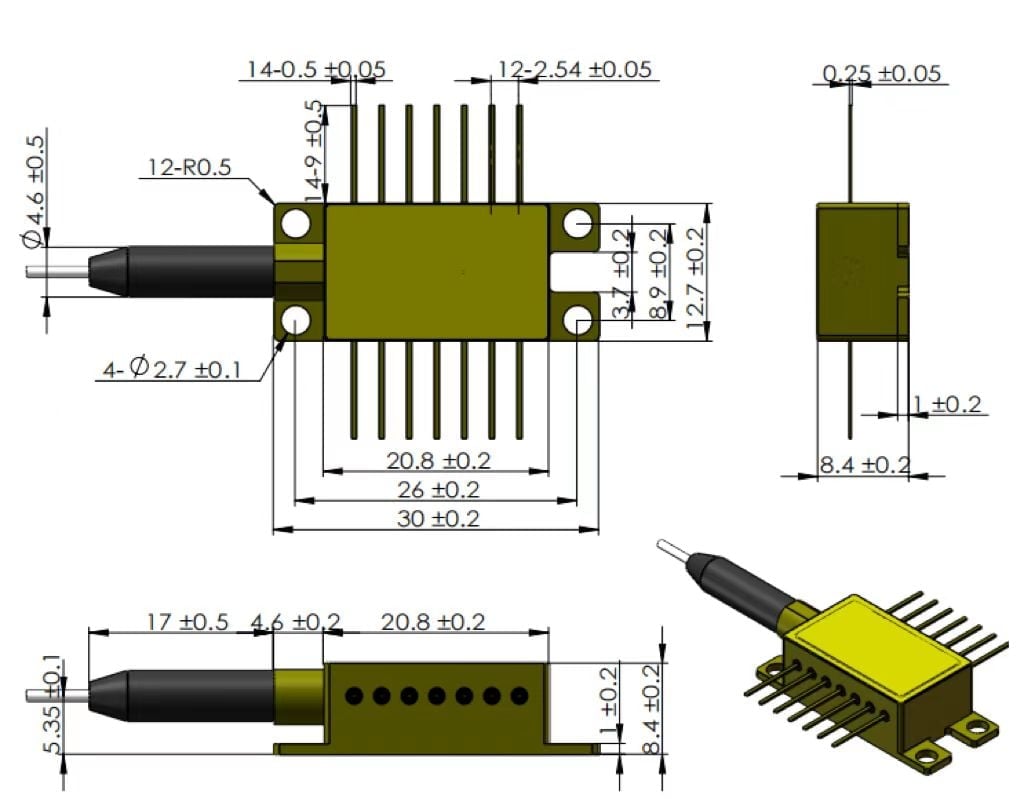
Overview of 1310 nm Butterfly DFB Laser Diodes
Structural Characteristics and Working Advantages
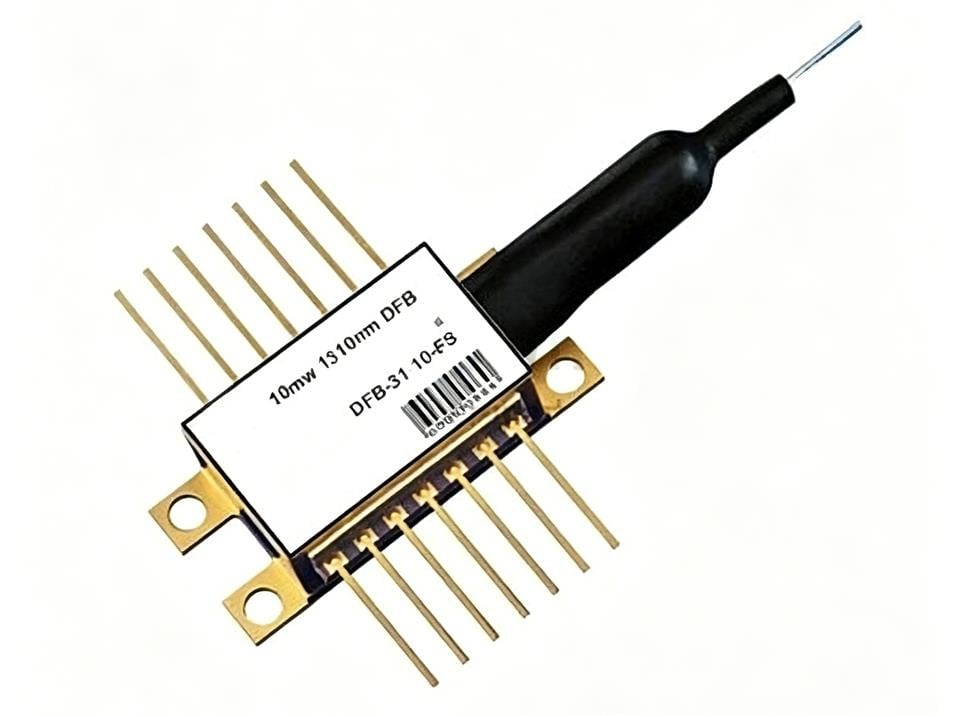
Different from ordinary Fabry-Perot laser diodes, DFB laser diodes adopt embedded periodic grating structure inside the epitaxial chip, which can effectively suppress multi-longitudinal-mode oscillation and realize stable single-wavelength output. The 1310 nm wavelength corresponds to the zero-dispersion and low-loss optimal transmission window of standard single-mode fiber, which can greatly reduce signal attenuation and dispersion distortion during long-distance transmission. The mainstream 10mW 1310 nm DFB laser products adopt butterfly packaging structure, which integrates laser gain chip, thermoelectric cooler (TEC), monitoring photodiode (MPD) and optical coupling assembly. This integrated structure supports precise temperature control and real-time power monitoring, enabling the device to maintain consistent optical and electrical performance in complex industrial and communication environments.
Core Electrical Parameter Significance
The electrical operating parameters of DFB laser diodes are mainly divided into current parameters and voltage parameters, covering threshold current, continuous wave operating current, modulation current, forward operating voltage and reverse withstand voltage. For 10mW high-stability output devices, the matching of current and voltage directly affects the slope efficiency, side-mode suppression ratio, extinction ratio and long-term aging resistance of the laser. Reasonable control of operating electrical parameters is the core premise to ensure that the laser works in a linear and stable state and avoids performance degradation and failure risks.

Classification and Typical Range of Operating Current
Threshold Current
Threshold current refers to the minimum forward driving current when the laser diode transitions from spontaneous radiation to stimulated radiation, which is a critical parameter to judge the turn-on performance of the laser. Under the standard room temperature condition of 25°C, the threshold current of conventional 10mW 1310 nm butterfly DFB laser diodes is stably maintained between 12mA and 15mA. When the driving current is lower than this range, the laser only outputs weak incoherent spontaneous light, which cannot meet the requirements of signal transmission and optical sensing; when the current exceeds the threshold value, the optical output power increases linearly with the current, and the device enters the effective working state.
Continuous Wave Operating Current
Continuous wave operating current is the steady-state bias current required for the laser to output rated 10mW optical power stably for a long time. At 25°C room temperature, the recommended continuous wave operating current of 1310 nm DFB laser diodes is 30mA to 100mA, and the optimal working current range with the best linearity and stability is 50mA to 60mA. Within this range, the laser has high electro-optical conversion efficiency, stable single-mode output and no mode hopping phenomenon. Long-term operation beyond the 100mA upper limit will cause excessive chip heat generation, accelerate device aging, and reduce the overall service life of the laser.
Modulation Operating Current
In high-speed optical communication systems such as 1.25G to 10G, the laser needs to work with superimposed modulation signals on the basis of fixed bias current. The modulation operating current is usually set on the basis of threshold current plus 20mA to 50mA redundant current. This setting can ensure a sufficient optical extinction ratio and signal bandwidth, avoid signal distortion caused by insufficient bias, and prevent excessive current surge from causing chip thermal damage during high-frequency switching.
Absolute Maximum Forward Current
The absolute maximum forward current is the ultimate stress resistance parameter of the device, not the conventional working current range. The maximum withstand forward current of 10mW 1310 nm butterfly DFB laser diodes is 120mA. Any continuous or instantaneous current exceeding this value will cause irreversible damage to the laser chip junction, resulting in sharp attenuation of optical power and even direct burnout of the device.
Classification and Typical Range of Operating Voltage
Forward Operating Voltage
Forward operating voltage refers to the steady voltage drop at both ends of the laser diode when it works under rated continuous wave current. Under standard 25°C room temperature and rated operating current, the forward voltage range of 10mW 1310 nm DFB laser diodes is 1.4V to 2.0V, and the optimal stable working voltage is concentrated at 1.8V. The forward voltage has a positive correlation with the driving current and a negative correlation with the working temperature. With the increase of driving current, the series resistance heat consumption of the chip increases, leading to a slight rise of forward voltage; with the increase of ambient temperature, the carrier activity of the chip increases, and the forward voltage decreases moderately.
Reverse Withstand Voltage
DFB laser diodes are extremely sensitive to reverse bias voltage, and excessive reverse voltage will cause instantaneous breakdown of the PN junction. The rated reverse withstand voltage of 1310 nm butterfly DFB laser diodes is strictly limited to 2V. In practical engineering applications, reverse voltage impact should be completely avoided. Even short-time reverse overvoltage will cause permanent damage to the chip junction structure, resulting in the failure of laser single-mode performance and power output capability.
TEC Matching Operating Voltage
The butterfly packaging structure is equipped with a dedicated thermoelectric cooler to realize constant temperature control of the laser chip. The operating voltage of the TEC module is independent of the laser diode itself, with a typical working voltage range of 2.5V to 3.0V. Stable TEC voltage output can ensure that the chip working temperature is locked at 25°C, effectively offsetting the temperature drift of current and voltage parameters, and maintaining the long-term stability of laser performance.
Key Factors Affecting Electrical Operating Parameters
Ambient Working Temperature
Temperature is the most critical external factor affecting the current and voltage parameters of DFB lasers. With the rise of ambient temperature, the threshold current of the laser increases significantly, and the electro-optical conversion efficiency decreases. To maintain the rated 10mW output power, the system needs to increase the driving current accordingly. At the same time, the forward voltage decreases by about 1.5mV for every 1°C increase in temperature. Uncontrolled temperature changes will cause parameter drift, mode hopping and signal instability, so constant temperature control is essential for high-precision laser operation.
Device Aging Degree
With the increase of service time, the internal quantum efficiency of the laser chip decreases, and the aging phenomenon appears. The most intuitive manifestation is the gradual increase of threshold current and the decrease of slope efficiency. To maintain stable optical power output, the driving current needs to be continuously increased, which will further aggravate chip heating and aging. Operating the laser within the recommended current and voltage range can effectively slow down the aging rate and extend the device service life to more than 100,000 hours.
Driving Circuit Performance
The stability of the driving circuit directly affects the actual operating current and voltage of the laser. Poor circuit design will cause current noise, voltage surge and instantaneous overshoot, which will break through the safe operating range of the device in a short time. In addition, parasitic inductance and resistance of high-speed circuits will distort modulation signals, resulting in excessive peak current and voltage, affecting the linear working state of the laser, and reducing the stability of optical signal output.
Standardized Operation Guidelines for Engineering Applications
Strictly Implement Rated Parameter Ranges
In conventional communication and sensing applications, the bias current should be set 20mA to 50mA higher than the threshold current to ensure linear output. The forward operating voltage should be maintained between 1.4V and 2.0V, avoiding long-term operation near the upper limit of 2.0V. All instantaneous and continuous electrical parameters shall not exceed the absolute maximum rating of the device to eliminate potential failure risks.
Optimize Temperature Control and Heat Dissipation
Make full use of the built-in TEC temperature control module of the butterfly laser to lock the chip working temperature at 25°C±5°C. For closed and high-temperature working environments, auxiliary heat dissipation structures should be configured to avoid junction temperature overheating caused by long-term high-power operation, so as to stabilize the current and voltage parameters and ensure consistent optical performance.
Optimize Driving and Protection Circuit Design
Adopt low-noise constant current driving chip with current limiting function to avoid current fluctuation and surge. Configure reverse voltage protection and slow start circuit to suppress instantaneous inrush current and reverse voltage impact. For high-speed modulation systems, impedance matching design is required to reduce signal reflection and parameter distortion, ensuring stable operation of electrical parameters.
The operating current and voltage range is the core electrical basis for the stable operation of 10mW 1310 nm butterfly-packaged DFB laser diodes. Under standard room temperature conditions, the device achieves optimal working performance with a continuous operating current of 30mA to 100mA and a forward voltage of 1.4V to 2.0V. Reasonable matching of electrical parameters, precise temperature control and reliable circuit protection can effectively avoid mode instability, power attenuation and device failure. In optical communication, CATV transmission, optical sensing and other application scenarios, strictly abiding by the standardized electrical operating range can maximize the electro-optical conversion efficiency and service life of the laser diode, and provide stable and reliable core device support for the normal operation of the entire optoelectronic system.





No comments have been posted yet.