
.webp)

































|
Product Filter
Recent Order
|
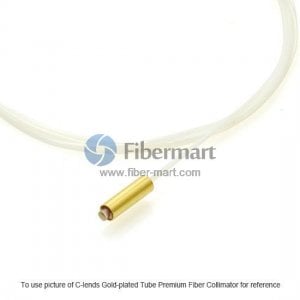
Fiber CollimatorFiber Optic Collimators are devices used to expand and collimate the output light at the fiber end, or to couple light beams between two fibers. They are a module that combine a fiber and a lens, and has a function that produces parallel beams. We offer a range of fixed and adjustable fiber collimator packages for collimating a laser beam from the end of an FC/APC, FC/PC, or SMA connectorized fiber while maintaining diffraction-limited performance at the design wavelength. They are available with different wavelengths (850 nm, 980 nm, 1060 nm, 1310 nm, 1550 nm) or fiber options (SM fiber, MM fiber, PM fiber, and LMA fiber, etc).
Introduction
Fiber Optic Collimators are precision optical components engineered to transform the diverging light beam emerging from an optical fiber into a parallel, collimated beam, or vice-versa, for efficient free-space coupling between optical components. By integrating a fiber terminus with a precision lens in a fixed or adjustable package, these devices serve as critical interfaces between the confined world of fiber optics and free-space optical systems. Available for key wavelengths from 850nm to 1550nm and compatible with single-mode, multimode, polarization-maintaining, and large-mode-area fibers, they are the definitive solution for beam manipulation, system interconnection, and signal conditioning in advanced photonic applications.
.jpg "Fibermart Optical Collimator") Features
● Designed to produce a highly parallel, low-divergence output beam from a fiber end, or to focus a free-space beam into a fiber core with high coupling efficiency. ● Optimized for standard wavelengths including 850nm, 980nm, 1060nm, 1310nm, 1550nm and compatible with SM, MM, PM, and LMA fibers. ● Offered with common connectorized interfaces such as FC/APC, FC/PC, and LC, SMA. ● Available in Fixed and Adjustable Package Options. ● Utilizes high-quality aspheric or GRIN lenses (C-Lens or G-Lens) for Diffraction-Limited Optical Performance. ● Low Insertion Loss & High Return Loss.
Principles
A fiber optic collimator uses Gaussian beam optics and lens transformation to convert diverging light from an optical fiber into a parallel beam.Light exiting a single-mode fiber spreads out as a Gaussian beam. The collimator captures this diverging light and transforms it into a planar, parallel beam.
This is done by placing the fiber end at the focal point of a lens, usually a GRIN lens or an aspheric lens. A GRIN lens has a refractive index that changes with distance from the center, bending light rays to make them parallel. An aspheric lens has a specially shaped surface that corrects for imperfections, also creating parallel rays. When the fiber is at the focal point, the lens bends the light rays to be parallel, creating a collimated beam. The process works in reverse: a parallel beam entering the lens will focus to a spot at the focal point, allowing a receiving fiber to be placed there for efficient light transfer. The quality of the collimated beam depends on the lens's accuracy and how precisely the fiber is aligned with the lens.
 Applications
● Free-Space Optical Interconnects and Switches. ● Integration with Bulk Optical Components. ● Fiber Optic Sensor Systems. ● Test, Measurement, and Characterization Setups. ● High-Power Laser Delivery and Processing.
|