In the rapidly evolving landscape of modern data transmission, where the demand for high bandwidth, long-distance signal integrity, and space-efficient connectivity continues to surge, 12-fiber cables have emerged as a cornerstone of critical infrastructure. These cables, with their 12 individual single-mode fiber strands (each boasting a 9-micron core), serve as the lifeline for metropolitan networks, large-scale data centers, and long-haul telecommunications systems. However, the performance of 12-fiber cables is heavily reliant on one often-overlooked component: the connector. The right connector type ensures seamless signal transfer, minimizes signal loss, and adapts to diverse application scenarios. This guide delves into the key 12-fiber cable connector types, their unique characteristics, and how to select the optimal one for your needs.
Key 12-Fiber Cable Connector Types and Their Core Attributes
12-fiber cables are paired with a range of connector types, each engineered to address specific requirements such as form factor, insertion loss, and environmental resilience. Below is a detailed breakdown of the most widely used connector types in the industry.
LC Connector: The Compact Powerhouse for High-Density Environments
The LC (Lucent Connector) stands out as the most popular choice for 12-fiber cables, particularly in data centers and distribution panels where space is at a premium. Its small form factor—approximately half the size of traditional SC connectors—allows for high-density packaging, enabling 12 fibers to be integrated into a compact cable design. This makes it ideal for environments where rack space is limited and efficient cable management is essential.
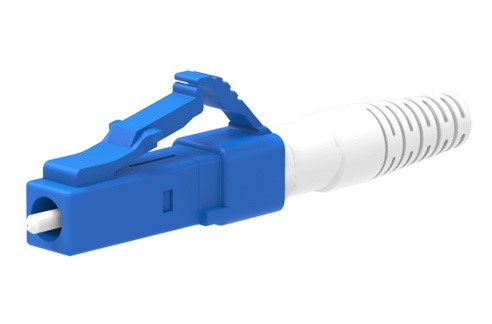
LC connectors are commonly terminated with either Ultra Physical Contact (UPC) or Angled Physical Contact (APC) polish. UPC polish, with its flat end-face, delivers low reflectivity (return loss ≥50dB for LC/UPC), making it suitable for most general data transmission applications. For scenarios where minimizing back-reflection is critical—such as RF video systems or passive optical networks (PON)—APC polish (identified by green connectors) is preferred, offering an impressive return loss of ≥60dB for LC/APC. With an insertion loss of ≤0.3dB, LC connectors ensure reliable, high-performance signal transfer, making them a top choice for 12-fiber cable deployments in high-density, high-speed networks.
SC Connector: The Rugged Solution for Stable Connectivity
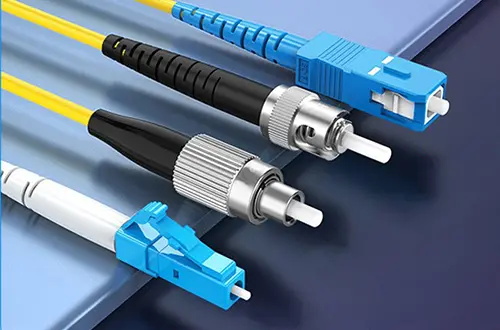
The SC (Subscriber Connector, also known as Square Connector) is renowned for its robust, push-pull latching mechanism, which provides a secure and stable connection. Unlike LC connectors, SC connectors have a larger form factor, but their durability and ease of use make them well-suited for applications where frequent mating and unmating may occur, such as in distribution frames and backbone connections.

Similar to LC connectors, SC connectors are available in UPC and APC polish options. SC/UPC connectors offer a return loss of ≥50dB, while SC/APC connectors provide ≥60dB, ensuring low back-reflection for sensitive systems. The SC connector’s simple design minimizes the risk of dust and debris accumulation, and its sturdy construction withstands harsh operating conditions, including temperature fluctuations (operating temperature: -10 to 60°C). This makes it a reliable choice for 12-fiber cables used in both indoor and semi-outdoor environments, such as campus networks or industrial data transmission systems.
ST Connector: The Legacy Option for Industrial and Legacy Networks
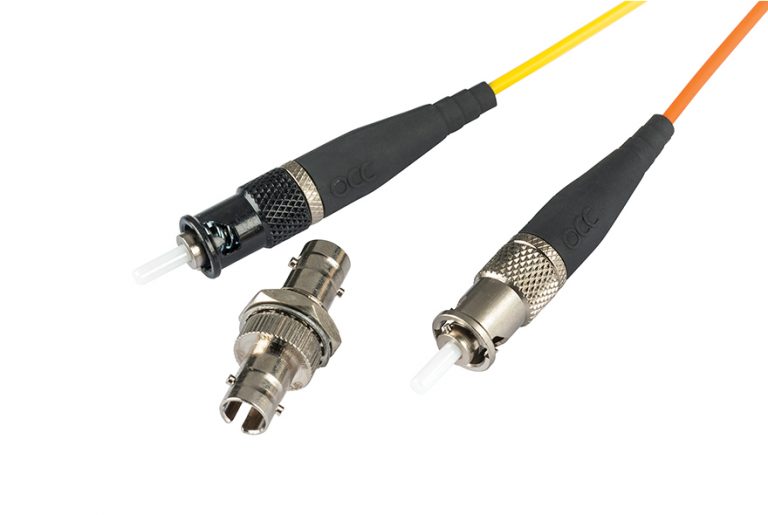
The ST (Straight Tip) connector is one of the oldest fiber optic connector types still in use today, known for its bayonet-style locking mechanism. While it has been largely replaced by LC and SC connectors in modern high-density networks, it remains a viable option for legacy systems and industrial applications where compatibility with existing infrastructure is a priority.
ST connectors are typically polished to UPC standards, offering a return loss of ≥50dB, and have an insertion loss of ≤0.3dB. Their metal housing provides excellent durability, making them resistant to mechanical stress and environmental damage, which is beneficial in industrial settings where cables may be exposed to vibration or harsh chemicals. While ST connectors have a larger footprint compared to LC and SC, their proven reliability and compatibility with older equipment make them a practical choice for 12-fiber cable deployments in legacy networks or industrial environments.
FC Connector: The Precision Choice for High-Frequency and Sensitive Applications
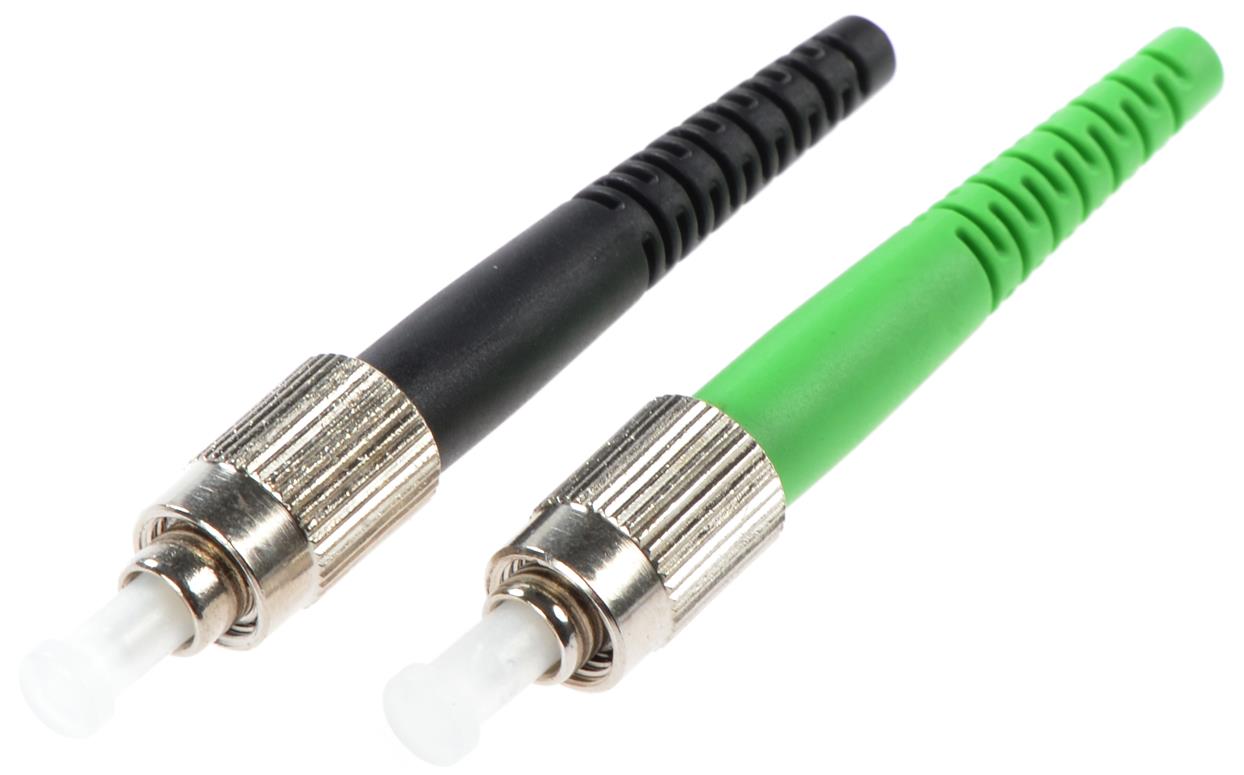
The FC (Ferrule Connector) is distinguished by its threaded locking mechanism, which ensures a precise and secure connection. This design minimizes signal loss caused by vibration or accidental disconnection, making it ideal for high-frequency applications, such as microwave systems, and sensitive environments like research laboratories or medical equipment.
FC connectors are available in both UPC and APC polish variants. FC/UPC connectors deliver a return loss of ≥50dB, while FC/APC connectors offer ≥60dB, ensuring low back-reflection for critical systems. The FC connector’s precision engineering results in consistent insertion loss (≤0.3dB), making it a top choice for 12-fiber cables used in applications where signal stability and accuracy are paramount. However, its threaded design requires more time to mate and unmate compared to LC and SC connectors, so it is less common in high-density, fast-paced data center environments.
E2000 Connector: The Secure Solution for Harsh and High-Security Environments
The E2000 connector is a high-performance, dust-proof connector designed to meet the demands of harsh environments and high-security applications. It features a spring-loaded shutter that protects the ferrule from dust, moisture, and physical damage when not in use, ensuring long-term reliability in challenging conditions.
E2000 connectors are available in UPC and APC polish options, with return loss specifications similar to other connector types (UPC ≥50dB, APC ≥60dB) and insertion loss ≤0.3dB. Their secure latching mechanism and robust construction make them suitable for outdoor telecommunications networks, military applications, and data centers with strict environmental requirements. While E2000 connectors are more expensive than LC or SC connectors, their ability to withstand extreme temperatures (storage temperature for LSZH-jacketed cables: -40 to 70°C) and prevent contamination makes them a valuable investment for 12-fiber cable deployments in harsh or high-security settings.
Factors to Consider When Selecting 12-Fiber Cable Connectors
Choosing the right connector type for your 12-fiber cable is critical to optimizing network performance and ensuring long-term reliability. Below are key factors to consider during the selection process:
Application Scenario
The intended application should be the primary driver of your connector choice. For high-density data centers where space is limited, LC connectors are the best option due to their compact size. In legacy industrial networks, ST connectors may be necessary for compatibility with existing equipment. For sensitive applications like PON or RF video systems, APC-polished connectors (such as LC/APC or SC/APC) are essential to minimize back-reflection. For harsh outdoor or high-security environments, E2000 connectors offer the durability and protection needed.
Pay close attention to insertion loss and return loss specifications. All 12-fiber cable connectors should have an insertion loss of ≤0.3dB to ensure minimal signal degradation. For applications where back-reflection can disrupt performance (e.g., high-speed data transmission or analog video), opt for APC-polished connectors, which provide higher return loss (≥60dB) compared to UPC-polished connectors (≥50dB).
Environmental Conditions
Consider the operating and storage temperatures of your deployment environment. For example, if your 12-fiber cable will be used in extreme cold or heat, choose a connector paired with an LSZH (Low Smoke Zero Halogen) jacket, which has a wider temperature range (-40 to 70°C for storage) compared to riser (OFNR) jackets (-20 to 70°C). Additionally, if the environment is dusty or humid, E2000 connectors with their dust-proof shutters are a better choice than LC or SC connectors.
Cable Management and Density
In environments with limited rack space, such as modern data centers, the form factor of the connector is crucial. LC connectors, with their small size, allow for higher-density cable management, enabling more connections in a smaller area. SC and ST connectors, while larger, may be easier to handle in scenarios where frequent cable adjustments are needed.
Summary
12-fiber cables are indispensable for modern high-speed, long-distance data transmission, and the choice of connector plays a pivotal role in unlocking their full potential. From the compact LC connector for high-density data centers to the rugged E2000 connector for harsh environments, each connector type offers unique advantages tailored to specific application needs. By considering factors such as application scenario, signal performance, environmental conditions, and cable density, you can select the optimal connector type to ensure seamless, reliable, and efficient operation of your 12-fiber cable network. Whether you’re building a metropolitan network, expanding a data center, or maintaining a legacy industrial system, understanding the nuances of 12-fiber cable connectors is the key to building a robust and future-proof network infrastructure.


.webp)



.jpg "12 Fiber Cable High Density Data Center Application")





No comments have been posted yet.