


.webp)


In the complex architecture of modern fiber-optic networks, data travels across continents at the speed of light. While fiber optic splitters may seem unassuming, they play a crucial role as passive optical components. These devices can split a single optical signal into multiple transmission paths or combine multiple signals into one, serving as the core component for efficient sharing of network resources—they are indispensable for everything from Fiber-to-the-Home (FTTH) access to the deployment of large-scale telecom backbone networks. This article will comprehensively dissect fiber optic splitters, covering their basic definition, working principle, type classification, selection method, practical applications, and future trends, helping you systematically master this "unsung hero" of fiber-optic networks.
What is Fiber Optic Splitter?
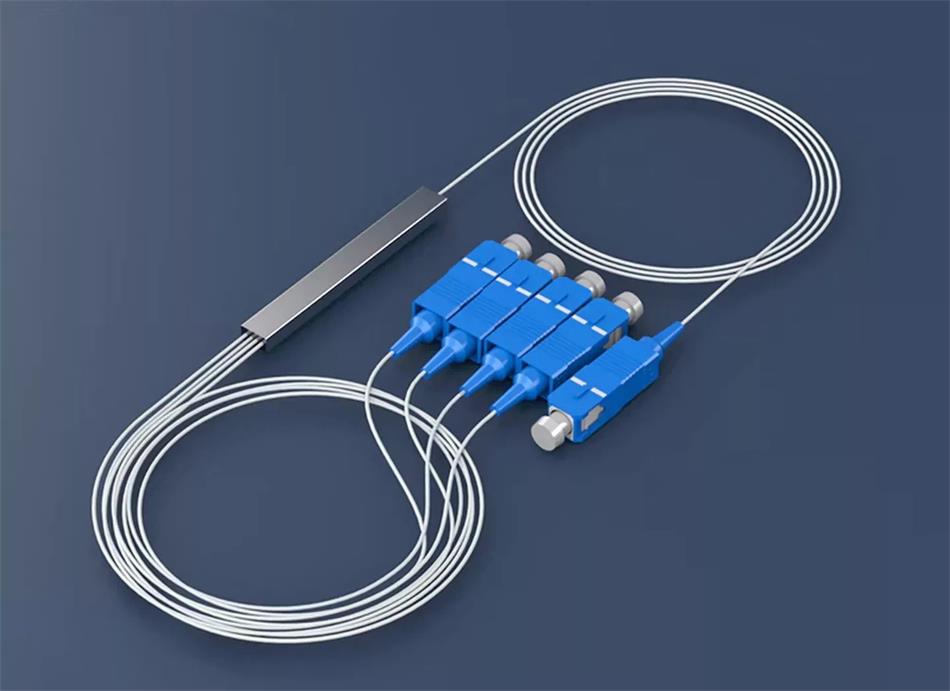
A fiber optic splitter, also known as an optical splitter, fiber splitter, or beam splitter, is an integrated waveguide optical power distribution device. Its core function is to split an incident light beam into two or more beams, or conversely, combine multiple incident light beams into one, featuring multiple input ports and output ports.
Unlike active devices that require power supply, fiber optic splitters are passive optical components. They contain no electronic components, consume no electrical energy, and achieve signal distribution solely by leveraging the physical properties of light. This characteristic not only reduces network deployment costs but also significantly improves reliability in complex networks, enabling them to adapt to hard-to-power scenarios such as remote areas and underground cabinets.
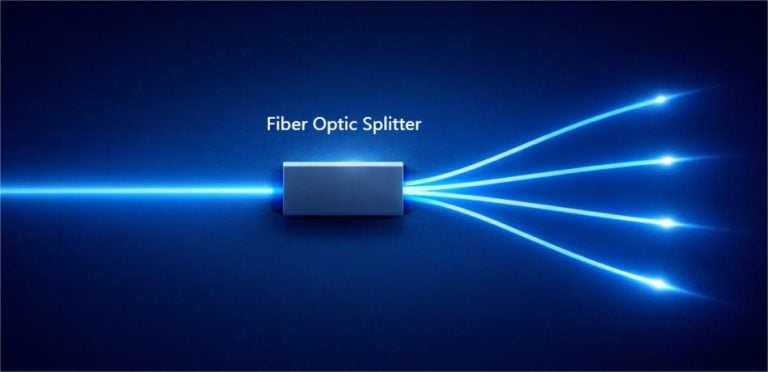
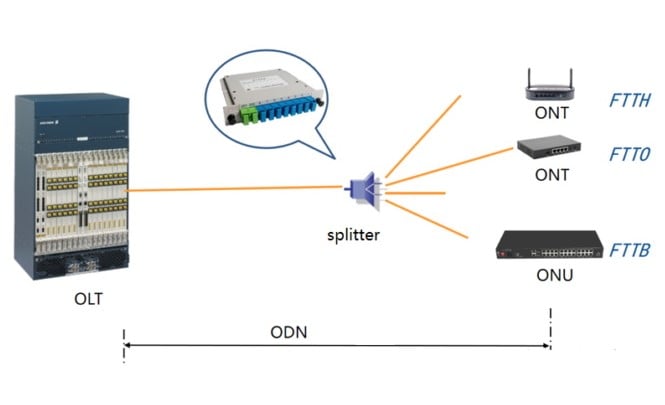
Its core value lies in solving a key pain point of fiber-optic networks: how to enable a single fiber infrastructure to serve multiple users or devices without sacrificing signal speed and quality. For example, in an FTTH network, telecom operators can use a 1:32 fiber optic splitter to allow one backbone fiber to provide gigabit broadband services to 32 households, eliminating the need to lay separate fibers for each household and greatly reducing infrastructure investment.
In addition, fiber optic splitters also have bidirectional transmission capabilities. They can not only split downlink signals (such as network data from operators to users) but also combine uplink signals (such as content uploaded by users)—a key prerequisite for enabling two-way communications like video calls and cloud services. Meanwhile, their compact design allows flexible adaptation to various installation scenarios, including patch panels, Optical Distribution Frames (ODF), and outdoor cabinets, meeting the needs of different network scales.
Working Principle of Fiber Optic Splitters
The essence of a fiber optic splitter's operation is to achieve controllable distribution of optical signals by utilizing the reflection, refraction, and waveguide principles of light. Its specific mechanism varies depending on the manufacturing technology, but the core logic is to regulate the propagation path of light to realize the reasonable distribution of optical power.
Physical Logic of Optical Distribution
When light travels in a single-mode fiber, its energy is not entirely concentrated in the fiber core; a small portion of energy diffuses through the cladding. If two fibers are placed sufficiently close to each other, light transmitted in one fiber will penetrate into the other—this characteristic is the foundation for fiber optic splitters to achieve signal redistribution. Specifically, the process of optical signal distribution is divided into four steps:
● Signal Input: Light pulses carrying data (incident light) enter the splitter through a single input port, which is usually connected to the operator's backbone fiber;
● Waveguide Function: The splitter is equipped with a precision waveguide structure (tiny light-guiding channels) inside. These waveguides guide the propagation of optical signals through precise refractive index design;
● Power Distribution: According to the splitter's "splitting ratio" (e.g., 1:4, 1:32), the optical signal is split into multiple beams either evenly or unevenly, and the power of each beam matches the splitting ratio (for example, a 1:4 splitter evenly divides the input optical power into 4 parts, each accounting for 1/4 of the original power);
● Signal Output: The split optical signals are exported through multiple output ports, each connected to user terminals, switches, or other network components.
Operational Differences Between Two Manufacturing Technologies - PLC Splitter and FBT Splitter
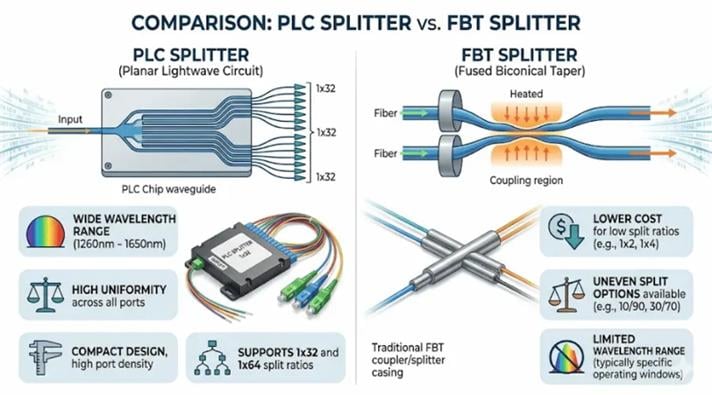
Currently, mainstream fiber optic splitters are mainly based on two manufacturing technologies: Fused Biconical Taper (FBT) and Planar Lightwave Circuit (PLC), each with distinct operating mechanisms and applicable scenarios:
Fused Biconical Taper (FBT) Splitter
Adopting a traditional manufacturing process, multiple fibers are twisted together, heated to soften, and then stretched to form a conical fusion area where the fiber cores fuse with each other. When an optical signal enters the conical area from the input fiber, its energy naturally diffuses into the adjacent output fibers, and the power distribution ratio is determined by the length and thickness of the conical area.
The advantage of this technology is its low cost, making it suitable for low splitting ratio (e.g., 1:2, 1:4) and short-distance transmission scenarios (such as local area networks). However, it has obvious limitations: the maximum splitting ratio is relatively low (up to 1:32, with higher splitting ratios leading to higher failure rates), and its wavelength adaptation range is narrow.
Planar Lightwave Circuit (PLC) Splitter
Based on semiconductor photolithography technology, waveguide patterns are etched on a high-purity quartz glass substrate. The input waveguide splits into multiple output waveguides through a precision-designed branch structure. When an optical signal propagates along the waveguide path, its power is distributed according to the geometric dimensions of the waveguide (width, length, branch angle).
PLC splitters feature a more sophisticated manufacturing process, supporting high splitting ratios (up to 1:128 or higher) and a wide wavelength adaptation range (full 1260nm-1650nm band). They also offer uniform power distribution and high reliability, making them the first choice for medium and large-scale networks such as FTTH and data centers. Their manufacturing process involves multiple precision steps, including substrate cleaning, photolithography, etching, fiber coupling, packaging, and testing, to ensure low insertion loss and stable performance. Some high-end PLC splitters also undergo reliability tests such as thermal cycling and humidity aging to ensure long-term operational stability.
Main Types of Fiber Optic Splitters
Fiber optic splitters can be classified based on multiple dimensions, including splitting ratio, manufacturing technology, packaging method, and transmission medium. Understanding the classification helps achieve accurate selection.
Classification by Splitting Ratio
The splitting ratio describes the quantity ratio of input ports to output ports, which is one of the core indicators for selection. Common types include:
● Low Splitting Ratio: 1:2, 1:4, suitable for small-scale networks (such as interconnection between two offices, fiber access for 4 households in an apartment);
● Medium Splitting Ratio: 1:8, 1:16, suitable for medium-scale deployments (such as office buildings, residential unit buildings);
● High Splitting Ratio: 1:32, 1:64, 1:128, suitable for large-scale FTTH communities, telecom backbone networks, and other scenarios that need to serve a large number of users;
● Multi-Input Splitters: 2:8, 2:32, 4:16, etc., which can split multiple input signals into more output ports, suitable for networks that need to transmit multiple types of signals (such as data, video) simultaneously.
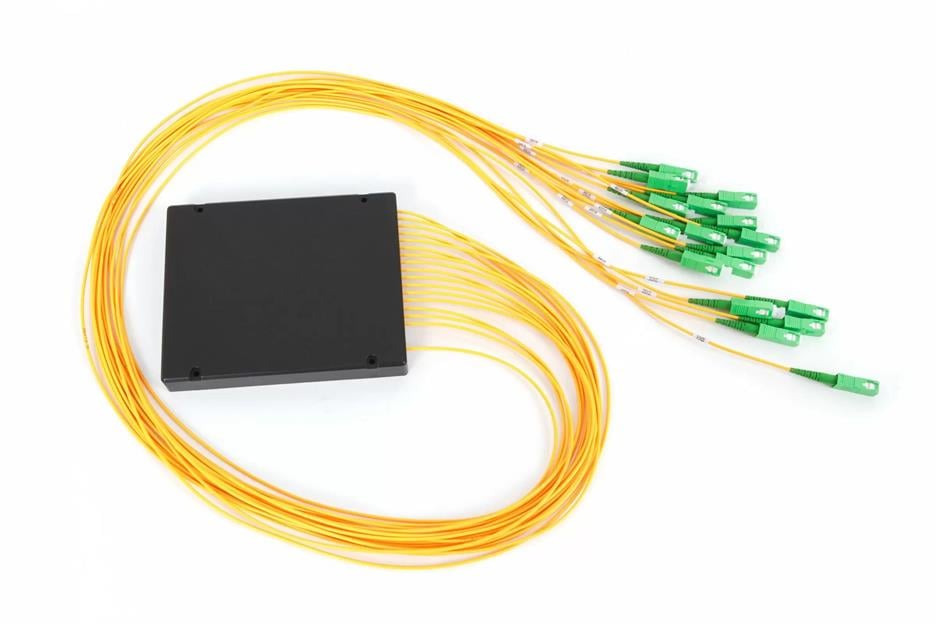
In addition, according to the power distribution method, they can be divided into uniform (balanced) splitters and non-uniform (unbalanced) splitters. The former has uniform power at each output port, suitable for most conventional scenarios; the latter can customize the power ratio of a specific port (e.g., FS 1x5 non-uniform PLC splitter can set the power of CH1 port to 20%, 33%, etc., with the remaining power evenly distributed among other ports), suitable for scenarios with large differences in signal transmission distances such as FTTR and rural areas, which can maximize resource utilization.
Classification by Manufacturing Technology
As mentioned earlier, they are mainly divided into FBT splitters and PLC splitters, and their core differences are shown in the following table:
|
Characteristics |
Fused Biconical Taper (FBT) Splitter |
Planar Lightwave Circuit (PLC) Splitter |
|---|---|---|
|
Operating Wavelength |
850nm, 1310nm, 1490nm, 1550nm (narrow band) |
1260nm-1650nm (full band, compatible with WDM technology) |
|
Splitting Ratio Range |
Up to 1:32 (higher splitting ratio leads to higher failure rate) |
Up to 1:128, supporting stable operation at high splitting ratios |
|
Insertion Loss |
Relatively high (about 0.5-2dB for 1:2 splitters) |
Relatively low (about 0.3-1dB for 1:2 splitters) |
|
Size |
Relatively bulky (fibers fused together) |
Compact (quartz chip design, suitable for small installation scenarios) |
|
Cost |
More cost-effective for low splitting ratio scenarios |
Higher initial cost, more cost-effective for high splitting ratio scenarios |
|
Packaging Type |
Bare fiber type, unencapsulated type, ABS module type |
Bare fiber type, unencapsulated type, ABS module type, LGX box type, 1U rack-mounted type, etc. |
In addition to conventional FBT and PLC splitters, for polarization-sensitive scenarios, polarization-maintaining (PM) splitters have also been developed, mainly divided into PM PLC (Polarization-Maintaining Planar Lightwave Circuit) splitters and PM FBT (Polarization-Maintaining Fused Biconical Taper) splitters. Their core function is to maintain the polarization state of optical signals during signal distribution, suitable for special scenarios such as high-precision optical communication and optical sensing.
Classification by Polarization-Maintaining (PM)
The core difference between polarization-maintaining (PM) splitters and conventional splitters is that they adopt PM fibers and special manufacturing processes, which can effectively suppress changes in the polarization state of optical signals and ensure stable transmission of polarization information. Their core indicator is the Polarization Extinction Ratio (PER), usually requiring ≥25dB, and some high-end products can reach more than 30dB. They are widely used in polarization-sensitive fields such as fiber optic gyroscopes, coherent communication, quantum communication, and optical sensing.
PM PLC Splitter
Based on planar lightwave circuit technology, on the basis of conventional PLC splitters, PM fibers are coupled with waveguide chips. The waveguide structure is specially designed to accurately match the fast and slow axes of PM fibers, reducing polarization distortion. Its manufacturing process adds a polarization calibration link on the basis of the conventional PLC process to ensure the axis alignment accuracy (±0.3μm) between the waveguide and PM fibers, avoiding polarization crosstalk.
Core Characteristics: High polarization extinction ratio (usually 25-30dB), high splitting ratio accuracy, low insertion loss (consistent with conventional PLC), support for high splitting ratios (up to 1:128), wide wavelength adaptation range (1260-1650nm), and strong stability. It is suitable for polarization-sensitive applications in long-term outdoor or harsh environments, such as optical sensing systems in the aerospace field and long-distance coherent communication networks.
.jpg "Polarization Maintaining Fiber Splitter Test Report by Fibermart")
PM FBT Splitter
Based on fused biconical taper technology, PM fibers (such as panda-type, elliptical cladding PM fibers) are selected as raw materials. During the twisting and fusion tapering process, it is necessary to strictly control the alignment of the fast and slow axes of the fibers to ensure the polarization maintaining capability of the fusion area. Compared with conventional FBT splitters, its manufacturing process adds a polarization state monitoring link to real-time calibrate the fiber alignment accuracy and avoid polarization crosstalk.
Core Characteristics: Relatively simple manufacturing process, lower cost than PM PLC, suitable for low splitting ratio (1:2, 1:4) scenarios, insertion loss slightly higher than PM PLC (about 0.5-2.5dB), polarization extinction ratio up to 25-28dB. It is mainly used in short-distance polarization-sensitive scenarios, such as fiber optic gyroscopes, laboratory test equipment, and small optical sensing modules. Some PM FBT splitters adopt steel tube packaging, which has strong mechanical protection capability and can be adapted to harsh environments.
Comparison of Core Differences Between PM PLC and PM FBT Splitters: PM PLC is more suitable for high splitting ratio, high polarization accuracy, and long-distance transmission scenarios, while PM FBT is more suitable for low splitting ratio and short-distance transmission, with more cost advantages. The two together cover the mainstream application scenarios of PM splitters.
Classification by Packaging Method
The packaging method determines the installation scenario and protection capability of the splitter. Common types include:
● Bare Fiber PLC Splitter: Compact design, small space occupation, low installation cost, but requiring additional protection. Suitable for FTTH, PON, LAN, CATV, and test equipment;
● Unencapsulated PLC Splitter: Encapsulated in stainless steel tubes, providing stronger protection for fibers. Mainly used in various connection scenarios above distribution boxes and network cabinets;
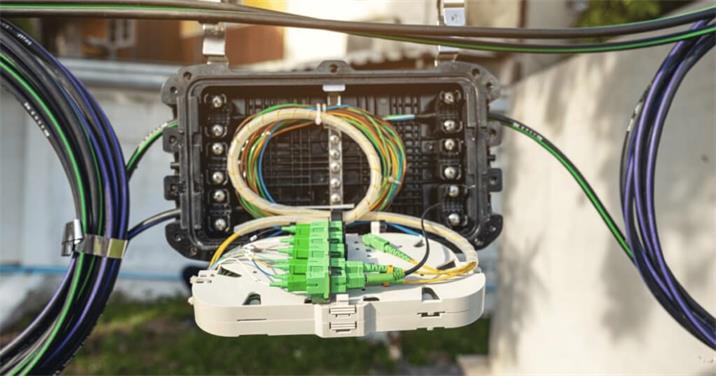
● ABS Module PLC Splitter: Effectively protects internal optical components and fibers, adapting to multiple installation methods. Widely used in outdoor distribution boxes of PON, FTTH, FTTX and other networks;
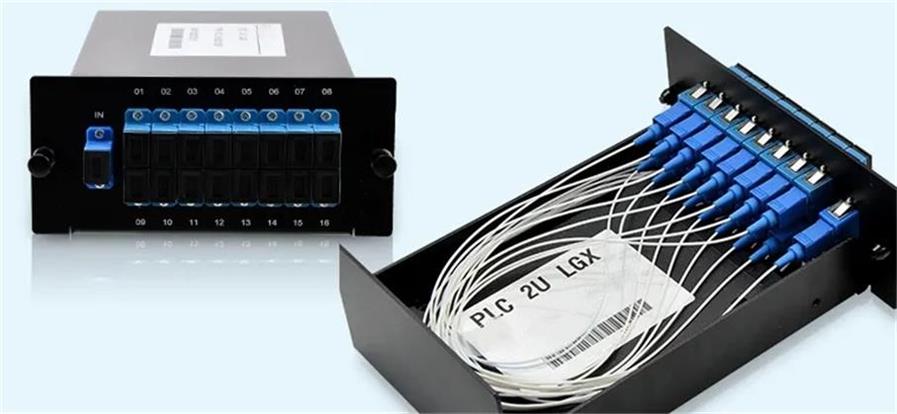
● LGX Box-Type PLC Splitter: Equipped with a sturdy metal box, supporting plug-and-play. It can be used independently or installed in standard optical distribution frames and fiber cabinets;
● FHD® Box-Type PLC Splitter: Compact structure, can be integrated into 1U platforms for fiber management. Commonly used in POL, data communication, FTTx and other projects;
● 1U Rack-Mounted PLC Splitter: Complies with 19-inch rack standards, with excellent optical performance and easy installation. Suitable for high-density wiring scenarios such as data centers.
Classification by Transmission Medium
According to the type of fiber adapted, it can be divided into single-mode fiber splitters and multi-mode fiber splitters:
● Single-Mode Fiber Splitter: Optimized for 1310nm and 1550nm wavelengths, suitable for long-distance and high-bandwidth transmission. It is the mainstream choice for telecom networks and FTTH;
● Multi-Mode Fiber Splitter: Optimized for 850nm and 1310nm wavelengths, mainly used for short-distance transmission (such as inside data centers).
In addition, according to the number of operating wavelengths, it can be divided into single-window splitters (supporting only one operating wavelength) and dual-window splitters (supporting two operating wavelengths), adapting to different network transmission needs.
Key Performance Parameters of Fiber Optic Splitters
A high-quality fiber optic splitter must pass a series of strict tests, and its performance parameters directly determine the quality and stability of network transmission. The following core indicators should be focused on during selection:
Insertion Loss
Definition: The optical power loss of the output port relative to the input port after the optical signal passes through the splitter, measured in decibels (dB). The smaller the insertion loss, the less signal attenuation, and the better the splitter performance. For example, the insertion loss of a 1:2 PLC splitter is usually about 3dB, and that of a 1:32 splitter is about 10dB. In FTTH networks, the insertion loss of a 1:32 splitter is usually required to be <12dB to ensure sufficient signal strength at the user end.
Return Loss
Also known as reflection loss, it refers to the power loss of optical signals reflected back to the light source due to the discontinuity of fibers or transmission lines, measured in dB. The larger the return loss, the fewer reflected signals, which can effectively avoid signal interference (such as echo in voice calls). The return loss of single-mode fiber splitters is usually required to be >50dB, and high-end PLC splitters can reach more than 65dB.
Splitting Ratio Accuracy
Refers to the uniformity of optical power distribution among each output port. For example, the ideal distribution ratio of a 1:4 splitter is 25% per port, with an allowable error of ±2%. The higher the splitting ratio accuracy, the more uniform the signal quality obtained by each user or device, avoiding situations such as slow speed and unstable signals in some terminals. The splitting ratio accuracy of PLC splitters is significantly better than that of FBT splitters.
Isolation
Refers to the optical signal isolation capability of one optical path of the splitter to other optical paths. The higher the isolation, the smaller the interference between optical paths, which can avoid signal crosstalk between different ports and ensure transmission stability.
Other Key Parameters
● Uniformity: The difference in insertion loss between each output port, the smaller the difference, the better;
● Polarization Dependent Loss (PDL): The loss caused by changes in the polarization state of optical signals, usually requiring ≤0.2dB to ensure transmission stability under different polarization states;
● Operating Temperature Range: Indoor splitters usually require 0℃-70℃, while outdoor splitters need to reach -40℃-85℃ (industrial grade) to adapt to different environments;
● Connector Compatibility: Supports common fiber connectors such as SC, LC, and FC, adapting to existing network interfaces.
How to Choose the Right Fiber Optic Splitter?
Selection should be based on network scale, transmission requirements, environmental conditions, and cost budget, following the following 5 steps to ensure that the splitter is suitable for actual application scenarios:
Step 1: Determine the Splitting Ratio
● Small-Scale Networks (2-8 users/devices): Choose 1:2, 1:4, 1:8 splitters, either FBT or PLC;
● Medium-Scale Networks (16-32 users/devices): Choose 1:16, 1:32 PLC splitters to ensure splitting accuracy and signal stability;
● Large-Scale Networks (more than 64 users/devices): Choose 1:64, 1:128 PLC splitters to support high splitting ratios and high-density deployments.
Step 2: Select Manufacturing Technology (FBT vs PLC)
● Prioritize FBT Splitters: Low splitting ratio (1:2-1:8), short-distance transmission (≤1km), and budget-constrained scenarios, such as small local area networks and indoor test equipment;
● Prioritize PLC Splitters: High splitting ratio, long-distance transmission, need for wide wavelength adaptation (such as WDM technology), and high requirements for signal stability, such as FTTH, data centers, and telecom backbone networks.
Step 3: Confirm Environmental Adaptability
● Indoor Scenarios (Data Centers, Telecom Rooms): Choose encapsulated splitters with IP20 protection rating (such as ABS modules, LGX box type, 1U rack-mounted type);
● Outdoor Scenarios (Street Cabinets, Utility Poles, Underground Pipelines): Choose waterproof and dustproof splitters with IP65/IP66 protection rating (such as reinforced ABS modules, stainless steel encapsulation) to ensure resistance to high and low temperatures, rain, snow, dust, and other environments.
Step 4: Verify Compatibility
● Fiber Type: Confirm that the splitter is compatible with single-mode or multi-mode fibers. Telecom networks prioritize single-mode, while data centers can choose multi-mode according to transmission distance;
● Network Standards: For PON networks (such as GPON, EPON, XGSPON), select splitters that comply with ITU-T G.652 standards to ensure compatibility with existing equipment.
Step 5: Evaluate Reliability and Cost
● Reliability: Select splitters with ≥500 insertion/extraction cycles and Mean Time Between Failures (MTBF) >25 years, and prioritize products that provide a 5-10 year warranty;
● Cost: FBT is more cost-effective for low splitting ratio scenarios (1:4 and below); PLC has higher initial costs but lower long-term comprehensive costs for high splitting ratio scenarios (1:8 and above); FBT can be selected for single-wavelength/dual-wavelength transmission to save costs, while PLC is preferred for PON broadband transmission to facilitate future network expansion and monitoring.
Practical Applications of Fiber Optic Splitters
Fiber optic splitters are widely used in all scenarios of fiber-optic networks. From home access to large-scale backbone networks, and from data centers to cable television networks, their core value is to achieve efficient distribution of optical signals and reduce infrastructure costs.
FTTH (Fiber-to-the-Home) Networks
● Challenge: Telecom operators need to extend one backbone fiber from the central office to the street to provide gigabit broadband services to 32 households, with a transmission distance of about 5km.
● Solution: Install a 1:32 PLC splitter in the street cabinet, with the input port connected to the backbone fiber and 32 output ports respectively connected to the home fiber of each household.
● Effect: Each household can obtain a network speed of 1Gbps+. The low insertion loss of the splitter (<10dB) ensures sufficient signal strength, eliminating the need for additional signal amplifiers.
Data Center Interconnection
● Challenge: Distribute the 100Gbps signal from the core switch to 8 server cabinets to ensure no obvious signal attenuation and stable transmission.
● Solution: Select a 1:8 PLC splitter, compatible with 1310nm wavelength and LC connectors, installed in the cabinet patch panel.
● Effect: Each server cabinet can obtain a 12.5Gbps signal with insertion loss <5dB, ensuring high-speed interconnection and error-free transmission inside the data center.
Telecom Backbone Networks
● Challenge: Combine 4 optical signals from rural areas into one for transmission to the municipal central hub, reducing fiber laying costs.
● Solution: Adopt a 4:1 PLC bidirectional splitter (with combining function) to combine 4 input signals into one output for transmission through the backbone fiber.
● Effect: Fiber usage is reduced by 75%, significantly lowering infrastructure investment while ensuring the stability and reliability of signal transmission.
CATV (Cable Television) Networks
● Challenge: Distribute the 1550nm wavelength cable TV signal from the headend room to 16 communities to ensure consistent signal quality in each community.
● Solution: Select a 1:16 PLC splitter, optimized for 1550nm wavelength, installed in the optical distribution frame of the headend room.
● Effect: Each community obtains consistent cable TV signals, eliminating the need for additional signal amplifiers and reducing operation and maintenance costs.
Other Scenarios
In addition, fiber optic splitters are also widely used in FTTR (Fiber-to-the-Room), 5G fronthaul networks, optical communication test equipment, and other scenarios. Among them, non-uniform splitters are mostly used in FTTR scenarios to adapt to differences in signal transmission distances between different rooms; high-precision FBT splitters are used in test scenarios to ensure the accuracy of test data.
Conclusion
Although fiber optic splitters do not have the "glamour" of high-speed optical modules and high-end fibers, they are the core support for the efficient and economical operation of fiber-optic networks. Through passive design, they realize the precise distribution of optical signals, enabling a single fiber to serve hundreds of users and devices, which greatly reduces the deployment cost of fiber infrastructure and ensures gigabit-level transmission speed and stability.
Whether it is home FTTH access, data center interconnection, telecom backbone networks, or cable television networks, choosing the right fiber optic splitter at FiberMart—matching the splitting ratio, manufacturing technology, and application environment—is the key to ensuring long-term stable operation of the network. With the continuous upgrading of fiber-optic networks, fiber optic splitters will continue to iterate and play a more important role in 5G, computing networks, smart cities, and other fields, unlocking the full potential of fiber-optic technology.
FAQs
Q1. What is a fiber optic splitter?
It’s a passive optical component that splits or combines optical signals, requiring no power to operate, and is used for fiber-optic network distribution.
Q2. What’s the difference between uniform and non-uniform splitters?
Uniform splitters have equal output power, while non-uniform ones have a custom power ratio to suit different transmission distances.
Q3. What is insertion loss (IL) and why does it matter?
Insertion loss is the optical power loss (measured in dB) between the input and output ports. A smaller IL ensures the terminal receives a strong enough signal.
Q4. How do I choose the right splitting ratio?
It depends on your network scale: small networks use 1:2/1:4/1:8, medium ones 1:16/1:32, and large ones 1:64/1:128.
Q5. What are the main application of fiber splitters?
Its main applications include FTTH, data center interconnection, telecom backbone networks, and CATV systems.
Q6. What is a polarization-maintaining (PM) splitter?
It uses PM fibers to maintain the polarization state of optical signals, and is commonly used in high-precision fields like fiber optic gyroscopes.





No comments have been posted yet.