


.webp)


One type of optical path controller that converts the optical path is a fiber optic switch including 1x2 Optical Switch. It is frequently utilised in dry optical route monitoring systems and optical fiber sensing systems, and it is the fundamental part of the optical switching system in the optical fiber communication system. Optical transmission devices and optical switching devices are two types of optical fiber communication devices. After years of development, wavelength division multiplexing optical transmission devices have grown increasingly sophisticated. In particular, the wavelength division multiplexer, wavelength division multiplexing light source, and wavelength division multiplexing optical amplifier have made significant strides towards all-opticalization by changing optical transmission from 0-E-0 to 0-0-0. On the other hand, fiber optic switches and other optical switching devices, such as optical cross-connector (OXC) and optical add-drop multiplexer (OADM), are essentially optoelectronic hybrids.
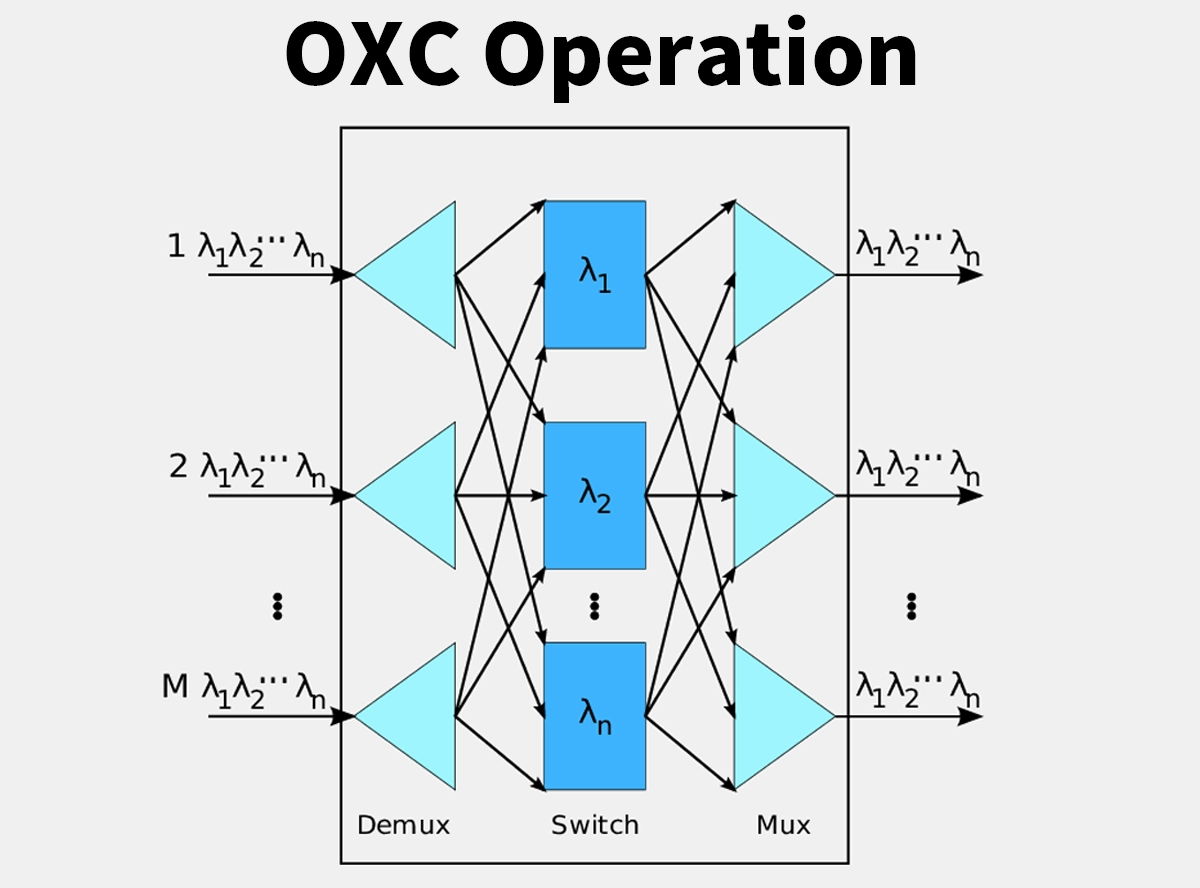
In an optical fiber communication system, a fiber optical switch serves three purposes: first, it can cut off or open the optical signal of a specific fiber channel; second, it can convert an optical signal of a specific wavelength from one fiber channel to another; and third, it can convert an optical signal of one wavelength into another wavelength within the same fiber channel (wavelength converter). The procedure used by optical switch manufacturers is currently somewhat standardised, and the price of fiber optic switches is becoming more and more popular due to increased market rivalry.
What are the fiber optic switch's primary characteristics?
While certain parameters are exclusive to fiber optical switches, others have definitions that apply to other devices. The following is a list of fiber optic switch characteristic parameters:
The decrease in optical power between the input and output ports is known as insertion loss.
The ratio of the optical power returned from the input to the optical power input is known as return loss.
Isolation: two phase-isolated output ports' optical power ratio
The ratio of the fiber optical switch's linked port's output optical power to the other port's output optical power in series is known as far-end crosstalk.
The ratio of a linked port's optical power to another port that is supposedly isolated when the other port is terminated is known as near-end crosstalk.
Wavelength of operation: 1310, 1550, and 850 nm
Extinction ratio: the ratio of the optical power output when the fiber optical switch's two ports are turned on and off
Service life: The quantity of conversions permitted for the optical path
Time or quickness of switching: The time needed for the fiber optical switch's port to turn on or off from a specific initial time is applied to the switch when the optical channel is configured to switch, protection switching, packet switching, and external modulation or start measuring as soon as the conversion energy is eliminated.

What category does a fiber optic switch fall under?
The varieties of fiber optic switches and their functional features are described in the introduction that follows:
Fiber optic switch that is mechanical: drive the active optical fiber or reflector using the drive mechanism in order to link it to the necessary optical fiber or optical waveguide in accordance with the specified classification and command signal requirements: fiber optical switch for moving optical fibers and fiber optical switch for moving micro mirrors.
Benefits include excellent isolation, low insertion loss, and independence from wavelength and polarisation.
Fiber optic switch that is not mechanical: The various varieties of fiber optical switches have different working principles. Fiber switches made of optical devices and waveguide-based fiber switches, which are electro-optical switches, are two further categories of non-mechanical fiber optic switches. Effect optical switch, acousto-optic effect optical switch, magneto-optic effect optical switch, and thermo-optic effect optical switch.
Benefits include quick switching times, compact dimensions, and simple integration.
The most established and conventional fiber optic switch in the optical fiber communication system is the mechanical fiber optic switch.
Additional fiber optic switches include nonlinear optical loop mirror optical switches, liquid crystal optical switches, bubble optical switches, and holographic optical switches.
Based on current use, the most popular types of fiber optic switches are mechanical, liquid crystal, electro-optical, thermo-optical, and sound-optical. Among them, MEMS fiber optic switches are more costly than other varieties, and the manufacturer's method is also more sophisticated.
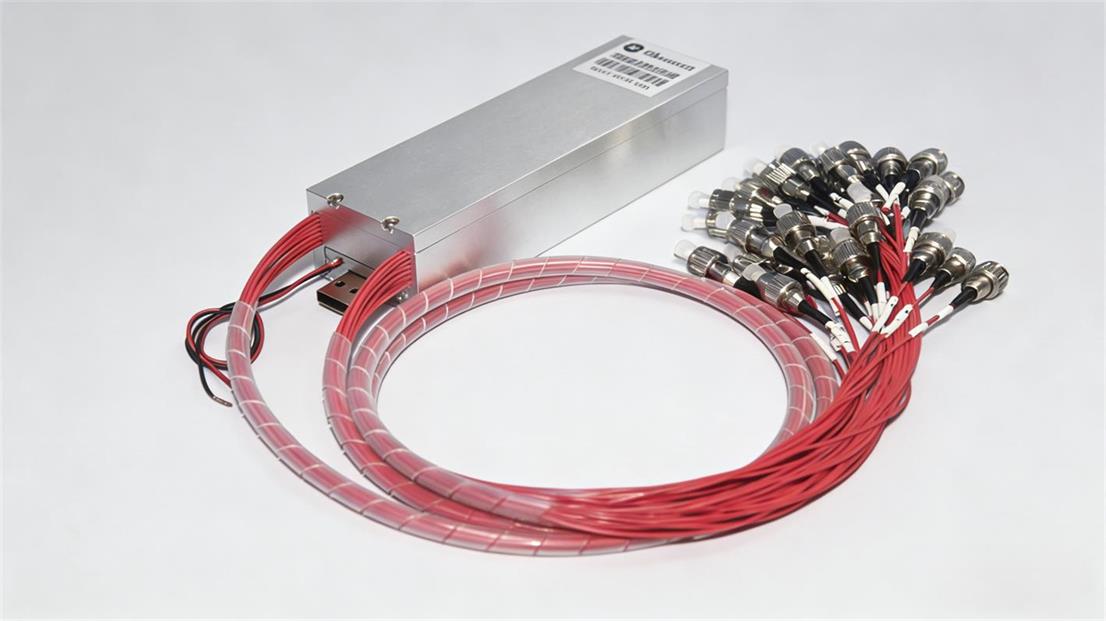
There are specifications for the fiber optic switch's switching performance in the optical fiber communication system. Which particular ones are they?
Compact device size, quick switching speed, low polarisation loss, good isolation, high coupling efficiency with fiber, small crosstalk, big extinction ratio, low insertion loss, small driving voltage, and no polarisation dependence. Large-scale integration, low cost, and high dependability
The optical switch, a crucial component, must always improve its performance due to the ongoing development of the fiber optic communication system. As a result, the maker of optical switches must meet stricter standards, and the cost of fiber optic switches will also be modified.
Do we want to know what kind of material the fiber optic switch is composed of? What qualities do each have?
Si and SiO2 have a significant thermo-optic coefficient, low loss, good mode matching with optical fiber, compatibility with large-scale integrated circuits, and suitability for thermo-optic electro-optic switches and matrices, but only in passive devices.
LiNbO3: It can be used to create electro-optical and acousto-optical switches because of its big size, high working voltage, and large electro-optical and acousto-optical effects.
III-V semiconductors: They have an electro-optic effect, a nonlinear optical effect, are easy to miniaturise, and can be used to create light-emitting detection and electronic devices. They can also be utilised to create electro-optic switches. It is challenging to match the optical fiber mode due to the high waveguide loss.
Organic polymers are inexpensive, can be produced on a large scale, have thermo-optic and electro-optic effects, and can be used to create thermo-optic and electro-optic switches. High crosstalk, high waveguide loss, and low stability.
Different optical switches including 1x2 Optical Switch have different application neighbourhoods from the standpoint of these various material types and characteristics, which means that the manufacturer's process, the cost of the materials, and the final fiber optic switch price will all differ.





No comments have been posted yet.