


.webp)


In cutting-edge fields such as optical fiber communications, quantum computing, and precision sensing, the stability of an optical signal's polarization state directly determines the performance limits of a system. As a core component for optical polarization manipulation, the Polarization-Maintaining (PM) Fiber Splitter, with its unique structural design, enables precise control over the optical polarization state and power distribution.
A Polarization-Maintaining Fiber Splitter (PMFS) is a passive optical device based on polarization-maintaining fiber (PMF). Its core function is to distribute optical power to multiple output ports according to a specific ratio while maintaining the polarization state of the incident light unchanged.
Compared to standard splitters, PM fiber splitters not only distribute optical power but also maintain the polarization state of the optical signal, which is crucial for polarization-sensitive applications. This article will provide an in-depth analysis of the working principles, performance metrics, advantages, and application areas of PM fiber splitters, along with a professional selection guide for readers.
Working Principle of PM Fiber Splitters
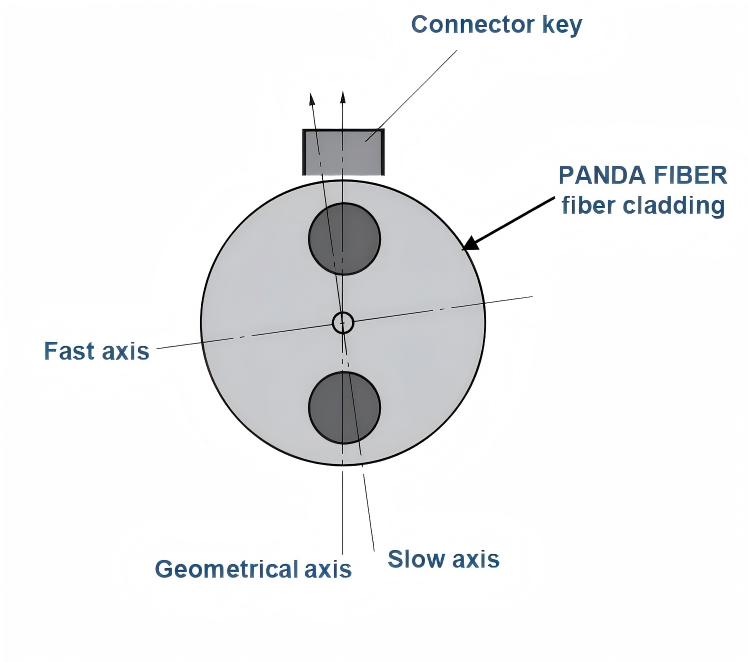
The working principle of PM fiber splitters is rooted in the birefringence characteristic of polarization-maintaining fiber. By introducing an asymmetric structure (such as the stress-applying parts in Panda-type fiber), the two orthogonal polarization components of the light wave (the fast axis and the slow axis) propagate at different speeds, creating a stable phase difference.
Birefringence Effect in PM Fiber
PM fiber creates a strong birefringence effect within the fiber by introducing stress-applying regions on either side of the core (e.g., Panda, Bow-Tie structures). This design establishes two distinct principal axes:
-
Fast Axis: The direction with the smaller refractive index, where light travels faster.
-
Slow Axis: The direction with the larger refractive index, where light travels slower.
When linearly polarized light is launched along one of these principal axes (fast or slow axis) of the PM fiber, its polarization state can remain stable over long distances. If the polarization direction is misaligned with the axes, optical power will couple between the two axes, causing polarization crosstalk.
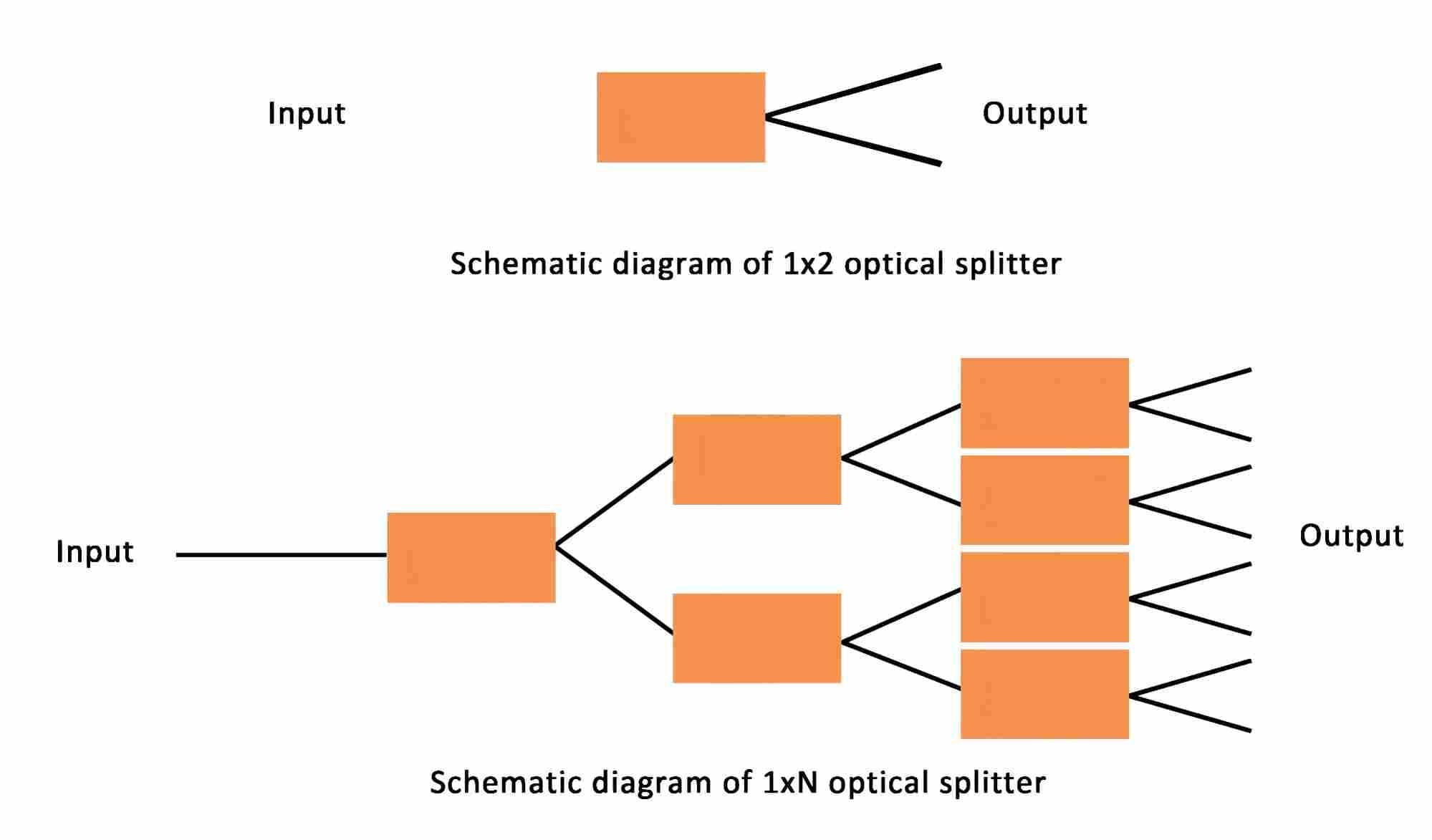
Beam Splitting Methods
PM fiber splitters employ various technologies to achieve beam splitting while preserving the polarization state:
-
Micro-Optic Splitters: Use combinations of lenses and glass capillaries to achieve optical field distribution through precision optical elements.
-
Fused Biconical Taper (FBT) Splitters: Bundle multiple PM fibers together, heat and fuse them, then stretch them to form a coupled waveguide structure.
-
Planar Lightwave Circuit (PLC) Splitters: Utilize semiconductor processes to create optical waveguide arrays on a chip, enabling more precise optical power distribution.
These technologies ensure strict alignment of the polarization axes at all ports, preventing aliasing of the output polarization state while achieving accurate optical power distribution.
Key Performance Metrics for PM Fiber Splitters
Evaluating the performance of a PM fiber splitter involves not only standard optical parameters but also specific polarization-related parameters.
Polarization Characteristics
-
Extinction Ratio (PER): A key parameter measuring the splitter's ability to maintain the polarization state, defined as the logarithmic ratio of the powers in the two orthogonal polarization modes. High-quality PM fiber splitters typically achieve a PER of 25 dB or higher**. A higher PER indicates a stronger ability to maintain the polarization state.
-
Polarization Dependent Loss (PDL): The variation in insertion loss caused by changes in the input polarization state. PM PLC splitters can compress PDL to below 0.2 dB, with high-quality products achieving 0.1 dB.
Standard Optical Metrics
-
Insertion Loss: The attenuation of output optical power relative to the input power. Typical insertion loss for high-quality PM fiber splitters is below 0.5 dB**.
-
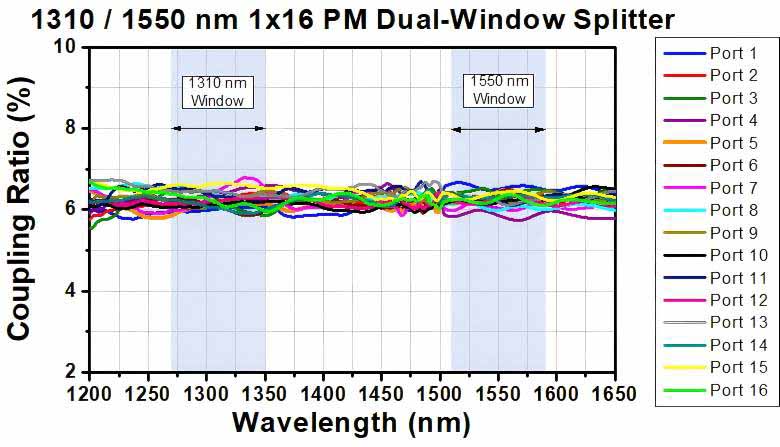
Uniformity: The consistency of power among the output ports, especially critical in multi-channel splitters.
-
Return Loss: Indicates the proportion of incident light reflected back towards the source. Higher return loss is better, as it reduces the impact of reflected light on the source and system.
Such as Fibermart PM Fiber Splitters, we have 100% QC tested for each unit before the shipment to our customer, all the PM Splitter comply to below specifications:
|
Parameter |
1x2 |
1x3 |
1x4 |
1x6 |
1x8 |
1x12 |
1x16 |
1x24 |
1x32 |
1x64 |
|
Operating Wavelength (nm) |
460, 630, 780, 980, 1310, 1550 or Custom |
|||||||||
|
Insertion Loss (@23°C) (dB) |
≤3.8 |
≤6.2 |
≤7.0 |
≤9.4 |
≤10.2 |
≤12.6 |
≤13.5 |
≤15.8 |
≤16.6 |
≤21 |
|
Uniformity (dB) |
≤0.3 |
≤0.5 |
≤0.4 |
≤0.6 |
≤0.4 |
≤0.8 |
≤0.6 |
≤1.1 |
≤0.8 |
≤1.5 |
|
Extinction Ratio (@23°C) (dB) |
≥23 |
≥23 |
≥23 |
≥22 |
≥22 |
≥22 |
≥20 |
≥20 |
≥18 |
≥18 |
|
Return Loss (dB) |
≥50 |
≥50 |
≥50 |
≥50 |
≥50 |
≥50 |
≥50 |
≥50 |
≥50 |
≥50 |
|
Power Handling(mW) |
500 |
|||||||||
|
Fiber Type |
PM1310 or PM1550 or Custom |
|||||||||
|
Connector Type |
LC, FC, SC, E2000, MPO, MTP |
|||||||||
|
Fiber Length Tolerance (%) |
±10 or Custom |
|||||||||
|
Operating Temperature (°C) |
-5 ~ +70 |
|||||||||
|
Storage Temperature (°C) |
-45 ~ +85 |
|||||||||
Notes:
For devices with connectors, Insertion Loss (IL) increases by 0.3dB, Return Loss (RL) decreases by 5dB, and Extinction Ratio (ER) decreases by 2dB.
Specifications are subject to change without notice.
Key Parameter Notes
Wavelength Coverage: The data in this table is primarily applicable to the most common PM wavelengths, PM1310 and PM1550. Fibermart also offers custom options for other wavelengths (e.g., 460nm, 630nm, 780nm, 980nm, 1064nm, 1310nm, 1550nm or custom).
Key Metrics Explained:
Insertion Loss: Refers to the reduction in optical power as the signal passes through the splitter. A lower value is better.
Extinction Ratio: Measures the device's ability to maintain the polarization state. This is a core metric for PM components, and a higher value is better.
Uniformity: Reflects the power distribution uniformity across output ports. A lower value indicates better uniformity.
Environmental Stability Metrics
PM fiber splitters often operate over wide temperature ranges (e.g., -40°C to +85°C), making performance stability crucial. Temperature-dependent loss is a key indicator for assessing performance variation under different temperature conditions.
Applications of PM Splitter
PM fiber splitters play an indispensable role in high-precision systems sensitive to polarization state.
Fiber Optic Sensing Systems
In fiber optic gyroscopes (FOGs), PM fiber splitters distribute linearly polarized light into the Sagnac interferometer loop, enabling angular velocity measurement by detecting rotation-induced phase differences. Their polarization crosstalk characteristics below -40 dB enable gyro bias stability better than 0.001°/h**.
Distributed fiber sensing systems also rely on PM fiber splitters to maintain the polarization state of sensing signals in strain and temperature monitoring, improving location accuracy to the meter level.
Quantum Communication Networks
In Quantum Key Distribution (QKD) systems, such as those using the BB84 protocol, PM fiber splitters are used to prepare four-state polarization-encoded photons. Their extinction ratio directly impacts the key generation rate. Experiments show that using a splitter with PER=25 dB can reduce the quantum bit error rate to below 1.2%.
Coherent Optical Communications
In 100G/400G coherent receivers, PM fiber splitters couple the local oscillator light and the signal light into the 90° optical hybrid. Their low loss characteristics can improve receiver sensitivity by 2 dB, extending transmission distance.
High-Precision Measurement Systems
-
Interferometry: PM fiber splitters are used for optical path distribution in interferometers, maintaining polarization state to achieve high-contrast interference fringes.
-
Fiber Lasers: Using PM fiber splitters within the laser cavity helps maintain the laser's polarization state, improving coherence and stability.
-
Biomedical Imaging: Techniques like Optical Coherence Tomography (OCT) rely on PM fiber splitters to maintain polarization state, enhancing image quality.
How to Choose PM Fiber Splitter? Types of PM Splitter
Selecting the right PM fiber splitter requires considering several technical factors to ensure it meets the needs of the specific application.
Performance Parameter Matching
Choose appropriate performance parameters based on the key requirements of the application scenario:
-
Extinction Ratio: Quantum communication and high-precision interferometry typically require high PER above 25 dB, while 20 dB may suffice for general applications.
-
Insertion Loss: Choose a splitter with low insertion loss (<0.5 dB) when the system power budget is tight.
-
Polarization Dependent Loss: Systems sensitive to polarization state changes should select splitters with low PDL (<0.2 dB).
Polarization Axis Alignment Configuration
PM fiber splitters can be customized based on application needs for the polarization axis alignment:
-
0-degree alignment: Fast axis to fast axis, or slow axis to slow axis. This is the most common configuration.
-
90-degree alignment: Fast axis to slow axis, suitable for certain types of interferometers and sensing systems.
-
45-degree alignment: Used for specific applications, such as certain types of depolarizers.
Splitting Ratio and Channel Count
Select the appropriate splitting ratio and number of channels based on the system architecture:
-
1x2, 1x4, 2x2: Common low-channel-count configurations for simpler systems.
-
1x8, 1x16, 1x32: High-channel-count configurations for multi-user or multi-sensor systems.
The splitting ratio can be equal (e.g., 50:50) or unequal (e.g., 10:90), selected according to the power requirements at different nodes in the system.
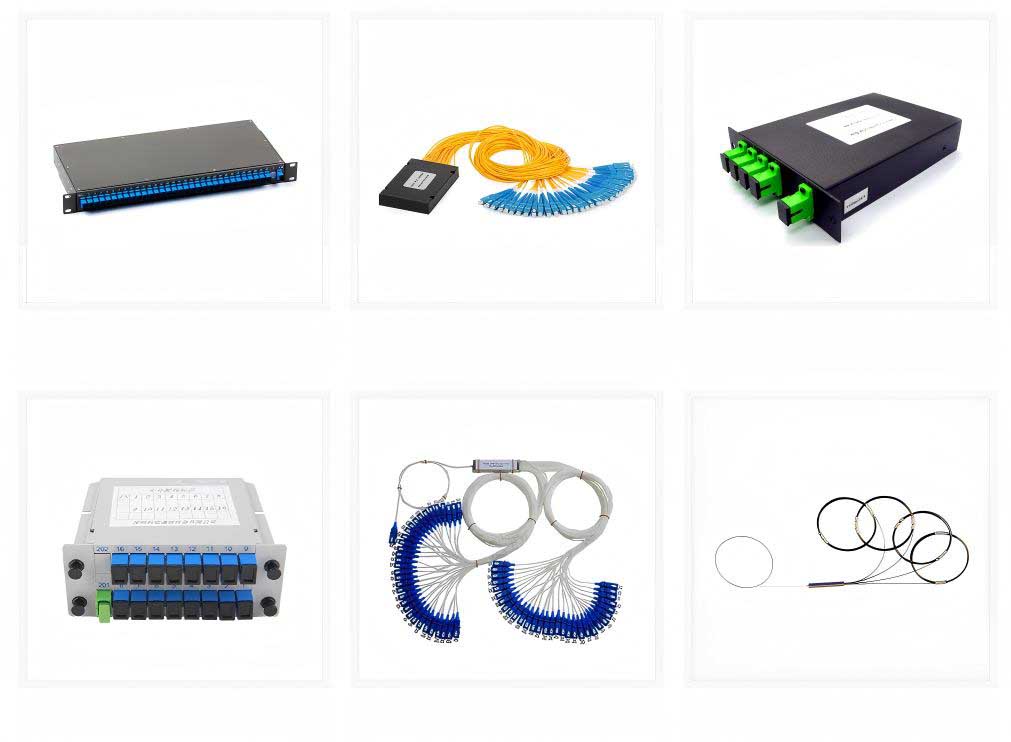
Package Styles
Select the appropriate package style based on the installation environment:
-
Bare Fiber: Suitable for integration inside patch panels or test equipment.
-
Miniature Steel Tube: Miniaturized package for space-constrained applications.
-
Box Type (ABS): Balances size and protection, widely used in fiber optic distribution boxes.
-
Plug-in Type: Modular design for easy installation and maintenance.
-
Rack-mount Type: Standard 19-inch chassis, suitable for high-density deployment in data centers.
Fiber Type Compatibility
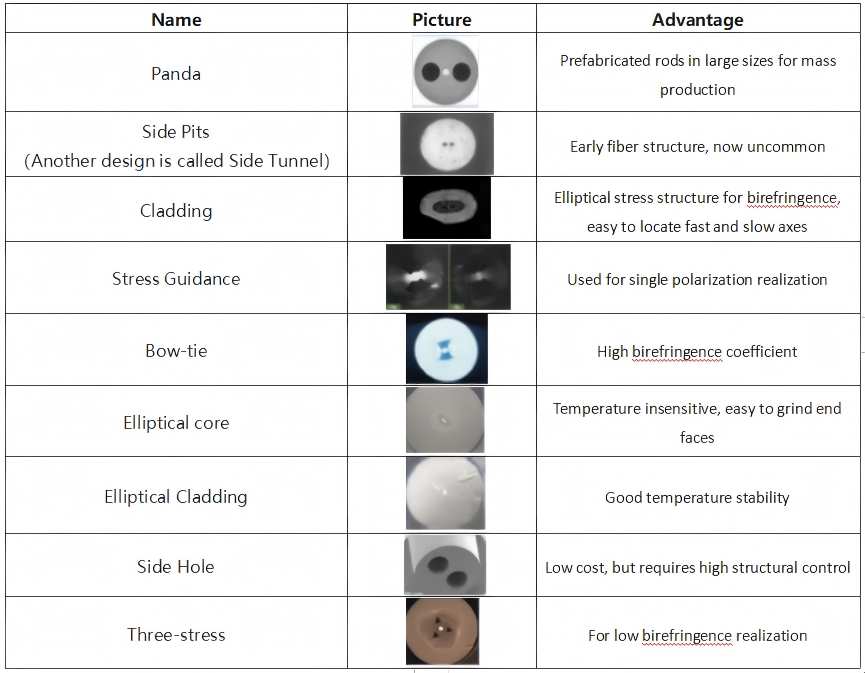
Ensure the type of PM fiber used in the splitter is compatible with other components in the system. Common PM fiber types include:
-
Panda: The most widely used PM fiber type.
-
Bow-Tie: Features a specific stress-applying region shape.
-
Elliptical Clad: Creates birefringence through its geometric shape.
Summary
As a key component in modern optical systems, PM fiber splitters provide a solid foundation for high-precision optical systems through precise control of optical polarization state and power distribution. Their widespread use in fiber optic sensing, quantum communication, coherent optical communications, and other fields demonstrates their indispensable value.
With the continuous development of quantum computing, 6G communications, and advanced sensing technologies, the performance requirements for PM fiber splitters will become increasingly demanding -- higher extinction ratios, lower losses, more compact packaging, and wider operating temperature ranges will be the directions for technological advancement.
Exploring High-Quality PM Fiber Splitter Solutions?
Welcome to Fibermart. We offer a full range of PM fiber splitter products, covering various splitting ratios, wavelength ranges, and package styles to meet your most demanding application requirements. Our professional technical team is ready to provide you with personalized product selection guidance and technical support.
Fibermart — Your Optical Solutions Partner, Enabling Precision Light Control.
Frequently Asked Questions
Q: I asked for a PM fiber combiner and you quoted me a splitter, why?
A: They are the same device used in opposite directions. All splitters can be used as combiners as long as you understand the split will occur in both directions as explained in the application notes.
Q: What is directivity in PM Fiber Splitter?
A: Directivity is a measure of how much unwanted light can be reflected or directed from one output port of a splitter into the other output port. For example, light from the input port of a 50/50 splitter is normally sent evenly into the two output ports. The directivity is the measure of how much light can be transmitted from one output port to the other output port instead.
Q: How many fibers or ports can I get for pm splitters?
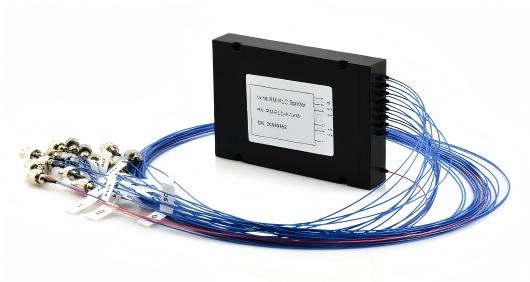
A: Standard configurations are 1x2, 2x2 and 1x3. By using these base splitters as “building blocks” we can create higher input and output port counts. The final device will be in a box or case to protect the individual splitters.
Q: Will the split ratio remain uniform for both the slow and fast axis launch for standard unit?
A: No. For the standard (off shelf) PM splitter unit the split ratio is optimized for only slow axis propagation. For uniform split ratio on
both slow and fast axis this can be done as a custom order.





No comments have been posted yet.