


.webp)


When we enjoy the smoothness of gigabit networks and the convenience of transoceanic communication, few of us stop to think: how exactly is a fiber optic cable, as thin as a human hair, manufactured? It may seem mysterious, but it is actually a sophisticated product that embodies more than half a century of engineering expertise—from ordinary quartz sand to a communication carrier that transmits data at the speed of light, every step relies on rigorous process control and precise scientific principles. Today, we will break down the entire manufacturing process of fiber optic cables, taking you behind the scenes of this "lifeline" of modern communication.
Fiber Optic Cable’s "3C Structure" - Core, Cladding, Coating
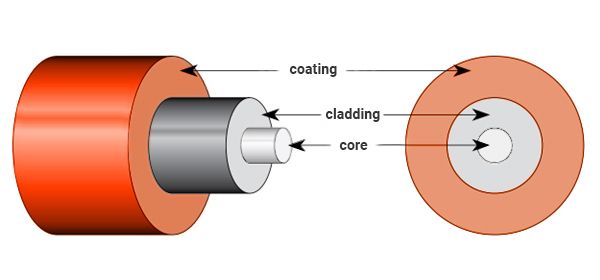
To understand the manufacturing process, it is first necessary to clarify the core composition of fiber optic cables. Unlike the copper cables we are familiar with, the core of a fiber optic cable is a thin glass fiber. Its most basic "three-layer structure" (commonly referred to as the "3Cs" in the industry) determines its transmission performance, which is also the core basis for all processes in the manufacturing process—each layer has its own function and is indispensable:
Core
The core is the central part of the fiber and the carrier for optical signal transmission. Many people mistakenly believe it is hollow, but in fact, it is a solid structure made of ultra-high-purity silicon dioxide (quartz glass). To ensure stable transmission of optical signals, the core requires extremely high purity, with impurity levels controlled at the parts per billion (ppb) level—this level of purity is equivalent to allowing only 1 milligram of impurities in 1,000 tons of pure water. In addition, engineers dope the core with a small amount of substances such as germanium (Ge) to increase its refractive index, creating conditions for total internal reflection and ensuring that optical signals do not easily attenuate or escape. The core diameter of single-mode fiber is usually only 9μm, much thinner than a human hair, while the core diameter of multi-mode fiber is 50μm or 62.5μm, adapting to different transmission scenarios.
Cladding
The cladding is the second layer of glass surrounding the core. It is also made of silicon dioxide, but with slightly lower purity, and is doped with substances such as fluorine (F) to reduce its refractive index—the core purpose of this design is to use the principle of "total internal reflection" to lock optical signals firmly inside the core. According to optical principles, when light travels from a medium with a higher refractive index (the core) to a medium with a lower refractive index (the cladding), as long as the incident angle is large enough, the light will be completely reflected back into the core without refracting to the outside, thereby achieving long-distance, leak-free transmission of optical signals. Without the cladding, optical signals would escape quickly, making long-distance communication impossible. The standard diameter of the cladding is fixed at 125μm, serving as the "standard size benchmark" for optical fibers.
Coating
The coating is the outermost layer of the fiber, usually made of materials such as acrylate or silicone rubber, with a thickness of approximately 250μm. Its main function is to protect the fragile glass core and cladding from scratches, wear, or moisture. Unlike the glass material of the core and cladding, the coating has good flexibility, which not only enhances the mechanical strength of the fiber but also makes it easier for installers to organize and splice fibers. In addition, the coating is usually color-coded (such as blue, orange, green, etc.) to help installers quickly distinguish different fiber links and improve installation efficiency. It should be noted that the coating itself does not improve the transmission performance of the fiber; its core value lies in "protection" and "convenience."
The 5 Manufacturing Steps of Fiber Optic Cable
The manufacturing of optical fiber is a sophisticated process that "reduces from coarse to fine, from raw materials to finished products." It can be divided into 5 key steps, each of which has extremely high requirements for the environment, temperature, and precision—even the slightest deviation can affect the final transmission performance.
Step 1: Preform Manufacturing
The preform is the "basic mother body" of fiber manufacturing. It is a cylindrical glass rod with a diameter of several centimeters and a length of several meters. The subsequent fiber drawing process involves pulling this "thick rod" into a thin fiber with a diameter of only 125μm. Preform manufacturing is the most technically challenging and cost-intensive link in the entire process (accounting for about 70% of the total fiber cost), and its purity and structural uniformity directly determine the core performance of the fiber, such as attenuation and bandwidth. Currently, there are 4 mainstream preform manufacturing methods in the industry, with the following two being the most commonly used:
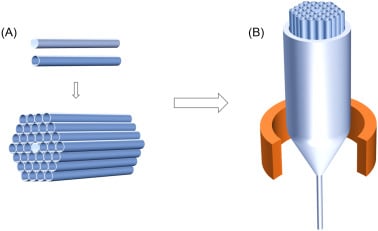
● Modified Chemical Vapor Deposition (MCVD): High-purity raw material gases such as silicon tetrachloride (SiCl₄) are introduced into a rotating quartz tube. High-temperature heating causes chemical reactions in the gases, generating silicon dioxide powder that deposits on the inner wall of the quartz tube. Subsequent heating and collapsing form a solid preform. This method has mature technology, is suitable for manufacturing small-sized preforms, and is widely used in single-mode fiber production. It can also precisely control the refractive index difference between the core and cladding, ensuring stable transmission performance.
● Outside Vapor Deposition (OVD): Raw material gases are sprayed onto the surface of a rotating "seed rod" to form a layer of silicon dioxide powder. Once the powder layer reaches a certain thickness, the seed rod is removed, and high-temperature sintering (1200-1500℃) is performed to remove moisture and impurities, converting the powder layer into a transparent solid preform. This method is commonly used by giants such as Corning, suitable for manufacturing large-sized preforms—one large-sized preform can produce tens of kilometers of fiber, offering higher production efficiency and more cost advantages.
● Vapor Axial Deposition (VAD): Raw material gases are sprayed from a nozzle, forming silicon dioxide powder at high temperatures, which is directly deposited on the top of a rotating and slowly rising seed rod, gradually forming a cylindrical preform. This method has a fast deposition rate, is suitable for large-scale production, and can produce preforms with a uniform refractive index distribution, often used in the manufacturing of multi-mode fibers and special fibers.
● Plasma Chemical Vapor Deposition (PCVD): Plasma is used to activate raw material gases, enabling them to quickly deposit a glass layer on the inner wall of the quartz tube, which is then collapsed into a preform. This method has a low reaction temperature and high deposition efficiency, and can precisely control the doping concentration of the core, making it suitable for manufacturing high-performance single-mode fibers, such as low-loss fibers used in 5G bearer networks.
Regardless of the method used, preform manufacturing must be carried out in an ultra-clean, constant temperature and humidity environment to avoid the mixing of impurities from the air, which would affect the purity of the fiber. At the same time, the temperature and atmosphere are strictly controlled during the sintering process to remove hydroxyl groups (-OH) from the raw materials, as hydroxyl groups absorb optical signals and cause increased fiber attenuation.
Step 2: Fiber Drawing
Fiber drawing is the key step in converting the preform into a thin fiber. This process is completed in a dedicated "drawing tower," with the core being melting at high temperatures and precise stretching to pull the preform into a fiber (core + cladding) with a uniform diameter and complete structure. The specific process is as follows:
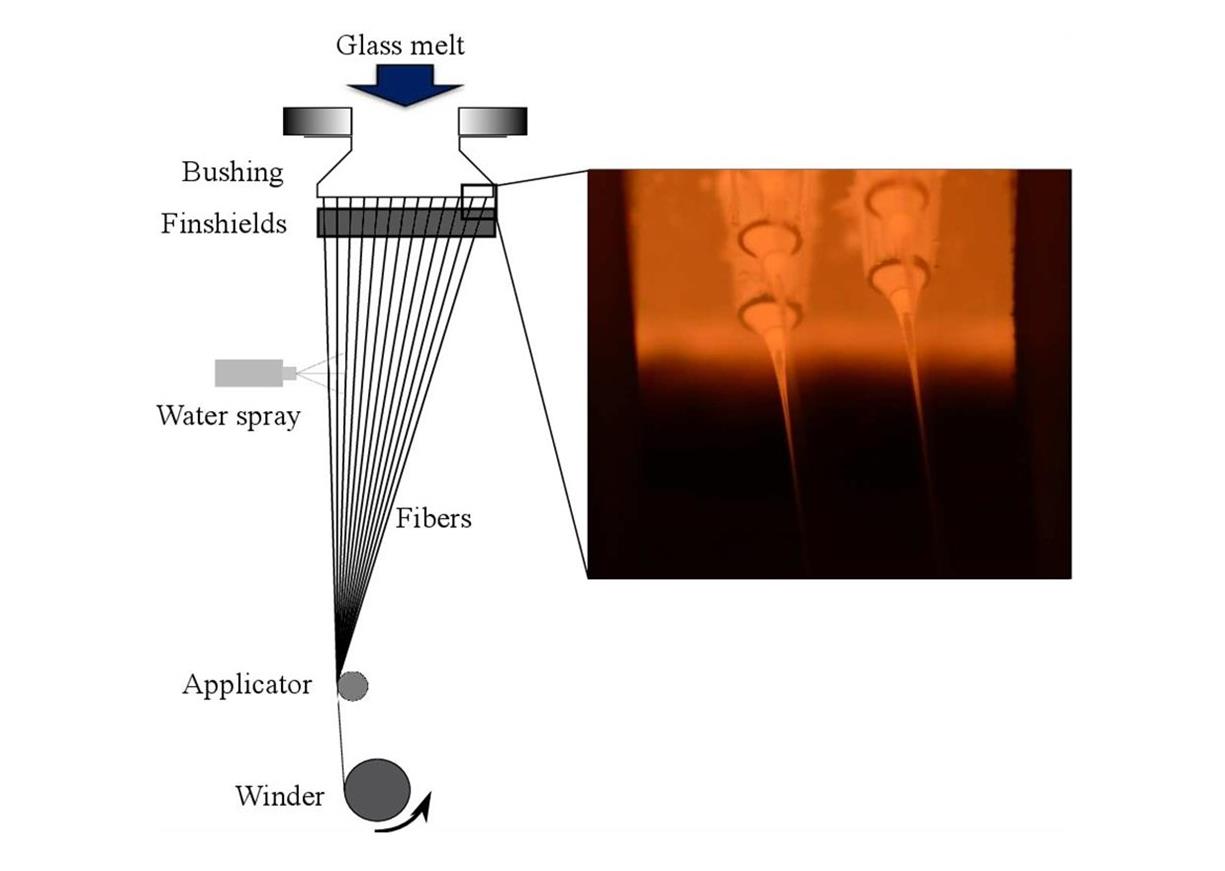
● Preheating and Melting: The preform is hung vertically at the top of the drawing tower, and the bottom is fed into a graphite heating furnace. The heating temperature is controlled at 2000-2200℃ (usually 2050℃±20℃ for single-mode fiber), softening and melting the bottom of the preform—this temperature must ensure that the glass flows sufficiently without being too high to cause material decomposition or evaporation, which would affect the geometric uniformity of the fiber.
● Precise Stretching: The molten glass naturally sags under gravity, forming a thin glass filament. At the same time, the traction device at the bottom of the drawing tower stretches it at a constant speed, usually 1500-3000 meters per minute. During the stretching process, a laser diameter gauge is used to real-time monitor the fiber diameter, ensuring that the diameter deviation does not exceed ±0.1μm (in line with ITU-T G.652 standards). If a deviation occurs, the system automatically adjusts the traction speed or heating temperature.
● Rapid Cooling: The stretched fiber immediately enters a cooling tube (1.5-3m in length, 20-50℃ in temperature) for rapid cooling and shaping, preventing the fiber from deforming due to high temperature and avoiding deviations in the refractive index of the core and cladding.
It is worth mentioning that a preform with a diameter of several centimeters can be drawn into 5-10 kilometers of fiber, with a stretching ratio of tens of thousands of times. The coordinated control of temperature and speed during drawing is crucial—according to industry data, every 10℃ deviation in drawing temperature increases the fiber attenuation coefficient by 0.02 dB/km, directly affecting the signal quality of long-distance communication. In addition, online testing is performed during drawing: an Optical Time-Domain Reflectometer (OTDR) is used to real-time monitor fiber attenuation, and a Polarization Mode Dispersion (PMD) tester is used to detect fiber polarization performance. If any abnormality is found, the machine is shut down immediately for adjustment to ensure that every section of fiber meets industry standards.
Step 3: Coating and Curing
The cooled fiber (core + cladding only) is very fragile, with a diameter of only 125μm. Even a slight scratch can cause fiber breakage or reduced transmission performance, so coating must be performed immediately. The coating process is usually divided into two steps and carried out in a clean environment throughout:
● Coating: The cooled fiber is fed into a coating machine, and two layers of resin (a soft inner layer and a hard outer layer) are uniformly applied through a mold, with a total coating thickness of approximately 250μm. The soft inner layer is mainly used to buffer external impacts, while the hard outer layer is used to prevent scratches and wear.
● UV Curing: The coated fiber immediately enters an ultraviolet (UV) curing furnace. Irradiation with ultraviolet light with a wavelength of 365nm-405nm causes the resin to rapidly polymerize and cure within a few seconds to tens of seconds, forming a hard, wear-resistant protective coating. During curing, the light intensity and energy density of the ultraviolet light are strictly controlled (requiring more than 3000 mJ/cm²) to ensure that the coating adheres firmly to the glass fiber, with a post-curing shrinkage rate of no more than 0.5%—otherwise, microbending loss will occur in the fiber.
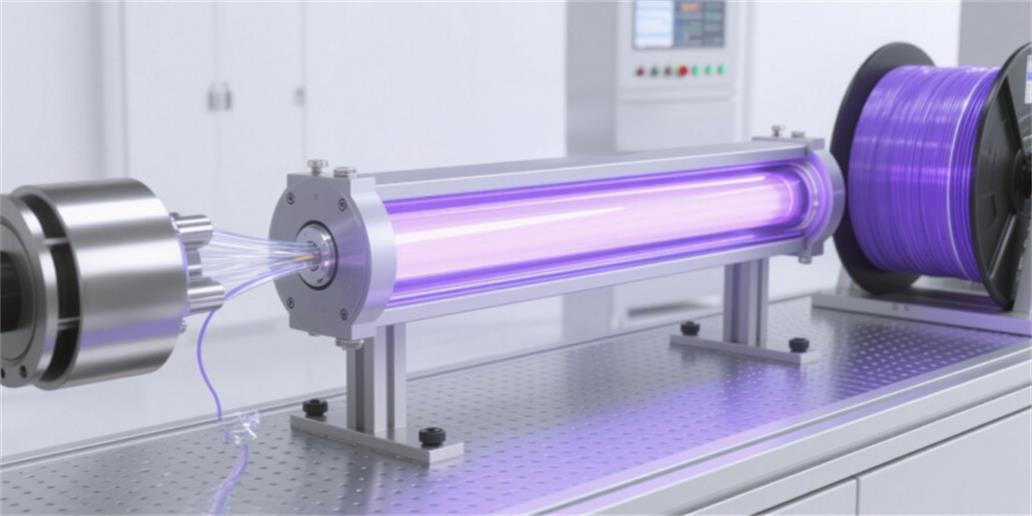
After coating and curing, the fiber is wound onto a dedicated spool. At this point, the fiber has basic transmission capabilities and is called a "bare fiber," which can be used for subsequent cable assembly.
Step 4: Cable Assembly
A single bare fiber cannot be directly used in practical scenarios (such as underground laying, overhead installation, or undersea transmission). It needs to be assembled into a cable with additional protective structures to make it resistant to stretching, bending, water, and corrosion. The core steps of cable assembly include buffering, strengthening, and jacketing, as follows:
● Buffering: Multiple bare fibers (usually 12, 24, 48, etc.) are organized into bundles and wrapped with a buffer layer (such as polypropylene sleeves). The buffer layer is divided into "tight buffer" and "loose buffer"—tight buffer means the buffer material is in close contact with the fiber, suitable for short-distance indoor applications; loose buffer means there is a gap between the fiber and the buffer layer, which can absorb external impacts, suitable for long-distance outdoor or undersea applications. At the same time, water-blocking ointment is filled in the buffer layer to prevent longitudinal water penetration and protect the fiber from moisture.
● Strengthening: Reinforcement members are added outside the buffer layer, the most common being aramid yarn (such as Kevlar). This material has extremely high tensile strength, which can prevent the cable from being stretched during laying and protect the internal fibers from damage. For outdoor or undersea cables, metal armor (such as steel tape or aluminum tape) is also added to enhance impact and corrosion resistance.
● Jacketing: An outer jacket is applied outside the reinforcement members. The jacket material is selected according to the application scenario—indoor cables usually use PVC material (lightweight and flame-retardant), outdoor cables use PE material (waterproof and anti-aging), and undersea cables use special seawater corrosion-resistant materials. The jacket’s role is to isolate the external environment (water, soil, chemicals) and provide final protection for the fiber.

After assembly, fiber optic cables are manufactured into different specifications to adapt to different application scenarios: FTTH (Fiber to the Home) cables usually adopt a tight buffer structure, with a small outer diameter and light weight, making them easy to thread into homes; OPGW (Optical Ground Wire) power cables add high-strength steel cores inside the jacket, with both communication and lightning protection functions, used for supporting communication in power lines; undersea cables adopt multi-layer armor and seawater corrosion-resistant jackets, filled with water-blocking materials inside, capable of withstanding high pressure and corrosion in deep seas, ensuring stable transoceanic communication. In addition, armored cables commonly used in industrial scenarios add steel or aluminum tape armor to improve impact and extrusion resistance, adapting to complex industrial environments.
Step 5: Testing and Packaging
The final step in fiber optic cable manufacturing is rigorous testing and packaging, which is crucial to ensuring communication reliability. All finished cables must undergo three categories of tests and can only be delivered from the factory after passing all of them:
● Optical Performance Testing: The core is to test indicators such as the fiber’s attenuation coefficient (the typical value for single-mode fiber is about 0.18dB/km at 1550nm wavelength and 0.35dB/km at 1310nm wavelength), bandwidth, and return loss, ensuring stable optical signal transmission with minimal loss.
● Mechanical Performance Testing: Tests the cable’s tensile strength, bending performance, compression performance, etc. For example, the tensile strength must meet IEC 60794-1-2 standards, and the bending radius must be controlled within the specified range (to avoid additional loss caused by bending).
● Environmental Adaptability Testing: The cable is placed in extreme environments to test its performance under conditions such as temperature cycles from -40℃ to +85℃, 95% relative humidity, and UV exposure, ensuring that the cable can work stably in different climates and environments.
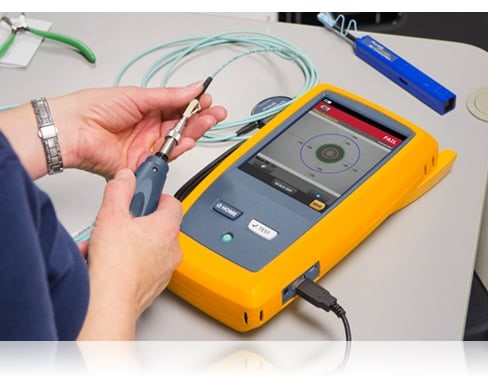
After passing the tests, the cable is wound onto large spools. The spool specifications are determined according to the cable length and diameter, usually divided into 1km, 2km, 5km, etc. The spool is marked with the cable’s model, specification, production date, test report number, and manufacturer information for subsequent construction and traceability. During packaging, waterproof and moisture-proof packaging materials are used to prevent the cable from getting damp or damaged during transportation. For special products such as long-distance undersea cables, special transportation containers are used to ensure the product is safely delivered to the destination. At the same time, each batch of cables is accompanied by a detailed test report, specifying the test results of various performance indicators, complying with international standards such as ISO9001:2015, ITU-T, and IEC, as well as relevant domestic industry standards.
FiberMart Fiber Optic Solutions
As a professional provider of fiber optic solutions, FiberMart focuses on matching different demands of customers, offering two core product lines that cover the entire fiber optic industry chain—from end-user finished products to factory manufacturing equipment.
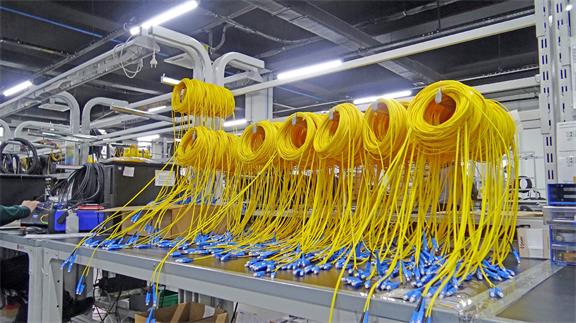
End-user Fiber Optic Cable and Assemblies
Targeting end-users in home, enterprise, and industrial scenarios, FiberMart provides a full range of ready-to-use fiber optic products, which are designed to be easy to install, stable in performance, and compatible with mainstream communication equipment. Key products include:
● FTTH Fiber Cables: Including tight-buffered and invisible fiber cables, suitable for home and apartment wiring, with small outer diameter, flame-retardant sheath, and easy threading without damaging decoration.
● Fiber Optic Jumpers & Patch Cords: Available in single-mode and multi-mode options, indoor and outdoor appication scenarios, with various connector types (SC, LC, ST), matching different devices such as optical modems and switches, ensuring low insertion loss (≤0.3dB).
● End-user Accessories: Fiber optic adapters, couplers, and indoor distribution boxes, providing one-stop solutions for home and small enterprise network construction, simplifying installation and maintenance.
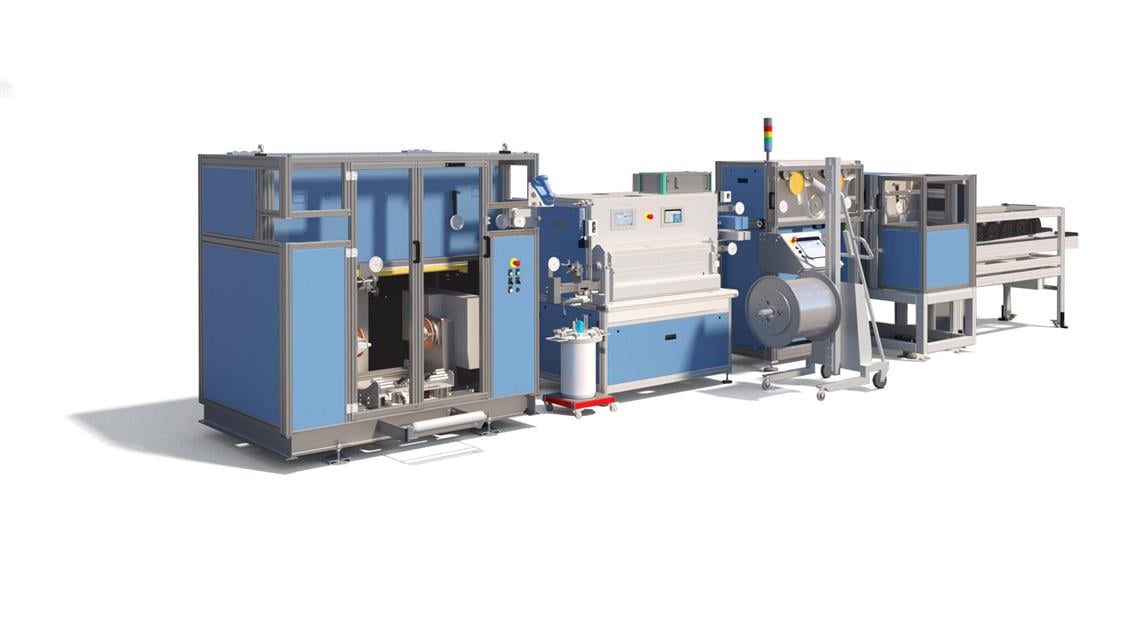
Optical Fiber Cable, Fiber Patchcord Factory Manufacturing Equipments
For fiber optic manufacturers, FiberMart provides comprehensive and customizable fiber optic cable factory production lines. These integrated production lines are designed to be high-precision, cost-effective, and efficient, helping manufacturers streamline production processes, improve production efficiency, and ensure stable product quality.
Conclusion
From high-purity quartz sand to finished fiber optic cables, the entire manufacturing process involves multiple fields such as materials science, optical principles, and precision machinery. Every step requires rigorous process control and precise parameter adjustment—from the ppb-level purity of the preform to the micron-level precision of fiber drawing, and the comprehensive testing of the final product. Any oversight in any link may lead to reduced fiber transmission performance or even rendering it unusable.
Today, fiber optic cables have become the "backbone" of modern communication, supporting the normal operation of various scenarios such as 5G, gigabit broadband, and transoceanic communication. Understanding its manufacturing process not only allows us to comprehend the principle of "light-speed communication" but also lets us feel the engineers’ pursuit of precision and quality behind technological progress.
Since Corning invented low-loss fiber in 1970, and with the continuous upgrading of fiber technology today, every breakthrough in fiber manufacturing processes over more than half a century has pushed human communication into a faster, more stable new era—and all of this starts with a small glass filament, and with every step of the meticulous manufacturing process.
FAQs
Q1: What are fiber optics made of?
Fiber optics are made of ultra-pure glass (silica) or plastic, designed to transmit light signals with minimal loss.
Q2: What is the preform in fiber optic manufacturing?
A preform is a specially prepared glass rod that serves as the base material for drawing optical fibers.
Q3: How are optical fibers drawn?
The preform is heated and drawn into thin strands through a furnace, creating the fiber optic core and cladding with controlled diameter.
Q4: Why is coating applied to optical fibre?
Coating protects the fiber from moisture and mechanical damage, adds strength, and maintains stable optical performance.
Q5: What are the main methods of preform preparation?
Techniques include Modified Chemical Vapor Deposition (MCVD), Outside Vapor Deposition (OVD), and Plasma-Enhanced Chemical Vapor Deposition (PECVD).
Q6: What industries use fiber optics?
Telecom, medical imaging, military communication, industrial automation, broadcasting, and sensing technologies.
Q7: How has fiber optic manufacturing evolved?
Advances in pure silica glass, doping techniques, automation, and new deposition methods have improved performance and reduced costs.
Q8: What are the key differences in manufacturing indoor and outdoor fiber optic cables?
Indoor cables use flame-retardant PVC jackets and tight buffering, while outdoor cables adopt weather-resistant PE jackets, armor, and water-blocking structures for harsh environments.
Q9: What special manufacturing considerations are needed for outdoor fiber optic cables?
Outdoor cables require anti-aging, moisture-proof, and anti-mechanical damage designs, including metal armor, water-blocking ointment, and UV-resistant jackets.
Posted on 9 April, 2026, by Francisco, Fibermart Ltd, All Copy Right Reserved.





No comments have been posted yet.