


.webp)


Polarization Maintaining Fiber Cable
In the intricate landscape of modern photonics—where applications range from high-speed telecommunications to life-saving medical imaging and aerospace navigation—preserving the polarization state of light is no longer a luxury but a necessity. At the forefront of this critical capability is the Polarization Maintaining Fiber Cable - a specialized optical component engineered to overcome the limitations of standard singlemode fibers. Unlike conventional fibers, which suffer from random polarization scattering caused by manufacturing imperfections (such as micro-irregularities in the silica core) and external stresses (including temperature fluctuations, mechanical bending, and vibration), Polarization Maintaining Fiber Cable is designed to lock in a stable linear polarization state over extended transmission distances. This unique attribute makes it indispensable for polarization-sensitive systems, where even the smallest polarization drift can compromise signal integrity, measurement accuracy, or operational reliability.
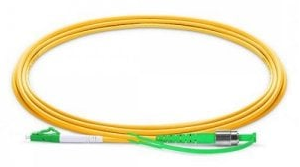
What Makes Polarization Maintaining Fiber Cable Unique?
To fully appreciate the value of Polarization Maintaining Fiber Cable, it is essential to first understand the shortfalls of the standard singlemode fibers used in most general optical communication. Standard fibers are optimized for efficient data transfer but lack mechanisms to stabilize light polarization. As light travels through these fibers, interactions with microscopic defects and environmental disturbances cause its polarization state to scatter randomly. For basic tasks like streaming video or browsing the internet, this randomization is negligible—digital signals can still be reconstructed with minimal loss. However, for applications that rely on precise polarization control (e.g., coherent optical communication, fiber-optic gyroscopes, or polarization-sensitive imaging), this randomness is catastrophic, leading to signal distortion, measurement errors, or complete system failure.
Polarization Maintaining Fiber Cable addresses this challenge through innovative design, primarily by introducing controlled birefringence. This is achieved via two common approaches:
Stress-induced birefringence: The fiber’s cladding incorporates stress-applying elements (such as boron-doped glass rods) that create a directional difference in refractive index. This guides light to propagate along a “preferred axis” (either the “slow axis” or “fast axis”), stabilizing its polarization.
Geometric birefringence: The fiber core is shaped asymmetrically (e.g., elliptical cross-section) to create distinct propagation paths for different polarization states, ensuring the desired linear polarization remains intact.
A key performance metric that defines high-quality Polarization Maintaining Fiber Cable is the extinction ratio— a measure of how effectively the cable preserves the target polarization state. Reputable manufacturers like FiberMart ensure their Polarization Maintaining Fiber Cable products meet or exceed industry standards, often achieving extinction ratios of 25 dB or higher. This means minimal cross-talk between polarization axes, guaranteeing that light retains its intended polarization even in challenging environments.
Versatile Configurations of Polarization Maintaining Fiber Cable
One of the greatest strengths of Polarization Maintaining Fiber Cable is its flexibility in configuration, allowing it to adapt to the diverse needs of industries ranging from telecommunications to biotechnology. Leading suppliers like FiberMart offer a range of customizable options to tailor the cable to specific use cases, starting with fiber diameter— a critical parameter that determines compatibility with devices and installation environments:
250µm bare fiber: Ultra-thin and lightweight, this configuration is ideal for integration into compact devices such as miniaturized sensors, micro-lasers, or high-density photonic modules. Its small profile enables easy embedding into space-constrained setups, making it a top choice for laboratory research and micro-photonic applications.
900µm buffered fiber: Equipped with a protective polymer coating, this variant adds durability against moisture, dust, and minor abrasion. It is well-suited for indoor use—such as connecting components within data centers, medical imaging machines, or research labs—where the cable is not exposed to extreme environmental stress.
3mm jacketed cable: Ruggedized with a thick outer jacket (typically made of PVC or low-smoke zero-halogen materials), this configuration withstands harsh conditions, including temperature extremes (-40°C to 85°C), UV radiation, and mechanical impact. It is designed for outdoor telecommunications links, industrial sensing systems, or aerospace applications.
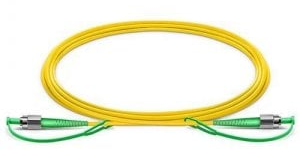
Connector compatibility is another vital aspect of Polarization Maintaining Fiber Cable configuration, ensuring seamless integration with existing optical systems. FiberMart offers a comprehensive range of connector types, including:
FC/UPC and FC/APC: Threaded connectors that provide a secure, vibration-resistant connection—ideal for high-stakes environments like aerospace navigation or industrial machinery. The APC (Angled Physical Contact) variant minimizes back reflection, a critical feature for high-power laser systems.
SC/UPC and SC/APC: Push-pull connectors that are easy to install and reconfigure, making them popular in data centers and labs where frequent component adjustments are needed.
LC connectors: Small-form-factor connectors optimized for high-density setups (e.g., fiber-optic patch panels or compact transceivers), where space efficiency is a priority.
Additionally, Polarization Maintaining Fiber Cable is available in multiple wavelength options, covering 460nm (visible blue), 630nm (visible red), 780nm (near-infrared), 980nm (pump wavelength for erbium-doped fiber amplifiers), 1310nm (traditional telecommunications), and 1550nm (long-haul communication and sensing). This wavelength flexibility ensures compatibility with a wide range of optical components, from biotech sensors to undersea fiber networks.
Critical Applications of Polarization Maintaining Fiber Cable
The unique capabilities of Polarization Maintaining Fiber Cable make it a cornerstone of polarization-sensitive systems across industries, enabling technologies that demand uncompromising precision:
1. Coherent Optical Telecommunications
In next-generation 5G/6G networks and long-haul undersea fiber links, coherent communication systems use light polarization to double or quadruple bandwidth by encoding data onto orthogonal polarization states. Without the stable polarization provided by Polarization Maintaining Fiber Cable, this encoding scheme fails—random polarization drift corrupts signals and reduces throughput. Polarization Maintaining Fiber Cable ensures that encoded polarization states remain intact, enabling the high-bandwidth connections needed for global data transmission.
2. Aerospace and Defense
Fiber-optic gyroscopes (FOGs)—critical for aircraft navigation, missile guidance, and satellite attitude control—rely on precise polarization control to measure angular velocity. FOGs operate on the Sagnac effect, where the phase difference between two counter-propagating, orthogonally polarized light beams determines rotation. Polarization Maintaining Fiber Cable preserves the beams’ orthogonal states, preventing measurement errors that could endanger missions in high-vibration, extreme-temperature environments.
3. Medical and Biotechnology
In medical imaging, polarization-sensitive optical coherence tomography (PS-OCT) uses Polarization Maintaining Fiber Cable to generate detailed images of tissue structure by analyzing polarization changes in reflected light. This technology is vital for diagnosing eye diseases, skin conditions, and cardiovascular issues—where blurry or inaccurate images could lead to misdiagnosis. Additionally, in laser-based treatments (e.g., laser eye surgery or cancer ablation), Polarization Maintaining Fiber Cable ensures uniform energy delivery to target tissues, reducing the risk of collateral damage.
4. Industrial Sensing
For industrial applications like pipeline monitoring, structural health sensing, or temperature measurement, Polarization Maintaining Fiber Cable enables precise, real-time data collection. For example, in oil and gas pipelines, polarization-based sensors use the cable to detect small strain changes (indicating leaks or structural weaknesses) by monitoring polarization shifts. The cable’s resistance to environmental stress ensures reliable performance even in high-pressure, corrosive, or high-temperature conditions.
Quality Assurance and Sourcing for Polarization Maintaining Fiber Cable
Given its role in critical systems, quality is non-negotiable for Polarization Maintaining Fiber Cable. Substandard cables can lead to costly downtime, system failures, or safety risks - making it essential to source from reputable suppliers that adhere to strict standards.
The gold standard for quality management is ISO 9001 certification, which ensures every stage of Polarization Maintaining Fiber Cable production—from raw material selection (e.g., high-purity silica for the core) to final testing—meets global benchmarks. Key quality tests include:
Extinction ratio testing: Verifies the cable’s ability to preserve polarization, ensuring values meet or exceed industry requirements.
Insertion loss testing: Measures signal attenuation, with acceptable levels typically below 0.5 dB for single connectors.
Environmental durability testing: Evaluates performance under temperature cycling, humidity, and mechanical stress to ensure reliability in real-world use.
Suppliers like FiberMart further enhance value by offering customizable solutions—such as Polarization Maintaining Fiber Cable in any length (from 1 meter to 1000+ meters)—and customer-centric perks like free shipping and in-stock availability. This streamlines procurement for time-sensitive projects, from emergency data center repairs to urgent medical equipment manufacturing.
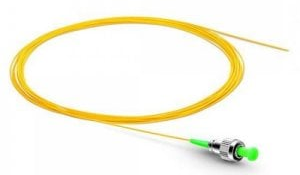
As optical technologies advance toward greater miniaturization, higher precision, and more demanding environments, the importance of Polarization Maintaining Fiber Cable will only grow. Its ability to preserve polarization integrity, combined with versatile configurations and strict quality standards, makes it an essential component in telecommunications, aerospace, medical, and industrial systems. For engineers, researchers, and system integrators, understanding the principles, configurations, and quality benchmarks of Polarization Maintaining Fiber Cable is key to unlocking the full potential of polarization-sensitive technologies. By choosing a high-quality Polarization Maintaining Fiber Cable from a trusted supplier, users can ensure their systems deliver consistent, reliable performance—powering innovations that shape the future of communication, healthcare, and global infrastructure.


-on-the-Poincaré-Sphere.jpg "What is Polarization Extinction Ratio? How to Measure the PER in PM Fibers?")





No comments have been posted yet.