


.webp)


In daily networking, RJ45 and SFP should be our most common network interface types. Today, let’s take a look at the difference between the two.
What is RJ45
RJ45 stands for Registered Jack 45, which is a physical connector standard. It has an 8-pin (8P8C) plug and socket, which is commonly known as a "crystal head". It is used in communication scenarios such as Ethernet and telephone, but in modern networks it specifically refers to Ethernet interfaces.
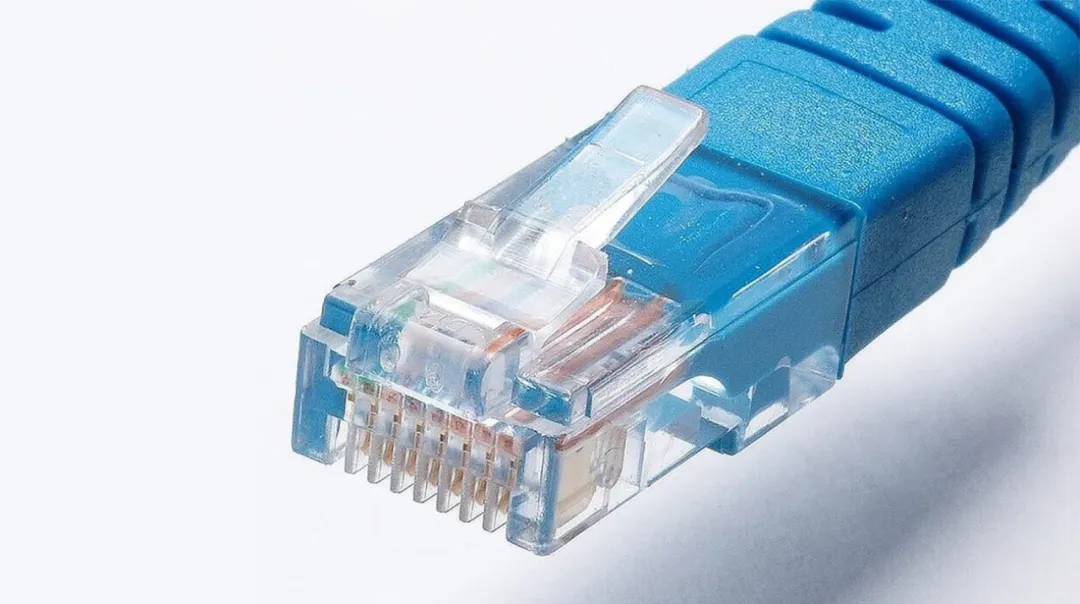
RJ45 Features
Interface type : 8P8C (8 pins, 8 contacts), which is different from the telephone line RJ11 (6P2C/4C).
Transmission medium : twisted pair cables, such as Cat5e, Cat6, Cat7 and other network cables.
Transmission rate : Support 10Mbps, 100Mbps, 1Gbps, 10Gbps (10Gbps).
Transmission distance : Limited by twisted pair cable attenuation and interference, the maximum distance is about 100 meters.
Signal type : electrical signal
What is SFP?
Ethernet SFP (Small Form Factor Pluggable) is a compact, hot-swappable module used primarily in telecommunications and data communications. It enables high-speed data connections over optical and copper cables, making it suitable for a variety of network settings. There are several types of small form factor pluggable modules, such as SFP, SFP+, and QSFP, each designed for different data rates and transmission requirements.
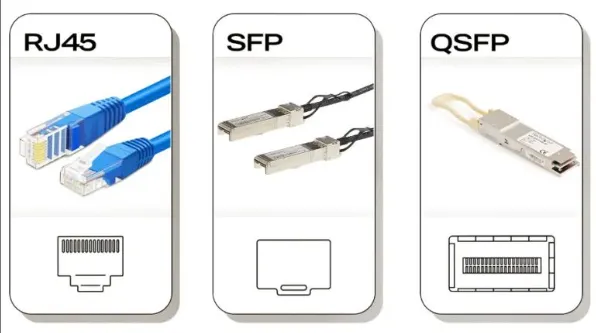
SFP usage scenarios
SFP small form-factor pluggable modules are typically found on network devices such as switches, routers, firewalls, and are located on the front or back of these devices.
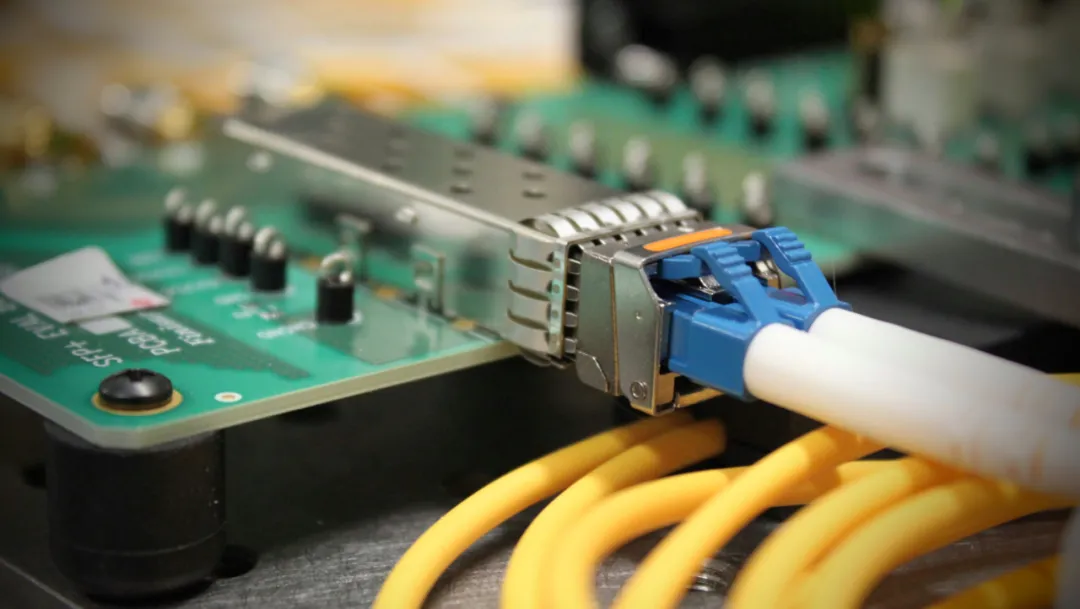
RJ45 and SFP interface comparison
The choice between using an SFP port or an RJ45 port depends on the specific requirements of the network and the network environment. The following figure compares some performance parameters of the two interfaces.

From the diagram, the SFP interface is not necessarily "better" than Ethernet RJ45. Depending on the specific environment requirements, the advantages of SFP are more suitable for environments that require high performance, flexibility, and long-distance connections. From a cost perspective, Ethernet RJ45 is still the standard choice for most typical network settings due to its ease of use and lower cost. The final choice between SFP and Ethernet should be based on specific network requirements, your budget, and future scalability requirements for the network.
Comparison of RJ45 and SFP's anti-electromagnetic interference capabilities
In industrial environments, RJ45 and SFP have different advantages in terms of their ability to resist electromagnetic interference.
RJ45
Standard RJ45 connectors usually use twisted pair cables, which are susceptible to electromagnetic interference (EMI). Shielded cables have strong anti-EMI capabilities , but are still limited by the transmission properties of copper, making them less suitable for long-distance high EMI environments.
SFP (Small Form Factor Pluggable)
SFP ports offer the flexibility of using fiber optic cables, which are not affected by EMI. This makes them particularly suitable for industrial environments with high EMI. Fiber optics transmit data in the form of light rather than electrical signals, thus avoiding the typical interference that affects copper cables.
Therefore, for industrial environments, using the SFP interface of fiber optic cable can improve the ability to resist electromagnetic interference, especially when data must be transmitted over long distances or in areas with more electromagnetic activity.
FAQ
What is SFP and how does it work?
SFP (Small Form Factor Pluggable) is a compact, hot-swappable network interface module used in telecommunications and data communications to connect switches or routers to the network via fiber or copper cables. It converts electrical signals to optical signals and vice versa.
Is SFP a fiber optic port?
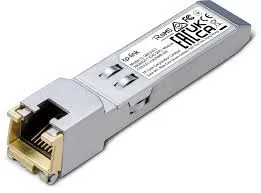
If the SFP interface contains a fiber optic SFP module, it can be a fiber optic port or an SFP optical-to-electrical port module.
Are SFP modules hot-swappable?
SFP modules are designed to be hot-swappable, they can be inserted or removed from a device without powering off the system.
What is the SFP connection rate?
SFP modules support a variety of speeds, typically ranging from 100 Mbps to 1 Gbps, while SFP+ supports higher speeds up to 10 Gbps.
What is SFP used for?
SFP is used for network expansion and flexibility, supporting connections between different media types (fiber and copper cables) and at different distances in the network.
Why use SFP between switches?
SFP is used between switches to facilitate high-speed connections over longer distances than typical copper cables.
Can SFP be connected to RJ45?
Using an SFP module that supports an RJ45 connector, the SFP interface can be connected to a standard Ethernet cable.
What is electromagnetic interference
Electromagnetic interference (EMI) refers to the unintended effects of any external electromagnetic signal on electronic equipment, circuits or communication systems , which may cause signal distortion, data errors or even equipment failure. EMI is an important issue in the field of electronic engineering and communications, especially in high-speed networks, wireless communications and precision instruments, which require strict control.
%20VS%20EMC.webp "Electromagnetic interference (EMI) VS EMC")
There are natural and man-made sources for the generation of radiation . For example, lightning, solar flares, cosmic radiation, etc. are natural sources, and man-made sources include electronic devices (such as motors, switching power supplies, inverters), wireless devices (Wi-Fi, Bluetooth, mobile phone base stations), high-voltage transmission lines, relays, fluorescent lamps, and high-speed digital signals (such as HDMI, USB 3.0, Gigabit Ethernet).





No comments have been posted yet.