


.webp)


Among the various types of fiber pigtails available, singlemode and multimode options stand out as the two most widely used variants. However, selecting the right type for specific applications can be a challenging task, as each variant possesses unique characteristics tailored to different network requirements. This article aims to provide a comprehensive comparison between singlemode and multimode fiber pigtails, along with a step-by-step guide to help you make an informed decision.
Core Differences: Structural and Operational Distinctions
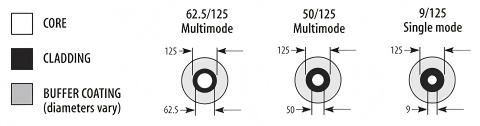
The fundamental difference between singlemode and multimode fiber pigtails lies in their core diameters, which directly influence how light signals travel through the fiber. Singlemode fiber pigtails, typically featuring a narrow core diameter of 9/125μm (where 9μm refers to the core and 125μm to the cladding), are designed to transmit a single beam of light. This design minimizes signal dispersion, allowing light to travel in a straight line with minimal interference. In contrast, multimode fiber pigtails have a larger core diameter, with common specifications including 62.5/125μm and 50/125μm. The wider core enables the transmission of multiple light beams simultaneously, which simplifies connectivity but introduces higher dispersion.
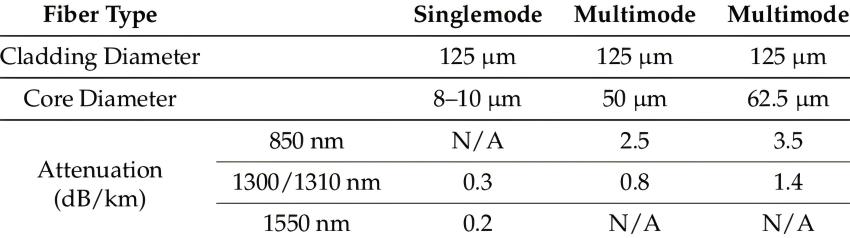
Another key distinction is the wavelength range each variant supports. Singlemode fiber pigtails operate efficiently at longer wavelengths, specifically 1310nm and 1550nm, making them ideal for long-distance signal transmission. Multimode fiber pigtails, on the other hand, are optimized for shorter wavelengths—850nm and 1300nm—and are primarily used for short-range applications. These wavelength differences directly impact signal attenuation, with singlemode options offering significantly lower attenuation rates: typically 0.36dB/km at 1310nm and 0.22dB/km at 1550nm, compared to higher attenuation levels in multimode alternatives.
Performance Parameters: What to Prioritize
When evaluating singlemode and multimode fiber pigtails, several performance parameters must be considered to ensure compatibility with your network infrastructure.
Attenuation and Signal Loss
Attenuation, the reduction in signal strength over distance, is a critical factor for long-haul networks. Singlemode fiber pigtails excel in this area, as their narrow core reduces light scattering and absorption. This low attenuation allows them to transmit signals over distances exceeding 10 kilometers—even up to 100 kilometers in some cases—without significant signal degradation. Multimode fiber pigtails, however, experience higher attenuation due to modal dispersion (the spreading of light beams as they travel through the wider core), limiting their effective range to 2 kilometers or less for most applications.
Insertion Loss and Return Loss
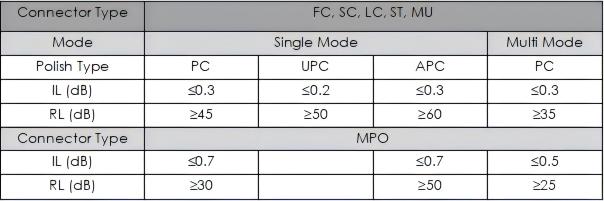
Insertion loss, the loss of signal power when light passes through a connector, is another vital parameter. Both singlemode and multimode fiber pigtails (such as those offered by Fibermart) typically meet strict insertion loss standards, with values <0.25dB. Return loss, which measures the amount of light reflected back from the connector, is also critical for signal integrity. Singlemode pigtails generally achieve higher return loss values (≥50dB) compared to multimode options, making them more suitable for high-speed, long-distance networks where signal reflection can cause interference.
Environmental Resilience
Environmental factors, such as temperature fluctuations and physical durability, also play a role in selection. Both singlemode and multimode fiber pigtails (including armored and waterproof variants) are designed to withstand harsh conditions, with operating temperature ranges from -40°C to 75°C and storage temperatures from -45°C to 85°C. Armored versions, in particular, offer enhanced protection against mechanical damage, making them suitable for outdoor or industrial environments. However, the choice between singlemode and multimode in such settings often depends more on transmission distance than environmental resilience, as both variants can be equipped with protective features.
Application Scenarios: Matching Pigtails to Your Needs
The choice between singlemode and multimode fiber pigtails largely depends on the specific requirements of your network, including distance, bandwidth, and cost.
Singlemode Fiber Pigtails: Ideal for Long-Distance, High-Bandwidth Networks
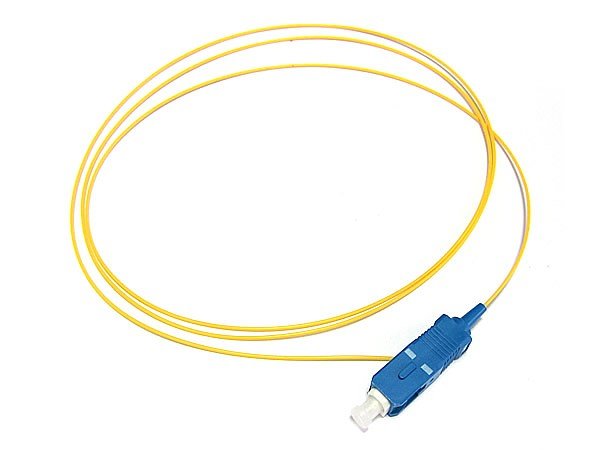
Singlemode fiber pigtails are the preferred choice for long-distance communication networks, such as:
Telecommunication Backbones: These networks require signal transmission over hundreds of kilometers between cities or countries. Singlemode pigtails’ low attenuation and high bandwidth (supporting 100G and beyond) make them ideal for this purpose.
Data Centers with Long Inter-Connections: Large data centers with multiple buildings or campuses often need to connect servers and storage systems over distances exceeding 2 kilometers. Singlemode pigtails ensure reliable, high-speed data transfer in such scenarios.
Fiber-to-the-Home (FTTH) Networks: FTTH networks require signal transmission from central offices to residential areas, which can span several kilometers. Singlemode pigtails’ efficiency in long-distance transmission helps reduce signal loss and ensure consistent performance.
Multimode Fiber Pigtails: Cost-Effective for Short-Range Applications
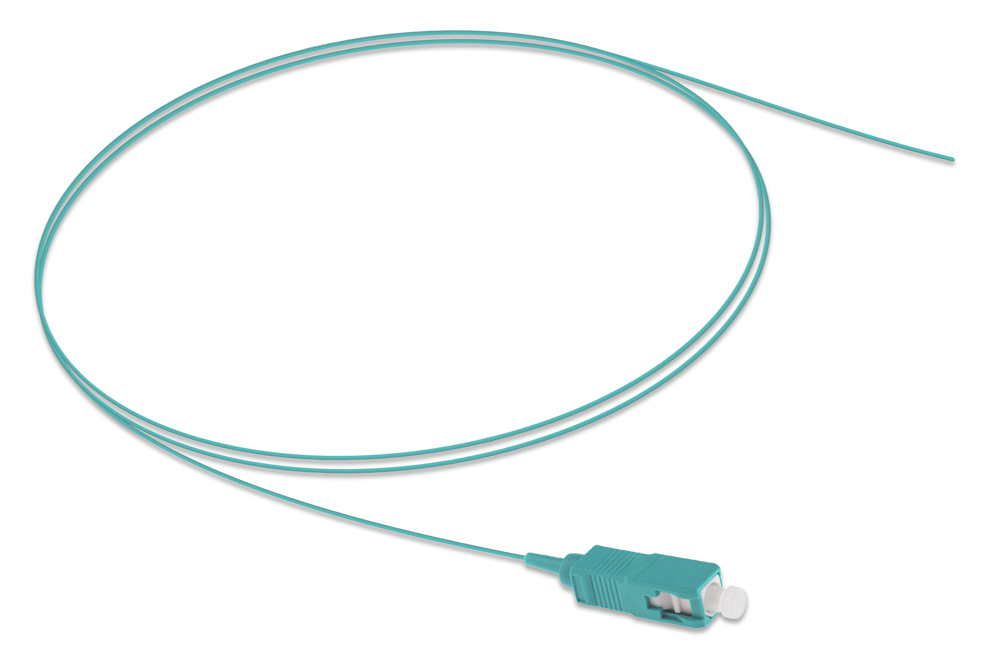
Multimode fiber pigtails are more cost-effective for short-range networks, making them suitable for:
Local Area Networks (LANs): Small to medium-sized businesses with on-site networks (e.g., office buildings or campuses) often use multimode pigtails. Their shorter transmission range (up to 2 kilometers) aligns with the typical size of such networks, and their lower cost (compared to singlemode) helps reduce overall infrastructure expenses.
Data Centers with Short Intra-Connections: In data centers where devices are located within the same building (e.g., server racks connected to top-of-rack switches), multimode pigtails (such as OM3, OM4, and OM5 variants) provide sufficient bandwidth (supporting 10G to 100G) at a lower cost. OM3 and OM4 pigtails, for example, are widely used for 10G Ethernet connections over distances up to 300 meters (OM3) and 550 meters (OM4).
Industrial Control Systems: Industrial environments with short-distance communication needs (e.g., factory floors with connected sensors and controllers) often rely on multimode pigtails. Their robustness (when equipped with armored jackets) and cost-effectiveness make them a practical choice for such applications.
Step-by-Step Guide to Choosing the Right Fiber Pigtail
To select between singlemode and multimode fiber pigtails, follow this structured approach:
Step 1: Determine Your Transmission Distance
First, assess the maximum distance over which signals need to be transmitted. If your network requires distances exceeding 2 kilometers, singlemode fiber pigtails are the clear choice. For distances 2 kilometers or less, multimode pigtails offer a cost-effective alternative.
Step 2: Evaluate Bandwidth Requirements
Consider the bandwidth needs of your network. Singlemode pigtails support higher bandwidths (e.g., 100G, 400G) over longer distances, making them suitable for high-speed applications such as 5G backhauls or cloud data centers. Multimode pigtails, while supporting 10G to 100G, are better suited for lower-bandwidth or short-range applications where cost is a priority.
Step 3: Consider Connector Compatibility
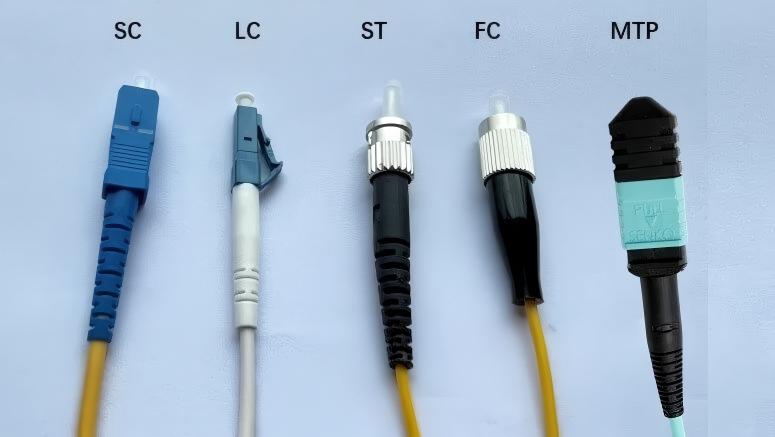
Ensure the fiber pigtail’s connector type matches your existing devices. Both singlemode and multimode pigtails are available with common connectors such as LC, SC, FC, and ST. LC connectors, for example, are widely used in data centers due to their compact size and high performance, while SC connectors are common in telecommunication networks.
Step 4: Factor in Environmental Conditions
Assess the environment where the pigtails will be installed. If the installation is outdoors or in harsh industrial settings, consider armored or waterproof variants (available for both singlemode and multimode pigtails). These variants offer enhanced protection against moisture, dust, and mechanical damage, ensuring long-term reliability.
Step 5: Balance Cost and Performance
Finally, balance cost and performance. Singlemode fiber pigtails are generally more expensive than multimode options, primarily due to their specialized design and materials. However, their long-distance capabilities and high bandwidth may justify the cost for large-scale or critical networks. Multimode pigtails, on the other hand, provide a cost-effective solution for short-range applications where performance requirements are less demanding.
Singlemode and multimode fiber pigtails each offer unique advantages tailored to specific network needs. Singlemode pigtails excel in long-distance, high-bandwidth applications, while multimode pigtails provide a cost-effective solution for short-range networks. By understanding their core differences, performance parameters, and application scenarios, and following a structured selection process, you can choose the right fiber pigtail to optimize your optical communication infrastructure. Whether you require a 9/125μm singlemode pigtail for a telecommunication backbone or a 50/125μm multimode pigtail for a local area network, reputable suppliers like Fibermart offer a wide range of customizable options to meet your specific requirements—ensuring reliable, efficient, and cost-effective connectivity.





No comments have been posted yet.