


.webp)


In the field of fiber optic communication, the MPO loopback cable is an essential tool. It is not only used for testing and diagnosing equipment but also plays a crucial role in ensuring the stable operation of optical networks. As an efficient and precise testing device, the MPO loopback cable helps technicians verify the performance of fiber optic equipment and quickly identify issues. But how does it work? How does it enable the optical signal to loop back? Fibermart breaks down its working principle step by step, providing a clear understanding of this vital tool.
What Is an MPO Loopback Cable?

1.The Meaning of MPO
MPO stands for "Multi-Fiber Push On," a high-density fiber optic connector. It typically supports 8, 12, 24, or more fibers, making it widely used in data centers, high-speed networks, and fiber optic communication systems.
2.The Purpose of a Loopback Cable
A loopback cable is designed to "loop back" optical signals, connecting the transmitter (TX) and receiver (RX) ports of a device. This allows the device to self-check its ability to transmit and receive signals effectively.
How Does an MPO Loopback Cable Work?
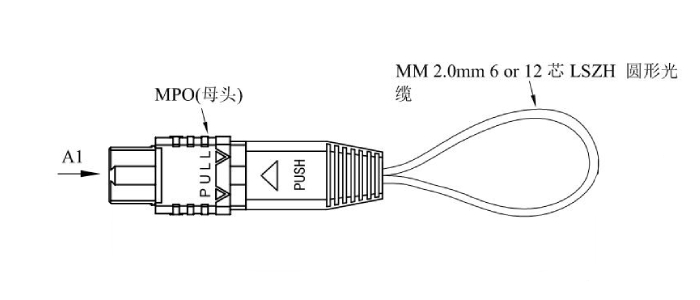
The core principle of the MPO loopback cable is to create a physical optical loop that allows the signal to return to the device, enabling comprehensive testing of signal transmission, reception, and overall performance.
1. Transmitting the Optical Signal
During testing, the fiber optic device emits an optical signal through its transmitter port (TX). These signals are generated by lasers or LEDs, typically at wavelengths of 850nm, 1310nm, or 1550nm, depending on the device and application.
2. Entering the MPO Loopback Cable
The optical signal enters the MPO loopback cable through the transmitter port. Inside the cable, the signal is guided into the fiber channels of the MPO connector. In some setups, technicians might use an MPO-12 to LC cable to adapt different connection interfaces during testing.
3. Signal Loopback
At the other end of the loopback cable, the optical signal makes a "U-turn" and begins its journey back. The cable uses the principle of total internal reflection within the fiber to ensure the signal returns efficiently and without loss.
4. Receiving the Optical Signal
The returning signal is received by the device's RX port. The device analyzes the signal's strength, attenuation, and error rates to determine whether the TX and RX functions are working properly.
By completing this loop, technicians can quickly verify the health of the device’s ports and determine if any further maintenance or component replacements are needed.
Technical Details of MPO Loopback Cable
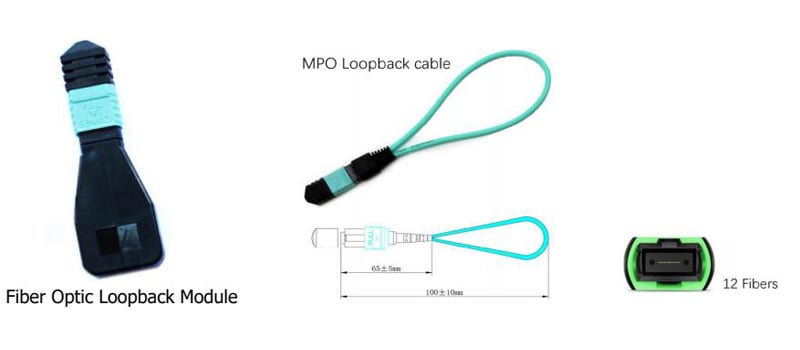
1.Efficient Optical Signal Transmission
MPO loopback cables use low-loss optical fiber materials to ensure signal stability during transmission. These cables are designed for high bandwidth and low attenuation, meeting the demands of modern high-speed networks.
2.Multichannel Fiber Loopback Design
An MPO loopback cable can handle multiple fiber channels simultaneously. For example, a 12-fiber MPO loopback cable can test 12 channels in one go, significantly improving testing efficiency.
3.Polarity and Pairing
MPO loopback cables require correct polarity configurations, such as Type A (straight-through), Type B (cross-over), or Type C (pair-flipped). Correct polarity ensures that the optical signal follows the right path in the loop.
Real-World Applications of MPO Loopback Cable
1. Fiber Optic Equipment Testing
The MPO loopback cable is widely used to test the performance of fiber optic equipment. In data centers, it is essential for validating the functionality of optical transceivers and switch ports.
2. Diagnosing Fiber Links
When a fiber optic link experiences attenuation or transmission issues, technicians can use an MPO loopback cable to quickly identify the problem.
3. Optical Module Compatibility Testing
During production, MPO loopback cables help verify the transmission and reception capabilities of optical modules, ensuring they meet industry standards. This is particularly useful for manufacturers like an MPO loopback cable manufacturer, who need reliable tools for quality assurance.
Advantages of MPO Loopback Cable
1. High Testing Efficiency:
It can process multiple channels simultaneously, saving significant time.
2. Accurate Detection:
Low-loss design ensures reliable test results.
3. Wide Compatibility:
Adheres to international standards, making it compatible with various fiber optic devices.
4. Portable and Easy to Use:
Its compact design makes it convenient for field deployment and testing.
Tips for Using MPO Loopback Cable
1. Keep Connectors Clean
Dust and debris can affect signal transmission. Always clean the connectors before use to prevent attenuation.
2. Match the Correct Polarity
Select the right polarity type to ensure proper signal routing and accurate testing results.
3. Avoid Excessive Bending
Although fibers are flexible, over-bending can cause signal loss or even damage the cable.
Future Trends in MPO Loopback Cable Technology

As network technologies continue to evolve, MPO loopback cables are also improving. Future developments may include:
1. Higher Fiber Counts:
To accommodate greater bandwidth demands, 48-fiber and even 96-fiber MPO loopback cables are becoming more common.
2. Lower Insertion Loss:
Advancements in fiber materials and manufacturing processes will reduce signal loss further.
3. Integration with Smart Testing Tools:
Combining MPO loopback cables with AI-driven diagnostic tools will make network testing even faster and more efficient.
Conclusion
The Fiber-Mart MPO loopback cable efficiently facilitates optical signal testing and diagnosis, making it an indispensable tool for maintaining fiber optic networks. Understanding its working principle and technical details allows you to use it effectively, improving testing accuracy and reducing maintenance costs.
For specialized setups, such as adapting between connectors, consider pairing your tools with an LC to MPO cable to ensure compatibility. To guarantee quality and performance, always source your equipment from a reputable MPO loopback cable manufacturer.
We hope this article has provided you with a clear understanding of MPO loopback cables and how to use them effectively. If you have further questions, feel free to reach out—we're here to help!





No comments have been posted yet.