


.webp)


Among the diverse range of fiber pigtail connectors available in the market, the LC, SC, FC, and ST types stand out as the most widely used and trusted options. Each of these connectors boasts unique structural designs, performance characteristics, and application scenarios, making it essential for professionals in the optical communication field to understand their differences and choose the right one for specific projects.
An Overview of Fiber Pigtail Connectors
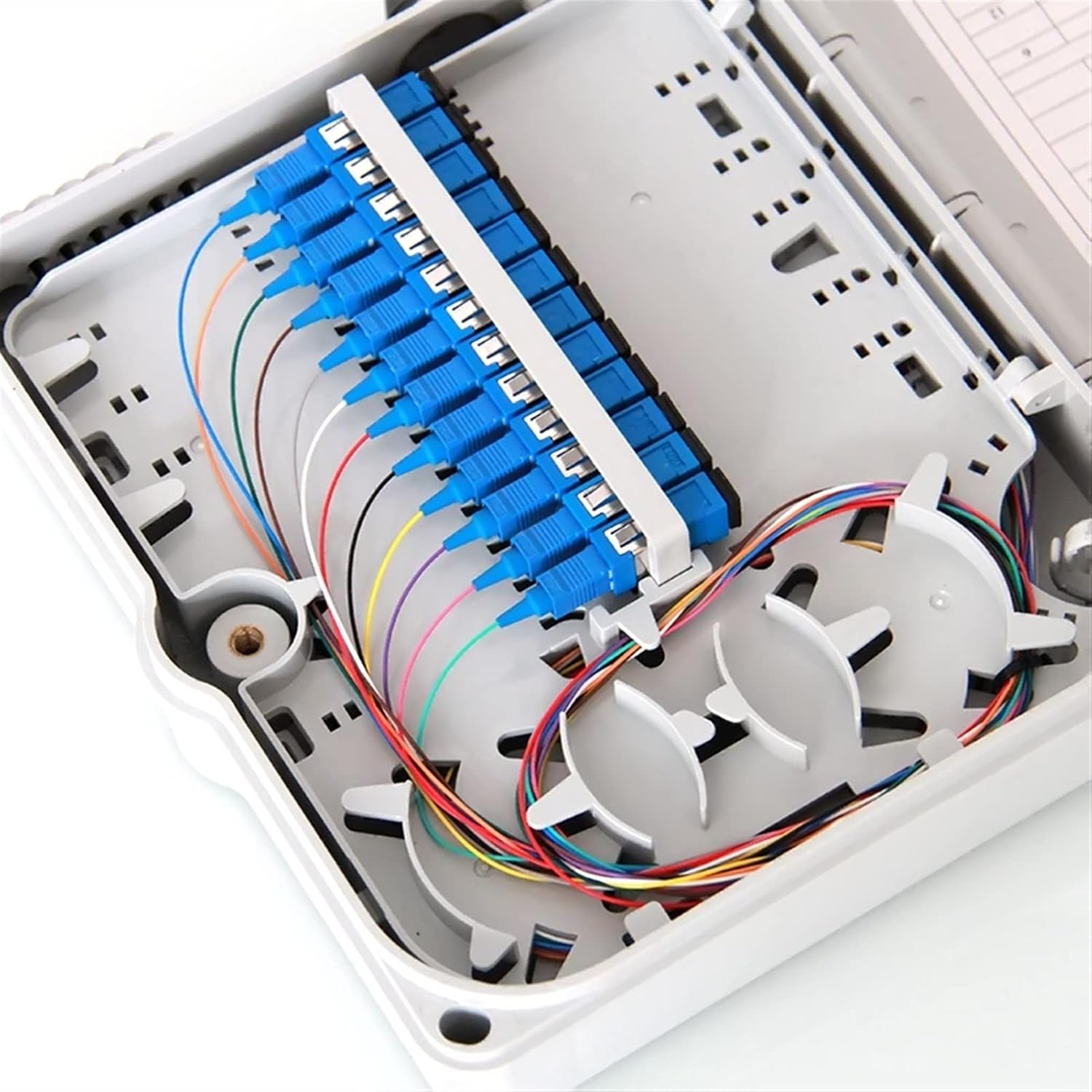
Before diving into the specifics of each connector type, it is crucial to establish a basic understanding of fiber pigtail connectors. A fiber pigtail typically consists of a short length of optical fiber with a connector pre - terminated on one end (Connector A) and the other end left unterminated (Connector B) for fusion splicing to other optical fibers. The connector, as the interface between the fiber pigtail and optical equipment, directly impacts key performance indicators such as insertion loss, return loss, and connection stability.
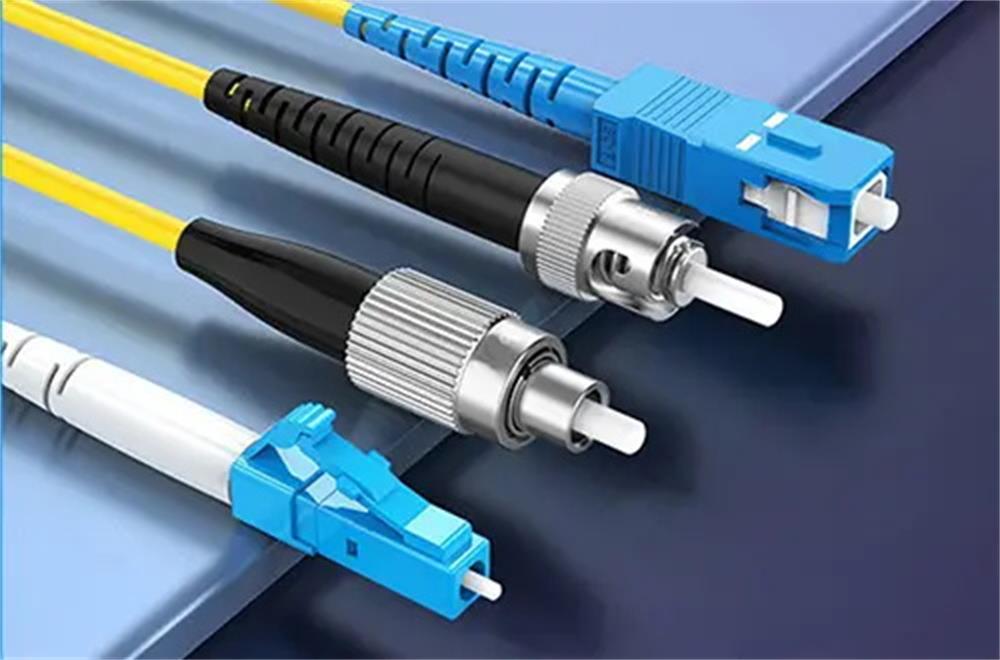
Fiber pigtail connectors must adhere to strict industry standards to ensure compatibility and reliability across different devices and manufacturers. Standards such as those set by Telcordia, EIA/TIA, and IEC outline the specifications for dimensions, mechanical strength, and optical performance, ensuring that connectors from various suppliers can work seamlessly together. When selecting a fiber pigtail connector, factors such as fiber mode (singlemode or multimode), application environment (indoor, outdoor, or harsh conditions), and performance requirements (such as low insertion loss for high - speed data transmission) must all be taken into account.
In-depth Analysis of Four Common Fiber Pigtail Connector Types
LC Connector: The Compact Choice for High - Density Applications
The LC (Lucent Connector) was developed by Lucent Technologies and has gained widespread popularity due to its compact size and excellent performance. One of the most notable features of the LC connector is its small form factor, which is approximately half the size of traditional connectors like the SC. This compact design makes it ideal for high - density applications, such as data centers where space is at a premium and a large number of connections need to be made in a limited area.
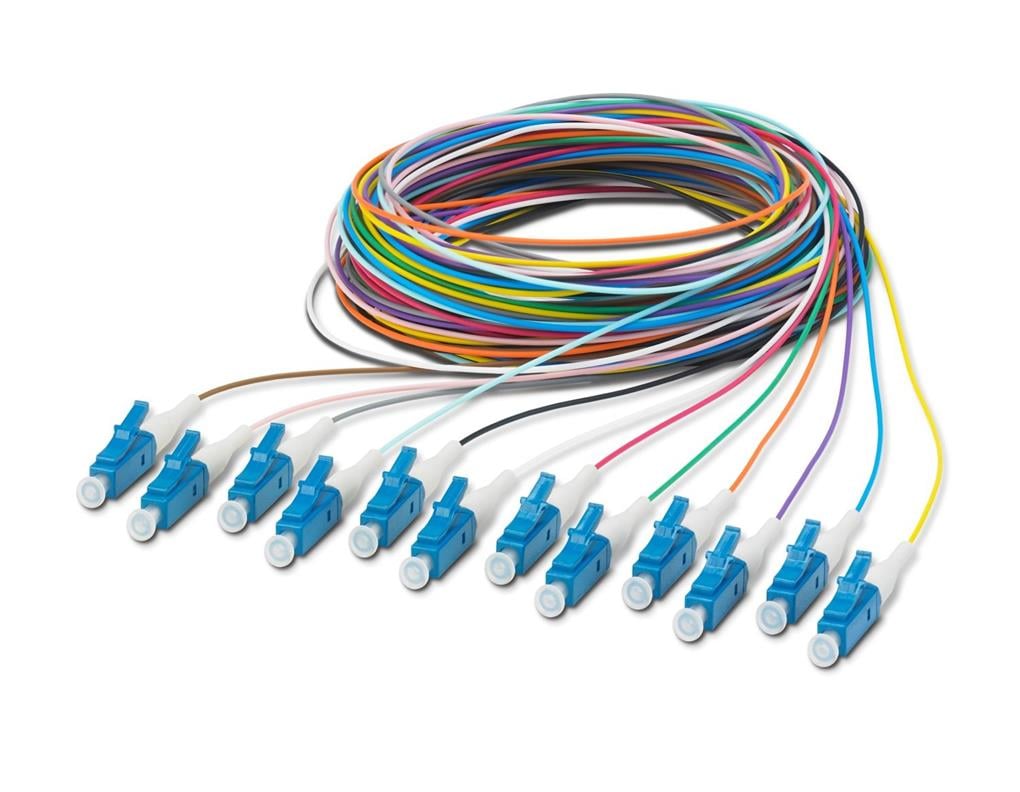
In terms of structure, the LC connector uses a push - pull latching mechanism, which allows for easy and quick insertion and removal. This mechanism also ensures a secure connection, reducing the risk of accidental disconnection. The LC connector is compatible with both singlemode and multimode fibers, making it versatile for a range of applications. It exhibits low insertion loss (typically less than 0.25 dB) and high return loss (≥50 dB), ensuring efficient signal transmission with minimal signal reflection.
Common applications of the LC connector include 10G, 40G, and 100G Ethernet systems in data centers, as well as fiber - to - the - home (FTTH) networks. Its compact size and high performance make it the preferred choice for environments where space and speed are critical.
SC Connector: The Versatile Option for General - Purpose Use
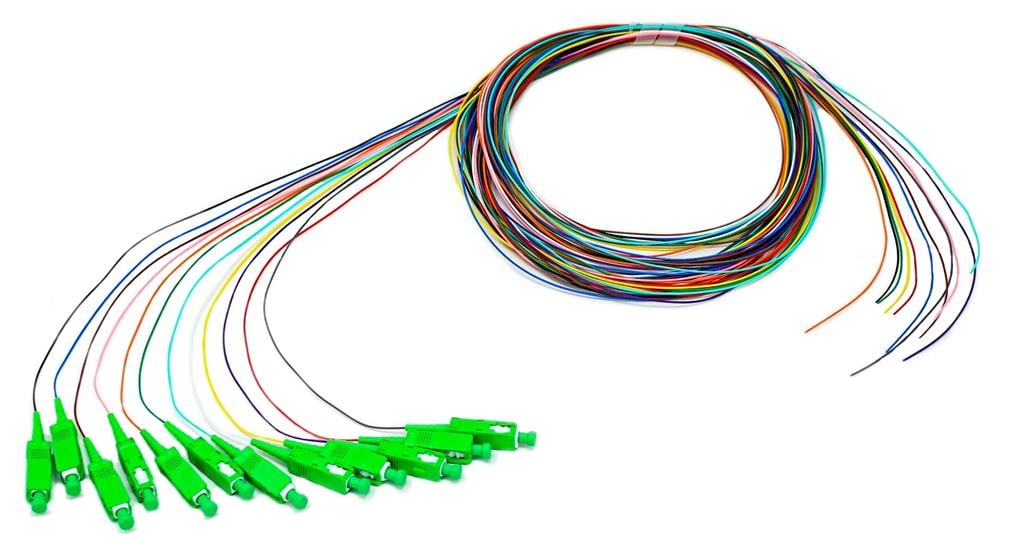
The SC (Subscriber Connector) is a widely used fiber pigtail connector known for its simplicity, reliability, and versatility. It features a square - shaped design with a push - pull latching mechanism, which is easy to operate and provides a stable connection. The SC connector has a larger ferrule size compared to the LC, which makes it easier to clean and maintain, reducing the risk of signal loss due to contamination.
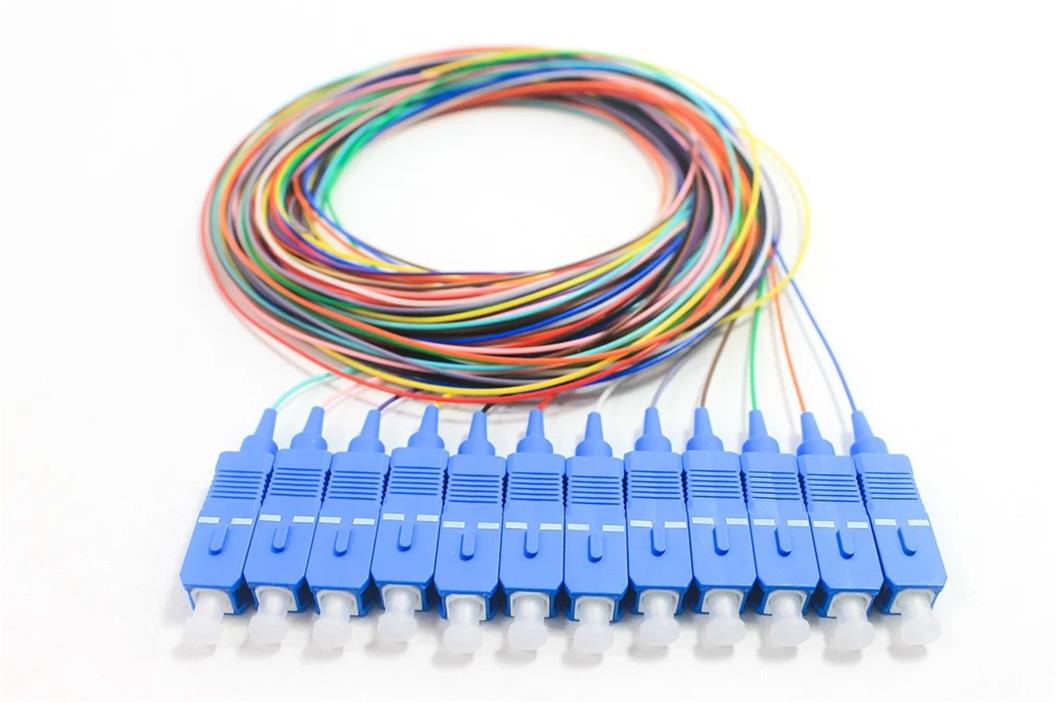
One of the key advantages of the SC connector is its compatibility with a wide range of fiber types, including singlemode (OS2) and multimode (OM1, OM2, OM3, OM4, OM5) fibers. It also supports various cable types, such as tight - buffered cables with different outer diameters (0.9mm, 2.0mm). The SC connector meets strict industry standards, ensuring low insertion loss (<0.25 dB) and high return loss (≥50 dB), making it suitable for general - purpose applications.
The SC connector is commonly used in local area networks (LANs), wide area networks (WANs), and telecommunications systems. It is also widely adopted in FTTH networks and industrial control systems, where its reliability and ease of use make it a practical choice for both indoor and outdoor applications.
FC Connector: The Rugged Solution for High - Stability Requirements
The FC (Ferrule Connector) is a robust fiber pigtail connector designed for applications that require high stability and resistance to vibration. It features a threaded coupling mechanism, which provides a secure and tight connection, minimizing the impact of vibration and external forces on signal transmission. The FC connector uses a ceramic ferrule, which ensures precise alignment of the optical fiber, reducing insertion loss and improving signal quality.
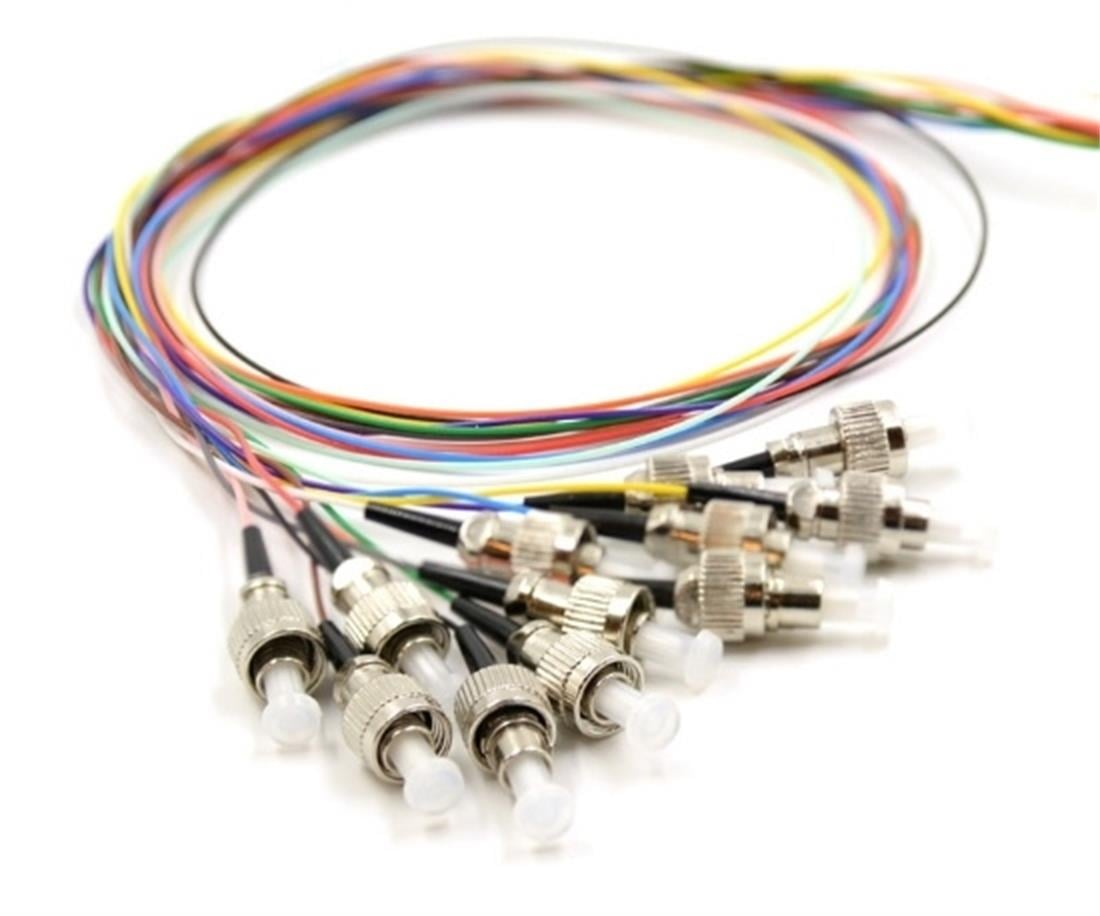
The FC connector is particularly suitable for singlemode fiber applications, where high precision and stability are essential. It exhibits excellent performance in terms of insertion loss (<0.25 dB) and return loss (≥50 dB), even in harsh environments. The threaded design also makes it easy to install and remove, although it requires more time compared to connectors with push - pull mechanisms.
Common applications of the FC connector include long - haul telecommunications networks, satellite communication systems, and test and measurement equipment. It is also used in industrial environments where vibration and temperature fluctuations are common, such as power plants and oil refineries.
ST Connector: The Legacy Connector for Multimode Applications
The ST (Straight Tip) connector is one of the earliest fiber pigtail connectors and has a long history of use in multimode fiber applications. It features a round - shaped design with a bayonet - style latching mechanism, which allows for quick and easy insertion and removal. The ST connector uses a ceramic ferrule, which provides good alignment and low insertion loss.
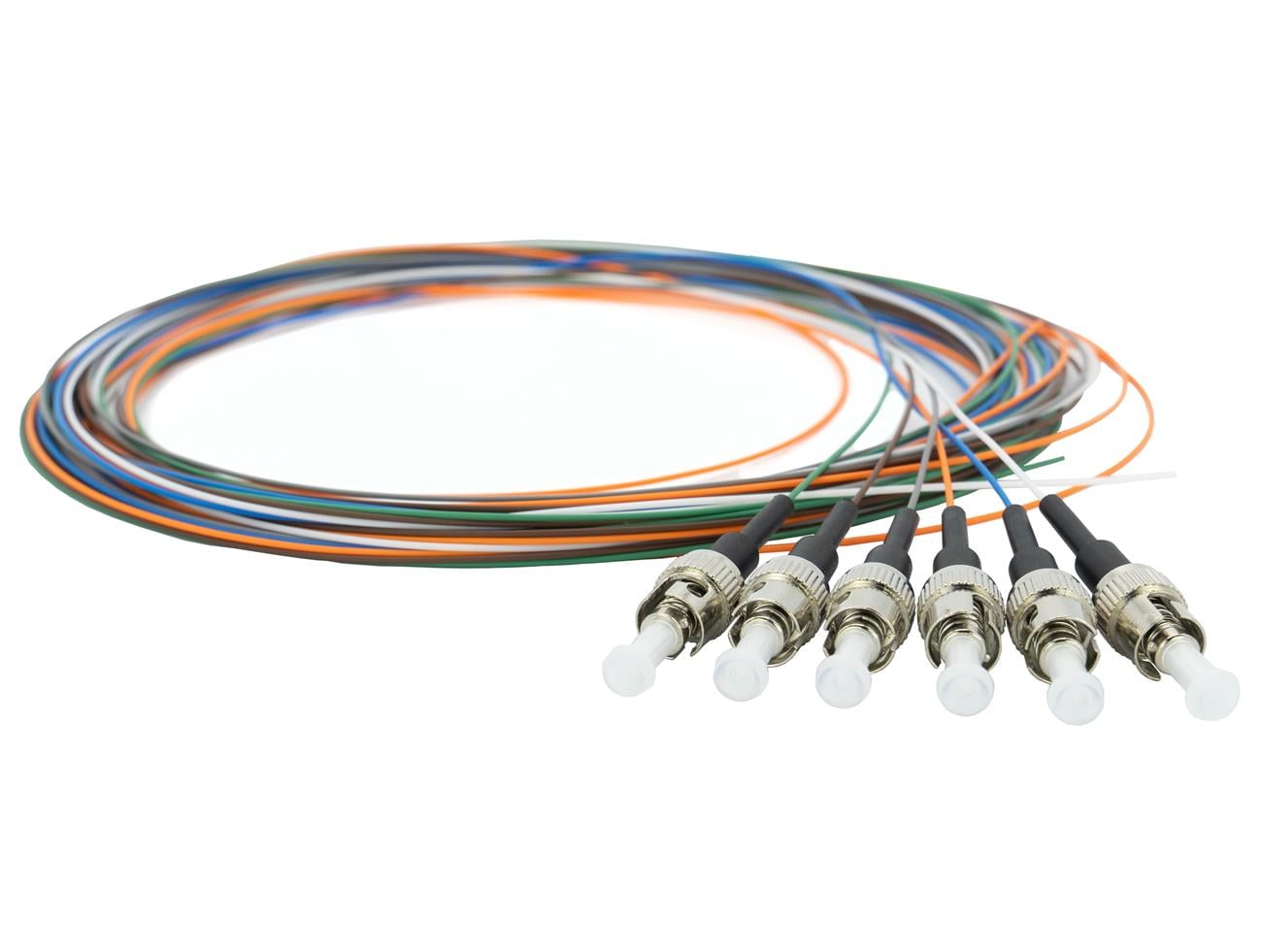
While the ST connector was once widely used in LANs and campus networks, its popularity has declined in recent years due to the emergence of more compact and high - performance connectors like the LC and SC. However, it still remains in use in some legacy systems and industrial applications where multimode fibers are used. The ST connector is compatible with multimode fibers (OM1, OM2, OM3, OM4, OM5) and exhibits insertion loss of less than 0.25 dB and return loss of ≥50 dB.
Applications of the ST connector include legacy LANs, industrial control systems, and some audio - visual systems. It is also used in some military and aerospace applications where its rugged design and reliability are valued.
Key Factors for Selecting the Right Fiber Pigtail Connector
Choosing the right fiber pigtail connector is crucial for ensuring the performance and reliability of an optical communication system. The following are key factors to consider when making a selection:
Application Environment
The application environment plays a significant role in determining the appropriate connector type. For high - density environments like data centers, the compact LC connector is the best choice. For general - purpose indoor applications, the versatile SC connector is a practical option. In harsh environments with high vibration, the rugged FC connector is preferred. For legacy multimode systems, the ST connector may still be suitable.
Fiber Type and Transmission Speed
The type of fiber (singlemode or multimode) and the required transmission speed must also be considered. Singlemode fiber applications, such as long - haul networks, often require connectors with high precision, like the FC or LC. Multimode fiber applications, such as LANs, can use the SC, LC, or ST connectors. For high - speed transmission systems (100G and above), the LC connector is often the preferred choice due to its low insertion loss and high density.
Compatibility and Standards Compliance
It is essential to select a connector that is compatible with the existing optical equipment and adheres to industry standards. Connectors that meet Telcordia, EIA/TIA, and IEC standards ensure compatibility and reliability. Before making a purchase, it is advisable to check the specifications of the connector to ensure it is compatible with the fiber type, cable type, and equipment in use.
The LC, SC, FC, and ST fiber pigtail connectors each have unique characteristics and application scenarios, making them indispensable components in the field of optical communication. The LC connector stands out for its compact size and high density, making it ideal for data centers and high - speed networks. The SC connector offers versatility and ease of use, suitable for general - purpose applications. The FC connector provides ruggedness and high stability, making it a reliable choice for harsh environments. The ST connector, although a legacy option, still has its place in some multimode and legacy systems.By understanding the features, advantages, and application scenarios of these four connector types, professionals in the optical communication field can make informed decisions when selecting fiber pigtail connectors for their projects.





No comments have been posted yet.