


.webp)


In the rapidly evolving landscape of optical communication, the demand for reliable, high-performance components has never been greater. Among these critical elements, low loss fiber optic couplers stand out as indispensable tools, enabling the seamless distribution of optical signals across diverse networks. As a key component in Passive Optical Networks (PONs) and a range of other optical systems, low loss couplers directly impact signal integrity, network efficiency, and overall operational costs.
What Are Low Loss Fiber Optic Couplers?
At their core, low loss fiber optic couplers are passive optical components designed to split or combine optical signals between multiple fiber optic paths while minimizing signal attenuation—commonly referred to as “loss.” Unlike active components that require external power, these couplers operate without energy input, making them highly reliable and cost-effective for long-term network deployment.
The “low loss” attribute is defining: even minor signal loss can degrade communication quality in large-scale networks, such as PONs that serve hundreds or thousands of end-users. For instance, in a GPON (Gigabit PON) system, a single optical line terminal (OLT) connects to multiple optical network units (ONUs) via a coupler; excessive loss here could result in slow data speeds or dropped connections for end-users.
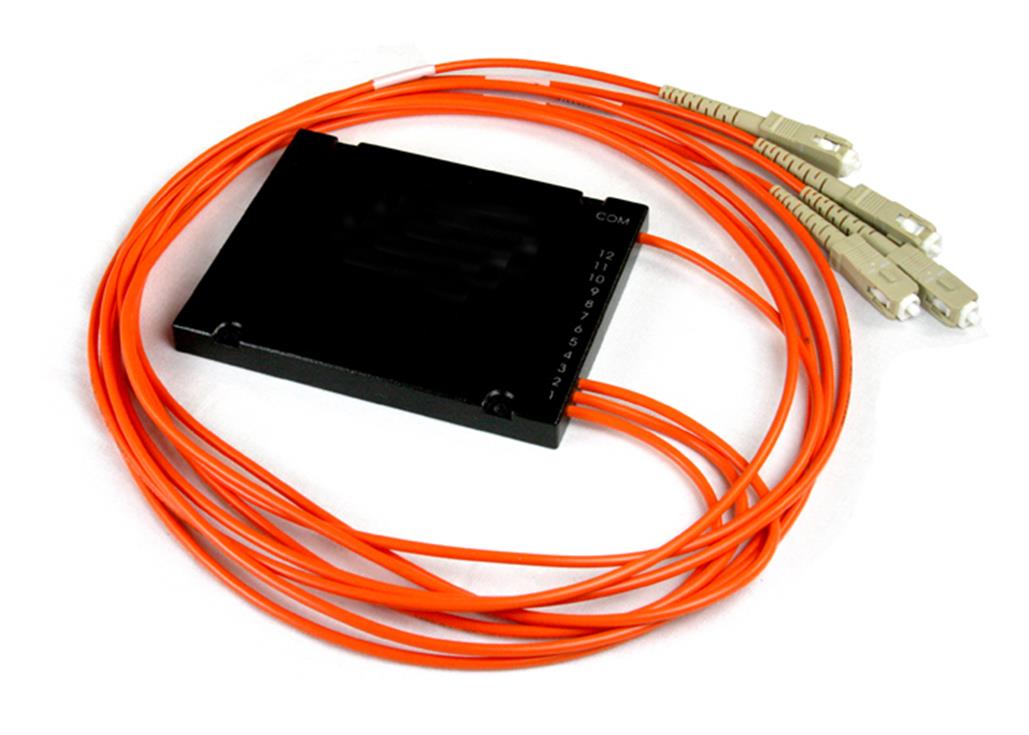
Among the various types of fiber optic couplers, FBT couplers (short for Fused Biconical Taper couplers) are widely recognized for their exceptional low-loss performance. These couplers are manufactured using a precision process: two or more optical fibers are fused together and tapered under controlled heat, creating a uniform optical interface that allows signals to be split or combined with minimal attenuation. This design not only ensures low loss but also delivers stability across a wide range of operating conditions— a critical advantage for outdoor or industrial network deployments.
Key Technical Advantages of Low Loss FBT Couplers
Ultra-Low Insertion Loss
Insertion loss (IL) refers to the amount of signal power lost as light passes through the coupler. For FBT couplers, this loss is typically kept to a minimum—often as low as 0.1dB for standard configurations, and consistently ≤0.5dB even for complex split ratios. This ultra-low IL ensures that most of the original signal power reaches the target destination, reducing the need for signal amplifiers (which add cost and complexity to networks). For example, a 1x2 FBT coupler with 0.3dB insertion loss will only dissipate ~7% of the signal power, leaving 93% intact for end-users.
Excellent Loss Uniformity
Loss uniformity measures the consistency of insertion loss across all output ports of a coupler. In multi-port couplers (e.g., 1x4 or 1x8), uneven loss can lead to inconsistent performance across different network segments. Low loss FBT couplers address this with uniformity levels of ≤0.6dB, ensuring that every output port receives a signal of nearly identical strength. This is particularly important in PONs, where ONUs in different neighborhoods or buildings must receive equal signal quality to avoid service disparities.
High Stability Across Environments
Networks often operate in harsh conditions—from freezing temperatures (-40°C) in northern climates to high heat (85°C) in outdoor cabinets or industrial facilities. Low loss FBT couplers are engineered to maintain their performance across this wide temperature range, with temperature-dependent loss (TDL) ≤0.5dB. This stability eliminates signal fluctuations caused by environmental changes, ensuring year-round reliability. Additionally, their high return loss (≥55dB) and directivity (≥55dB) prevent signal reflections, which can interfere with data transmission and damage sensitive equipment like lasers.
Versatility in Customization
Every network has unique requirements, and low loss FBT couplers are designed to adapt. They support a broad range of customization options, including:
Split ratios: From standard 50:50 (equal split) to specialized ratios like 10:90 or 1:99, catering to scenarios where one port needs more signal power (e.g., a primary ONU vs. a backup unit).
Fiber types: Compatibility with single-mode (SM), multi-mode (OM1, OM2, OM3, OM4, OM5), and polarization-maintaining (PM) fibers, making them suitable for both short-range (e.g., data centers using OM4 fiber) and long-range (e.g., rural GPONs using SM fiber) applications.
Wavelengths: Operation across a wide spectrum, from 460nm (visible light) to 1620nm (telecom C-band), supporting diverse use cases such as fiber-to-the-home (FTTH) (1310/1550nm) and industrial sensing (780/980nm).
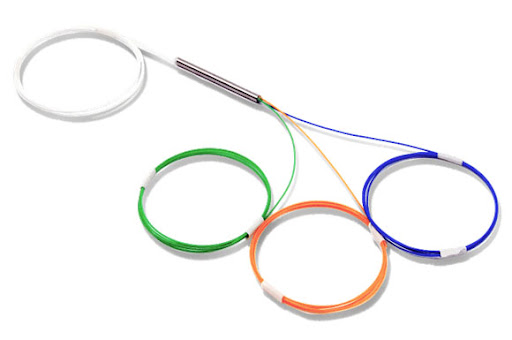
Package styles: Options like bare fiber, ABS boxes, or steel tubes, allowing installation in space-constrained environments (e.g., indoor cabinets with ABS-boxed couplers) or rugged outdoor settings (e.g., steel-tubed couplers for underground cables).
Applications of Low Loss FBT Couplers
Passive Optical Networks (PONs)
PONs—including EPON (Ethernet PON) and GPON—are the backbone of modern FTTH and FTTB (Fiber-to-the-Building) networks. In these systems, a low loss FBT coupler splits the signal from a central OLT to multiple ONUs (e.g., 1x16 or 1x24 split ratios). The coupler’s low insertion loss ensures that even the farthest ONU (up to 20km in GPON) receives a strong enough signal to support gigabit-speed internet, IPTV, and voice services. For example, a 1x24 FBT coupler with 5dB insertion loss can reliably serve 24 households, each enjoying consistent 1Gbps download speeds.
Data Centers
Data centers rely on high-speed optical links to connect servers, storage systems, and switches. Low loss FBT couplers are used here to split or combine signals in short-range multi-mode fiber networks (e.g., OM3 or OM4 fiber). For instance, a 2x2 FBT coupler might combine two 100Gbps signals from different servers into a single link, or split a 400Gbps signal to feed multiple switches. The coupler’s low loss and high uniformity ensure that data center operations run smoothly, with minimal latency and no signal bottlenecks.
Industrial and Sensing Systems
In industrial settings, optical fibers are used for sensing (e.g., temperature, pressure, or strain monitoring) and machine-to-machine (M2M) communication. Low loss FBT couplers play a key role here by distributing sensing signals to multiple sensors or aggregating data from different points. For example, in an oil refinery, a 1x8 FBT coupler might split a 980nm laser signal to eight temperature sensors along a pipeline; the coupler’s stability in high-temperature environments (-40 to 85°C) ensures accurate, real-time data collection.
Telecommunication Backbones
Long-haul telecommunication networks (e.g., cross-country fiber links) use low loss FBT couplers to tap into signals for monitoring or testing. A coupler with a 1:99 split ratio, for instance, can divert 1% of the signal to a monitoring device (to check for errors or degradation) while sending 99% to the intended destination. This “tap” function allows network operators to maintain visibility into network performance without disrupting service— a critical requirement for 24/7 telecommunication services.

How to Choose the Right Low Loss FBT Coupler
Define Your Network Requirements
Start by clarifying core parameters:
Network type: Is it a PON, data center, or sensing system? PONs may require higher port counts (e.g., 1x16), while data centers might prioritize multi-mode fiber compatibility.
Signal distance: Short-range networks (e.g., data centers) can use multi-mode FBT couplers, while long-range PONs need single-mode couplers to minimize dispersion and loss.
Split ratio: Choose a ratio that balances signal strength across ports. For equal distribution (e.g., FTTH), 50:50 or 1:8 ratios work; for monitoring, 1:99 is ideal.
Evaluate Key Specifications
Focus on specs that directly impact performance:
Insertion loss: Aim for ≤0.5dB for standard couplers; lower loss is better for long-range networks.
Loss uniformity: Ensure ≤0.6dB to avoid inconsistent output across ports.
Temperature range: Confirm the coupler can operate in your network’s environment (e.g., -40 to 85°C for outdoor use).
Fiber and wavelength compatibility: Match the coupler’s fiber type (SM/OMx/PM) and wavelength range to your existing infrastructure. For example, a GPON system using 1310/1550nm wavelengths needs a coupler rated for 1260~1620nm.
Consider Package and Installation
The coupler’s package style affects installation and durability:
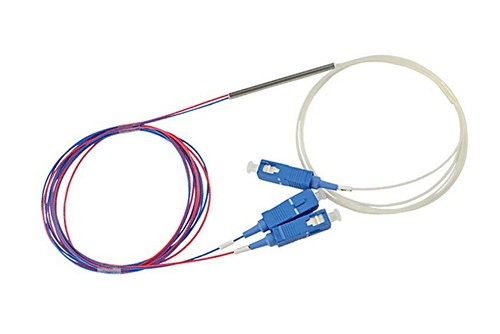
Bare fiber: Suitable for integration into larger modules (e.g., inside OLTs/ONUs) but requires additional protection.
ABS box: Ideal for indoor use (e.g., data center racks) due to its compact size and dust resistance.
Steel tube: Best for outdoor or rugged environments (e.g., underground cables) as it offers superior mechanical protection.
Low loss fiber optic couplers—especially FBT couplers—are the unsung heroes of modern optical communication. Their ability to split or combine signals with minimal loss, high uniformity, and environmental stability makes them essential for PONs, data centers, industrial systems, and telecommunication backbones. By choosing the right FBT coupler—aligned with your network’s requirements for split ratio, fiber type, and package style—you can ensure reliable, high-performance communication that scales with your needs.
Summary
As the demand for faster, more connected networks grows (driven by 5G, FTTH, and cloud computing), the role of low loss FBT couplers will only become more critical. Investing in high-quality FBT couplers today is an investment in the future of your network—one that delivers consistent performance, reduces operational costs, and keeps pace with the evolving needs of end-users and industries alike.





No comments have been posted yet.