


.webp)


In the era of high-speed broadband and 5G connectivity, the demand for efficient, reliable optical fiber infrastructure has never been greater. At the heart of this infrastructure lies a critical component: the optical cable splitter. This device plays a pivotal role in Passive Optical Networks (PONs), enabling the distribution of optical signals across multiple end-users while maintaining signal integrity.
What Is an Optical Cable Splitter?
An optical cable splitter, also known as a fiber optic splitter, is a passive optical component designed to divide a single incoming optical signal into multiple outgoing signals (or combine multiple incoming signals into one, depending on application) at a predefined ratio. Unlike active network components (such as amplifiers or routers), splitters require no external power source—they rely on the principles of light propagation to distribute signals, making them energy-efficient and low-maintenance.
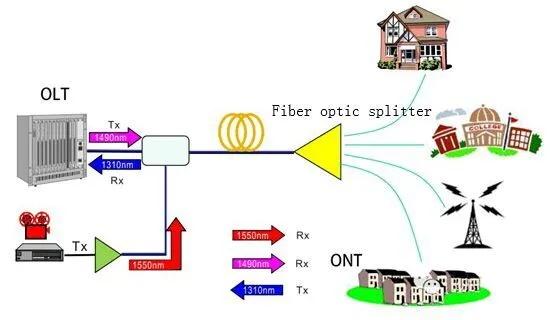
The primary function of an optical cable splitter is to enable signal sharing in PONs, the backbone of fiber-to-the-home (FTTH), fiber-to-the-building (FTTB), and enterprise fiber networks. By splitting one main optical line into multiple branches, service providers can connect dozens of users to a single central office, reducing infrastructure costs and simplifying network deployment. For example, a 1×32 splitter can route one incoming signal from a PON optical line terminal (OLT) to 32 different optical network units (ONUs) in homes or offices—all without compromising signal quality.
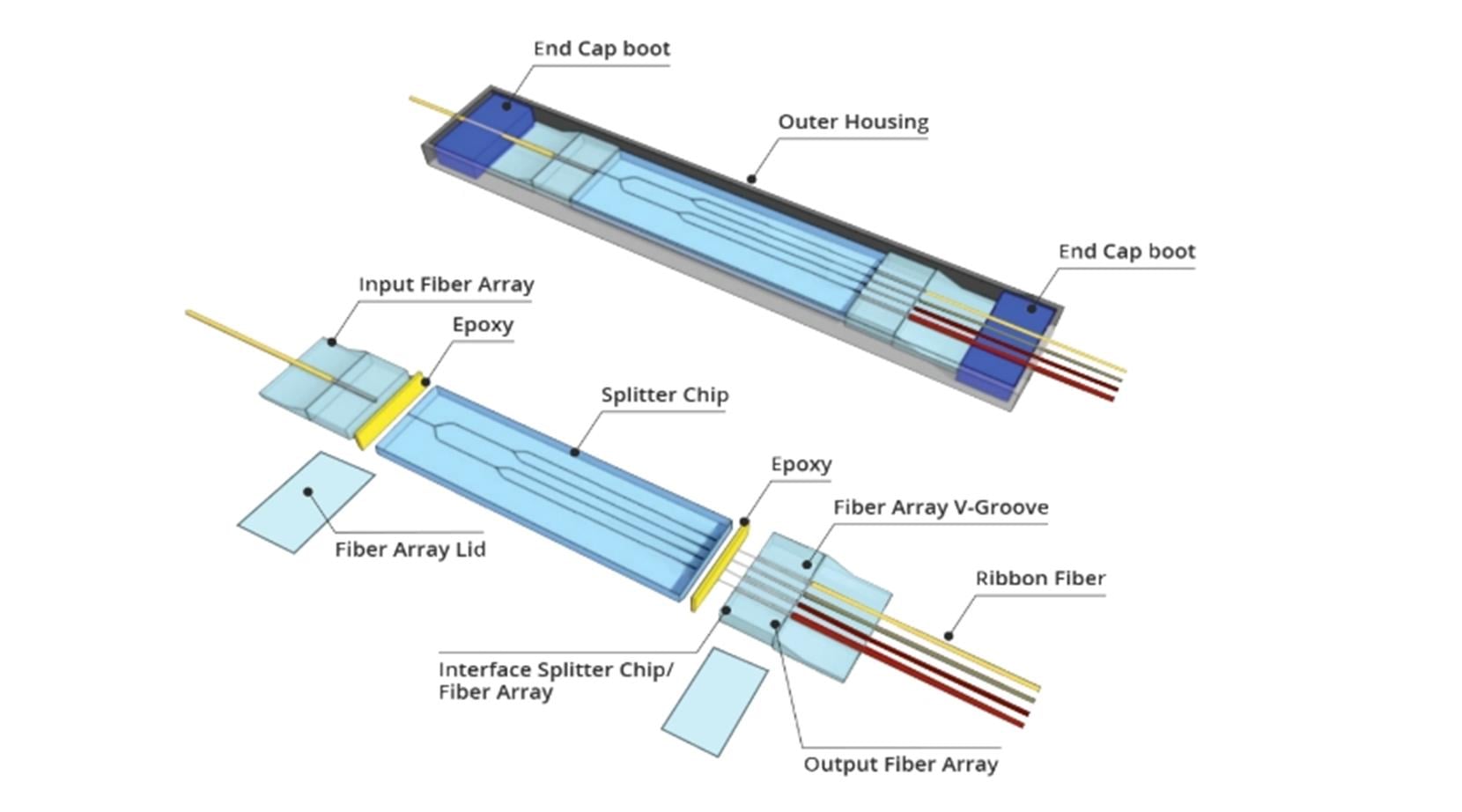
The Two Main Types of Optical Cable Splitters
While optical cable splitters serve a unified purpose, they are manufactured using two distinct technologies, each with unique advantages and use cases. Understanding the differences between these types is crucial for selecting the right splitter for a specific network scenario.
FBT Couplers (Fused Biconical Taper Splitters)
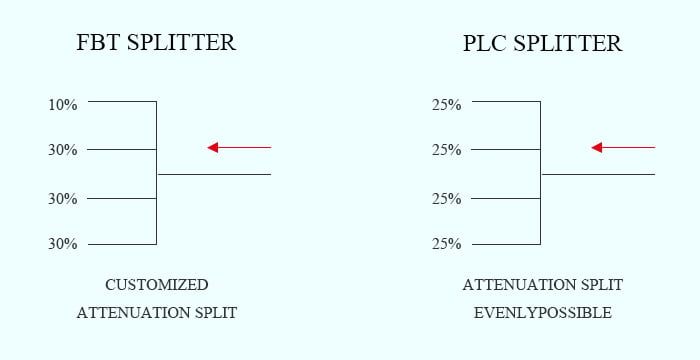
FBT couplers, or fused biconical taper splitters, are the traditional type of optical splitter, named for their manufacturing process: two or more optical fibers are fused together and tapered (stretched) under high temperature to create a shared light-propagation region. This design allows light to be split between the fibers based on the taper’s geometry.
Key Characteristics:
Cost-Effective: FBT couplers are typically less expensive to produce than their PLC counterparts, making them ideal for small-scale applications (e.g., 1×2 or 2×2 configurations) where budget is a priority.
Simplicity: Their straightforward design ensures easy integration into low-density networks, such as small office setups or point-to-point fiber links.
Limitations: FBT couplers are less suitable for high-density applications (e.g., 1×16 or 1×32 splits) because signal loss increases with the number of output ports. They also have larger physical footprints, which can be a constraint in space-constrained environments like data centers.
PLC Splitters (Planar Lightwave Circuit Splitters)
PLC splitters are the modern standard for high-density fiber networks, leveraging planar lightwave circuit technology—a miniaturized optical circuit etched onto a silicon or glass substrate. This design allows for precise signal splitting across dozens of ports while maintaining compact dimensions.
Key Characteristics:
Compact Size: PLC splitters are significantly smaller than FBT couplers, even for high-port configurations (e.g., 1×64 or 2×32). This makes them ideal for dense environments like data centers, telecom closets, or FTTH deployments where space is limited.
Uniform Performance: PLC splitters offer consistent insertion loss (signal reduction) across all output ports, ensuring equal signal quality for every connected user. For example, a 1×8 PLC splitter will have nearly identical loss for all 8 output signals, a critical feature for PONs.
Broad Compatibility: They support a wide operating wavelength range (typically 1260–1650 nm), making them compatible with all major PON standards, including EPON (Ethernet PON) and GPON (Gigabit PON)—the two most widely used technologies for FTTH networks.
Durability: PLC splitters are resistant to environmental factors like temperature fluctuations (-40°C to 85°C for both operating and storage conditions) and mechanical stress, ensuring long-term reliability in outdoor or harsh indoor environments.
Applications of Optical Cable Splitters
Optical cable splitters are versatile components, with use cases spanning consumer, enterprise, and industrial networks. Their passive design and reliable performance make them indispensable in the following scenarios:
Fiber-to-the-Home (FTTH) and Fiber-to-the-Premises (FTTP)
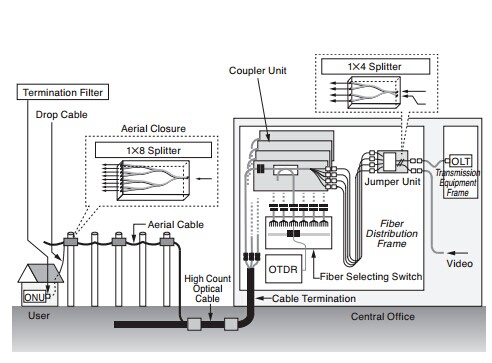
FTTH/FTTP networks are the gold standard for residential broadband, delivering gigabit speeds to homes. PLC splitters are the backbone of these networks: a single OLT port in a central office connects to a 1×32 or 1×64 PLC splitter, which then routes signals to 32 or 64 individual homes. This “point-to-multipoint” architecture reduces the need for redundant fiber lines, cutting deployment costs for service providers while ensuring fast, stable internet for users.
Enterprise and Data Center Networks
In enterprise environments (e.g., office buildings, campuses), optical splitters enable shared fiber connections between departments or floors. For example, a 2×8 PLC splitter can connect two OLT ports to 8 different office units, providing dedicated fiber links for each team. In data centers, rack-mount PLC splitters (e.g., 1U 19” enclosures) simplify the distribution of signals between servers, storage systems, and network switches, supporting high-bandwidth applications like cloud computing and big data processing.
Telecommunication Backbones
Telecom operators rely on optical splitters to extend the reach of their core fiber networks. For instance, in rural areas where user density is low, a 1×16 FBT coupler may be used to connect a small group of users to a regional OLT, while urban areas with high user density require 1×64 or 1×128 PLC splitters to handle large volumes of traffic. Splitters also play a role in 5G networks, enabling the connection of small cells (low-power base stations) to macrocell towers via fiber.
Specialized Industries
In industries like aerospace, defense, and medical imaging, polarization maintaining (PM) PLC splitters are essential. These splitters preserve the polarization state of light, ensuring accurate data transmission for applications like satellite communications, laser-based medical devices, and high-precision sensors. For example, a PM PLC splitter might be used in a hospital’s fiber network to transmit high-resolution MRI images without signal distortion.
Why Choose High-Quality Optical Cable Splitters?
The performance of an optical fiber network is only as good as its components—and optical cable splitters are no exception. Investing in high-quality splitters (such as those offered by Fibermart) delivers three key benefits:
Long-Term Reliability: High-quality PLC splitters are manufactured to strict industry standards, with robust enclosures (e.g., ABS boxes) and precision-etched circuits that resist wear, temperature changes, and moisture. This reduces the need for maintenance or replacements, lowering total cost of ownership over time.
Consistent Signal Quality: Cheap, low-grade splitters often suffer from high insertion loss, poor uniformity, or unstable return loss—issues that lead to slow internet speeds, dropped connections, or network outages. Premium splitters (like Fibermart’s P-grade PLC splitters) ensure minimal signal loss and uniform performance across all ports, keeping end-users connected and satisfied.
Scalability: As network demands grow (e.g., more users, higher bandwidth requirements), high-quality splitters can accommodate expansion. For example, a 1×32 PLC splitter can be upgraded to a 1×64 model without overhauling the entire network, making it easier for service providers to adapt to changing needs.
Summary
Optical cable splitters are the unsung heroes of modern fiber networks. From powering gigabit FTTH connections in homes to enabling high-density data center operations, these passive components make efficient, cost-effective signal distribution possible. By understanding the differences between FBT and PLC splitters, choosing high-quality products, network operators can build robust, scalable fiber infrastructures that meet the demands of today’s digital world.





No comments have been posted yet.