


.webp)


In the era of high-speed data transmission, 5G connectivity, and smart industrial systems, the optical switch emerges as a vital component that enables flexible, efficient, and reliable management of optical signals. Unlike passive optical components that follow fixed signal paths, the optical switch actively redirects light signals between multiple input and output ports, adapting to real-time demands of optical networks. This dynamic functionality makes the optical switch indispensable for modern applications—from data centers and telecommunications to industrial sensing—where agility and performance are non-negotiable. As optical networks grow more complex, the role of the optical switch in optimizing signal flow, enhancing network resilience, and reducing operational costs becomes increasingly critical.

What Is an Optical Switch? Core Concepts and Classification
At its essence, an optical switch is an active optical component designed to route optical signals between different input (I) and output (O) ports based on predefined or real-time commands. It acts as the “traffic controller” of optical networks, directing signals to specific paths without converting them into electrical signals—eliminating the latency and signal loss associated with electro-optical conversion. The versatility of the optical switch stems from its diverse designs, each tailored to meet the unique needs of different applications.
Fibermart, a leading provider of optical components, categorizes optical switches into four primary types based on their operating mechanisms and use cases:
Opto-Mechanical Optical Switch
This type relies on mechanical movement (e.g., rotating mirrors or shifting fiber collimators) to align input and output ports. It offers high reliability (with a lifespan of up to 100 million cycles), low insertion loss, and excellent isolation between ports—making it ideal for long-term, stable applications like fiber optic testing and network backup systems. Fibermart’s opto-mechanical switches are available in configurations ranging from 1x1 (bidirectional) to 1x64 (high-channel), catering to both small-scale and large-scale network needs.
.jpg "Mechanical Optical Switch")
MEMS Optical Switch
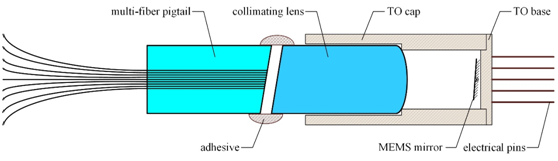
Micro-Electro-Mechanical Systems (MEMS) switches use microfabricated mirrors on a silicon chip to redirect light. They combine the speed of solid-state switches (switching time ≤8 ms) with the low loss of mechanical switches, making them perfect for high-speed, dynamic applications such as data center load balancing and 5G base station connectivity. Fibermart’s 1x16 MEMS switch, for example, enables rapid signal rerouting across 16 ports, supporting the high bandwidth demands of modern networks.
Solid-State Optical Switch
Solid-state switches operate without moving parts, using materials like lithium niobate (LiNbO₃) to change light’s refractive index and redirect signals. They offer ultra-fast switching speeds and high durability, but typically have slightly higher insertion loss than mechanical alternatives. These switches are ideal for applications requiring frequent, rapid signal changes—such as optical burst switching in high-speed data networks.
Polarization-Maintaining (PM) Optical Switch
Designed for polarization-sensitive systems (e.g., coherent communication and interferometric sensors), PM switches preserve the polarization state of incoming signals as they are routed. Fibermart’s PM switches, available in configurations like 1x1 and 1x12, ensure consistent signal quality in applications where polarization stability directly impacts performance—such as satellite communications and precision fiber optic sensing.
Key Performance Metrics: Evaluating a High-Quality Optical Switch
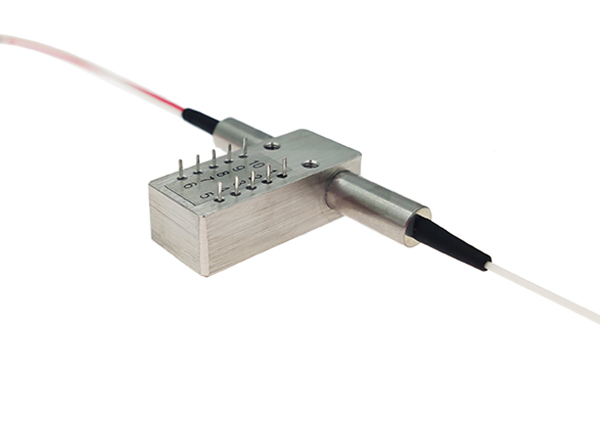
The effectiveness of an optical switch is determined by a set of critical performance metrics that define its ability to integrate seamlessly into optical networks and deliver reliable results. These metrics vary slightly by switch type but collectively ensure optimal performance:
Insertion Loss: The power loss incurred when a signal passes through the optical switch. Fibermart classifies switches into P (Premium), S (Standard), and A (Advanced) grades, with P-grade switches offering the lowest loss—critical for long-haul communication where signal degradation must be minimized.
Cross Talk: Measures the signal leakage between non-adjacent ports. For single-mode (SM) switches, Fibermart guarantees cross talk ≥55 dB, ensuring that signals in one port do not interfere with those in another—vital for high-density networks with multiple concurrent signals.
Return Loss: Indicates how much light is reflected back to the input port (≥50 dB for SM switches). High return loss reduces interference from reflected signals, enhancing signal integrity.
Polarization Dependent Loss (PDL): For non-PM switches, PDL (≤0.2 dB) quantifies how much loss varies with signal polarization. Low PDL ensures consistent performance across all polarization states, a must for general-purpose communication networks.
Operating Temperature Range: Fibermart’s switches operate reliably between -40°C and 85°C (storage temperature same as operating), making them suitable for harsh environments like outdoor telecommunications towers and industrial facilities.
These metrics ensure that the optical switch not only meets technical requirements but also delivers long-term value by reducing maintenance costs and minimizing network downtime.

Applications of Optical Switch: Powering Critical Industries
The flexibility and performance of the optical switch make it a cornerstone of diverse industries, addressing unique challenges in signal management and network design:
Telecommunications and 5G Networks
In 5G networks, where low latency and high bandwidth are essential, the optical switch enables dynamic load balancing by rerouting traffic between base stations and core networks. It also plays a key role in optical add-drop multiplexers (OADMs), allowing network operators to “add” or “drop” specific wavelengths without disrupting other signals. For example, Fibermart’s 2x2 opto-mechanical switch facilitates bidirectional communication between 5G base stations, ensuring seamless connectivity even during peak traffic.
Data Centers
Data centers rely on optical switches to manage the massive data flows between servers, storage systems, and cloud infrastructure. High-channel switches (e.g., Fibermart’s 1x32 opto-mechanical module) enable centralized control of multiple connections, reducing the number of physical fibers needed and simplifying network maintenance. MEMS switches, with their fast switching speeds, are used for rapid failover—rerouting signals within milliseconds if a link fails, ensuring 99.999% network uptime.
Fiber Optic Testing and Sensing
In fiber optic testing (e.g., using optical time-domain reflectometers, OTDRs), the optical switch allows technicians to test multiple fiber links sequentially without reconfiguring the setup—saving time and improving efficiency. In industrial sensing (e.g., temperature or pressure sensors), PM switches preserve signal polarization, ensuring accurate measurements in harsh environments like oil refineries or power plants. Fibermart’s 1x1 PM switch, for instance, is widely used in precision sensing applications where data accuracy is critical.
Network Resilience and Backup
The optical switch enhances network resilience by enabling automatic backup paths. In ring topology networks (common in telecommunications), if a fiber link is damaged, the switch reroutes signals through a backup path—minimizing downtime. Fibermart’s dual 1x2 (D1x2) and dual 2x2 (D2x2) bypass switches are specifically designed for this purpose, providing redundant paths for critical services like emergency communications.
Choosing the Right Optical Switch: A Guide for Industry Users
Selecting the optimal optical switch requires aligning its specifications with the application’s technical requirements and operational goals. Fibermart’s extensive product lineup and customization options ensure that users find the perfect match for their needs. Key considerations include:
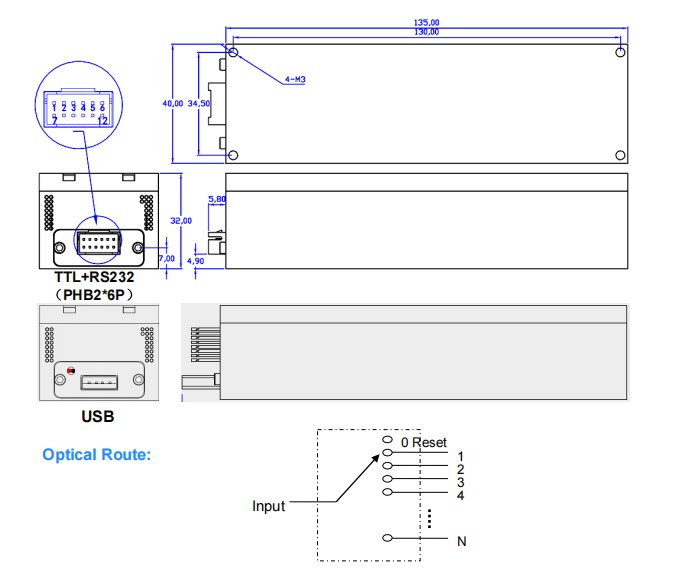
Configuration: Choose port configurations based on the number of input/output paths needed. For bidirectional point-to-point links, a 1x1 or 1x2 switch suffices; for high-channel networks (e.g., data centers), 1x16 or 1x32 switches are more suitable. Fibermart’s 1x32 opto-mechanical module, for example, supports 32 output ports, ideal for large-scale network management.
Switch Type: Opt for opto-mechanical switches for stability and low loss, MEMS switches for speed and dynamic routing, solid-state switches for ultra-fast applications, and PM switches for polarization-sensitive systems.
Fiber and Wavelength Compatibility: Ensure the switch supports the fiber type (SM, OM1-OM5, PM) and wavelength range (532–780 nm for visible light, 1260–1660 nm for long-haul communication) used in your network. Fibermart’s 1x4 SM switch, designed for 635 nm wavelengths, is tailored for short-range industrial sensing.

Customization: For unique needs (e.g., high-power handling, custom fiber lengths, or rackmount designs), Fibermart offers customized optical switch solutions. Its 19-inch rackmount multi-channel switch, for instance, can be tailored to fit specific data center rack configurations.
With prices ranging from $58 (for a basic 1x1 opto-mechanical switch) to $5,985 (for a high-channel 1x32 PM switch), Fibermart balances performance and affordability, ensuring that users across industries can access high-quality optical switch technology.
Conclusion
As optical networks evolve to support 6G, edge computing, and the Internet of Things (IoT), the optical switch will continue to play a pivotal role in enabling the agility and efficiency these technologies demand. Innovations in MEMS and solid-state technology will drive faster switching speeds and higher channel densities, while advances in PM technology will expand the switch’s utility in precision applications. For businesses and engineers looking to build resilient, high-performance optical networks, the optical switch is not just a component—it is a strategic investment that future-proofs systems against growing bandwidth demands and evolving industry standards. With providers like Fibermart leading the way in innovation and customization, the optical switch will remain at the forefront of optical network technology, powering the next wave of digital transformation.





No comments have been posted yet.