


.webp)


In the rapidly evolving landscape of optical communication and sensing technologies, the optical circulator stands out as a pivotal passive component, enabling efficient and reliable signal management that underpins countless modern applications. Unlike reciprocal optical devices, which treat light propagation identically in all directions, the optical circulator leverages non-reciprocal properties to direct optical signals along a unidirectional path between multiple ports—typically 3 or 4—with exceptional precision. This unique functionality not only optimizes signal transmission but also solves critical challenges in bidirectional communication, making the optical circulator indispensable in today’s high-speed, high-capacity optical networks.
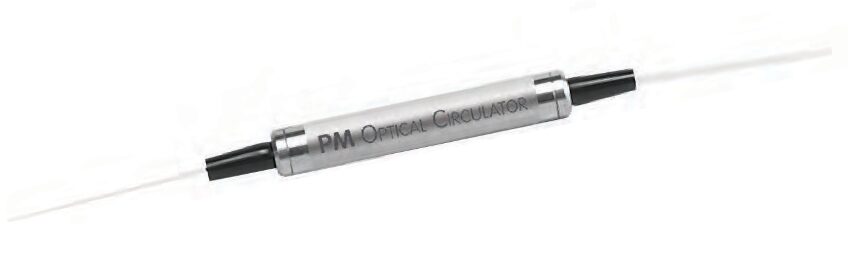
What Is an Optical Circulator? Core Principles and Design
At its core, an optical circulator is a passive optical component engineered to route light signals sequentially from one port to the next, while blocking reverse transmission. For instance, in a standard 3-port optical circulator, a signal entering Port 1 will exit exclusively through Port 2, a signal entering Port 2 will exit through Port 3, and a signal entering Port 3 will exit through Port 1—creating a unidirectional “circulation” path. This non-reciprocal behavior is achieved through advanced optical materials (such as Faraday rotators, which rotate the polarization of light in a fixed direction regardless of propagation direction) and precision-aligned optical elements, ensuring minimal signal interference and maximum control.

Fibermart, a leading provider of optical components, offers two primary types of optical circulator to meet diverse industry needs:
Polarization-Insensitive (PI) Optical Circulator: Designed to operate independently of the input light’s polarization state, this type is ideal for general-purpose applications where signal polarization may vary, such as long-haul communication networks.

Polarization-Maintaining (PM) Optical Circulator: Preserves the polarization of incoming light as it circulates between ports, making it critical for high-precision systems like fiber optic sensors and coherent communication links, where polarization stability directly impacts performance.

Both types are available in 3-port (1x2) and 4-port (2x2) configurations, with Fibermart’s designs emphasizing high isolation (≥40 dB at center wavelength and 23°C), low insertion loss (≤1.0 dB for Grade P models), and excellent environmental stability—ensuring consistent performance even in harsh operating conditions (operating temperature: -10°C to +70°C; storage temperature: -40°C to +85°C).
Key Performance Metrics: What Defines a High-Quality Optical Circulator?
To fully appreciate the value of an optical circulator, it is essential to understand the performance metrics that distinguish high-quality models from ordinary ones. These parameters directly influence how well the component integrates into optical systems and supports reliable signal transmission:
Isolation: Measures the component’s ability to block unwanted reverse signals. A high isolation level (≥35 dB across all wavelengths, temperatures, and polarization states for Fibermart’s models) prevents signal crosstalk, a common issue that degrades communication quality.
Insertion Loss: The amount of signal power lost as light passes through the optical circulator. Low insertion loss (≤1.3 dB for Grade A models) ensures that most of the signal reaches its destination, reducing the need for additional amplification.
Polarization Dependent Loss (PDL): For PI models, PDL (≤0.15 dB) quantifies how much signal loss varies with polarization—low PDL ensures consistent performance across all polarization states.
Return Loss: Indicates how much light is reflected back to the input port (≥50 dB for Fibermart’s products), minimizing interference from reflected signals.
Power Handling: The maximum optical power the optical circulator can tolerate (up to 300 mW for standard models, with customized high-power options up to 5W). This is critical for high-power applications like laser-based sensing.
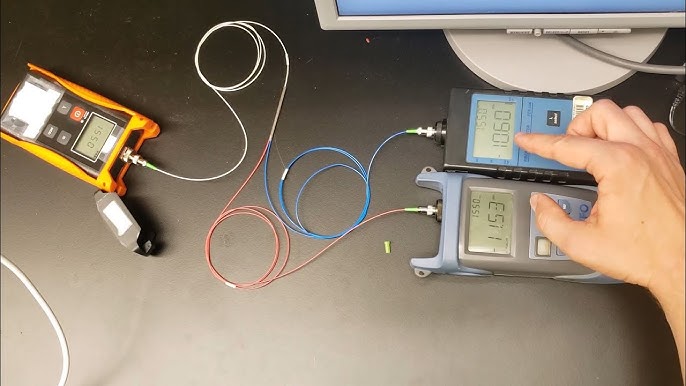
These metrics collectively ensure that the optical circulator operates efficiently, reliably, and seamlessly within complex optical systems—whether for communication, sensing, or industrial applications.
Applications of Optical Circulator: Powering Modern Technologies
The versatility of the optical circulator makes it a cornerstone of numerous cutting-edge technologies. Its ability to enable bidirectional transmission over a single fiber, isolate signals, and route light precisely addresses the needs of diverse industries:

Optical Communication Networks
In wavelength-division multiplexing (WDM) networks— which transmit multiple optical signals (each at a different wavelength) over a single fiber—the optical circulator is indispensable for bidirectional communication. It allows data to be sent and received simultaneously over the same fiber, doubling bandwidth without requiring additional infrastructure. For example, in Optical Add-Drop Multiplexers (OADMs), the optical circulator routes specific wavelengths to “drop” (extract) or “add” (insert) data, while ensuring other wavelengths continue uninterrupted. It also plays a key role in Dispersion Compensation Modules (DCMs), where it redirects signals through dispersion-compensating fiber to correct signal distortion in long-haul links.
Fiber Optic Sensors
Fiber optic sensors rely on precise light signal detection to measure physical parameters like temperature, pressure, and strain. The optical circulator enhances sensor performance by isolating the transmitted (probe) signal from the reflected (measurement) signal. In Optical Time-Domain Reflectometers (OTDRs)—used to locate faults in fiber cables—the optical circulator directs the OTDR’s laser pulse into the fiber and routes the reflected pulse back to the detector, ensuring accurate fault localization without signal interference.
Other Critical Applications
Beyond communication and sensing, the optical circulator supports:
Bidirectional Pumping: In optical amplifiers (e.g., erbium-doped fiber amplifiers, EDFAs), it enables pump lasers to inject power into the fiber from both ends, boosting signal strength over long distances.
In-Line Chromatic Dispersion Compensation: By routing signals through compensation components, it corrects wavelength-dependent signal delays, ensuring high-speed data (e.g., 100Gbps+) is transmitted without distortion.

Choosing the Right Optical Circulator: Considerations for Industrial Users
Selecting the optimal optical circulator requires aligning the component’s specifications with the application’s unique needs. Fibermart, with its extensive product lineup and customization capabilities, offers guidance to help users make informed decisions:
Port Configuration: 3-port models are ideal for simple bidirectional links (e.g., point-to-point communication), while 4-port models suit complex systems requiring multiple signal routes (e.g., multi-wavelength OADMs).
Polarization Requirement: PI models are cost-effective for general applications, while PM models are necessary for polarization-sensitive systems (e.g., coherent optical communication, interferometric sensors).
Wavelength Range: Fibermart’s optical circulator options cover key wavelengths: 1310 nm and 1550 nm (±30 nm) for standard communication, and S+C+L bands (1460–1625 nm) for wideband WDM networks.
Customization: For specialized needs (e.g., high-power handling up to 5W, unique package dimensions), Fibermart offers customized optical circulator solutions tailored to specific industrial requirements.
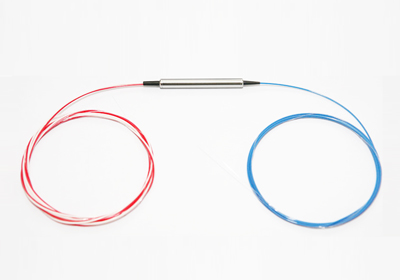
With prices ranging from $115 (for standard 3-port PI models at 1310/1550 nm) to $1,245 (for high-power 5W PM models), Fibermart balances performance and affordability, ensuring users get the right optical circulator without compromising on quality.
As optical technologies continue to advance—with demands for higher bandwidth, faster speeds, and more precise sensing—the optical circulator will remain a critical enabler. Its non-reciprocal functionality, combined with ongoing improvements in miniaturization, power handling, and cost-effectiveness, positions it to support next-generation applications: from 6G communication networks to ultra-sensitive environmental sensors.
Summary
For engineers, system integrators, and businesses looking to optimize their optical systems, the optical circulator is not just a component—it is a foundational technology that drives efficiency, reliability, and innovation. With trusted providers like Fibermart offering a comprehensive range of models and customization options, leveraging the power of the optical circulator has never been easier—empowering the next wave of breakthroughs in optical technology.





No comments have been posted yet.