


.webp)


In the era of high-speed data transmission, fiber optic communication has become the cornerstone of global connectivity, powering everything from internet backbones to cable television (CATV) networks. At the heart of this technology lies a critical component: the Distributed Feedback (DFB) Laser Diode. Unlike traditional laser diodes, DFB laser diodes offer unparalleled precision in wavelength control and stability, making them indispensable for meeting the demands of advanced communication systems. This article delves into the technology, advantages, applications, and selection considerations of DFB laser diodes, highlighting their role in shaping the future of fiber optic communication.

1. What Is a DFB Laser Diode?
A Distributed Feedback (DFB) Laser Diode is a specialized type of laser diode designed to generate highly stable and precise optical signals. Its defining feature is a periodic diffraction grating integrated into the device’s active region—the area where light amplification occurs. This grating acts as an optical feedback mechanism, using Bragg scattering to select and stabilize a single wavelength of light. Unlike Fabry-Perot laser diodes (which rely on mirrors at the device’s ends for feedback), the DFB design eliminates wavelength drift caused by temperature fluctuations or mechanical stress, ensuring consistent performance over time.
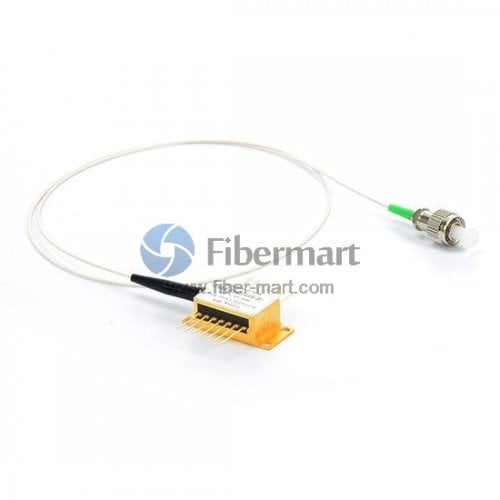
Modern DFB laser diodes, such as those offered by Fibermart, are typically packaged in hermetic enclosures to protect internal components from environmental interference. A common configuration is the 14-pin butterfly package, which integrates essential accessories to enhance functionality: a thermoelectric cooler (TEC) to regulate temperature, a thermistor to monitor heat levels, a monitor photodiode (PD) to track optical output, and an optical isolator to prevent signal reflections. These additions collectively guarantee high-quality, reliable laser operation even in harsh industrial or telecommunications environments.
2. Key Advantages for Fiber Optic Communication
DFB laser diodes address three critical challenges in fiber optic communication: wavelength precision, high-speed performance, and long-term stability. These advantages make them the preferred choice for next-generation networks.
2.1 Compliance with ITU Wavelength Standards
The International Telecommunication Union (ITU) has established strict standards for wavelength division multiplexing (WDM)—a technology that allows multiple data signals to be transmitted simultaneously over a single fiber by using different wavelengths. DFB laser diodes are engineered to meet these standards precisely:
For CWDM (Coarse WDM) systems, they operate across the 1270–1610 nm range, adhering to a 20 nm wavelength grid.
For DWDM (Dense WDM) systems, they cover the 1527.22–1610.92 nm spectrum, following a 100 GHz (0.8 nm) frequency grid.
This compliance ensures seamless integration into global communication networks, enabling interoperability between different vendors’ equipment.
2.2 High-Speed and Low-Noise Operation
In fiber optic communication, data is transmitted as modulated light signals. DFB laser diodes excel at high-speed modulation, supporting data rates that range from gigabits to terabits per second—essential for applications like cloud computing, video streaming, and 5G backhauls. Their stable wavelength output also minimizes signal noise, reducing data loss and improving transmission quality over long distances.
2.3 Robust Environmental Stability
Temperature changes and mechanical vibrations can disrupt laser performance, leading to signal degradation. DFB laser diodes mitigate this with built-in TECs and thermistors, which maintain a constant operating temperature. Additionally, hermetic packaging protects internal components from moisture, dust, and corrosion, ensuring reliable operation in outdoor cabinets, data centers, and industrial settings. Fibermart’s DFB laser diodes further meet Telcordia GR-468 qualifications (a benchmark for telecommunications equipment reliability) and RoHS directives (for environmental safety), reinforcing their suitability for critical infrastructure.
3. Applications in Fiber Optic Networks
DFB laser diodes are versatile components, powering a wide range of fiber optic communication systems. Their precision and stability make them ideal for both short-range and long-haul applications.
3.1 Local, Metropolitan, and Wide-Area Networks (LAN, MAN, WAN)
In LANs (e.g., office networks) and MANs (e.g., city-wide data grids), DFB laser diodes enable high-speed data transfer between routers, switches, and servers. For WANs— which connect geographically distant locations—their long-distance transmission capabilities (supported by low noise and stable wavelengths) ensure consistent signal quality across thousands of kilometers.
3.2 CATV and Broadband Systems
Cable television (CATV) networks rely on DFB laser diodes to deliver high-definition video, internet, and voice services to households. For example, Fibermart’s 30MW 1310nm DFB butterfly laser diode is specifically optimized for CATV transmitters, providing sufficient output power to cover large service areas while maintaining signal clarity.
3.3 Specialized Communication Equipment
Beyond standard networks, DFB laser diodes are used in specialized devices such as stabilized light sources (for calibrating fiber optic test equipment) and modulated light sources (for research and industrial sensing). They also play a role in emerging technologies like gas detection systems, where their precise wavelength output enables accurate identification of gas molecules.
4. How to Select the Right DFB Laser Diode
Choosing the appropriate DFB laser diode depends on the specific requirements of the application. Key factors to consider include wavelength, output power, package type, and fiber compatibility.
4.1 Wavelength and Power
Wavelength selection is determined by the network type: 1310nm and 1490nm are common for short-to-medium haul systems, while 1550nm (and DWDM-tuned 1550nm variants) are preferred for long-haul transmission due to lower fiber attenuation. Output power ranges from 2mW (for low-power sensing) to 30MW (for high-power CATV transmitters). For example, a 10MW 1550nm DFB diode is suitable for WAN applications, while a 2mW CWDM diode works well for small-scale LANs.
4.2 Package and Fiber Type
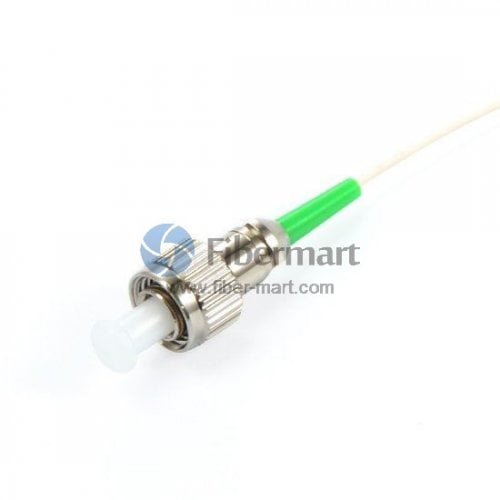
The 14-pin butterfly package is the industry standard for high-performance DFB diodes, as it integrates TECs and monitors. For compact applications, smaller packages like TO56 or TO60 may be used (e.g., Fibermart’s TO56 TOSA with pigtail, designed for space-constrained devices). Fiber compatibility is also critical: single-mode (SM) fibers are used for long distances, while polarization-maintaining (PM) fibers are ideal for applications requiring stable light polarization, such as coherent communication systems.
4.3 Compliance and Certification
Always select DFB laser diodes that meet industry certifications like Telcordia GR-468 (for reliability) and RoHS (for environmental safety). These certifications ensure the component will perform consistently in real-world conditions and align with global regulatory standards.
As fiber optic communication continues to evolve to meet the growing demand for faster, more reliable data transmission, DFB laser diodes remain a foundational technology. Their precision wavelength control, high-speed performance, and environmental stability make them indispensable for LAN, MAN, WAN, and CATV networks, as well as specialized applications like sensing and testing. For engineers, network operators, and technology professionals, understanding the capabilities and selection criteria of DFB laser diodes is key to building efficient, scalable fiber optic systems. Whether powering a city’s broadband network or enabling long-haul data transmission across continents, DFB laser diodes are more than just components—they are the backbone of the digital age.




