


.webp)


In the dynamic landscape of optical communication and data transmission, optical switches emerge as foundational components, enabling precise control and routing of light signals across fiber optic networks. These devices play a pivotal role in optimizing network flexibility, reliability, and efficiency—whether in large-scale telecom backbones, data centers, or industrial sensing systems. This guide explores the core functionality, diverse types, critical specifications, and real-world applications of optical switches, equipping industry professionals with the knowledge to select and deploy these components effectively.
What Are Optical Switches?
At their core, optical switches are active or passive devices designed to selectively route optical signals from one fiber optic circuit to another. Unlike electrical switches (which handle electronic data), optical switches operate directly on light signals, eliminating the need for optical-to-electrical-to-optical (OEO) conversion—a process that introduces latency, increases power consumption, and limits bandwidth. This direct signal manipulation makes optical switches indispensable for high-speed, low-latency networks, where maintaining signal integrity is paramount.

Optical switches serve as the “traffic controllers” of fiber optic systems, enabling key functions such as network reconfiguration, fault protection, and signal testing. For example, in a fiber ring network, an optical switch can quickly redirect signals to a backup path if the primary fiber is damaged, minimizing downtime. In data centers, they facilitate dynamic allocation of bandwidth to meet fluctuating demand. As optical networks evolve to support 5G, cloud computing, and IoT (Internet of Things), the role of optical switches becomes even more critical—driving the need for faster, more reliable, and scalable switch designs.
Key Types of Optical Switches
Optical switches are classified based on their underlying technology, configuration, and fiber compatibility, with each type tailored to specific application requirements. Understanding these categories is essential for matching the right switch to a network’s needs.
Classification by Technology
The technology used to redirect signals defines the switch’s speed, durability, and performance:
Mechanical Optical Switches: These switches use physical moving parts (e.g., micro-mirrors or fiber alignment mechanisms) to route signals. They are cost-effective, offer high isolation (low cross-talk), and support a wide range of wavelengths. However, their switch time (typically a few milliseconds) is slower than other types, making them ideal for non-time-sensitive applications like network testing, monitoring, or static reconfiguration.
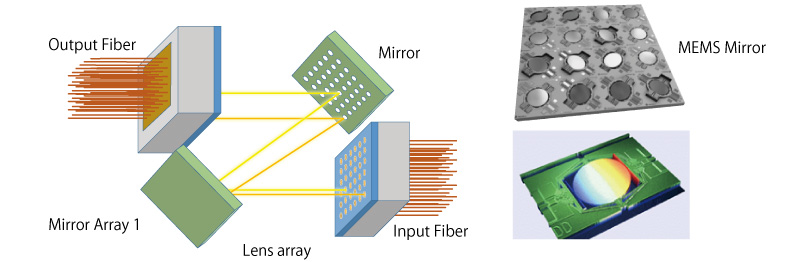
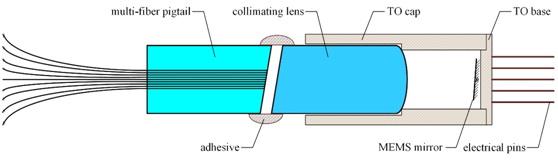
MEMS Optical Switches: Based on Micro-Electro-Mechanical Systems (MEMS) technology, these switches use tiny, electrically controlled mirrors to redirect light. They offer ultra-fast switch times (≤8 ms), high port density (supports up to 1x64 configurations), and long lifespans (≥100 million cycles). MEMS optical switches are well-suited for dynamic network environments, such as data center interconnections and telecom backbones, where rapid signal rerouting is critical.

Solid-State Optical Switches: These switches rely on material properties (e.g., electro-optical or thermo-optical effects) to change light’s path without moving parts. They offer near-instantaneous switching, high reliability, and resistance to vibration—making them suitable for harsh industrial environments or high-frequency applications like optical signal processing.
Polarization-Maintaining (PM) Optical Switches: Designed for polarization-sensitive systems (e.g., coherent communication or high-power laser setups), these switches preserve the polarization state of incoming signals. They are often used in applications where signal polarization directly impacts performance, such as aerospace sensing or quantum communication networks.
Classification by Configuration
Configuration refers to the number of input and output ports, determining how many signals the switch can route:
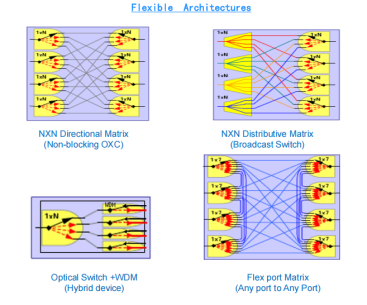
1xN Configuration: Features 1 input port and N output ports (e.g., 1x2, 1x4, 1x8). These switches are used for signal distribution—for example, routing a single test signal to multiple fiber links in a network diagnostics setup.
2xN Configuration: Includes 2 input ports and N output ports (e.g., 2x2, 2x4). They enable bidirectional communication or signal redundancy, such as in fiber ring protection systems where two paths are available for signal transmission.
Rackmount & Benchtop Optical Switches: These are specialized configurations for high-volume applications. Rackmount switches (e.g., 1U or 2U form factors) integrate into standard server racks, ideal for data centers or telecom central offices. Benchtop switches are portable, designed for laboratory testing or field maintenance.
Classification by Fiber Type
Optical switches are optimized for different fiber modes to ensure compatibility and performance:
Singlemode (SM) Optical Switches: Designed for singlemode fibers (9/125 μm core/cladding), they operate at wavelengths like 1310 nm, 1550 nm, or 1625 nm. They offer low insertion loss, high return loss (≥50 dB), and are used in long-haul telecom networks or high-bandwidth data links.
Multimode (MM) Optical Switches: Compatible with multimode fibers (50/125 μm or 62.5/125 μm), they support shorter wavelengths (650 nm, 850 nm, 1064 nm). They are ideal for short-distance applications, such as data center LANs or indoor optical sensing systems, and typically have a return loss of ≥30 dB.
Critical Specifications of Optical Switches
The performance of optical switches is defined by key technical parameters, which directly impact network efficiency, signal quality, and reliability. These specifications must be carefully evaluated during selection.
Signal Quality Metrics
Insertion Loss: The power loss incurred when a signal passes through the switch. For high-performance optical switches, insertion loss should be minimal (often specified as “P Grade” for premium performance), ensuring signals retain sufficient strength for long-distance transmission.
Cross Talk: Measures the leakage of signal from one port to another. Singlemode optical switches typically require cross talk ≥55 dB, while multimode switches need ≥35 dB—preventing interference between adjacent signals.
Return Loss: The amount of light reflected back to the input port. High return loss (≥50 dB for singlemode, ≥30 dB for multimode) reduces signal degradation and protects sensitive components like lasers.
Polarization Dependent Loss (PDL): The variation in insertion loss due to changes in signal polarization. PDL ≤0.2 dB is standard, ensuring consistent performance across different polarization states.
Mechanical and Environmental Specifications
Switch Time: The time taken to redirect a signal from one port to another. MEMS optical switches offer the fastest switch times (≤8 ms), while mechanical switches are slower (a few milliseconds).
Lifespan: The number of reliable switching cycles. Most optical switches support ≥100 million cycles, ensuring long-term durability in high-use environments.
Temperature Range: Optical switches operate reliably in temperatures from -40°C to 85°C (storage and operating), making them suitable for both indoor (data centers) and outdoor (telecom towers) deployments.
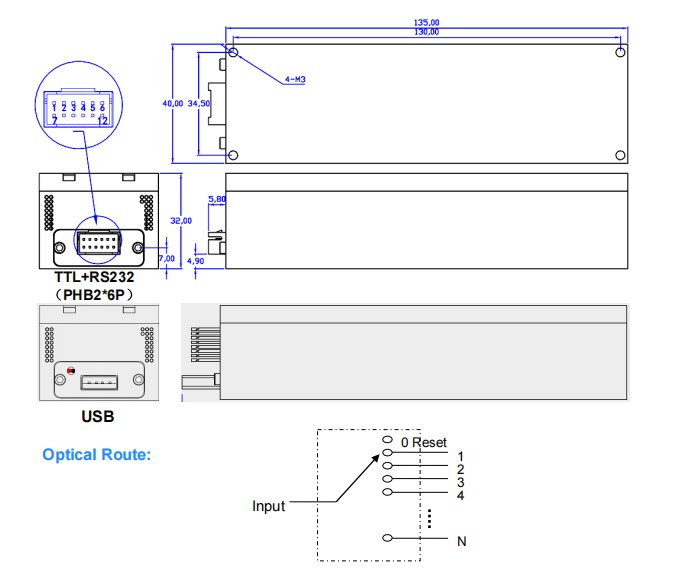
Control Interfaces: Many switches include RS232 or USB ports for remote control, enabling integration with network management systems for automated configuration and monitoring.
Applications of Optical Switches
The versatility of optical switches makes them a staple in diverse industries, where they address unique network challenges and enable innovative solutions.
Telecommunications Networks
In telecom systems, optical switches are critical for network resilience and flexibility:
Fiber Ring Protection: They enable automatic rerouting of signals to a backup fiber ring if the primary ring fails, ensuring uninterrupted service for users.
Optical Add-Drop Multiplexers (OADMs): Optical switches integrate with OADMs to add or remove specific wavelength channels from a WDM (Wavelength-Division Multiplexing) signal, supporting dynamic bandwidth management in long-haul networks.
Backbone Reconfiguration: MEMS optical switches facilitate rapid reconfiguration of telecom backbones to adapt to changing traffic patterns, such as peak-hour data surges.
Data Centers
Data centers rely on optical switches to optimize bandwidth and reduce latency:
High-Density Interconnections: MEMS or solid-state optical switches support high port densities (e.g., 1x32), enabling efficient connectivity between servers, storage devices, and routers.
Test and Measurement: Mechanical optical switches are used in data center testing to route test signals to multiple fiber links, simplifying diagnostics and quality assurance.
Dynamic Bandwidth Allocation: Optical switches adjust bandwidth allocation in real time, ensuring critical applications (e.g., cloud computing) receive sufficient resources during peak demand.
Industrial and Sensing Systems
In industrial settings, optical switches withstand harsh conditions while ensuring reliable signal routing:
Industrial Sensing: Solid-state or PM optical switches connect sensors (e.g., temperature, pressure) to control systems in factories or oil refineries, where vibration and extreme temperatures are common.
Aerospace and Defense: PM optical switches are used in avionics or satellite communication systems, where polarization preservation and high reliability are essential.
Test and Measurement
Optical switches are foundational in laboratory and field testing:
Network Diagnostics: They route test signals to different fiber segments, enabling technicians to identify faults (e.g., fiber breaks or splice losses) efficiently.
Manufacturing Testing: Rackmount optical switches support high-volume testing of fiber optic components (e.g., transceivers or cables) during production, ensuring consistent quality.
Conclusion
Optical switches are indispensable components of modern optical networks, enabling precise signal routing, dynamic reconfiguration, and enhanced reliability. Their diverse types—from mechanical to MEMS, singlemode to PM—cater to every application, from telecom backbones to industrial sensing. By understanding their key specifications (insertion loss, switch time, temperature range) and matching them to network needs, professionals can build efficient, scalable systems that meet the demands of 5G, cloud, and IoT. As optical networks continue to evolve, optical switches will remain at the forefront, driving innovation and enabling the next generation of high-speed, low-latency communication.





No comments have been posted yet.