
.webp)
































|
Recent Order
|
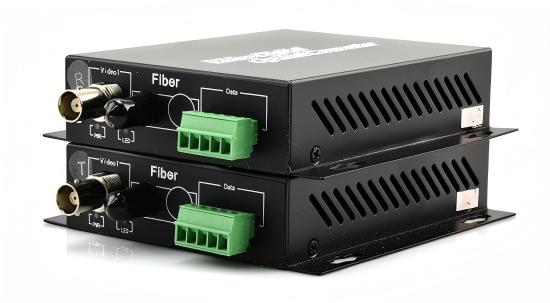
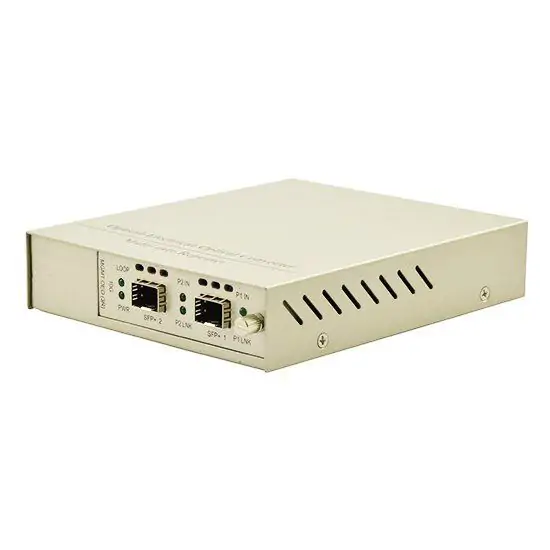
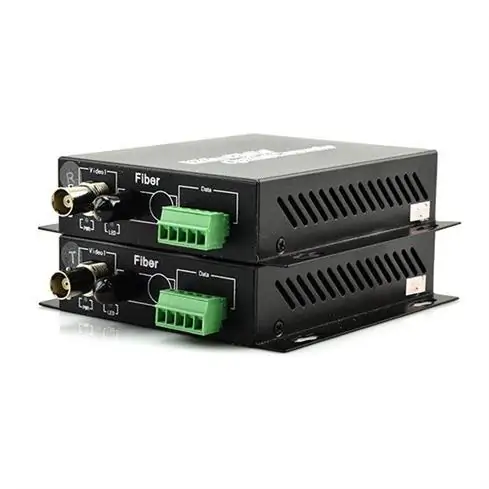
Optical Video ConverterOptical Video Multiplexer is popularly with telecommunication operator and suitable in business for communication operator, government and kinds of entities. It is one of the most transmission equipment in point-point fiber optic network. Typical optical multiplexers are Video & Data & Audio Multiplexers, PDH Multiplexer. Fiber-Mart optical fiber video converter are highly manageable, accompanied by a network management system for configuration, service, performance, security, and fault management that enable cost-effective and efficient transport.
Introduction
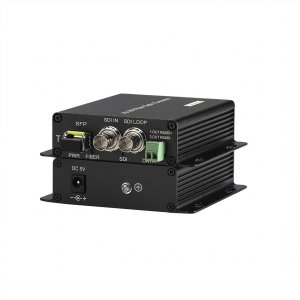
Fibermart Optical Video Converter, often referred to as a "Video Optical Transceiver" in industries like security and surveillance, is a professional device designed for the long-distance, high-quality transmission of video signals over fiber optic media. Its core function is to convert electrical signals (such as SDI, HDMI, or analog composite video) from cameras or other video sources into optical signals for transmission via fiber optic cable, and then reconvert them back to electrical signals at the receiving end.
As video technology advances toward 4K/8K ultra-high definition and demands for transmission stability and distance increase, the limitations of traditional copper cables become more apparent. Leveraging the significant advantages of fiber optics—including enormous bandwidth, low loss, immunity to electromagnetic interference, and long transmission distances (reaching tens or even hundreds of kilometers)—Optical Video Converters have become indispensable in high-end audio-visual applications. These include professional broadcasting, film production, large-scale security surveillance, telemedicine, and smart city infrastructures.
Features● High-Fidelity, Lossless Transmission: Digital non-compression technology to support real-time, zero-loss transmission from standard definition to 4K/8K ultra-high definition video, ensuring complete picture detail integrity. Some high-end models support HDR (High Dynamic Range) and WCG (Wide Color Gamut) passthrough, meeting top-tier production needs. ● Long Distance & High Bandwidth: Easily achieves transmission distances over 20km on single-mode fiber, with maximum ranges exceeding 80km. Supports data rates up to 12Gbps, enabling stable transmission of uncompressed 4K 60fps video streams. ● Superior Stability & Noise Immunity: Fiber optic transmission is completely immune to Electromagnetic Interference (EMI) and Radio Frequency Interference (RFI), with no ground loop issues. Particularly suited for complex electromagnetic environments like factories, power facilities, and rail transportation. ● Powerful System Integration: In addition to the main video channel, typically integrates synchronous transmission for bidirectional audio, data (e.g., RS-232/485), Ethernet, telephone, and other signals, enabling "all-in-one-cable" solutions that simplify cabling. ● Compact Design & High Reliability: Professional-grade units typically feature rugged metal housing for excellent heat dissipation, suitable for rack-mount or field deployment, and support stable 24/7 continuous operation.
Principle
●.System Components: A complete system consists of three parts: a Transmitter (converts electrical signals to optical signals), the Fiber Optic Medium, and a Receiver (converts optical signals back to electrical signals). ●.Analog Transmission System: At the transmitter, the input analog video signal modulates an optical carrier using techniques like PFM (Pulse Frequency Modulation), where light intensity varies continuously with the input signal amplitude. The receiver demodulates this to recover the video. This method is lower cost but is limited in distance, signal-to-noise ratio, and channel capacity due to source nonlinearity, and has relatively weaker noise immunity. ●.Digital Transmission System (Mainstream Technology): This is the dominant technology for high-end applications today. The process is as follows: ● Transmitter: The input video signal undergoes high-speed digital sampling (e.g., 8-bit or 10-bit quantization) and is encoded into a digital data stream. This digital electrical pulse then drives a laser (or LED) to convert the electrical pulses into corresponding optical pulses ("1s" and "0s"). ● Fiber Transmission: The optical pulse signal travels through the fiber with low loss and at high speed via the principle of total internal reflection. ● Receiver: A photodetector (e.g., a photodiode) receives the optical pulses and converts them back into weak electrical signals. These are then amplified, reshaped, processed with clock recovery, and decoded to faithfully reconstruct the original high-quality digital video signal. ●.Digital systems, with their superior noise immunity, ease of signal regeneration, support for multiplexing, and long-distance capability, have become the standard in broadcast and professional surveillance fields.
Applications
● Professional Broadcast & Film Production ● Large-Scale Security & Smart Cities ● Distance Learning & Telemedicine ● Industrial & Defense ● High-End CATV & Display: Used in museums, science centers, corporate lobbies, and exhibition halls for long-distance, high-quality distribution and display of ultra-high definition video content.
Specifications
● Supports HD-SDI/3G-SDI/12G-SDI, HDMI 2.0, or Analog HD (AHD/TVI/CVI) and CVBS composite video ● ≥ 8 MHz (Analog), Supports data rates up to 12 Gbps (Digital) ● Up to 4K UHD (3840x2160) @ 60Hz, backward compatible with 1080p, 720p, etc. ● ≤ ±1.5% (typical, affects color fidelity) ● LC/SC/ST, compatible with Single-Mode (SM) or Multi-Mode (MM) fiber ● 1310nm, 1550nm (common for single-mode) ● Multi-Mode Fiber: Up to 300m - 2km; Single-Mode Fiber: Typically 20km, up to 80km+ maximum ● Supports 1x Ethernet (10/100/1000M), 1x Bi-directional Audio, Multiple Bi-directional Data (RS-232/485/422) ● DC 12V/1A or AC adapter, some pro models support redundant power input ● -40°C ~ +75°C (Industrial wide-temperature range) ● Compact design suitable for desktop or rack mounting
|