


.webp)


OCS as a Critical Upgrade for Modern Data Centers
Driven by large language model training and hyperscale AI computing clusters, traditional electrical switches are encountering inherent technical bottlenecks. The electrical-optical conversion process introduces non-negligible latency, power consumption, and bandwidth limitations, which can no longer meet the high-speed interconnection demands of ten-thousand-card computing clusters. Against this backdrop, Optical Circuit Switching (OCS), which enables direct optical-layer signal forwarding without electro-optical conversion, has emerged as a core technology to break through the communication and power consumption bottlenecks of data centers, as well as a key evolutionary direction for next-generation AI data center networking architectures.
In terms of commercial deployment, the majority of OCS products applied in global commercial data centers adopt Micro-Electro-Mechanical Systems (MEMS) architecture, maintaining the highest technology readiness level (TRL). NVIDIA’s ongoing parallel testing of four OCS technical solutions marks a critical industry transition: OCS is evolving from a proprietary technology exclusive to top-tier tech giants into a widely deployed, multi-path commercial solution. Industry market forecasts project that the global OCS market size will exceed $2.5 billion by 2029, demonstrating definitive growth momentum.
Currently, the global OCS industry has formed four mainstream technical routes: MEMS, silicon photonic waveguide, liquid crystal, and piezoelectric ceramic. All four solutions share a unified core objective: realizing dynamic optical path reconfiguration at the pure optical layer to eliminate redundant photoelectric conversion. Their fundamental distinction lies in the physical mechanism of optical path switching. Each route leverages unique optical, material, and mechanical principles to reroute optical signals for differentiated application scenarios. This article conducts an in-depth analysis of the technical principles, pros and cons, and industrial positioning of the four routes.
In-depth Breakdown of Four OCS Technical Routes
MEMS: The Most Mature Mechanical Optical Switching Solution for Commercialization
Technical Principle
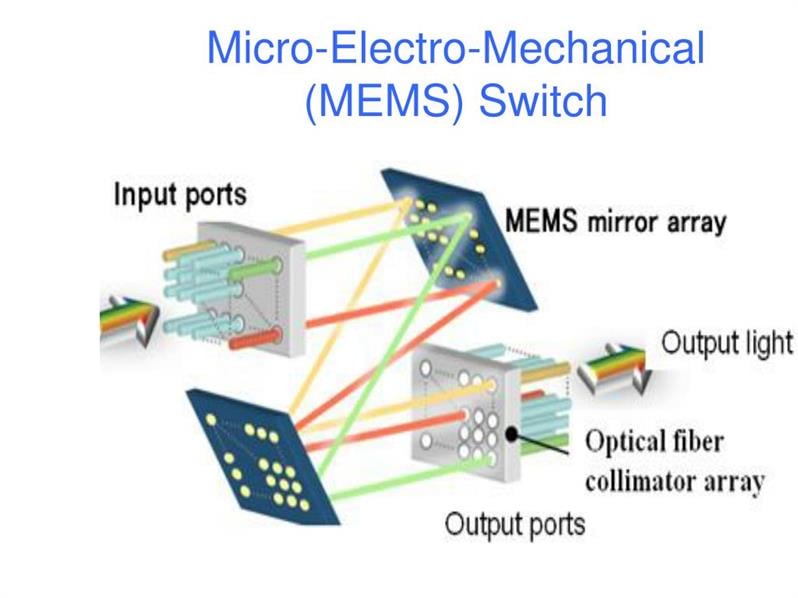
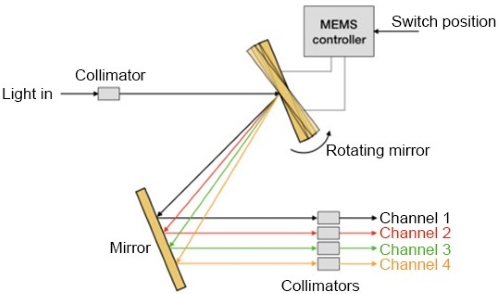
MEMS is the most industrially mature OCS solution, relying on high-precision micro-mechanical reflection structures for optical path modulation. Adopting a free-space optical design, light propagates in an unconfined space and irradiates an array of rotatable micro-mirrors. By electronically adjusting the mirror deflection angle, the reflection direction of light beams is altered, thereby rerouting optical signals to designated output ports and completing optical path reconfiguration. The core technical barrier lies in advanced micro-electromechanical manufacturing, which requires extreme precision in mirror flatness and angular control.
Industrial Application Status
Benefiting from verified engineering feasibility, MEMS has been widely deployed in commercial hyperscale computing clusters. Google has adopted MEMS-based OCS for successive generations of large-scale AI training clusters, fully validating its stability in extreme computing scenarios. Additionally, Lumentum’s mainstream commercial OCS products are all built on MEMS micro-mirror architecture, making it the dominant choice for data center procurement.
Technical Trade-offs
Advantages: The free-space optical structure features low and controllable optical loss, supporting large-scale port expansion for multi-device interconnection in mega data centers. Furthermore, standardized production, packaging, and commissioning workflows deliver proven mass-production stability with abundant industrial engineering experience.
Limitations: The inherent mechanical properties determine its technical constraints. Frequent mechanical rotation causes mechanical fatigue, leading to long-term angular drift and component aging. High-precision mirror arrays demand stringent manufacturing environments and premium packaging materials, resulting in difficult consistency control and high operation and maintenance costs throughout the product lifecycle.
Waveguide: Silicon Photonic Native Solution for Long-term Integration
Technical Principle
The waveguide solution adopts a fundamentally different design logic from MEMS. It confines light within micro-optical waveguides etched on silicon photonic chips. By tuning the photoelectric control units on the chip, the refractive index of specific waveguides is modulated. This enables beam shunting between different waveguide channels or optical interference to adjust output ports, achieving all-optical switching inside the chip.

Industrial Positioning and Strategic Value
The most prominent strength of the waveguide solution is its native compatibility with silicon photonic platforms and Co-packaged Optics (CPO) architecture. Unlike discrete OCS devices, waveguide switching structures can be monolithically integrated into optical chips, conforming to the miniaturization and high-integration development trend of modern data centers. It has become a key strategic reserve technology for global manufacturers targeting long-term optical interconnection iteration.
Technical Trade-offs
Advantages: Without external moving mechanical components, the highly integrated on-chip switching unit features a compact footprint. It supports multi-functional integration of optical switching, coupling, and amplification, perfectly adapting to high-density server deployment scenarios.
Limitations: On-chip optical transmission faces inherent physical defects. Scattering at waveguide boundaries induces crosstalk between adjacent channels and deteriorates signal purity. Moreover, on-chip optical insertion loss remains difficult to optimize, and chip heat generation distorts waveguide refractive indexes, bringing severe challenges to thermal management and channel consistency in large-scale switching matrices.
Liquid Crystal: Mechanical-loss-free Electrically Controlled Material Solution
Technical Principle
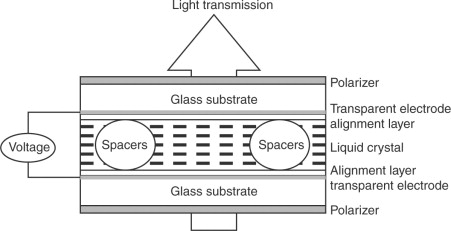
The liquid crystal solution is a pure electrically controlled optical modulation technology, requiring neither MEMS micro-mirrors nor on-chip waveguides. Based on the electro-optic effect, an external electric field adjusts the arrangement of liquid crystal molecules to modify local material refractive index. As light penetrates the liquid crystal medium, its propagation path shifts with refractive index changes, realizing passive optical path reconfiguration through medium modulation.
Industrial Application Status
Coherent stands as a leading global vendor promoting liquid crystal OCS technology. The company launches low-loss, long-lifespan liquid crystal OCS products, primarily targeting scenarios requiring high durability and low maintenance frequency.
Technical Trade-offs
Advantages: The complete absence of mechanical moving parts eliminates mechanical wear and component aging, extending service life and reducing long-term OPEX. Its simplified structural design also provides superior shock resistance and environmental stability compared with mechanical alternatives.
Limitations: Technical bottlenecks stem from material characteristics. Molecular reorientation brings inherent response latency, restricting its application in ultra-low-latency computing interconnection scenarios. Liquid crystal properties are temperature-sensitive, causing consistency challenges in mass production. In addition, long-term electrification triggers molecular polarization aging, undermining prolonged operational stability.
Piezoelectric Ceramic: High-precision Micro-displacement Mechanical Solution
Technical Principle
The piezoelectric ceramic solution utilizes the inverse piezoelectric effect for optical modulation. Under applied voltage, piezoelectric materials generate micron-level precise telescopic deformation. This tiny displacement drives micro-mirrors, prisms, or fiber arrays to shift position, adjusting the alignment state of optical coupling components and completing optical path switching.
Technical Differentiation
Similar to MEMS, piezoelectric ceramic belongs to mechanical switching technology, yet their motion mechanisms differ essentially. MEMS relies on angular deflection of mirrors for reflective switching, while piezoelectric ceramics prioritize linear micro-displacement to achieve high-precision optical alignment, making it more suitable for sophisticated optical coupling scenarios.

Technical Trade-offs
Advantages: It delivers exceptional displacement control accuracy with minimal coupling loss. In compact optical structures, it achieves fast response under low driving voltage, adapting to low-power-consumption operating conditions.
Limitations: Material and manufacturing constraints restrict large-scale commercialization. The inherent creep characteristic of piezoelectric materials causes long-term displacement drift and degraded optical stability. Inconsistent deformation performance leads to low mass-production yield, while high-precision displacement packaging further increases manufacturing costs.
Positioning of Four Technical Routes
Based on technical principles, commercial maturity, and application boundaries, the four OCS solutions form a differentiated global industrial layout:
● MEMS: The most commercially viable route with mature engineering practices, serving as the mainstream solution for large-scale deployment in current commercial data centers.
● Waveguide: Boasts superior integration capability, closely aligned with silicon photonics and CPO roadmaps, acting as a long-term strategic technology for chip-scale optical interconnection.
● Liquid Crystal: Features zero mechanical wear and low maintenance cost, optimized for static and low-speed switching scenarios demanding long-term durability.
● Piezoelectric Ceramic: Excels in micro-displacement control, targeting high-end customized optical switching scenarios with stringent precision requirements.
The OCS industry will maintain a multi-route parallel development pattern without technological monopoly. MEMS will continue to dominate near-term commercial deployment; the waveguide solution will underpin long-term integration upgrades; liquid crystal and piezoelectric ceramic technologies will supplement niche high-value scenarios. With leading global tech enterprises such as NVIDIA accelerating technical verification and iterative optimization of manufacturing processes, OCS will gradually expand from high-end hyperscale computing clusters to general-purpose data centers. Driven by global industrial chain collaboration, the OCS market will maintain steady growth and release substantial commercial value in the next five years.
FAQs
Q1. What is Optical Circuit Switching (OCS), and what challenges does it address in modern AI data centers?
OCS is a technology that forwards optical signals directly at the optical layer without electro-optical conversion. It resolves the inherent bottlenecks of non-negligible latency, excessive power consumption, and bandwidth constraints in traditional electrical switches, fulfilling the high-speed interconnection requirements of ten-thousand-card AI computing clusters.
Q2. Which OCS technical route has the highest commercial maturity and is most widely adopted in current commercial data centers?
The Micro-Electro-Mechanical Systems (MEMS) architecture holds the highest Technology Readiness Level (TRL) and is the most industrially mature OCS solution. It is the mainstream option for large-scale deployment in global commercial hyperscale data centers, with fully validated stability in extreme AI computing scenarios.
Q3. What is the commonality and fundamental difference across the four mainstream OCS technical routes?
All four routes (MEMS, silicon photonic waveguide, liquid crystal, and piezoelectric ceramic) share a unified core objective: to enable dynamic optical path reconfiguration at the pure optical layer and eliminate redundant electro-optical conversion. Their fundamental difference lies in the physical mechanism of optical path switching, with each leveraging distinct optical, material, and mechanical principles for differentiated application scenarios.
Q4. What are the advantages and inherent limitations of the MEMS OCS solution?
Its core advantages include low and controllable optical loss via a free-space optical structure, support for large-scale port expansion, and proven mass-production stability with mature standardized manufacturing workflows. The inherent limitations are mechanical fatigue-induced long-term angular drift and component aging, as well as high manufacturing and O&M costs driven by stringent consistency control requirements.
Q5. What is the strategic value of silicon photonic waveguide-based OCS?
The waveguide solution offers native compatibility with silicon photonic platforms and Co-packaged Optics (CPO) architectures. Unlike discrete OCS devices, its switching structure can be monolithically integrated into optical chips, aligning with the long-term miniaturization and high-integration development trend of modern data centers.
Q6. What is the development trend of the global OCS industry in the coming years?
The OCS industry will maintain a long-term parallel development pattern across multiple technical routes, with no single technological monopoly. MEMS will continue to dominate near-term commercial deployment, while waveguide solutions will underpin long-term integration upgrades. Liquid crystal and piezoelectric ceramic technologies will fill niche high-value scenarios, and OCS adoption will gradually expand from hyperscale AI computing clusters to general-purpose data centers.
Posted on 8 May, 2026, by Francisco, Fibermart, All Copy Right Reserved.





No comments have been posted yet.